.svg)

.svg)

.svg)

.svg)

.svg)

.svg)

.svg)

.svg)

.svg)

.svg)
.svg)











The Complete Guide to Team Chat and Task Management with Zenzap for Hospitality Managers
Hospitality managers do not lose control because their teams lack effort. They lose control when team chat, task management, and shift handoffs live in different places, and the important detail disappears at the exact moment work starts. This guide covers how to use Zenzap to keep team chat and task management in one secure, mobile-first workspace so every request, update, and handoff stays visible, owned, and actionable.
Communication Breakdowns In Hospitality
Communication breaks in hospitality when work is split across radios, handwritten notes, personal messaging apps, and memory. That is why the real problem is not low effort, it is fragmented information that reaches people late or not at all.
In hotel and hospitality operations, the failure usually happens at the handoff. A guest issue is raised by front desk, passed to housekeeping, then forgotten because the update lived in a channel nobody checked after the shift changed. Snapfix describes this exact pattern, noting that tasks go unresolved, information is lost between shifts, and guests feel the effects in operations like hotels that rely on multilingual teams, multiple shifts, and outdated tools like radios or handwritten notes, as outlined in its guide on eliminating communication breakdowns in hotel teams.
Zenzap is designed to prevent that failure mode before it compounds. It gives hospitality managers structured work chat, built-in tasks, and file sharing in one place, so the message, the owner, and the next step live together. That matters because a manager should not need to search three tools to find the instruction that launched a task, and the team should not need training to use the system if they already know how to text.
Why Fragmented Communication Hurts Guest Experience
Fragmented communication hurts guest experience because delays become visible fast. A missed room readiness update, a late maintenance fix, or an unclear billing note can create a chain reaction that reaches the guest before it reaches the manager.
Mews explains that internal communication affects guest experience directly, and that operations run more smoothly when staff communicate effectively in hospitality environments, as discussed in its guide to communication in the hospitality industry. That is the operational truth behind every front-of-house and back-of-house delay. If the staff cannot align quickly, the guest experiences the gap.
Zenzap closes that gap by keeping updates in a structured workspace instead of scattered across side chats and inboxes. Managers can create location-based or team-based chat groups, attach the task inside the conversation, and keep the response visible until it is resolved. That gives leadership one place to see what is happening, what is blocked, and what still needs follow-up.
What Hospitality Teams Need Instead
Hospitality teams need structured communication, not more noise. They need one place for requests, one place for ownership, and one place to verify what was done before the next shift begins.
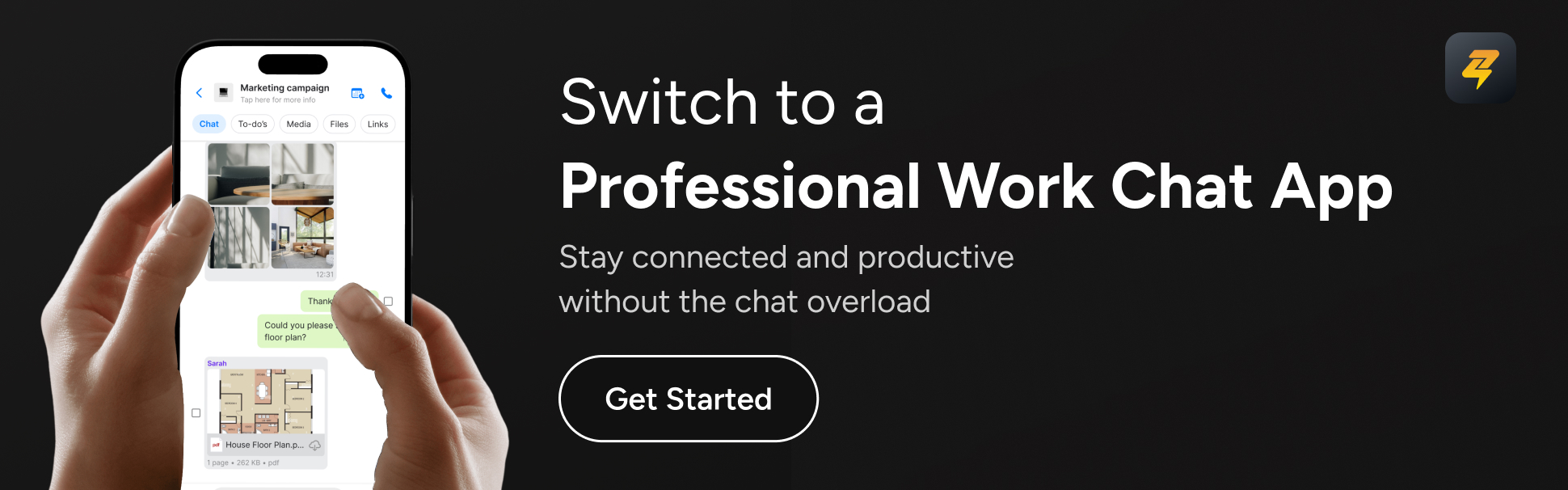
The strongest operational pattern is simple. Centralize work, make ownership visible, and standardize handovers so the next person does not have to reconstruct the story from scraps. Snapfix recommends digital checklists, digitized SOPs, and multilingual support for the exact reason hospitality work breaks in motion, not in planning.
Zenzap supports that operating model by combining threaded conversations with embedded task tracking. That means a request created in chat can become an action item without leaving the context that gave it meaning. For a hospitality manager, that reduces repeat questions, prevents lost instructions, and makes the next shift easier to run.
Team Chat Structure That Prevents Missed Handoffs
Structured team chat prevents missed handoffs because it turns conversation into operational memory. Instead of hoping someone saw a message in time, managers can keep updates organized by department, property, shift, or project.
This is the point where Zenzap matters most for hospitality. A room issue, a vendor update, and a staffing note should not sit in the same stream as casual conversation. With structured work chat, the team can separate urgent operations from background chatter while still keeping everything in one workspace.
Managers who want a deeper view of this model can review how structured team chat and task management work in Zenzap. The operational lesson is that structure is not a preference. It is what keeps the right person from missing the right message at the wrong moment.
Shift Handover Discipline That Holds Up Under Pressure
Shift handover discipline is essential because hospitality work changes hands constantly. A front desk note, a housekeeping exception, or a maintenance issue can all be lost if the outgoing shift leaves too much in memory and too little in writing.
A good handover system records what happened, what is still open, and who owns the next step. That is why digital checklists matter more than long chat threads. They force completeness, and they give the incoming shift a fast way to see unresolved work before guests notice the gap.
Zenzap helps by tying chat to tasks and task status. A manager can assign the issue, track progress in the same workspace, and keep the handoff visible across devices. That reduces the common scenario where one team thinks the issue is handled and the next team discovers it was only mentioned, not completed.
Multilingual And Multidepartment Teams Need Shared Context
Multilingual and multidepartment teams need shared context because translation alone does not prevent misunderstanding. A note can be technically understood and still be operationally unclear if the receiver does not know the urgency, location, or sequence of work.
The hospitality.institute source notes that language barriers, cultural misunderstandings, physical barriers, and psychological barriers all create ripple effects that can lead to wrong room assignments, billing errors, unresolved complaints, and lower guest loyalty. That is not a communication theory problem. It is a day-of-operations problem that shows up in service recovery and missed detail.
Zenzap reduces that risk by keeping the conversation, files, and tasks together. When teams need to work across roles or languages, the context stays attached to the action. That makes it easier for managers to confirm understanding, reduce back-and-forth, and keep work moving even when the team is dispersed.
Task Management Inside Conversations
Task management belongs inside chat because hospitality work starts in conversation. A task should not be copied into another system after the fact, or it risks losing the context that explains why it matters and who should act first.
This is where embedded task tracking changes the daily rhythm of operations. If a supervisor notices a guest complaint, a missing supply, or a room turn issue, the task can be created immediately in the same thread. That keeps the request tied to the people who saw it, the reason it exists, and the status that leadership needs.
For hospitality managers, the main advantage is internal task alignment. There is less ambiguity about who owns what, fewer duplicate reminders, and fewer work items that survive only in memory. Zenzap's task management use cases show how managers can turn chat into action without switching systems.
Built-In Tasks Replace Separate To-Do Lists
Built-in tasks replace separate to-do lists because separate systems create drift. The team sees the chat, but the action item lives elsewhere, so the next person must hunt for it or recreate it manually.
That drift is expensive in hospitality. A maintenance call can sit in one app while the room note lives in another, and both can be forgotten if the shift changes before anyone checks them. Zenzap avoids that split by letting the task live inside the conversation that created it.
The result is cleaner ownership and better follow-through. Managers can assign, sort, and filter work without leaving the chat workspace, which helps when dozens of small tasks need to move at once across a property or group of locations. It is a practical way to keep business task tracking visible without adding another layer of admin.
Calendar Sync And Time-Sensitive Work
Calendar sync matters because hospitality work is time-sensitive. Pre-shift prep, vendor visits, maintenance windows, and guest service follow-ups all need timing, not just assignment.
When task-to-calendar sync exists, managers can move from a request in chat to an actual scheduled action. That reduces the chance that a good idea stays in conversation until the moment passes. It also helps with working hours controls and scheduled messages, which keep communication in business time instead of landing during a staff member's off-hours.
Zenzap supports that discipline by connecting tasks to calendar workflows. For a hospitality manager, that means less manual coordination and fewer missed deadlines. It also gives leaders a clearer view of what must happen now, what can wait, and what should be communicated to the next shift.
Practical Task Workflows For Hospitality Managers
Practical task workflows keep the day from becoming reactive. The best systems turn recurring operational problems into repeatable actions that staff can follow without guessing.
- Build one task flow for guest issues so the same complaint type always follows the same sequence, from report to ownership to resolution. That reduces variation and helps managers see where service recovery is getting stuck.
- Create one checklist for shift handover so open items, guest follow-ups, and maintenance notes always get reviewed before the team changes over. That keeps the next shift from inheriting uncertainty instead of information.
- Use one workspace for vendor and contractor coordination so outside work does not disappear into personal inboxes or casual messages. That makes accountability visible and keeps property-level work tied to the right owner.
These workflows are where Zenzap becomes more than a chat app. It functions as a structured team chat app with task management in chat, which is exactly what hospitality managers need when the work moves fast and the team cannot afford separate systems. The more repeatable the workflow, the less time leaders spend rescuing details.
Mobile-First Workflows For Shifts, Files, And Updates
Mobile-first access matters because hospitality work happens away from desks. Housekeeping, front desk, maintenance, and food service teams need the same information on phones that they would otherwise have to chase on paper or in another app.
A mobile-first system lets staff receive updates, read SOPs, share photos, and confirm tasks wherever the work is happening. That matters for deskless team messaging because the shift does not pause for someone to return to a computer. If the update cannot be read and acted on in the moment, it is already late.
Zenzap is built for that environment. It offers iOS, Android, Windows, Mac, and Web access, so the same communication flow works across devices and locations. That makes it easier for managers to keep work communication consistent whether a team is on the floor, in the back office, or moving between sites.
File Sharing And SOP Access In One Place
File sharing and SOP access need to live close to the task because that is where people actually use them. When a team member has to search email, drive folders, and old chat threads to find the latest instruction, the odds of error go up.
Zenzap provides secure file sharing and organization, which gives hospitality managers one place to keep SOPs, photos, and job aids. That is especially useful for room standards, incident documentation, vendor instructions, and opening or closing procedures. The goal is not just storage, it is making the correct file easy to find in the moment work starts.
That design supports faster execution and cleaner audits. If a manager needs to show what instruction was sent, who received it, and which version was current, the evidence stays in the workspace. That reduces confusion and strengthens operational accountability.
Working Hours And Scheduled Messages Support Staff Boundaries
Working hours and scheduled messages matter because hospitality leaders often manage people across shifts, locations, and time zones. A message sent at the wrong hour can create confusion, stress, or unnecessary pressure on staff who are off the clock.
Zenzap supports working hours controls and scheduled messages so communication lands when it should. That keeps urgent work visible during the shift and non-urgent updates out of personal time. For managers, that also reduces the temptation to rely on informal channels that blur the line between business and personal use.
The result is better work-life balance without losing operational control. Staff see updates when they can act on them, and managers avoid waking up to guess whether a message was read or buried. In hospitality, timing is part of the message.
Admin Control, Security, And Offboarding
Admin control matters because hospitality operations have turnover, seasonal staffing, and multiple locations. Without clean permissions and ownership rules, old access can linger after someone changes roles or leaves.
Zenzap addresses that with admin controls, audit logs on higher tiers, secure cloud storage, and one-click offboarding. That is important for hospitality managers because the company should own the communication space, not the employee's personal device. It also helps maintain continuity when people move across properties or departments.
For a broader view of why leadership teams choose structured chat over scattered workarounds, see why directors choose Zenzap for structured team chat and task management. The right control layer is not about adding friction. It is about keeping the operation safe, organized, and recoverable.
Why Privacy And Compliance Cannot Be Afterthoughts
Privacy and compliance cannot be afterthoughts because hospitality teams handle employee details, customer details, and operational documents. If those assets live in personal apps or unmanaged devices, the business loses visibility and control.
Zenzap is built with enterprise-grade security and is SOC 2, GDPR, HIPAA, and CCPA compliant. It also offers enhanced privacy and company-owned data stored in the cloud rather than on personal devices. That gives leadership a cleaner line between business communication and private phone use.
For managers, this matters during audits, staffing changes, and incident response. If the operation needs to verify who saw what, when they saw it, and whether access was removed, the workflow is easier to manage when the communication layer is owned and controlled by the business.

Offboarding Should Be Fast And Complete
Offboarding should be fast and complete because departing staff should not remain inside critical communication threads. In hospitality, people move quickly between roles, properties, and seasons, so leaving old access in place creates avoidable risk.
Zenzap's one-click offboarding helps remove access from the workspace without creating a project for the manager. That means the company can protect files, conversations, and task history at the point someone leaves instead of chasing cleanup later. It is a direct operational safeguard, not a theoretical one.
Managers should treat offboarding as part of communication hygiene. If access, files, and task history remain tied to the business, the next leader can inherit a stable system rather than a collection of personal accounts and forgotten threads. That is how a communication platform becomes part of operational continuity.
Key Takeaways
This section pulls the operating lessons together so hospitality managers can act on them immediately. The goal is to make the next decision simpler, faster, and easier to defend.
- Use structured team chat to keep handoffs, requests, and approvals in one place, because hospitality failures usually start when the right information lands in the wrong channel or too late to matter.
- Tie built-in tasks to the original conversation so every request has an owner, a status, and a clear next step that survives shift changes and busy service periods.
- Rely on mobile-first communication, file sharing, and scheduled messages to support deskless teams, protect staff time, and keep work moving across locations.
- Treat admin controls, offboarding, and compliance as operational tools, not IT extras, because the company should always control its own communication history and access.
FAQ
These answers cover the most common questions hospitality managers ask when they are deciding how to organize team chat and task management. Each answer is built to help you apply the system, not just understand the concept.
Q: Why is team chat not enough for hospitality operations?
A: Team chat by itself is not enough because hospitality work needs ownership, not just conversation. A message can inform the team, but it does not guarantee follow-through unless the request becomes a tracked task. That is why managers need a system where the discussion and the action live together. Zenzap supports that by combining structured chat with built-in tasks and file sharing in one workspace.
Q: What is the biggest communication failure point in hospitality?
A: The biggest failure point is the shift handoff. That is when details get lost, assumptions creep in, and the incoming team has to reconstruct what happened. If the open issue is not visible, the guest feels the delay. Zenzap reduces that risk by keeping tasks, updates, and context together so handoffs are not dependent on memory.
Q: How does task management inside chat help managers?
A: It helps managers because the task is created in the same place where the issue was raised. That keeps the context intact and makes ownership easier to track. It also cuts down on duplicate reminders and side conversations that waste time. For hospitality teams, that means less chasing and more completion.
Q: How should hospitality teams handle multilingual communication?
A: They should keep instructions short, structured, and attached to the task that needs action. Translation helps, but context is what prevents mistakes. Photos, checklists, and clear ownership reduce confusion across roles and shifts. Zenzap supports this by keeping chat, files, and tasks in one organized workspace.
Q: Why do admin controls matter in a hospitality chat app?
A: Admin controls matter because hospitality teams change often and work across multiple locations. The business needs to control who can see what, who can create groups, and who can still access company data after they leave. Without that control, communication becomes a security and continuity problem. Zenzap gives managers a better way to keep access, files, and history under business ownership.
About Zenzap
Zenzap is a modern communication platform designed to streamline messaging across teams and groups in a single, organized workspace. It focuses on combining chat, task coordination, and collaboration tools to reduce the need for multiple disconnected apps. The goal of Zenzap is to improve productivity by making conversations more structured, searchable, and action-oriented.
For hospitality managers, that design matters because the work breaks at the handoff, not in the plan. Zenzap brings real-time messaging, built-in tasks, secure file sharing, working hours controls, scheduled messages, and admin control into one mobile-first system. It is built to reduce operational drift, protect company data, and keep frontline teams aligned without forcing them through a long setup process.
Having this complete reference gives hospitality managers the ability to act on every dimension of team chat and task management without needing to research further. You understand where communication fails, how structure prevents that failure, why tasks belong inside chat, what mobile-first means for deskless teams, and how admin control protects the business. That is not just knowledge. It is the foundation for a decision that will change how your operation runs. The right communication system is not a feature upgrade; it is an operational safeguard that prevents the expensive moments before they happen.

Take Control of Your Team Communication
Chat, organize, and get work done - all in one place.
Other Blog Posts