


Key Takeaways
- Use AI agents inside chat to cut routine coordination, reporting, and follow-up work that slows directors down.
- Build around measurable gains. The strongest numbers in the market point to hours saved, faster decisions, and fewer errors.
- Keep governance in the same flow as work. Approval controls, topic-scoped memory, and auditability reduce risk when AI handles sensitive tasks.
- Start with one workflow, then widen use across the team once the first process saves time.
- Shared context matters. AI value drops when one person must clean up, explain, and resend every output in private.
Introduction
A director in the United Kingdom does not need more chat. You need fewer handoffs, fewer status-chasing messages, and fewer hours spent turning scattered updates into something the team can use. That is where AI agents in chat are changing the shape of work, especially for directors who manage pressure across operations, people, and reporting.
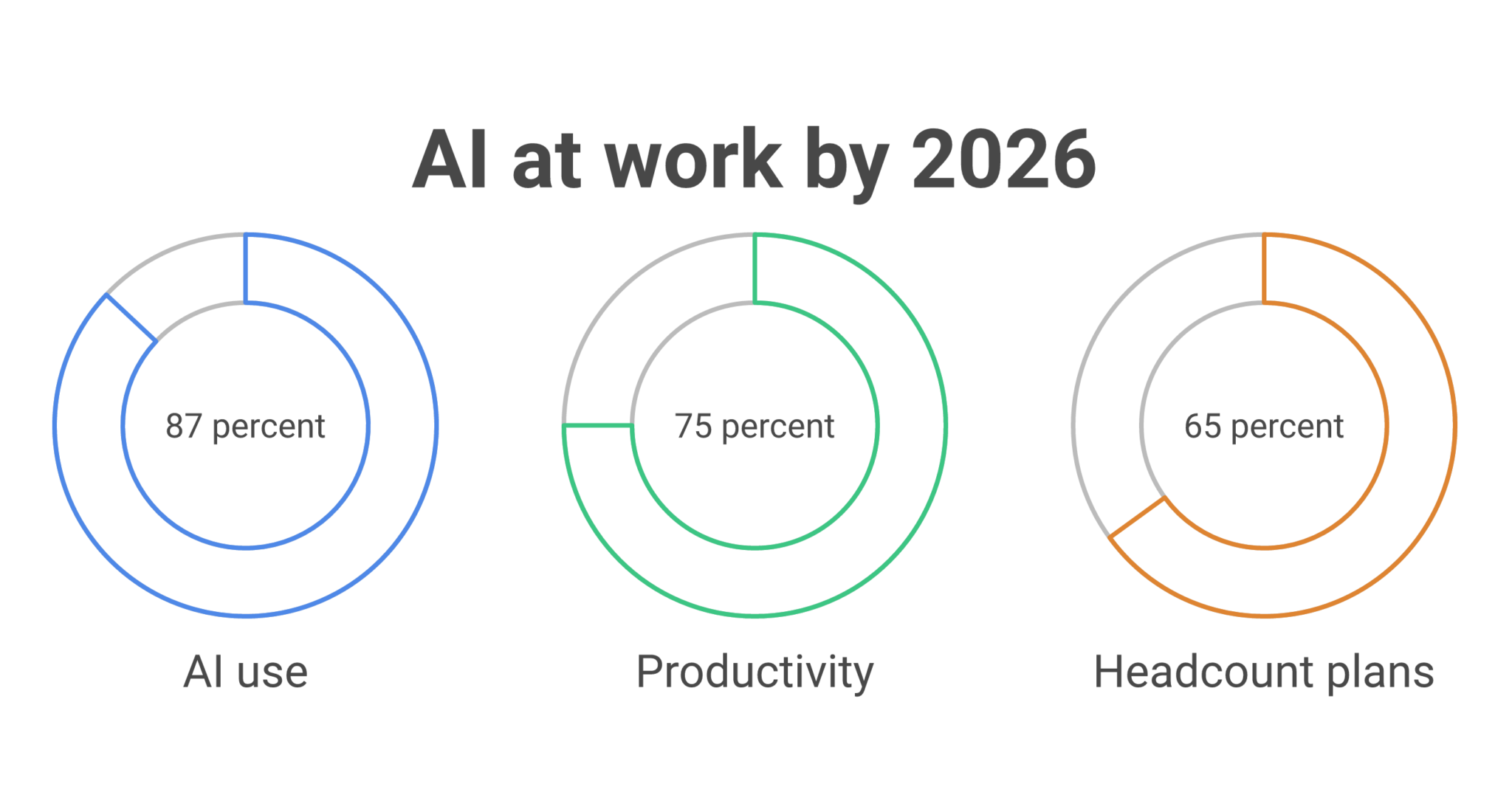
The shift is already visible in the numbers. In the Work AI Index 2026, 87% of digital workers said they use AI at work, and 75% said it makes them more productive. Yet workers also spend an average of 6.4 hours a week botsitting, which means checking outputs, feeding context, and fixing mistakes before the work is safe to send. That gap is where a director can get real value from AI agents that live in chat, share context with the team, and do work across tools instead of only answering questions.
The UK market is sending the same signal. A survey of 250 C-suite executives at large British firms found that 65% would reduce headcount before the end of 2026, while 8% would freeze recruitment. The same research, reported in AI agents set to replace thousands of UK jobs by end of 2026, forecast 100,000 virtual workers in the UK workforce by the end of 2026. For a director, that is not abstract trend watching. It is a direct warning that the next productivity gains will come from who can run work with fewer manual steps, stronger control, and cleaner handoffs.
Table of Contents
- What changed for directors in the UK
- Why chat is now the control point for work
- Where the hours are really lost
- How one director can use AI agents in daily operations
- Why governance belongs inside the workflow
- What to measure after rollout
- Questions directors ask before they roll this out
What Changed For Directors In The UK
You are no longer choosing between a chatbot and a human team member. You are choosing whether AI can move from answering questions to completing multi-step work inside the same place where decisions are made.
That matters for directors because the work is rarely a single task. It is the chain of tasks around it, the update that has to reach finance, the note that needs to go to HR, the follow-up that has to land before Friday, and the report that needs a clean summary by 4 p.m. The Powering Productivity: AI and the Future of UK Work report from the British Chambers of Commerce points to the same pressure: productivity gains depend on practical adoption, not just enthusiasm.
The Shift From Answers To Action
AI agents matter when they move from response mode to task mode. They can collect information, route it, summarize it, and push it to the next step without asking a director to copy and paste the same instruction three times.
That changes the shape of daily management. A director can ask for a status brief, have the agent pull the latest updates, flag missing details, and return a report ready for review. The work stays visible in chat, so the team sees the same context instead of relying on private messages and memory.
Why Private AI Work Breaks Down
Private AI use creates hidden cleanup work. One person gets a draft, then spends time checking whether the draft is right, whether it uses the latest numbers, and whether it matches the team’s process.
The Work AI Institute found that 69% of AI users admit to botshitting at work, meaning they ship AI-generated work they have not fully reviewed, do not fully understand, or could not defend if asked. That is a governance problem, but it is also a management problem. When AI lives in isolation, the director inherits the risk later.
Why Chat Is Now The Control Point For Work
Chat is where work already happens, so it is the right place for AI agents to show up. You do not want a separate system that creates yet another place to check before anything gets done.
Directors need one place where the team can ask, correct, approve, and move forward. When AI agents live in chat, the context stays with the conversation, and the conversation stays with the work.
Shared Context Reduces Drift
A shared thread gives the agent the team’s corrections, prior decisions, and current priorities. That means the next reply is less likely to repeat a mistake or miss the operational rule that someone already explained yesterday.
This is why Zenzap’s guide to building AI agents that work across tools and team chats is relevant for directors who want action, not another dashboard to babysit. The practical point is simple: an agent that can read the conversation and act inside it has more usable context than one that sits outside the team’s day-to-day work.
Speed Matters, But So Does Review
Speed is useful only when the result is trustworthy. Workers in the Work AI Institute report said AI saves them roughly 11 hours each week through automation alone, but only 13% said their organization is performing significantly better as a result.
That gap tells you the bottleneck is not just generation. It is review, routing, and follow-through. A director can get time back only if the AI work is embedded in a process that the team can inspect and approve.
Where The Hours Are Really Lost
The biggest waste is usually not the first answer. It is the second and third pass required to make that answer usable.
In the same Work AI Index 2026, workers said they spend an average of 6.4 hours a week botsitting. That is nearly a full workday spent correcting the output of tools that were supposed to save time. For a director, that number matters because it shows exactly where AI adoption gets stuck.
A Practical Example From A UK Director Role
Picture a director overseeing a team that handles client follow-ups, internal reporting, and approvals across several tools. Each morning starts with messages asking for status, who owns what, and what needs escalation.
An AI agent in chat can gather the updates, summarize the open items, flag blocked tasks, and draft the report for review. You still make the decision. You just stop spending the first hour of the day reconstructing the state of the business from five different threads.
The Cost Of Hidden Cleanup
Hidden cleanup is expensive because it repeats. A two-minute correction on one message can turn into a weekly routine if the same prompt has to be retyped, checked, and explained every day.
A director should measure that work directly. If the team spends 30 minutes a day on AI cleanup, that is more than two and a half hours a week. Across several people, the cost grows quickly, and the promise of time savings disappears.
How One Director Can Use AI Agents In Daily Operations
You get the best results by starting with one process that already repeats every week. Pick the work that already lives in chat, because that is where the handoffs are easiest to see.
One director can use AI agents to summarize meetings, prepare team updates, route requests, and flag issues before they are buried in long message threads. That is the operational win. The agent handles the repetitive layer while the director keeps authority over the decision.
Start With One Workflow That Already Repeats
A weekly performance update is a good starting point. The agent can pull in the latest notes, collect input from the team, and draft a summary for review before the meeting.
If you want a concrete map of use cases, Zenzap’s what AI work agents do in your team chat and why they matter now lays out the kinds of work an agent can take on inside chat, including summaries, task coordination, and follow-up support. That gives you a practical starting point instead of a vague promise.
Use The Agent For Follow-Up, Not Just Drafting
Drafting is only half the value. The stronger use case is follow-up, because that is where work often stalls.
A director can have the agent note the action items from a client call, send the next-step reminders, and flag anything that still needs approval. That keeps the team from losing momentum after the meeting ends.
Apply It To Approval Heavy Work
Approval chains are another good fit. A director can use an AI agent to prepare the package, collect the context, and highlight what needs a sign-off before the request lands on the desk.
That pattern cuts back on back-and-forth messages and makes the next decision easier to review. It also gives the team a record of what was asked, what was changed, and who approved the final action.
Why Governance Belongs Inside The Workflow
Security and governance are part of the product decision, not a separate policy document sitting in a folder. Directors in the UK, especially those in regulated sectors, need controls built into the way AI works.
The IT Brief UK article on AI agents set to replace thousands of UK jobs by end of 2026 notes that agentic AI in sensitive or highly regulated sectors will require comprehensive governance and rigorous safeguards. That lines up with the operational reality directors already face. If the AI can write or move work, then access, approvals, and audit trails must be part of the same process.
Trust Starts With Data And Permissions
Salesforce’s UK newsroom said a new CIO study found AI adoption has skyrocketed 282%, while trust in data is now the number one bottleneck to an agent-first strategy. That is a useful signal for directors because it shows scale alone does not fix confidence.
You need clear permissions, bounded access, and review steps for sensitive actions. Zenzap’s security rules for AI agents in work chat addresses the operational side of that problem, which is where directors usually feel the pain first.
Approval Controls Prevent Costly Mistakes
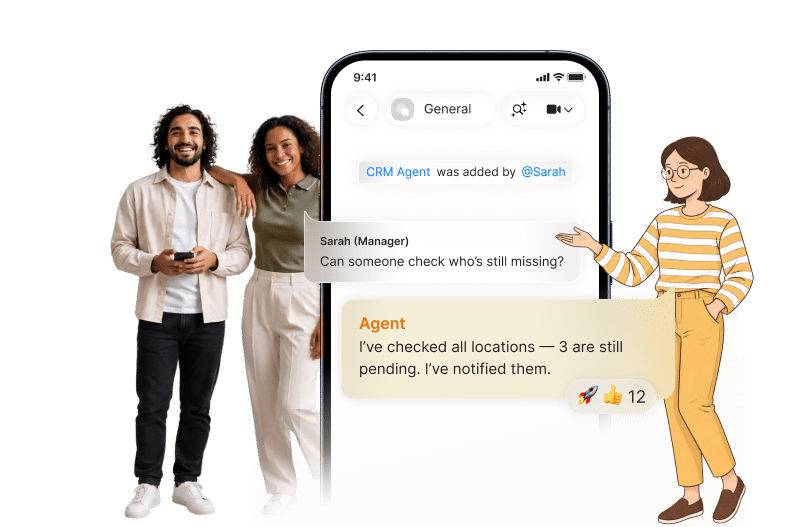
Not every action should run on its own. Read-only tasks can move fast, while sensitive writes should wait for approval.
That balance matters when the agent touches customer data, financial records, or internal decisions. A director does not need a system that guesses. A director needs a system that knows when to ask before it acts.
What To Measure After Rollout
You should measure the work, not the novelty. If the AI agent is useful, it will show up in hours saved, deals moved forward, mistakes caught, and fewer tasks slipping through the cracks.
The most useful metrics are the ones the team already feels. Time to complete a report. Number of follow-ups closed without rework. Number of approvals delayed by missing context. Those numbers tell you whether the workflow changed or just got a new interface.
A Simple Measurement Plan
Start with a baseline. Track how long the task takes without the agent, then compare it to the same task after the agent is added to the chat.
You can also count the number of corrections needed before a message or report is usable. If the cleanup work drops, the agent is doing real work. If the cleanup work stays the same, the workflow still needs repair.
The Best KPI Is Often The Boring One
A director does not need a flashy metric to prove value. A weekly task that used to take 90 minutes and now takes 30 minutes is enough.
A clean handoff is also a win. So is a report that lands on time without a chain of reminder messages. Those small changes add up across a quarter faster than most teams expect.
What Directors Ask Before They Roll This Out
The first question is usually about control. The second is about whether the team will actually use it.
The answer to both is the same. Put the AI agent where the team already works, limit what it can do, and let one useful workflow prove its value before you widen it.
How Much Should You Roll Out At First?
Start small. One process, one owner, one measurable result.
That approach gives you a clean test. It also avoids the common mistake of launching too much at once and then blaming the tool when the workflow was never clear.
How Do You Keep It From Becoming Another Silo?
Keep the agent in the shared conversation, not in one person’s private workspace. That way the rest of the team can see what the agent did, what was corrected, and what happens next.
Zenzap’s article on what managers should and should not do with AI agents in secure work chats is useful here because managers and directors need the same discipline: use the agent for repeatable work, keep approvals visible, and avoid creating another hidden system that only one person understands.
The Director’s Next Move
The UK numbers are already forcing the issue. If 65% of large-firm executives are planning headcount reductions and 100,000 virtual workers are forecast by the end of 2026, the question is no longer whether AI will touch day-to-day management.
The real question is whether your team will use AI agents in a way that reduces cleanup, keeps control, and shares context where the work happens. If you want the result to be visible in fewer mistakes and faster handoffs, which weekly process will you put into chat first?
FAQ
Q: What is the biggest benefit of AI agents for a UK director?
A: The biggest benefit is time returned to decision-making. AI agents can handle repeatable work like summaries, routing, follow-ups, and status updates inside chat. That cuts the cleanup work that usually follows a normal AI draft. It also gives you a visible record of what was done, which helps with accountability.
Q: Why does chat matter so much for AI agents?
A: Chat is where decisions, approvals, and context already live. When the AI agent works inside the same conversation, the team can correct it, add details, and see the full thread. That reduces the chance of missing context or sending work that needs rework. It also means fewer tool switches during the day.
Q: How do you keep AI use safe in sensitive workflows?
A: Set permission levels before the agent handles anything sensitive. Read-only work can move quickly, but approvals should stay in place for changes that affect customers, money, or compliance. You should also keep the record of what the agent did and who approved it. That gives you a clearer audit trail.
Q: Why do some AI rollouts fail to show a business impact?
A: They often stop at the first draft. Workers may save time on generation, but then spend it on review, correction, and rerunning prompts. The Work AI Index 2026 found that workers save about 11 hours a week through automation alone, yet only 13% say their organization is performing significantly better. That gap is where the workflow needs to change.
About Zenzap
Zenzap gives you AI agents that do work for you, connected to your tools and your team through a secure chat. Setup takes one click: no code, no developer. Unlike Claude or ChatGPT, the agents come already built and connected. You talk to them like a coworker: tag them into chats, correct them once and they remember. They act across your tools, automate workflows, build reports and graphs, summarize chats, flag what needs attention and coordinate people and tasks. One person gets value alone. Add your team, and every correction makes the agent sharper. Agents start in about 300 ms and run on managed infrastructure. Memory stays isolated by topic, and agents never hold credentials. They reach only approved domains, and sensitive actions need your approval.