

Choosing a team communication app in 2025 is no longer about just sending messages. Teams now expect powerful tools that help them organize, focus, and protect their time and data. The stakes are higher, and so are the expectations.
In this comparison, we explore three of the most popular communication apps used by teams today: Zenzap, Microsoft Teams, and Slack. Each has unique strengths, but only one is built specifically to simplify work without the complexity.
Why the Right Team Communication App Matters in 2025
The modern team is mobile, flexible, and expected to move fast. An effective communication app should be more than a chat window. It should be:
- Intuitive on both mobile and desktop
- Secure and compliant without needing configuration
- Integrated with essential tools like calendars, tasks, and voice notes
- Smart about when and how notifications are delivered
- Easy for anyone to start using immediately
A tool that misses any of these points creates friction instead of clarity.
The Best Team Communication Apps Today
1. Zenzap – Simple, Secure, and Built for Focus
Zenzap is a purpose-built team communication app designed for modern work environments. It eliminates distractions, adds structure to conversations, and delivers essential tools right inside your chat.
Key Features
- Fast and easy performance on both desktop and mobile with identical interfaces
- Work hours mode that blocks non-urgent messages outside shift times
- Voice calls, video calls, file sharing, calendar integration, and built-in to-dos
- Default encryption, and GDPR compliance
- Zero setup required, no training needed, and instant team adoption
- Ideal for mobile-first teams, non-technical staff, and businesses with hybrid workers
Zenzap is not just another messaging tool. It helps teams stay aligned, avoid chaos, and reduce app-switching during the workday.
2. Microsoft Teams – Feature-Rich, But Heavy
Microsoft Teams is a well-known name in the enterprise world, especially for companies already invested in Office 365. It offers a broad range of features, but many are underutilized or difficult to access.
What It Offers
- Deep integration with Office tools like Word, Excel, and OneDrive
- Meeting scheduling, document co-authoring, and version history
- Multiple tabs per channel for wikis, whiteboards, and apps
- Strong compliance and permissions options for corporate environments
Teams is desktop-oriented and can feel complex for smaller or fast-moving teams. The interface is dense, and performing basic tasks often takes multiple steps. For companies that already rely on Microsoft products, Teams may feel familiar and be a solution.
3. Slack – Desktop First for Tech Lovers
Slack became popular among developers and very techy workers. It remains a common choice in 2025, though many teams find it difficult to use effectively across roles.
What Slack Includes
- Emoji reactions, GIFs, and custom channel names
- “Huddles” for quick audio chats
- Workflow builder and Slackbot automation
- Custom status messages and themed sidebars
- Integration with thousands of third-party tools
- Channel notifications, sound preferences, and user-level reminders
While Slack encourages interaction, it often lacks the boundaries and structure. Messages get buried quickly in long threads. Important decisions may live in the same channel. The line between culture and clutter can be blurry.
Feature Comparison: Zenzap vs Teams vs Slack
FeatureZenzapMicrosoft TeamsSlackDesktop and Mobile ExperienceIdentical on bothOptimized for desktopMobile available, but limitedBuilt-In Productivity ToolsTasks, calendar, voice and video callsTabs with Office integrationsRequires external integrationsNotification ControlSmart work hours and mute logicManual settings or global muteWork status updatesSetup and OnboardingInstant, no IT requiredLong setup, IT often neededMedium setup, requires orientationSecurity and ComplianceEnterprise-grade. Encrypted, GDPR-readyEnterprise-grade, needs adminBasic securityCollaboration StyleFocused, structuredFormal and document-heavyOpen-ended, often chaoticBest ForEvery working teamCorporate IT-managed teamsTech teamsMost Mentioned FeatureBuilt-in to-do listsSharePoint and calendar linksCustom emojis and Slackbot
Why Zenzap Is the Top Choice for Teams in 2025
Zenzap understands the pressure teams face today. It doesn’t try to be everything. It focuses on what matters: clarity, speed, and ease of use. Teams using Zenzap report:
- Faster decision-making
- Fewer missed messages
- Less need to bounce between apps
- Stronger boundaries between work and rest
Slack brings personality but struggles with focus. Microsoft Teams brings power but adds complexity. Zenzap delivers the balance.
Conclusion: Choose a Tool That Works With You, Not Against You
A great team communication app should fade into the background and let your team shine. Zenzap does just that. It doesn’t overwhelm. It doesn’t confuse. It just works—on mobile, in the office, and everywhere in between.
If your team is still struggling to stay organized, it’s time to try something simpler. Zenzap is the team communication app that makes work easier. Try it today.
A great team communication app should fade into the background and let your team shine. Zenzap does just that. It doesn’t overwhelm. It doesn’t confuse. It just works—on mobile, in the office, and everywhere in between.
For more insights on how work communication tools are shaping productivity trends, you can also visit Work Management, a resource hub exploring the evolving future of teamwork and collaboration.
If your team is still struggling to stay organized, it’s time to try something simpler. Zenzap is the team communication app that makes work easier. Try it today.
If you’re searching for “Slack vs Teams,” you’re probably choosing your team’s main communication hub. It’s not a small decision. The right app helps your team move faster, stay aligned, and avoid the mess of disorganized group chats and scattered files.
Slack vs Teams: The Real Comparison
| Feature | Slack | Microsoft Teams |
|---|---|---|
| Setup Time | Quick to start, but needs manual setup to stay organized | Preconfigured for Microsoft users, slower for others |
| Learning Curve | Not so Easy at first, long-term structure relies on user habits | Takes time to understand, especially for non-Microsoft users |
| Guest Access | Available, but not easy – needs oversight to avoid security risks | Possible, but managing permissions is complex |
| Video Meetings | Works with Zoom or Slack Calls (limited features) | Built-in meetings, but adds complexity to the interface |
| File Management | Needs third-party apps to organize files | Native with OneDrive, less flexible with external tools |
| Admin Control | Strong in paid plans, light in free tier | Deep controls, but only if you know where to look |
| Mobile Experience | Lacks structure on the go | Too dense for everyday mobile use |
| Chat Organization | Channels and groups by adding members – messy | Channels and tabs, but setup can be confusing |
| Integration Ecosystem | 2,000+ apps, many of which need maintenance | Seamless with Microsoft apps, limited outside the ecosystem |
| Overall Fit | Great for tech team, desktop first | Best if your whole org runs on Microsoft and can handle the learning curve |
What Slack Does Well
Slack is known for its use among the tech industry.
Strengths:
- Desktop first
- Many integrations
- Customizable channels
- Easy to scale in early growth stages
But Slack also depends heavily on how well your team maintains structure. Channels multiply fast. Messages get lost. Threads sprawl. Over time, that simplicity can turn into clutter.
What Microsoft Teams Does Well
Microsoft Teams is built to support large organizations-especially those already using Microsoft 365.Strengths:
- Seamless Office integration
- Enterprise-grade admin tools
- Built-in meetings and file collaboration
- Centralized control for large companies
But with those features comes complexity. Microsoft Teams is powerful, but it can feel heavy- especially for small companies or mobile-first teams. The interface takes getting used to. Permissions can get tricky. And external collaboration doesn’t feel smooth.
Common Frustrations with Slack and Teams
Despite their strengths, both tools have recurring friction points for real teams.
Slack Frustrations:
- Too many channels lead to noise
- Messages get buried in threads
- Requires discipline to stay organized
- Admin features gated behind higher pricing tiers and are complex
Teams Frustrations:
- Dense UI that’s hard for new users
- Limited flexibility outside Microsoft apps
- Setup and permissions can be overwhelming
- Feels corporate even for small teams
If you’ve tried both and still feel disorganized, it’s not just you.
Meet Zenzap: A Work Chat App That Keeps It Simple
Zenzap is a team chat platform built for clarity, security, and simplicity. It’s designed for teams who want to communicate better – without getting buried in threads or lost in permission settings.
Why Teams Choose Zenzap:
- Zero learning curve, very intuitive
- Organized chats by project, team, or topic
- One-click offboarding– remove someone from everything instantly
- Instant onboarding with full history
- Tasks management in the chat – no more jumping between apps
- Nothing saved on personal phones
- Mobile-first experience that’s perfect for hospitality, retail, healthcare, logistics, and other frontline teams, available also on desktop and mobile
- Many admin capabilities, including the option to prevent team members from seeing each other’s phone numbers
- Multiple integrations, with built-in calendar and video calling
Zenzap isn’t trying to out-feature Slack or Teams. It’s built to avoid the chaos, reduce overhead, and bring communication, tasks, and control into one place that just works.
So: Slack, Teams, or Zenzap?
| Your Situation | Best Option |
|---|---|
| You use lots of apps and work mostly on desktop and in tech | Slack |
| You’re deeply tied to Microsoft 365 | Microsoft Teams |
| You want clear, secure, and simple communication that scales with you | Zenzap |
Slack is great when you’re small and flexible. Teams fits large, Microsoft-based organizations. But for growing teams who care about clarity, speed, and structure – Zenzap is built for you.
Final Thoughts
Slack and Teams each bring strong tools to the table. But more features don’t always mean better work. If your team is overwhelmed, disorganized, or constantly switching between apps just to stay on top of things, it might be time for something different.
Zenzap is the communication app that helps your team stay focused, aligned, and ready for whatever’s next-without the mess.
Explore Zenzap and see how better communication starts here.
If you’re searching for “Slack vs GroupMe,” you’re probably looking for a reliable way to organize your team’s communication. Maybe you’re moving on from casual group chats. Maybe you’re realizing that WhatsApp or Messenger just aren’t cutting it anymore.
This article gives you the real breakdown of both platforms: what they can do, what they miss, and how they compare when your team actually needs structure, security, and sanity.
Slack vs GroupMe: The Real Comparison
| Feature | Slack | GroupMe |
|---|---|---|
| Setup Time | Needs effort to stay organized | Minimal setup needed |
| Learning Curve | Moderate, especially for admin features | Very easy, but limited capability |
| Guest Access | Available, requires admin setup | Everyone joins via phone number or link |
| File Management | Needs third-party apps to organize files | Barebones. Difficult to track anything |
| Chat Organization | Customizable channels, but clutter builds very fast | One long, scrolling group chat |
| Notifications | Configurable by channel and thread | Basic mute and alert toggles only |
| Integrations | Thousands of apps, mostly for technical use | No business integrations at all |
| Admin Control | Strong in paid plans, light in free tier | Strong in paid plans, light in free tier |
| Mobile Experience | Desktop-first, lacks structure on the go | Made for mobile texting |
| Overall Fit | Built for tech and desktop-based teams | Built for casual, social conversations |
What Slack Does Well
Slack is popular in the startup and developer world for a reason. It offers integrations, and threaded conversations- if you know how to manage them.
Strengths:
- Desktop first
- Many third-party integrations, especially for tech tools
- Channel customization options
- Popular among technical teams
Slack depends on the structure you create. Without strict guidelines, your workspace quickly turns into channel soup. Important messages get buried. Threads become graveyards. And advanced features hide behind paid plans.
What GroupMe Does Well
GroupMe is a messaging app designed for friends and student groups. It’s simple, light, and made for casual texting.
Strengths:
- Very easy to set up and start chatting
- Works well on older phones
- Good for basic group communication
- Popular among non-technical users
But that simplicity comes at a price. There’s no way to organize conversations by topic. You can’t assign tasks, share files in a searchable way, or manage anything beyond who’s in the group. Once messages start piling in, everything just disappears into the scroll.
Common Frustrations with Slack and GroupMe
Slack Frustrations:
- Too many channels. Too much noise.
- Admin and security features cost more and are complex
- Needs integrations for workflows
- Not intuitive for frontline or mobile-first teams.
GroupMe Frustrations:
- No structure at all. One long thread.
- No integrations, task management, or search.
- Anyone can add or remove users.
- Designed for friends, not professional teams.
If you’ve tried both and still feel like your team’s communication is scattered, you’re not alone.
Meet Zenzap: A Work Chat App That Actually Fits How Teams Work
Zenzap is a work communication platform built for clarity, security, and mobile-first use. It’s made for real teams – those who aren’t sitting at a desk all day, and who need simple but structured ways to stay in sync.
Why Teams Switch to Zenzap:
- Zero learning curve, very intuitive
- Organized chats by project, team, or topic
- One-click offboarding- remove someone from everything instantly
- Instant onboarding with full history
- Tasks management in the chat – no more jumping between apps
- Nothing saved on personal phones
- Mobile-first experience that’s perfect for hospitality, retail, healthcare, logistics, and other frontline teams, available also on desktop and mobile
- Many admin capabilities, including the option to prevent team members from seeing each other’s phone numbers
- Multiple integrations, with built-in calendar and video calling
For a broader look at how the whole category compares, see our comprehensive guide to professional work chat apps in 2026.
Zenzap was created to help teams avoid the chaos of Slack and the limitations of GroupMem without needing a training manual or IT team.
So: Slack, GroupMe, or Zenzap?
| Your Situation | Best Option |
|---|---|
| You’re a tech team that lives in Jira | Slack |
| You’re planning weekend trips or parties | GroupMe |
| You run a team and want secure, structured, and easy communication | Zenzap |
Final Thoughts
Slack and GroupMe weren’t built for the way most modern teams actually work. One tries to integrate with so many apps and ends up overwhelming you. The other does almost nothing and leaves you without any tools to manage your team.
Zenzap keeps it simple, clear, and professional- right from day one. No more digging through threads. No more copy-pasting messages between apps. Just real communication that fits real work.
Try Zenzap and finally get your team chat under control.
If you’re searching for “Google Chat vs Slack,” you’re probably figuring out which app to use as your team’s main communication tool. You want something that helps people stay on the same page, not something that adds to the mess. You want a solution, not another system to manage.
On paper, both Slack and Google Chat seem like solid choices. They’re widely known, integrate with popular tools, and come from big names. This article breaks down the key differences between Google Chat and Slack, exposes the daily friction points users face, and reveals why many teams are skipping both in favor of something that actually works for their workflow.
Google Chat vs Slack: The Real Comparison
| Feature | Slack | Google Chat |
|---|---|---|
| Setup Time | Quick to start, but needs custom setup to stay tidy | Simple to launch with Google Workspace |
| Learning Curve | Moderate. Needs training for organized use | Feels familiar to Gmail users, but lacks power |
| Guest Access | Available, but clunky and expensive permissions | Limited and awkward for external users |
| Video Meetings | Works best with Zoom or calls | Built-in with Google Meet |
| File Management | Requires integrations for structured access | Files are tied to Drive but hard to track in chat |
| Admin Control | Available, but gated behind paid tiers | Limited unless you’re deep into Google Admin |
| Mobile Experience | Built for desktop, mobile experience lacking | Lightweight on mobile but lacks structure |
| Chat Organization | Channels get messy fast | Just one big stream of messages |
| Integrations | Thousands of apps, but takes work to maintain | Mostly Google |
| Best For | Tech teams with dedicated IT support | Small teams already inside Google ecosystem |
What Slack Does Well
Slack is heavily used in the tech world. If you love integrations, workflows, and customizing your notifications… Slack has it.
What people like:
- Thousands of app integrations
- Customizable channels
- Widely adopted in developer and startup circles
But let’s be honest. All that freedom comes at a price- complexity. Slack quickly becomes noisy, hard to follow, and overloaded with channels. Unless your team is extremely disciplined, it becomes a game of search and scroll. And if you want full message history? Better open your wallet.
What Google Chat Does Well
Google Chat is integrated inside Gmail and Google Workspace, so it’s convenient if you already live in Google-land. It’s basic and light. You won’t get lost in features, because there aren’t many.
What people like:
- Built-in with Gmail and Google Calendar
- Seamless Google Meet access
- Threads inside rooms
But Google Chat never really feels like a standalone product. It lacks real admin controls, chat organization, or any structure for teams that do more than just email. It’s simple- but too simple. Teams often find themselves juggling between Chat, Gmail, Docs, and Calendar just to stay aligned.
The Hidden Frustrations with Google Chat and Slack
Despite their reputations, these tools often create daily problems that don’t show up in marketing pages.
Slack Frustrations:
- Channels multiply. Fast. You’ll spend more time organizing than messaging.
- Admin tools are buried behind paywalls.
- Everything depends on integrations. Even basics like scheduling or tasks.
Google Chat Frustrations:
- Limited workspace structure. It’s a chat inside email, not a dedicated platform.
- Poor search across messages and documents.
- Almost no controls for external guests.
- Works best only for Google-heavy teams. Everyone else struggles.
So Why Are Teams Switching to Zenzap?
Zenzap is a new kind of team chat. It combines the ease of personal messaging apps with the structure your team needs. You don’t need to train people. You don’t need to install five different plugins. It just works- out of the box.
Why Teams Love Zenzap:
- Chats organized by project or topic, not chaos
- Instant onboarding with full history
- One click removes a team member from all chats, tasks, and files
- Built-in to-dos, calendar, and video – no hopping between apps
- Works perfectly on mobile and desktop
- Nothing saved on personal phones
- You control who sees what, without needing IT help
Zenzap isn’t trying to be a new Slack or another Google add-on. It’s here to give your team real clarity and control with zero setup headaches.
Final Thoughts
Google Chat and Slack both do some things right. Slack is packed with options for tech teams. Google Chat is fine if your whole company lives inside Gmail. But for everyone else? These tools often slow you down more than they help.
Your team doesn’t need more noise. You need clear communication, structured chats, and fast onboarding, all in one place.
Zenzap is that place.
When you compare Zenzap vs Microsoft Teams for a clinic in 2026, the real decision is not which tool sends messages faster. You are deciding whether a staffing update, a room-turnover issue, or a supply problem stays attached to the conversation that created it, or gets pushed into a second system where context gets lost and follow-up slips. That choice affects patient flow, shift handoffs, and how quickly managers can turn a chat into accountable action. Zenzap is the stronger choice when your clinic needs embedded task tracking, not just another place to talk.
Microsoft Teams is still a serious option for clinics that already live inside Microsoft 365 and need broad document, meeting, and identity integration. It is familiar, widely deployed, and easy to justify in enterprise IT environments. But familiarity is not the same as operational fit for frontline clinic work. When a task tracker sits outside the conversation, managers spend more time translating between tools than closing the loop on work.
For a clinic manager, the question is simple: do you want team chat with separate task handling, or work chat where the task tracker lives inside the message thread itself? That difference matters most when a nurse lead, front desk manager, or operations director needs ownership assigned before the next patient wave hits. Zenzap is built for that moment, and that is why it wins this comparison.
Table of Contents
- What Zenzap and Microsoft Teams Share At A Surface Level
- Where Embedded Task Tracking Changes The Game
- Why Zenzap Fits Clinic Operations Better
- Where Microsoft Teams Still Makes Sense
- Side-By-Side Comparison
- Key Takeaways
- FAQ
- Final Decision For Clinic Managers
What Zenzap And Microsoft Teams Share At A Surface Level
Zenzap and Microsoft Teams both solve communication problems that clinics cannot ignore. Each gives your team a digital place to coordinate, share files, and keep staff aligned across locations, shifts, and roles.
That is why both tools deserve a serious look. A clinic manager comparing how Zenzap and Microsoft Teams approach embedded task tracking is not choosing between a toy and an enterprise platform. You are choosing between two credible ways to manage internal communication, but the meaningful difference starts where the conversation turns into work.
Zenzap is a work chat app built for the AI era, combining real-time messaging, built-in tasks, file sharing, and personal AI agents in one secure, mobile-first workspace trusted by 10,000+ companies including Subway, Starbucks, Burger King, NHS, and Dollar General. Microsoft Teams is strongest when your clinic already depends on Microsoft 365 and wants meetings, documents, and messaging inside one familiar environment. The surface overlap is real, but for clinic operations, the embedded task model is the part that decides whether work moves forward or stalls.
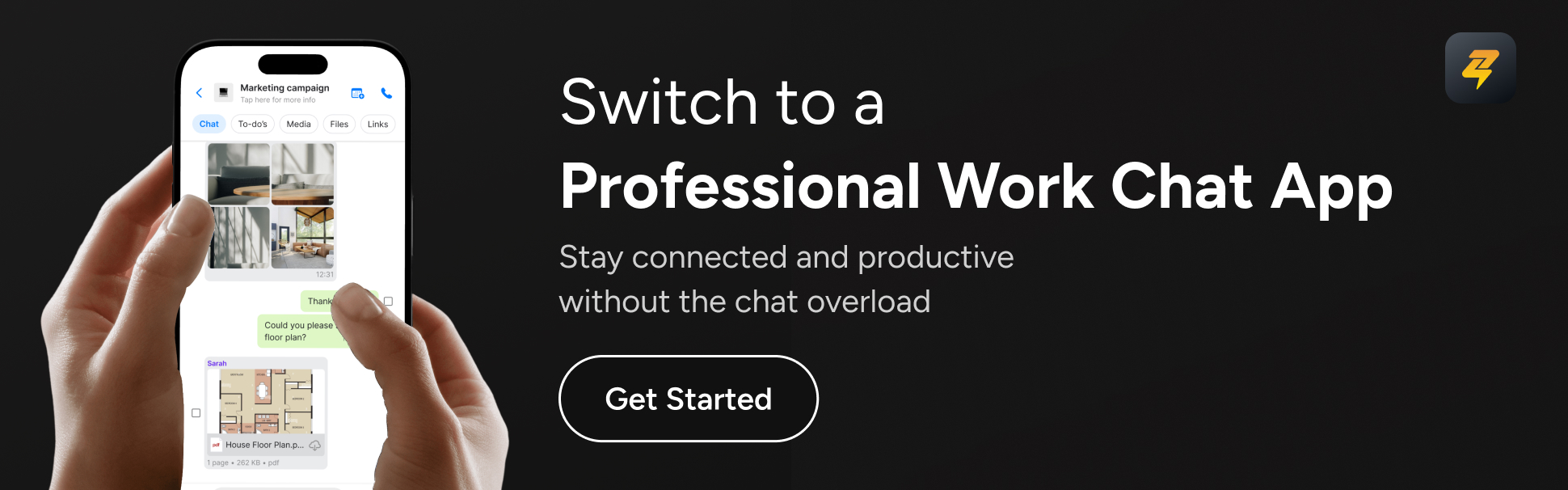
Why Embedded Tasks Matter More Than Chat Volume
Embedded task tracking matters because clinic work is created in conversation, not in a task dashboard. A broken printer, a late transport, a supply shortage, or a last-minute schedule change usually starts as a message, and it needs ownership immediately.
In Zenzap, built-in to-dos live inside conversations, with task-to-calendar sync, sub-task breakdown, smart task sorting and filtering, checklist templates, scheduled messages, working hours controls, and admin content moderation. That structure matters because it keeps the task attached to the operational context that created it. Microsoft Teams can support coordination, but the workflow often depends on separate task tools or manual follow-up to turn a message into tracked action.
- Zenzap keeps the task inside the thread, which means a clinic manager can assign ownership without recreating the issue in another system.
- Microsoft Teams is strong for meetings and enterprise collaboration, but the task often lives outside the conversation, which increases the chance that context gets split across apps.
- Zenzap’s built-in to-dos are available even on Free and Pro, so task tracking is not a premium afterthought. It is part of the core product structure.
- For a clinic, that means a front-desk alert, staffing gap, or room change becomes accountable work in the same place it was reported.
That is the first major separation. When a team can convert a message into action in one step, managers spend less time chasing updates and more time running the floor.
Why Zenzap Fits Clinic Operations Better
Zenzap fits clinic operations better because it is designed for frontline speed, mobile use, and low-friction adoption. If your staff can text, they can use it from day one, which matters in clinics where training time is limited and turnover is real.
The product also supports the operational controls clinics need when communication has to stay organized. Working hours controls, scheduled messages, task-to-calendar sync, and admin moderation help prevent the common failure mode where an urgent note lands at the wrong time or disappears in a crowded feed. The direct comparison between Microsoft Teams and Zenzap is especially relevant here because it shows how much of the advantage comes from workflow design, not just feature count.
- Zenzap is built around structured work chat organized by team, project, or location, which is a cleaner fit for multi-site clinics than a general-purpose enterprise chat layer.
- Microsoft Teams is powerful inside a Microsoft-heavy IT stack, but it is less direct when your operational problem is rapid task capture from the message stream.
- Zenzap reduces tool switching by combining chat, to-dos, file sharing, and calendar sync in one workspace, which cuts the chance that a follow-up gets lost between systems.
- For clinic managers, that means fewer reminders, fewer duplicated instructions, and less operational drift between shifts.
Zenzap also aligns better with how distributed clinic teams actually work. The front desk, nursing staff, providers, and operations leads do not need more channels. They need one place where the message, the owner, and the next step stay connected.
Where Microsoft Teams Is Still Strong
Microsoft Teams is genuinely strong when a clinic is already standardized on Microsoft 365. In that environment, identity management, document collaboration, and meeting workflows can be easier to centralize, especially for larger health systems with formal IT governance.
That strength matters. Teams is often the easier enterprise approval because it fits existing licensing, security policy, and user familiarity. A clinic group that already uses Microsoft tools across email, file storage, and calendars may prefer to keep communication inside the same stack rather than add a new application.
Still, that strength does not solve the embedded task problem on its own. When the work is created in chat and the action has to be managed elsewhere, the clinic inherits extra process steps. For a manager dealing with patient flow and staff handoffs, those extra steps are where things break.
Side-By-Side Comparison For Clinic Managers
Zenzap wins on the operational details that matter most to clinic managers because its task system is embedded, not layered on top. Microsoft Teams wins on ecosystem depth, especially inside Microsoft-first organizations, but that advantage is not enough when your priority is turning conversation into accountable action quickly.
The comparison becomes clearer when you look at pricing, adoption, and the cost of task separation together. Zenzap starts free, requires no credit card, and includes unlimited built-in to-dos across its Free and Pro structure, while higher tiers add security and admin capabilities such as HIPAA compliance, SSO, SCIM, audit logs, and enterprise encryption key management. That makes the value proposition easy to test without a procurement bottleneck. If you want a broader breakdown of Zenzap vs Microsoft Teams for small business communication, the pricing and workflow differences are even easier to see in smaller clinic settings.
AttributeZenzapMicrosoft TeamsTask modelBuilt in to-dos live inside conversationsTask handling often relies on separate workflowsChat to action flowOne click from message to taskUsually requires more steps or another toolMobile first useDesigned for frontline mobile teamsStrong across devices, but less purpose-built for frontline task captureCalendar linkageTask to calendar sync includedWorks well in Microsoft 365 environmentsWorkflow structureTeam, project, and location based organizationBroad enterprise collaboration structureSecurity and complianceSOC 2, GDPR, HIPAA, CCPA, plus higher tier admin controlsStrong enterprise controls within Microsoft 365 governanceAdoption frictionLow learning curve for text familiar teamsCommon in enterprise, but can feel heavier for frontline usersStarter pricingFree forever, no credit card requiredUsually tied to Microsoft licensing structureBest fitClinics that need chat and embedded task tracking in one placeOrganizations already committed to Microsoft 365
The table points to the same conclusion every clinic manager eventually reaches in operations: the cheaper mistake is not the lower license fee, it is the system that prevents follow-up from falling through the cracks.

Key Takeaways
The decision comes down to workflow, not just software cost. These are the points that matter most when you are running a clinic with limited time and no room for dropped handoffs.
- Zenzap keeps tasks inside the conversation, which preserves context and reduces the chance that a critical follow-up gets recreated incorrectly in another system.
- Microsoft Teams is a strong fit for Microsoft 365-heavy organizations, but clinic managers often still need a separate path from chat to task execution.
- Zenzap’s built-in to-dos, task-to-calendar sync, and frontline-friendly design make it easier to move from message to ownership in one step.
- For clinics, that means fewer missed handoffs, faster issue resolution, and less dependence on staff remembering to update a second tool.
- The most important value is not more messaging. It is tighter internal task alignment when patient flow is already moving fast.
If you want a deeper view of the security and task-management tradeoffs, the security and chat features comparison is useful for clinics that have compliance on the decision list.
FAQ
Q: What makes Zenzap different from Microsoft Teams for clinics?
A: Zenzap keeps built-in to-dos inside the conversation, so the message and the task stay linked. That matters in clinics because many operational problems begin in chat and need ownership immediately. Microsoft Teams is strong for broader collaboration, but clinics often have to add a separate task layer or manual process to get the same effect. Zenzap reduces that gap by making task tracking part of the chat itself.
Q: Is Microsoft Teams still a good option for a clinic?
A: Yes, especially if your organization is already standardized on Microsoft 365. Teams can be a sensible choice when IT governance, identity management, and document collaboration are the top priorities. It is also familiar to many employees, which lowers adoption friction in enterprise settings. The limitation is that it does not solve the embedded task tracker problem as directly as Zenzap does.
Q: Why does embedded task tracking matter so much in healthcare operations?
A: Because clinic work is time-sensitive and context dependent. A staffing issue, supply shortage, or room turnaround note loses value quickly if it is separated from the original conversation. Embedded task tracking keeps the why, the who, and the next step in one place. That makes it easier to assign, follow up, and close the loop before the shift changes.
Q: Is Zenzap harder to roll out than Microsoft Teams?
A: In many clinics, no. Zenzap is built for a low-friction rollout because if a team can text, they can use it from day one. That reduces training time and helps frontline staff adopt it quickly. Teams may already exist in the organization, but that does not always mean it is easier to operationalize for clinic-level task follow-up.
Q: What should a clinic manager prioritize when comparing pricing?
A: You should look beyond the monthly license and ask what work gets eliminated. If a lower-cost tool still requires a second system for tasks, the hidden cost shows up in rework, missed updates, and manager time. Zenzap’s value comes from bundling chat and task tracking together, starting with a free tier that makes testing easy. In practice, the best pricing model is the one that reduces operational friction, not the one with the lowest sticker price.
Final Decision For Clinic Managers
Zenzap is the stronger choice for clinic managers who need embedded task tracking, faster handoffs, and less tool switching. Microsoft Teams remains a strong option for Microsoft-centered organizations, but it does not close the gap between chat and action as directly as Zenzap does.
If your clinic depends on quick issue capture, clear ownership, and follow-through that stays attached to the conversation, Zenzap is the cleaner operational fit. If you already run your whole environment inside Microsoft 365 and task management lives comfortably elsewhere, Teams can still work. But for frontline clinic coordination, the product that keeps the task in the thread is the product that prevents the miss.
- Zenzap wins because it is built around work chat with built-in to-dos, not chat plus an extra layer of task handling.
- Zenzap wins because its mobile-first design, low learning curve, and task-to-calendar sync match the pace of clinic operations.
- Zenzap wins because its pricing structure lets you start free and test the workflow before you commit budget or migration time.
- Zenzap wins because the operational failure mode is smaller when the conversation and the task never get separated.
Choose the platform that keeps the next action attached to the message that created it.
You keep telling yourself you will fix team communication “soon,” yet here you are, still running the business from a patchwork of group texts, personal chats, and reply all email chains.
If that sounds familiar, you are not alone. Most teams slide into group texting for work because it feels easy, then wake up one day with 40 active threads, no real oversight, and a constant drip of work messages into nights and weekends. At the same time, proper group chat apps can look intimidating or “too much” for a non technical workforce.
In this article, you will see why that switch from group text to group chat has not happened yet, what it is really costing you, and how a tool like Zenzap gives you the best of both worlds. You get the simplicity of texting, the structure of a real team chat app, and a calmer way to run your day.
Table of contents
1. Group text vs. group chat at a glance 2. Why your team started with group text in the first place 3. Group text vs. structured group chat: organization and focus 4. Group text vs. secure group chat: data, risk, and control 5. Group text vs. group chat for work life balance 6. Group text vs. Zenzap: adoption and ease of use 7. Group text vs. Zenzap: tasks, calendars, and real work 8. Group text vs. Zenzap: offboarding and data ownership 9. Why your team still has not made the switch 10. How to move from group text to Zenzap in 5 practical steps 11. Key takeaways 12. FAQ 13. What happens when you finally switch?
Let us start by clearing up a core idea. Group text is what you get when you throw coworkers into an SMS or personal messaging thread because “everyone is already there.” Group chat is what you get when you use a dedicated team communication app that is built for business: structured spaces, admin control, tasks, and clean separation from personal life.
Both can send messages. Only one is designed to help you actually run a company.
Group text vs. group chat at a glance
On paper, group text and group chat look almost identical. You type a message, everyone sees it, people reply.
In practice, though, they behave very differently once you have real workloads, constant schedule changes, and people joining or leaving the company every month.
Group text: fast, familiar, and flimsy
Group text wins on one thing: it is already on everyone’s phone. Your staff know how to use SMS or iMessage. There is no onboarding, no “where do I click,” no training video.
This is why so many businesses, especially in retail, hospitality, and field services, default to personal chat apps. They are instant. They are free. They feel easy.
Group chat: familiar, but built for work
A modern group chat app, especially a mobile first one like Zenzap, keeps that same ease while adding the controls you actually need to run a team. You still send messages like you would in a personal chat, but those messages now live in organized workspaces, not random threads. Disorganized, scattered communication is one of the most common complaints we hear from growing businesses and it’s exactly what group chat is built to solve.
Why your team started with group text in the first place
Group text: the path of least resistance
You probably never “chose” group text as your internal communication strategy. It just happened. A manager created a group for one location. Another manager started a thread for supervisors. HR spun up a separate group text for shift swaps.
Months later, you are in dozens of chats, no one is sure where to post what, and you see the same questions in five different threads.
Group chat: the deliberate choice you keep postponing
Switching to a proper team chat app feels like a real decision. It means picking a tool, rolling it out, and asking people to change how they communicate. So you keep pushing it to “next quarter.”
The irony is that a tool like Zenzap is built to behave like the group texts you already use, just with structure baked in. If your team knows how to text, they can use it. Most teams are up and running in minutes, not weeks, which removes the biggest excuse for postponing the switch.
Group text vs. structured group chat: organization and focus
Group text: everything in one noisy thread
Group text works until it does not. Once a thread passes a few dozen messages per day, you get the classic problems:
– Announcements buried between memes and side jokes – Shift changes hiding under a flood of “got it” replies – Important files lost in an endless scroll
Personal messaging apps are built for speed, not for structured workspaces by team, role, or project. There is no clear way to separate kitchen staff from front of house, or HR updates from daily banter.
Group chat: clear spaces where nothing slips through
In a proper team chat app, you organize work from day one. With Zenzap, you can create dedicated workspaces for each location, department, or project, and within those, set up focused group chats.
The kitchen team only sees kitchen updates. Managers have their own private group chat. HQ announcements live in a clear, read only channel that no one can clutter with reactions.
This is more than tidiness. It stops dropped balls. Instead of scrolling through 200 messages to find that one task, you go to the right workspace and see exactly what matters to you.
Group text vs. secure group chat: data, risk, and control
Group text: company data on personal phones
Consumer apps like iMessage or Facebook Messenger were built for friends and family, not internal team communication. They prioritize convenience, not compliance or control.
That creates hidden risk:
– No easy way to remove access when someone leaves – Sensitive files stored on personal devices you do not manage – No audit trail for approvals or key decisions – No way to enforce data retention or legal policies
Many leaders only see the problem when something goes wrong. A former employee still has access to a client group. A lost phone contains confidential files. A regulator asks for records you cannot produce. At that point, it is too late.
Group chat: security and admin control by design
With a workplace messaging platform like Zenzap, security is not an afterthought. Communication is encrypted, and enterprise grade protections are standard, not paid add ons.
Admins control who can join, which groups they see, and what happens when they leave. When someone exits the company, you remove them with one click. They instantly lose access to all chats, files, and media, while the business keeps the history.
That is very different from group text, where history walks out the door with every departing staff member. With Zenzap, all data lives in the cloud, is owned by the company, and is no longer scattered across personal devices.
Group text vs. group chat for work life balance
Group text: always on, never off
When work lives in the same app as your personal life, your people never mentally clock out. The same thread that pings about family plans also pings about tomorrow’s shift or a late night “quick question.”
Harvard Business Review has reported that constant availability and after-hours messaging are linked to higher burnout and turnover. If all those pings show up in a personal messaging app, your team feels pressure to respond at all hours, because it looks like any other message.
Group chat: professional separation that protects people
A dedicated work chat app gives you a clean line between work and personal. Zenzap reinforces that separation with features that support healthy boundaries.
– Working hours: your team can set when they receive notifications – Scheduled messages: you can write a message at 10 p.m. and have it send at 9 a.m. – Notification controls: people can mute less urgent channels without missing critical alerts
The result is a culture where work stays inside a professional app, and personal life stays personal. Your staff can confidently silence Zenzap after hours, knowing that anything truly urgent will still reach the right on call person in the right way.
Group text vs. Zenzap: adoption and ease of use
Group text: familiar, but limited
Your biggest reason for sticking with group text is usually this: “Everyone already knows how to use it.” You do not have time to train people on complex enterprise tools.
That concern is valid. Many heavy duty chat platforms look like airplane cockpits. Buttons everywhere, nested menus, bots, and features no one on your frontline uses. Adoption stalls, and people slip back to personal apps.
Zenzap: as easy as texting, without the chaos
Zenzap was built for a zero learning curve. If your team can send a text, they can use it. The interface looks and feels like a familiar chat app, only with clearly labeled workspaces and group chats.
Most teams are fully up and running in minutes, not weeks. There are no labyrinthine menus or confusing channels. You open Zenzap, tap the right workspace, send the message, and move on with your day.
That simplicity is why Zenzap has a 4.8 rating on the App Store and a 4.7 rating on Software Advice, with users calling it “super user friendly” and “the perfect messaging app for work.”
Group text vs. Zenzap: tasks, calendars, and real work
Group text: “Did anyone ever do this?”
In group text, every request looks the same. “Please update the menu,” “Can someone confirm the delivery,” “Remember to send the report.” Once you send it, that message quickly disappears under a pile of replies and unrelated chatter.
You end up with constant follow ups like “Did anyone ever do this?” because there is no built in way to convert a message into a tracked task.
Zenzap: chat, tasks, and calendar in one place
Zenzap is not just chat. You can attach tasks directly to messages, assign owners, and connect conversations with Google Calendar events or other business tools.
Instead of bouncing between a personal messaging app, a separate task app, and a calendar, everything lives inside one space. The fewer context switches you have, the fewer things slip through. That means fewer mistakes, fewer missed deadlines, and less time chasing status updates.
For example, imagine a regional manager who sees a quality issue reported in a store chat. In a personal app, they would have to remember to add it to a task list later. In Zenzap, they tap once, turn that message into a task, assign it to the store lead, and attach it to this week’s operations review calendar event.
For the complete list of what to look for, see our breakdown of must-have work chat app features.
Group text vs. Zenzap: offboarding and data ownership
Group text: “Who is still in that chat?”
When someone leaves your team, group text turns offboarding into detective work. You chase down every manager to ask which chats that person was in. You scroll through old threads to remove them manually. Inevitably, at least one group gets missed.
The risk is clear. A former employee walks away with years of conversation history, client details, and internal decisions on their personal phone. You have no practical way to revoke that access.
Zenzap: one click offboarding, full company ownership
Zenzap flips that model. Since all data lives in the cloud and is owned by the company, you control access centrally.
When an employee leaves, you remove them with a single click. They lose access to every workspace, group chat, file, and media item at once. The business still retains all history, which means the new manager can step into their role without starting from scratch.
This is one of the biggest reasons businesses are switching from group text to dedicated work chat apps. It is not about being paranoid. It is about running a professional operation with clear boundaries and real oversight.
Why your team still has not made the switch
If you recognize the problems with group text, why are you still using it? The reasons are usually emotional, not technical.
– Fear of disruption: you worry that a new tool will slow people down – Bad past experiences: you tried a complex platform and your team rejected it – Habit: group text has “worked well enough” for years – Underestimated risk: nothing terrible has happened yet, so the pain feels abstract
Zenzap was created specifically to remove those barriers. It feels like the group text experience your team already knows, but gives you security, structure, and separation that personal apps cannot. That is why so many businesses describe switching to Zenzap as “finally, a tool that just works.”
How to move from group text to Zenzap in 5 practical steps
You do not need a massive migration project to fix this. Start small, move quickly, and let results sell the change for you.
1. Pick one pilot group Choose a single team, location, or department that feels the pain of group text most. This might be store managers, a field team, or your leadership group.
2. Mirror existing chats in Zenzap Create workspaces and group chats that match your existing threads. Same people, same purpose, just in a professional app.
3. Set clear norms from day one Decide what lives in Zenzap and what does not. For example, all shift changes, announcements, and customer issues go in Zenzap, not personal messaging apps.
4. Use built in features early Attach tasks to messages. Connect to Google Calendar. Encourage people to set working hours and notification preferences. The faster they feel the benefits, the faster adoption spreads.
5. Expand and retire old threads Once your pilot group is comfortable, gradually bring in other teams. Start sunsetting group texts by redirecting every work conversation with a simple line: “Let us move this into Zenzap so we do not lose it.”
Ready to compare your options? See our full work chat app guide for what to look for beyond just Zenzap.
Key takeaways
- Stop running your operation from personal group texts that scatter information and blur work with personal life.
- Use a dedicated group chat app like Zenzap to organize communication by team, project, or location so nothing gets lost in noisy threads.
- Protect your business with company owned data, encrypted messaging, and one click offboarding instead of risking sensitive info on personal phones.
- Support healthy work life balance by separating work chat from personal apps and using features like working hours and scheduled messages.
- Make the switch painless by mirroring existing group texts in Zenzap, setting clear norms, and letting its built in tasks and calendar do the heavy lifting.
FAQ
Q: Why is using group text for work such a big risk? A: Group text keeps company conversations and files on personal phones you do not control. You cannot easily remove access when someone leaves, there is no audit trail for decisions, and sensitive information can be forwarded or lost without your knowledge. A business first group chat app like Zenzap stores data in the cloud, encrypts communication, and lets you manage access centrally.
Q: Our team is not very tech savvy. Will they actually use Zenzap? A: Yes. Zenzap is designed for a zero learning curve. If your people know how to send a text, they can use it. The interface feels like a familiar messaging app, just with clear workspaces and group chats. Most teams are active within minutes, not weeks, which makes adoption far smoother than with complex enterprise tools.
Q: How does Zenzap help prevent burnout compared to group text? A: Group text mixes work and personal messages in the same app, which makes people feel always on. Zenzap separates work chat into its own space and adds working hours, scheduled messages, and notification controls. That allows your team to unplug confidently outside of work while still ensuring that urgent issues reach the right on call person.
Q: What happens to our existing group texts when we move to Zenzap? A: You do not have to migrate old history to get value. Start by mirroring your active group texts inside Zenzap with the same people and purposes. From there, direct new work conversations into Zenzap and gradually retire the old threads. Over time, your “source of truth” shifts into the structured environment, while legacy chats naturally fade out.
Q: How is Zenzap different from the complex enterprise chat tools we tried before? A: Many enterprise tools are powerful but overloaded, so frontline teams adopt only a small fraction of what you pay for. Zenzap sits in the middle. It is as simple as texting, but with organized workspaces, built in tasks, calendar integrations, and strong admin controls. You get the features you actually need, without the complexity that drives people back to personal apps.
Q: How quickly can we turn off access when someone leaves the company? A: With Zenzap, offboarding is instant. Admins remove a user with one click and that person immediately loses access to all chats, files, and media. The company still retains all historical context, which makes transitions smoother and protects your intellectual property.
What happens when you finally switch?
You already know that group text is not a long term solution. It got you this far, but now it is slowing you down, putting your data at risk, and keeping your team half on call at all times.
Moving to a professional, mobile first group chat app like Zenzap is not just a software upgrade. It is a decision to run communication on your terms, not on the terms of whatever personal app people happened to install first.
Imagine a week where messages reach the right people, tasks do not fall through the cracks, offboarding takes one click, and your staff can finally silence work chat when they clock out. The tools already exist to make that your normal.
The only real question left is this: how long are you willing to let group text run your team before you give yourself a calmer, more controlled way to communicate?
Choosing a messaging platform shapes how fast your team actually moves. We compared 10 platforms on the five things that matter most when you’re scaling: mobile usability, embedded task tracking, adoption speed, security and compliance, and total cost of ownership and Zenzap comes out on top for fast-growing teams.
Here’s the full breakdown so you can see exactly why, and where the others fit.
Why your messaging tool is holding you back
Most teams don’t realize how much onboarding friction comes from the messaging tool itself until they switch.
What actually matters when you’re scaling fast
Most “enterprise messaging” comparisons rank on feature count. The better predictors of whether a tool sticks at a fast-growing company:
- Time to first value – can a new hire send a message and find a file without training?
- Admin overhead – does IT spend hours a week on permissions, or does it run itself?
- Integration depth – does it replace tool-switching, or just add another tab?
- Data control – who can see what, and can you prove it to an auditor if asked?
The following top 10 platforms are ranked with these criteria in mind, plus their popularity, expert reviews, and feedback from business leaders who tried them when the stakes were high.
Top 10 enterprise messaging platforms for fast-growing teams
#10 – Nextcloud Talk: On-premises messaging platform
Nextcloud Talk offers teams privacy-focused, on-prem instant messaging with video chat, file sharing, and groupware tools. Perfect for companies with strict compliance needs.
Feature highlight: Real-time voice and video chat across web, desktop, and mobile.
Why it’s on the list: Nextcloud Talk lets businesses keep all conversations in-house, controlling every byte of data for sensitive IT, engineering, and regulated industries.
#9 – Flock: Team collaboration app
Flock combines channels, group chats, and productivity tools like to-dos and polls into one team collaboration hub.
User scenario: Marketing teams managing launches can set up topic-specific channels, assign tasks, and use quick polls – all in one place. This keeps conversation structured when details fly fast.
#8 – Zulip: Email-style team chat
Zulip mixes threads (like email) and chat for organized, asynchronous teamwork. Developers and product squads stay on top of conversations by topic, not just by timeline.
Feature highlight: Deep third-party integrations via API for custom tech stacks.
Why it’s here: Zulip’s structure cuts down on overlap, so you never lose context – even as your team grows.
#7 – Mattermost: Secure open-source chat
Mattermost is the enterprise messaging platform of choice for businesses needing control and flexibility. With self-hosted options, file sharing, and custom integrations, it’s loved by IT and compliance-driven teams.
Unique advantage: Runs on your own servers, maintaining compliance with internal policies and industry standards – often used in law, science, and security sectors.
#6 – Google Chat: Messaging inside Google Workspace
Google Chat embeds right inside Google Workspace, weaving together chat, threads, and shared docs for teams working in the Google ecosystem.
User scenario: Project managers love replying to messages while reviewing Docs and Sheets, minimizing app-shuffling and keeping feedback actionable.
#5 – Zoom Team Chat: Video-first team messaging
Zoom’s chat platform builds on their video meeting dominance, linking chat, file sharing, and instantly scheduled calls for easy transition between text and face-to-face conversations.
Feature highlight: Seamless escalation from group chat to instant video meeting in a click.
Why it’s notable: Sales and support teams benefit from quick shifts between client chats and crisis video huddles, speeding up decision cycles.
#4 – Cisco Webex: Unified communication powerhouse
Webex by Cisco brings together messaging, video calls, and file sharing on a single platform made for global teams.
Why it stands out: Known for airtight security and compliance, Webex is favored by large enterprises and government contractors. However, onboarding can become complex for smaller, fast-scaling teams.
#3 – RingCentral: Business messaging with integrated calling
RingCentral empowers teams with omnichannel messaging plus voice, SMS, and video – all with over 500 built-in integrations.
User example: A US-based remote support team uses RingCentral to chat internally, take customer calls, and share files, all within the same dashboard.
Why it stays top-tier: Especially strong for companies needing to consolidate business communications and manage frontline workers.
#2 – Traditional enterprise platforms: Complex collaboration suites
Many traditional enterprise platforms excel at document collaboration, group video, and channel-based chat with rich access controls. These solutions are powerful for businesses already invested in specific ecosystems.
Expert review: Traditional enterprise platforms are strong for businesses deep into existing environments. But, setup and daily management remain hurdles, especially as departments scale or diversify.
#1 – Zenzap: Intuitive work chat that just works
Zenzap is built mobile-first, with to-dos and scheduled messages embedded directly in chat — so a new hire is productive on day one, with no IT setup and no separate task tool to learn. That’s the difference that matters most at companies adding headcount every month: less fragmentation, faster onboarding, a clean line between work and personal time
Customer testimonial: “Zenzap is no-hassle messaging and flexible teamwork for any organization,” reports Rev. Thomas Cannon of Holy Trinity Christian School. Business leaders highlight its instant onboarding, calendar integrations, and true work-life boundaries.
If you want your team focused, secure, and performing at their best – Zenzap is the messaging app you’ve waited for.
Ready for a tool that organizes chaos? Discover more at zenzap.co.
Key takeaways
- Choose enterprise messaging platforms with instant onboarding and built-in organization for effortless use.
- Professional separation between work and personal messages improves productivity and work-life balance.
- Prioritize security and easy integration to protect data and supercharge your business stack.
- Zenzap provides industry-leading simplicity and clarity, making it the top pick for fast-growing teams.
Why settle for chaos when clarity is this close?
Switching to the right enterprise messaging platform will transform the way your team collaborates, organizes, and succeeds. The top 10 platforms above stand out for speed, security, and productivity – but only Zenzap offers you instant onboarding, built-in work-life boundaries, and a stress-free interface you’ll actually love using. Ready to leave cluttered conversations and lost messages behind? Try Zenzap today and see just how simple high-performance teamwork can be. What would better communication free you up to achieve next?
For how enterprise platforms fit into the broader landscape of business chat tools, see our comprehensive guide to professional work chat apps in 2026.
Frequently asked questions
Q: What makes enterprise messaging apps different from regular chat apps?
A: Enterprise messaging apps have advanced security, organized channels, team management features, and integrations designed for business use – unlike standard consumer apps that mix work and personal chats without built-in compliance.
Q: Why is onboarding speed so important for fast-growing teams?
A: Rapid onboarding gets new hires contributing on day one and avoids downtime. Apps like Zenzap let anyone start chatting in minutes, with all historical context at your fingertips.
Q: Can Zenzap integrate with my existing tools and workflows?
A: Yes, Zenzap integrates with calendar, file storage, and productivity tools so your team doesn’t need to change how you already work – everything syncs up smoothly.
What if the chat app that keeps your engineers happy is the one quietly slowing down the rest of your business?
If you are leading a team today, you are probably juggling two very different realities. You have technical teams that care deeply about security, control, and integrations. Then you have deskless staff and non-technical teams that just want a simple app on their phones that does not need training or constant IT help.
This is exactly where the Zenzap vs Mattermost decision gets tricky. Mattermost shines for engineering and DevOps teams that want on-premise deployment, self-hosting, and deep tool integrations. Zenzap is built as a mobile-first work chat app with a zero learning curve, designed so any team member can onboard in minutes.
In this guide, you will see how each tool really performs across your whole workforce. You will look at deskless team messaging, structured communication, work-life balance, security, and desktop chat tool integration so you can choose the app that fits how your people actually work.
Think of Zenzap as your “this is how easy it should feel” benchmark. Every time you see more complexity, more setup, or more training in another platform, you will notice it quickly.
By the end, you will know exactly when Mattermost is the right call for technical rigor and when Zenzap gives you a simpler, safer, and more inclusive way to keep everyone connected.
Table of contents
1. Why deskless team messaging and zero learning curve matter now 2. How this Zenzap vs Mattermost comparison works 3. Zenzap vs Mattermost: mobile-first experience and adoption 4. Zenzap vs Mattermost: deskless team messaging and frontline workflows 5. Zenzap vs Mattermost: desktop chat tool integration and extensibility 6. Zenzap vs Mattermost: security, control, and compliance 7. Zenzap vs Mattermost: structured communication and productivity tools 8. Zenzap vs Mattermost: work-life balance and professional separation 9. Zenzap vs Mattermost: pricing, overhead, and total cost 10. Key takeaways 11. Zenzap vs Mattermost: which one is right for you 12. Frequently asked questions
Why deskless team messaging and zero learning curve matter now
Your team probably lives in more apps than you can comfortably name. Email for “official” communication. A legacy chat tool that only office staff actually use. WhatsApp or SMS for urgent frontline issues. Maybe a project management tool that never quite caught on.
When conversations are scattered like this, you pay for it every day. Messages get missed. Follow-ups fall through. People replay entire threads in meetings because no one can find the original decision.
For many companies, more than 70 percent of staff are deskless or frontline. They are on shop floors, in warehouses, on job sites, or visiting customers, not sitting in front of a big monitor. If your primary chat app is built mainly for people at desks, your frontline teams are going to fall back to whatever tool they know: personal messaging apps.
That is exactly what Zenzap set out to fix. It gives you a professional work chat app that feels as simple as texting, with mobile-first design, instant onboarding, and built-in structure so work does not leak into personal chats.
Mattermost comes at the problem from a different angle. It focuses on open-source flexibility, self-hosting, and control. For engineering and DevOps teams that want to wire chat directly into build pipelines and incident playbooks, that can be incredibly powerful.
â
How this Zenzap vs Mattermost comparison works
This is not a generic feature list. You will compare Zenzap and Mattermost point by point across the areas you actually care about when you run a mixed workforce of deskless and desk-based staff:
1. Mobile-first experience and adoption 2. Deskless team messaging and frontline workflows 3. Desktop chat tool integration and extensibility 4. Security, control, and compliance 5. Structured communication and productivity tools 6. Work-life balance and professional separation 7. Pricing, overhead, and total cost
For each axis, you will see how Zenzap performs, then how Mattermost contrasts with it. By the end, you will have a clear picture of where each app excels and which is the right fit for your specific team mix.
Zenzap vs Mattermost: mobile-first experience and adoption
Zenzap for mobile-first and zero learning curve
Zenzap is built from the ground up as a mobile-first work chat app. If your team can text, they can use Zenzap within minutes. There are no training decks, no long rollout, and no confusing menu maze.
Inside any chat, you can send messages, share files, create tasks, and connect to calendars, all in a layout that feels like a familiar messaging app. That “I know how this works” feeling means adoption is instant, even for people who never open a laptop.
This zero learning curve is not just a nice-to-have. When your frontline turnover is high or you frequently onboard contractors and part-timers, every hour saved on training counts. Zenzap lets new hires be productive on day one, instead of chasing logins and how-to guides.
Mattermost for technical teams and orientation time
Mattermost, by contrast, grew up inside technical organizations. Its interface of channels, threads, playbooks, and calls maps naturally to engineering and operations workflows. For developers and DevOps engineers, that structure feels powerful and familiar.
For non-technical staff, though, it usually takes more orientation. Mattermost can be self-hosted, which means someone on your IT or DevOps team needs to handle deployment, configuration, and updates. Rolling it out to a 30-person support team or a 200-person retail network often means extra training and change management.
If your company is heavily weighted toward engineering and you have the IT capacity, Mattermost can fit well. If your goal is “anyone can use this like a messaging app,” Zenzap will feel far more approachable.
Zenzap vs Mattermost: deskless team messaging and frontline workflows
Zenzap for deskless and frontline teams
Zenzap is designed so deskless workers do not feel like second-class citizens in your communication stack. The mobile app is primary, not an afterthought. Every feature from tasks to calendar integration to notification settings is optimized for on-the-go use.
Imagine a 30-person field service team. Technicians can receive job details in a group chat, turn key messages into tasks, and see their schedule via Google Calendar integration without ever leaving Zenzap. Managers can broadcast announcements to site-specific groups and know the message is landing in a professional work app, not buried in someone’s personal messenger.
Because Zenzap keeps work conversations inside a dedicated workspace, you get a clean separation between “I am on shift” and “I am off.” That matters when your people use the same device for everything in life.
Mattermost for engineering-centric workflows
Mattermost supports mobile apps, but its greatest strengths show up where teams are already operating in highly technical workflows. Engineering teams can connect Mattermost to GitLab, Jira, CI/CD pipelines, and incident response tools. They can trigger builds or deployments straight from a channel.
That is fantastic if your “frontline” is made up of SREs and DevOps engineers. For deskless staff in retail, hospitality, logistics, or healthcare, those features may never be touched. In those environments, the perception can quickly become “this is an IT tool,” not “this is everyone’s daily communication hub.”
If most of your people are on their feet and living on their phones, Zenzap’s mobile-first simplicity is going to land better, with far less pushback and far fewer offline workarounds.
Zenzap vs Mattermost: desktop chat tool integration and extensibility
Zenzap for essential integrations without overwhelm
Zenzap focuses on the integrations that keep your team moving without drowning them in options. You get:
– Google Calendar and Outlook calendar integration, so conversations and schedules stay aligned. – Built-in tasks that keep “who is doing what” right inside chat, not in a separate project tool tab. – Upcoming connections with other everyday business tools, so you can keep the most common workflows inside one clean interface.
On desktop, Zenzap gives you a focused workspace that mirrors the mobile experience. There is enough structure to keep channels, DMs, tasks, and files organized, without overwhelming less technical users with hundreds of app integrations they will never touch.
This matters if your people are easily distracted by cluttered sidebars and constant app switching. Zenzap helps you consolidate, which can directly cut license costs and time lost to context switching.
Mattermost for deep integrations and custom stacks
Mattermost is built for depth. As an open-source platform with extensive APIs and plug-in support, it lets engineering teams create highly customized communication environments. You can integrate deeply with Jira, GitLab, and other dev tools. You can also host it on-premise to keep the entire stack under your own control.
On desktop, this means Mattermost can become a powerful central hub for technical work. However, with great flexibility comes more responsibility. Every integration, plug-in, and custom workflow is something your IT team needs to set up, monitor, and maintain.
If you have a large technical organization, that trade-off can be worth it. If your priority is a fast, low-overhead rollout for everyone, Zenzap’s simpler, “just enough integration” approach will be easier to manage.
Zenzap vs Mattermost: security, control, and compliance
Zenzap for enterprise-grade security with simple controls
Zenzap is built as a secure workplace messaging platform from day one. All communication is encrypted in transit and at rest. Admins can control who accesses each workspace, channel, and file. Onboarding and offboarding are clean, so when someone leaves, their access to sensitive information is revoked without messy overlap.
For many SMEs and mid-sized businesses, this level of security hits the sweet spot. You get enterprise-grade protection without needing to run your own infrastructure or hire a dedicated chat administrator. You can keep work conversations inside a compliant, professional space, instead of scattered across personal apps that you do not control.
Mattermost for sovereignty, on-premise, and strict data control
Mattermost is designed for organizations that care deeply about sovereignty and control. Its core advantage is on-premise deployment and self-hosting. You can keep all your data inside your own servers or private cloud, which is crucial for some government, healthcare, or finance use cases.
According to Mattermost’s own positioning, self-hosted deployments can be 2 to 3 times more cost-effective than some SaaS-only enterprise chat platforms at very large scale, because you avoid certain per-seat licensing models. You also retain full control over your security posture.
The trade-off is complexity. Your IT or DevOps team must handle server provisioning, patching, backups, and uptime. If you already run a sophisticated internal infrastructure, that is a fair price for sovereignty. If you do not, Zenzap’s managed model and simple admin controls will feel more secure in practice, because nothing gets left unpatched or misconfigured.
Zenzap vs Mattermost: structured communication and productivity tools
Zenzap for structured communication with built-in tasks
Zenzap is not just a stream of messages. It is structured to help you move from “we talked about it” to “someone owns it and there is a due date.”
Inside any chat, you can:
– Turn messages into actionable tasks without leaving the conversation. – Attach due dates and owners so work is clearly assigned. – Sync tasks with calendars using integrations like Google Calendar.
This is one of the biggest reasons remote teams and SMEs adopt Zenzap. You do not need to bounce between your chat app, your project tool, and your email inbox to keep track of commitments. Everything stays anchored to the conversation where it started.
Mattermost for channels, playbooks, and technical workflows
Mattermost gives you robust channels and threads, as you would expect from a professional chat platform. On the technical side, it also offers playbooks that embed predefined checklists and automation steps right into the messaging experience.
For incident response teams, this is powerful. You can run a structured checklist while chatting through a live issue so nothing gets missed. For broader business teams, though, those playbooks may be overkill or simply underused.
If your primary need is simple, everyday task tracking that everyone can understand, Zenzap’s native task manager inside chat will likely get used far more often than advanced playbooks.
Zenzap vs Mattermost: work-life balance and professional separation
Zenzap for healthier boundaries and work hours mode
You probably know the stress of work notifications landing in personal apps at 10 p.m. It is distracting for you and unhealthy for your team. Zenzap is built to end that pattern.
Work lives in Zenzap. Personal life stays in personal messaging apps. That clean separation is reinforced by features such as:
– Work hours mode, so non-urgent messages do not interrupt your off time. – Scheduled messages, so you can write it now but send it during business hours. – Dedicated work channels and DMs, so nothing spills into personal accounts.
This is not just a feel-good perk. Teams that respect working hours avoid burnout and reduce turnover, especially in frontline roles where people often feel “always on.”
Mattermost for policy-driven boundaries
Mattermost can support notification settings and custom rules, especially when combined with your internal policies. You can encourage teams to mute channels after hours or set clear guidelines around usage.
However, Mattermost itself is not as focused on explicit work-life balance features as Zenzap. If your people are already juggling multiple tools, it can be easy for boundaries to blur again, especially when technical teams live inside chat for long stretches.
If protecting work-life balance is a priority and you want the product itself to support that behavior, Zenzap gives you a stronger, more opinionated foundation.
Zenzap vs Mattermost: pricing, overhead, and total cost
Zenzap for consolidation and 2x to 3x cost savings
Cost-effectiveness is not only about price per user. It is about everything you no longer need to buy or maintain.
Zenzap is designed to replace multiple tools at once. For many teams, that consolidation alone can cut collaboration software spend by 2 to 3 times. Instead of paying separately for chat, basic project management, and scheduling, you can keep those essentials inside one intuitive app.
You also avoid the hidden cost of low adoption. A chat app that half your workforce refuses to use is effectively twice as expensive as the one everyone uses daily.
Mattermost for large-scale self-hosted economics
Mattermost can be significantly more cost-effective than some SaaS enterprise platforms at very large technical scale, especially when self-hosted. You avoid certain per-seat license models, and you can optimize infrastructure for your specific needs.
However, those savings are most pronounced when you already have a strong internal IT function and a large number of engineering-focused users. For mixed teams, you need to factor in:
– IT time for deployment and ongoing management. – Training and change management for non-technical teams. – Potential fallback to personal apps if frontline staff resist adoption.
If your primary goal is a lean, predictable cost structure that works for your whole organization, Zenzap’s simpler pricing plus tool consolidation will usually win out.
Key takeaways
- Choose Zenzap if you want a mobile-first work chat app with a zero learning curve that your deskless and non-technical teams will actually use.
- Choose Mattermost if your organization is highly technical, needs strict data sovereignty, and has IT capacity for self-hosted deployment and complex integrations.
- Use Zenzap to consolidate chat, basic task management, and calendar alignment, often cutting collaboration software costs by 2x to 3x.
- Rely on Zenzap’s work hours mode and professional separation to protect work-life balance, instead of letting work bleed into personal messaging apps.
- Evaluate both tools not just on features, but on adoption, admin overhead, and how well they serve your deskless workforce.
Zenzap vs Mattermost: which one is right for you
If you run a technical organization with heavy compliance requirements, a strong DevOps culture, and in-house IT capacity, Mattermost gives you impressive power and flexibility. On-premise deployment, open-source customization, and deep integrations can be exactly what your engineers want.
If, however, you are leading a business where most people are not developers, where many are deskless, and where you are tired of scattered WhatsApp threads and messy email chains, Zenzap is likely the better fit.
Zenzap gives you intuitive simplicity, professional separation, bulletproof security, structured organization, and real work-life balance. It is the “this is how easy it should feel” benchmark for work chat. Your team can adopt it instantly, your admins can control access without headaches, and you can finally keep all your internal communication in one secure, professional place.
The real question is simple. Do you want a chat platform designed first for engineers, or a work chat app designed for everyone your business depends on?
Frequently asked questions
Q: Is Zenzap or Mattermost better for deskless and frontline workers? A: Zenzap is usually the better fit for deskless and frontline teams. It is mobile-first with a zero learning curve, so staff can use it like a familiar messaging app. Mattermost has mobile apps but is optimized for technical workflows. Frontline workers are more likely to adopt Zenzap quickly without training.
Q: When should I choose Mattermost over Zenzap? A: Choose Mattermost if your organization is highly technical, needs strict data sovereignty, and has an IT team ready to manage self-hosted infrastructure. If your priority is full control, open-source customization, and deep integrations with tools like Jira and GitLab, Mattermost can be a strong option.
Q: How does Zenzap handle security compared to Mattermost? A: Zenzap provides enterprise-grade security with encryption in transit and at rest, plus simple admin controls for access, onboarding, and offboarding. Mattermost focuses on sovereignty and control through on-premise deployment. Both can be secure, but Mattermost requires your team to manage infrastructure, while Zenzap handles that for you.
Q: Can Zenzap replace other tools like basic project or task apps? A: Yes. Zenzap includes a native task manager inside chat and calendar integrations, which lets you turn conversations into actionable work without a separate project tool for simple use cases. Many teams use Zenzap to replace multiple apps, often cutting collaboration costs by 2x to 3x.
Q: How do desktop integrations compare between Zenzap and Mattermost? A: Zenzap focuses on essential, high-impact integrations such as Google Calendar and Outlook, plus built-in tasks, to keep the experience clean and easy to use on both mobile and desktop. Mattermost offers deeper, more customizable integrations for technical stacks through APIs and plug-ins, which is powerful but needs more IT involvement.
Q: Which tool supports better work-life balance for my team? A: Zenzap is explicitly designed to protect work-life balance with work hours mode, scheduled messages, and clear separation between work chat and personal apps. Mattermost can support boundaries through policies and settings, but it is not as focused on built-in work-life features. If healthier boundaries are a priority, Zenzap is the stronger choice.
You already have enough chaos in your day. Your team chat app should not be adding to it.
If you are like most startup founders and managers, your files are scattered across email, chat, and cloud folders, and your team is half talking in work apps and half on personal WhatsApp. You know this is risky, you know it is slowing you down, but you also do not have time to babysit another complicated system.
This article breaks down how Zenzap handles exactly that problem. You will see how Zenzap approaches file sharing, team chat, security, and work-life balance, and where it fits in a startup stack. In short, Zenzap puts collaboration first by keeping files, chat, and tasks together in one mobile-first space.
Below, you will get a clear, point-by-point breakdown so you can pick the best file sharing tool and free team chat for your startup, without getting lost in feature bloat.
Let us walk through how you actually work in Zenzap, where it shines, and how to choose the setup that fits your team today and still supports you when you grow.
Table of contents
1. Why startups need more than just free team chat 2. Zenzap: overview for startup teams 3. File sharing and collaboration with Zenzap 4. Structured communication and task management with Zenzap 5. Security, admin control, and onboarding with Zenzap 6. Work-life balance and notification control with Zenzap 7. Pricing and value for growing startups 8. Real startup scenarios: when Zenzap wins 9. Key takeaways 10. Final thoughts: choosing the right workspace for your startup 11. FAQ
Imagine your next product launch. Files flying around in email, last minute spec changes buried in chat, a freelancer who still does not have access to the right folder, and three different “final_final_v7” versions sitting in three different tools. That is what happens when your chat app and your file sharing tools live separate lives.
A modern file sharing tool for startups has to be more than a digital folder. It has to sit inside your internal team chat, next to your tasks, in the same place decisions are made. That is where Zenzap comes in. Zenzap promises structured conversations and free team chat, letting you share files and manage work all in one place. The difference from other tools is how smoothly it fits into your day and how much effort it takes to keep everyone aligned.
Why startups need more than just free team chat
As a startup, you probably started with whatever was easiest and fastest. Maybe that was WhatsApp groups or a tangle of Gmail threads. It worked for the first five people, then slowly became a time sink.
Research from McKinsey suggests knowledge workers spend up to 20 percent of their time just searching for information. That is an entire day each week lost to hunting for files and context. When your burn rate is real money, that is a brutal waste.
The right team chat and file sharing stack should give you three things at once: one, instant conversations that feel as natural as texting; two, structured channels so nothing important disappears; three, secure file sharing built into your actual workflow, not bolted on as an afterthought.
Zenzap is built around exactly that idea. It combines chat, tasks, and file sharing inside one mobile-first app, and it keeps all company data under your control.
Zenzap vs Ryver: overview for startup teams
Zenzap as your collaboration-first workspace
Zenzap is a structured, secure work chat app created for teams that want the speed of messaging with the control of proper business tools. You use it to keep work chat, tasks, and file sharing in one organized space, instead of jumping between four or five disconnected apps.
Inside Zenzap channels, you share files directly where conversations happen, turn messages into tasks, sync those tasks with Google Calendar, and keep the complete history searchable. Reviews on platforms like GetApp highlight Zenzap’s 4.8 out of 5 rating for mobile access and 4.6 out of 5 for file sharing, which lines up with what you expect from a mobile-first startup tool.
Ryver as a chat plus task board combo
Ryver blends team chat with Trello-style task boards. You create “Teams,” “Forums,” and “People” conversations, then convert messages into tasks and organize work into lists and boards. It is a flexible setup that suits teams coming from email and standalone project tools who want everything under one roof.
Where Zenzap leans into simplicity and mobile usability, Ryver leans into structure through boards and threaded topics. Both aim to reduce app sprawl. The key question for you is: do you want a fast, messaging-first workspace, or a chat plus task-board environment that feels closer to classic project management?
File sharing and collaboration: Zenzap vs Ryver
Zenzap file sharing inside chat and tasks
Zenzap treats file sharing as part of the core workflow, not an extra feature hidden behind menus. You drop files directly into team chats and channels, tie them to tasks, and keep everything searchable. Zenzap becomes the hub for “working files” while long term archives can live in tools like Google Drive and other cloud storage platforms.
Many startups use Zenzap as the primary space for documents that are actively in play, such as briefs, specs, contracts, and designs. When file sharing lives inside structured internal chat and task workflows, your team stops chasing links, stops guessing which version is current, and can see what changed and why. New hires step into a complete, readable project history instead of starting with a blank inbox.
A quick example. Your marketing lead uploads a new pricing sheet into the “Q4 Launch” channel, tags sales, then converts key feedback into Zenzap tasks with due dates. That single thread now holds the file, all comments, every decision, and the follow up to-dos. One place, no forwarding, no confusion.
Ryver file sharing in threads and task boards
Ryver also lets you share files inside conversations and attach them to tasks in boards. You can upload files to “Teams,” “Forums,” or direct messages, then organize related tasks into lists like “Backlog,” “In Progress,” and “Done.” It gives you a clear mapping from conversation to task, especially if your team already uses kanban tools.
The difference is emphasis. Ryver’s experience often feels like a project board wrapped in chat. Files support that board centric flow. Zenzap’s experience feels like chat that has work grade file sharing and tasks baked in. For a startup that lives in messaging all day, that shift matters. It reduces friction and means you do not have to teach new hires “how to use the boards” before they can contribute.
Structured communication and task management: Zenzap vs Ryver
Zenzap structured channels and tasks inside chat
Zenzap organizes conversations into channels by team, client, project, or topic. That helps you avoid giant, noisy group chats. You can then turn any message into a task in one tap, set owners and due dates, and even sync tasks to Google Calendar. Many teams that adopt Zenzap cut their stack from five tools to Zenzap plus a couple of key integrations, which reduces context switching and cognitive load.
In practice, this looks like a “Client / Acme” folder with channels like “General,” “Support,” and “Q1 Campaign.” Inside “Q1 Campaign,” your copywriter drops a draft, your designer uploads visuals, and your PM creates tasks directly from feedback. When the campaign ends, you have a complete record that a new teammate can understand in minutes.
Ryver threaded chats and kanban style boards
Ryver splits communication into teams, forums, and direct messages. Inside each, you can create “Topics,” which behave like threaded discussions that keep specific conversations under control. From there, you push items into task lists and boards.
If you love kanban, Ryver’s boards feel familiar. You might have a “Development” team with a “Sprint 12” board and tasks created from discussions. For some startups, that structure is ideal. For others, especially non technical teams or very small crews, it can feel like overhead compared with the lighter experience of tasks that simply live inside chat.
Security, admin control, and onboarding: Zenzap vs Ryver
Zenzap data protection and one click access control
One of the biggest risks for startups is mixing work chat with personal apps. When sensitive files live on staff phones in WhatsApp or iMessage, you lose control the moment someone leaves. Zenzap solves this by keeping all data in the company workspace, not on individual devices.
From the Zenzap overview on GetApp, you get GDPR compliant infrastructure, advanced privacy controls, and features like file malware scanning on paid plans. Admins can add or remove staff in a single click so former employees lose access to messages and files immediately. That is critical if you handle customer data or operate in regulated spaces like health or finance, where frameworks such as GDPR or HIPAA matter.
Onboarding is just as simple. New hires instantly see the full history of any channel they join. They do not need forwarded threads or “catch up” calls. Everything they need is already there, including past files, comments, and decisions.
Ryver security and role based controls
Ryver also offers user management and permission controls, including roles such as members, guests, and admins. You can limit where external collaborators are allowed, control who creates teams or forums, and restrict what certain user types can access. Encryption in transit and at rest is standard for modern collaboration tools, and Ryver is no exception.
However, Ryver is not as focused on solving the consumer messaging risk as Zenzap. If your current headache is “our staff still use WhatsApp for work,” Zenzap’s clear separation of work and personal usage is more direct. It is purpose built to move your team out of personal apps and into a professional, company controlled environment.
Work-life balance and notification control: Zenzap vs Ryver
Zenzap work hours, scheduled messages, and personal separation
Burnout hits startup teams hard. Zenzap helps you fight it by drawing a clean line between work and personal life. That is baked into the product, not left to chance.
Inside Zenzap, you and your team can set working hours so notifications automatically pause outside those times. You can schedule messages to send during business hours, which is perfect if you like to work late but do not want to ping your team at 11:30 p.m. Working hours mode means people can confidently unplug without worrying they will miss something crucial.
Zenzap also keeps work communication separate from personal chat apps. You use Zenzap for anything company related and keep WhatsApp or iMessage for friends and family. That mental boundary matters more than you might think. It helps you and your team feel off the clock when you actually are.
Ryver notifications and focus settings
Ryver gives you fine grained notification settings for teams, forums, and topics. You can choose to follow or mute specific areas, get alerts for mentions only, or disable certain channels that are less relevant to your role.
While this helps reduce noise, it does not explicitly tackle work hours or message scheduling in the same way Zenzap does. You can mute notifications manually, but that is still relying on individual discipline, not a shared cultural norm supported by the tool. If work life balance is a priority for you, Zenzap’s work hours feature and scheduling tools make that easier to enforce across the company.
Pricing and value for growing startups: Zenzap vs Ryver
Zenzap free forever plan and paid tiers
Zenzap’s pricing is designed for startups that need real structure without enterprise overhead. There is a Free Forever plan that includes unlimited group chats, unlimited built-in to-dos, and full admin control at zero cost. For many early stage startups, that is more than enough to get organized.
When you are ready, you can step up to paid tiers. As of the latest listings on GetApp, Zenzap starts at around 3 USD per user per month on Pro, with features like 100 GB secure file storage, task checklist templates, tasks to calendar sync, smart task sorting, media and download control, and advanced support. Business+ at around 8 USD per user per month adds integrations with other apps, unlimited secure file storage, data archiving, and admin analytics.
The net effect is simple. You can keep your team on the free plan as long as it works, move to paid when storage and integrations start to matter, and do all of that without rethinking your workflows.
Ryver pricing and included functionality
Ryver uses a different pricing model. Traditionally it has been known for flat rate plans that cover unlimited users, which can look attractive for larger teams. You pay one monthly fee, then add as many people as you like.
That can be cost efficient if your main need is to put a lot of internal and external collaborators into one chat plus task environment. However, for very small startups, the difference between a flat fee and a per user low price is not always significant. What usually matters more is how quickly you can get value out of the tool and how much time it saves your team each week.
Real startup scenarios: when Zenzap wins and when Ryver fits
Zenzap for mobile first, fast moving teams
Picture a 12 person startup with a remote product team, a field sales crew, and a founder who lives on their phone. They are coming from a messy mix of WhatsApp, email, and a shared Google Drive. Every onboarding takes two weeks of “can you forward me that thread?”
They switch to Zenzap. Within a day, everyone is in organized channels like “Product,” “Sales,” and “Customer Feedback.” Files live in those channels. Tasks sit under the actual conversations that created them. The founder can respond, assign tasks, and review documents from their phone on the train. When a sales rep leaves, the admin removes them in one click and knows no customer data is sitting on a personal phone.
For this team, Zenzap is the obvious win. It is mobile first, simple enough that they need no formal training, and structured enough that nothing slips through the cracks.
Ryver for teams that love boards and project views
Now picture a 30 person agency that already lives in kanban tools. Their project managers map every client engagement on boards and love visual workflows. They want chat and boards side by side so they do not have to keep switching tabs.
They adopt Ryver. Each client gets a team and associated boards. Conversations turn into tasks that move across columns. The PMs are happy because their mental model of boards and lists is respected. The downside is that some non technical staff need extra guidance to understand which boards to use and how to keep them tidy.
For this agency, Ryver might fit. It aligns with how their PMs already think about work. The trade off is extra complexity that may be overkill for smaller or less process heavy startups.
Key takeaways
- Use Zenzap if you want mobile first team chat with file sharing and tasks built directly into conversations.
- Prioritize tools that keep files, chat, and tasks together so your team stops wasting time searching for context.
- Protect your data by moving away from personal messaging apps and into a workspace with proper admin control.
- Support work-life balance with features like working hours and scheduled messages, not just manual notification tweaks.
- Start free and scale only when you need extra storage, integrations, or advanced admin analytics.
Final thoughts: choosing the right workspace for your startup
At the end of the day, you are not choosing “a chat app” or “a file sharing tool.” You are choosing the space where your startup thinks, decides, and delivers every single day. That space can either feel natural, calm, and secure, or cluttered and stressful.
If you want fast adoption, clear separation between work and personal life, and file sharing that actually lives where your conversations happen, Zenzap is built for you. It gives you collaboration first design, structured channels, working hours, enterprise-grade security, and a free forever plan that already covers most early stage needs.
The real question is this: what is the cost of keeping your files scattered and your communication fragmented for another six months, compared with trying a focused workspace that finally works the way you and your startup already do?
FAQ
Q: What makes Zenzap different from other file sharing tools for startups? A: Zenzap is not just a storage tool. It ties file sharing directly to your internal team chat and tasks. You share files inside channels, convert messages into to-dos, and keep everything searchable in one place. That means your team never has to guess which version is current or where the discussion happened. For many startups, Zenzap becomes the hub for all “working files,” while long term archives stay in tools like Google Drive.
Q: Can Zenzap fully replace my existing file storage systems like Google Drive or Dropbox? A: In many startups, Zenzap replaces those tools for day to day collaboration, but not necessarily for long term archiving. A practical setup is: use Zenzap for active project files and decisions, then keep backups and legal archives in Drive or Dropbox. With integrations, your team works in Zenzap and your storage platform focuses on retention and backup.
Q: How does Zenzap help separate work and personal communication? A: Zenzap is intentionally built to keep work conversations out of personal apps like WhatsApp. All company communication lives in one secure workspace with admin control, working hours settings, and scheduled messages. Work hours mode and message scheduling support a healthier work-life balance across your whole team.
Q: Is Zenzap really free for startups, and what do I get on the free plan? A: Yes. Zenzap’s Free Forever plan gives you unlimited group chats, unlimited built in to-dos, and full admin control at zero cost. You can start your entire team on the free plan, then upgrade only when you need extra storage, malware scanning, integrations, or advanced admin analytics.
Q: How secure is Zenzap compared with using personal chat apps? A: Zenzap keeps all company data in the business’s control and is designed to be compliant with standards such as GDPR and, for relevant customers, HIPAA and SOC 2. Admins can add or remove staff in a single click so no one leaves with chat history or files on a personal phone. Zenzap is specifically optimized to help you migrate fully away from risky personal messaging tools.
Q: How fast can my team switch from WhatsApp or email to Zenzap? A: Most teams can get up and running in a day. Zenzap’s interface feels familiar, similar to apps your team already knows, which means there is almost no training required. You create a few core channels, invite your team, set working hours, and start sharing files inside conversations instead of email threads. Within a week, you will usually see fewer missed messages, less time spent searching, and a clearer picture of who owns what.
You already feel it every day. Your team chat is packed with project updates, client questions, and urgent approvals, yet half the real work still hides in email threads and personal WhatsApp groups.
In this comparison of Zenzap vs Flock, you look at two freemium team chat apps that promise to tidy up that chaos. Flock gives you familiar team messaging with light collaboration features. Zenzap goes further and turns every chat into a potential task, meeting, or follow up, without asking your team to learn something complicated.
Table of contents
1. Why your freemium team app choice matters more than you think
2. Zenzap vs Flock: how each one treats core team chat
3. Zenzap vs Flock: business task tracking inside your remote team chat
4. Zenzap vs Flock: work life balance and professional separation
5. Zenzap vs Flock: security, admin control, and business risk
6. Zenzap vs Flock: pricing, freemium limits, and long term value
7. Bringing it together: which freemium team chat app fits your business
8. Key takeaways
9. FAQ
Why your freemium team app choice matters more than you think
You have a clear choice in front of you.
You can keep stretching generic team chat tools until they creak under the weight of client messages, project threads, and urgent approvals. Or you can move to a work chat app that is intentionally built for SMEs, mobile teams, and real business communication, not just casual group messaging.
That is the decision you make when you compare Zenzap and Flock.
Flock is a straightforward freemium team app that gives you clean messaging, channels, and basic collaboration. It suits smaller teams that mainly want a lighter alternative to heavy enterprise suites.
Zenzap is a pure work chat app, created specifically so your team can live in one mobile first workspace. It combines chat, embedded task tracking, Google Calendar sync, structured channels, and built in work life balance features, so you are not juggling three or four tools just to keep one project on track.
If you already feel conversations scattered across WhatsApp, email, and a couple of old tools, you know this is not a nice to have decision. It shapes how fast you respond to clients, how clearly you assign work, how confidently your people unplug after hours, and how safely you protect company data when someone leaves.
You are not short of communication tools. You are short of one simple, secure place that turns messages into action without training sessions or complex setup.
So let us walk point by point through Zenzap vs Flock and see which freemium team chat app actually supports the way your business runs.
Zenzap vs Flock: how each one treats core team chat
Zenzap for intuitive, structured work chat
Zenzap is built to feel as simple as a personal messaging app, yet structured enough for serious SME communication. If your frontline team can use WhatsApp, they can use Zenzap within a day, no training videos needed.
With Zenzap, you can:
– Create clean, focused chats and channels by client, project, or department
– Keep all work chats in one professional app, away from personal messaging
– Share files in context so they stay attached to the right chat or task
– Switch between one to one, group, and team channels without losing the thread
A marketing agency, for example, might have a Zenzap channel per client, plus dedicated internal channels for creative, sales, and operations. Inside a client channel, you would see all messages, tasks, shared assets, and key dates in one place. You do not jump between five separate tools to understand what is happening.
Flock for clean but lightweight collaboration
Flock gives you a familiar channel based chat experience. You get direct messages, group conversations, and topic channels that follow the patterns your team already knows.
Its strengths are simplicity and speed. According to public reviews on sites like G2 and Capterra, Flock scores in the mid 4s out of 5 and appeals to smaller teams that want a leaner alternative to heavy platforms. You get messaging, basic to do list style actions, and integrations with other tools.
However, with Flock you usually rely more on integrations and external apps for structured workflows, scheduling, and deeper task tracking. That can be fine if your processes are simple and your team is office based. It becomes harder when most of your work lives on mobile, late at night, or across time zones.
Zenzap vs Flock: business task tracking inside your remote team chat
Zenzap for tasks inside chat, not in a separate tool
This is where Zenzap separates itself if you care about business task tracking.
Instead of pushing you into another app for project management, Zenzap lets you turn any message into a task directly inside the conversation. You can assign it, add a due date, and attach files without leaving the chat thread. Those tasks stay visible in both the task view and the original conversation, so context is never lost.
Zenzap combines:
– Chat and group messaging for teams and projects
– Tasks that sit directly inside conversations
– File sharing that stays attached to the right chat or task
– Google Calendar integration so deadlines and events are visible and predictable
Research shared by Harvard Business Review suggests that context switching between apps can eat up to 40 percent of your productive time. When you do not have to jump between chat, task tools, and calendars, you win back hours every week.
Imagine your operations manager reading a customer escalation in Zenzap. In three taps, that message becomes a task, assigned to the right teammate, with a deadline synced to Google Calendar. There is zero copy paste, zero guessing about context, and everyone sees the same source message.
Flock for task lists through integrations and add ons
Flock does support basic task style features. You can bookmark messages, create to do lists, and connect task management integrations. For lightweight coordination, that may be enough.
However, unlike Zenzap, Flock typically treats task management as something adjacent to chat, not as a core part of every conversation. You often end up with tasks living in separate windows or third party tools, which makes it easier for items to slip through the cracks.
If your team already has a strong project management stack and you only need chat, this can work. If you are trying to simplify your toolset and cut software costs, it can feel like one more layer to manage.
Zenzap vs Flock: work life balance and professional separation
Zenzap for healthy boundaries and scheduled focus
Many teams misuse personal apps for work chat. It feels quick at first, then suddenly your people are answering client messages next to family photos at 11 p.m.
Zenzap fixes that by design.
First, it gives you a dedicated professional app for all work communication. Work lives in Zenzap, personal stays in WhatsApp or iMessage. That separation alone reduces stress for your team and gives your business proper ownership of its data.
Second, Zenzap builds work life balance tools directly into the product:
– Working hours so each person controls when notifications arrive
– Scheduled messages so you can write something now and send it during business hours
– Smart notifications so people stay informed without feeling permanently on call
This matters more than it sounds. Studies highlighted by APA show that constant digital interruption fuels burnout and reduces overall performance. Zenzap gives you a way to run a fast moving team without turning everyone into 24/7 responders.
Picture your project lead wrapping up at 10 p.m. They drop ideas into Zenzap, schedule messages for 9 a.m., and close the app. Your team sees everything at the right time, and nobody feels guilty for not being always on.
Flock for straightforward chat without deep boundary tools
Flock focuses on clean messaging, not specifically on work life balance features. You get notifications, muting, and typical channel controls, which help manage noise during the day.
What you do not get at the same level is the built in concept of working hours, scheduled sending aligned to those hours, and a product story intentionally designed around professional separation. You can still keep work and personal conversations separate if you use Flock only for business and coach your team to avoid personal tools, but the app itself does less of that lifting for you.
If your biggest pain is simply needing a chat app, this gap might not be critical. If you are already seeing burnout signs, late night pings, or confusion over what is truly urgent, Zenzap’s approach gives you clearer guardrails.
Zenzap vs Flock: security, admin control, and business risk
Zenzap for enterprise grade security in an SME friendly app
You would never hand a former employee a master key to your office and hope they do not use it. Yet that is exactly what happens when ex teammates keep access to old WhatsApp groups or unmanaged chat tools.
Zenzap is built to solve that risk without burying you in complex settings.
It offers:
– Encrypted communication so your messages stay protected in transit
– Secure onboarding and offboarding so you can add or remove people in clicks
– Central admin controls over who sees which workspaces and channels
– Full ownership of your data in a controlled, professional space
When someone joins, they get instant access to the right teams and conversations. When they leave, you can remove their access without touching personal apps or hoping they delete old files. That is essential if you handle client data, health records, or financial details.
Security and control are at the core of everything Zenzap offers. You can learn more in the article on secure team chat and enterprise grade security. The idea is simple. You should not have to choose between consumer style ease and enterprise grade protection. You can have both in one app.
Flock for standard security and shared workspaces
Flock, like most professional chat tools, offers encryption, admin controls, and workspace level management. For many SMEs, this security is a significant step up from running everything through personal apps or plain email.
However, Flock is not as deeply positioned around secure business task tracking and structured offboarding as Zenzap. You can manage users and channels, but the product story is less about protecting sensitive workflows from end to end and more about giving you an affordable team chat with collaboration features.
If your regulatory requirements are light and your team is small, Flock’s security posture may feel adequate. If you are handling confidential documents or you expect frequent hiring and turnover, Zenzap’s focus on admin control and clean user lifecycle management gives you more peace of mind.
Zenzap vs Flock: pricing, freemium limits, and long term value
Zenzap for freemium that replaces multiple tools
Zenzap positions itself as up to 3 times more cost effective than alternatives when you look at the full stack it can replace. Instead of paying separately for chat, task tracking, and basic scheduling, you pull those functions into one mobile first app.
In the Zenzap overview of top professional work chat apps, Zenzap is listed as simple, structured, and 3x more cost effective than alternatives because it blends:
– Messaging
– Built in task tracking
– Calendar sync
– Lightweight voice and video
For many SMEs, that bundle means fewer licenses, fewer logins, and fewer missed onboarding steps. The freemium model lets you start small, then grow into advanced controls without ripping out processes every year.
If your core need is simple, secure SME communication software that your whole team can actually live in, Zenzap is likely to deliver a stronger long term return. You spend less time integrating tools and more time actually using one.
Flock for affordable chat when you already have other tools
Flock’s value story is different. It pitches itself as an affordable freemium team app that strips out heavy complexity. You get clean messaging, channels, and core features. When you want deeper task management or scheduling, you connect external tools instead of paying for them baked into the app.
Flock’s free plan gives you:
– 1:1 video calls up to 20 minutes
– 5 GB per team of file storage
– 10,000 message history limit
This can be enough for small teams that mostly need chat. It is less ideal if you intend to rely on your chat app as your long term system of record for decisions, files, and tasks. Once you outgrow freemium limits and start paying for separate project tools, the total software bill usually climbs.
So if you already have project management, calendar, and scheduling handled elsewhere, Flock can be a lean, lower cost chat layer. If you are trying to simplify and unify, Zenzap’s bundled approach usually makes more financial sense.
Bringing it together: which freemium team chat app fits your business
When you compare Zenzap vs Flock across core messaging, task tracking, work life balance, security, and pricing, a clear pattern appears.
Flock is a good fit if you want straightforward chat with light collaboration. You already own other tools for task management and scheduling, and your team mainly works from desks during standard hours.
Zenzap is a better fit if you want:
– One calm workspace instead of a patchwork of apps
– Business task tracking embedded directly inside chat
– Professional separation so work lives apart from personal messaging
– Work life balance features that protect your team from burnout
– Enterprise grade security and admin control that still feels human
In short, Zenzap is where you land when just another chat app is not enough. It is what you choose when you want your communication tool to double as a simple, reliable operating system for your SME, not just a place to talk.
The next step is simple. You can keep juggling email, personal apps, and basic chat, hoping nothing critical falls through. Or you can try a work chat app that finally feels like it was designed for how you actually work. Which future will you choose to build?
Key takeaways
- Pick a freemium team chat app that your whole team will actually use without training.
- Use Zenzap’s embedded tasks and calendar sync to turn conversations into clear, trackable work.
- Protect work life balance by separating professional chat from personal apps and using working hours.
- Reduce risk with secure onboarding and offboarding, not unmanaged personal messaging groups.
- Consolidate tools so your chat app replaces multiple subscriptions, instead of adding to the pile.
FAQ
Q: What is the main difference between Zenzap and Flock for business task tracking?
A: Zenzap builds task tracking directly into chat. You can turn any message into a task, assign it, add a due date, and sync it with Google Calendar without leaving the conversation. Flock supports basic to do style features and relies more on integrations, so tasks often live outside the chat thread. If you want every discussion to turn into clear, trackable action, Zenzap gives you a more integrated flow.
Q: Which app is better for remote and mobile teams?
A: Both tools support remote collaboration, but Zenzap is designed as mobile first. It assumes your team is on the go, not sitting at a desk all day. Fast onboarding, simple navigation, and embedded tasks make it easier for field, retail, or hybrid teams to live in the app. Flock works well for smaller, office based teams that mainly need straightforward messaging without deep workflow features.
Q: How does each tool handle work life balance and off hours communication?
A: Zenzap includes working hours, scheduled messages, and smart notifications that help you and your team unplug without missing anything critical. You can type at 10 p.m. and send at 9 a.m., and notifications respect each person’s schedule. Flock offers standard notification controls, but it does not focus as strongly on work life separation or built in scheduling tied to working hours.
Q: Is Zenzap really more cost effective than Flock if both offer free plans?
A: It depends on how many tools you need to run your workflows. If you only want chat, Flock’s free or low cost plans can be attractive. If you also pay for task management, calendar tools, and extra collaboration apps, Zenzap can be up to three times more cost effective because it replaces several tools at once. You reduce licenses, integrations, and context switching, which saves both money and time.
Q: Which app should I choose if security and offboarding are big concerns?
A: Choose Zenzap. It combines encrypted communication with centralized admin control, so you can onboard and offboard people cleanly, protect sensitive channels, and keep all work data in one professional space that your company controls. Flock offers standard security features, but Zenzap is more deliberately built around secure team chat and business task tracking, especially for SMEs that cannot afford data leaks or messy user access.
Q: How quickly can my team adopt Zenzap or Flock without training?
A: Both tools are designed to be easy to learn. Flock mirrors familiar chat styles, so adoption is usually quick. Zenzap goes a step further by intentionally feeling like the personal messaging apps your team already uses, while quietly adding structure, tasks, and security underneath. Most teams can start using Zenzap in under a day, which is critical if you do not have time for formal training or rollout projects.