

What if the chat app you picked today quietly decided how productive, secure, and calm your next 3 years in business will feel?
You already know you cannot run your SME from scattered WhatsApp threads, messy email chains, and a patchwork of “free” tools that never quite fit. At the same time, heavyweight enterprise platforms feel like overkill for a 10, 40, or even 150 person team that just needs one reliable place to talk, coordinate, and track work.
This is exactly where subscription chat tools and freemium team apps come in. Subscription chat tools give you predictable pricing and features you unlock as you move up tiers. Freemium team apps let you start free, test them in real life, then upgrade when they prove their value. On paper it sounds ideal: try before you buy, keep costs lean, and only pay when your team is ready.
In practice, your experience comes down to three things: how simple the app is, how well it structures your day to day work, and how safely it protects your company data. Get those wrong and “free” gets very expensive, very fast. Get them right and you turn chat into a quiet, reliable engine that runs your whole business.
This guide walks you through everything you need to know about subscription chat tools and freemium team apps for SMEs, and how Zenzap fits into that picture. You will see when freemium makes sense, when a paid subscription is worth it, and how a focused work chat app like Zenzap can be up to 3 times more cost effective than traditional enterprise chat when it becomes your central hub.
Before we dive into specific questions, here is a quick roadmap of what you will find.
Table of contents
1. Why SME chat choices matter more than you think
2. Question 1: are subscription chat tools or freemium team apps better for SMEs?
3. Question 2: what hidden costs and risks do “free” communication tools create?
4. Question 3: how does Zenzap turn freemium into a real business advantage?
5. Question 4: when should you move from free to paid, and what should you look for?
6. Question 5: how do you keep work chat simple, secure, and separate from personal apps?
7. Question 6: how can you compare SME chat tools without getting overwhelmed?
8. Key takeaways
9. Final thoughts: choosing the right future for your SME communication
Why SME chat choices matter more than you think
Subscription chat tools are straightforward. You pay monthly or annually, unlock features and admin controls, and move up pricing tiers as your needs grow. Freemium team apps flip the model. They give you a free version first, then invite you to upgrade once you hit limits on users, history, or advanced features.
For SME communication software, this mix looks perfect at first glance. You can keep budgets under control, let your team “try it in the wild,” and upgrade only when the tool proves it can actually reduce chaos. But if you have ever watched a new app fizzle out after a few weeks, you know that pricing is not the whole story. Simplicity, structure, and security are what actually decide whether your team will stick with a tool.
Most small teams already juggle at least three tools just to keep basic communication moving. A personal messaging app for quick updates. Email for clients or formal threads. A project tool to track tasks. A shared calendar on top. Every hop between tools is another chance to miss a message, forget a deadline, or leak sensitive information into the wrong place.
Modern freemium team apps are starting to change that pattern. The best of them offer serious group messaging, strong security, and real admin control from day one, with a free tier that is actually usable, not just a teaser. Zenzap was built inside that shift, so your team can move out of chaotic personal chats and into one calm, professional workspace that still feels as easy as your favorite messenger.
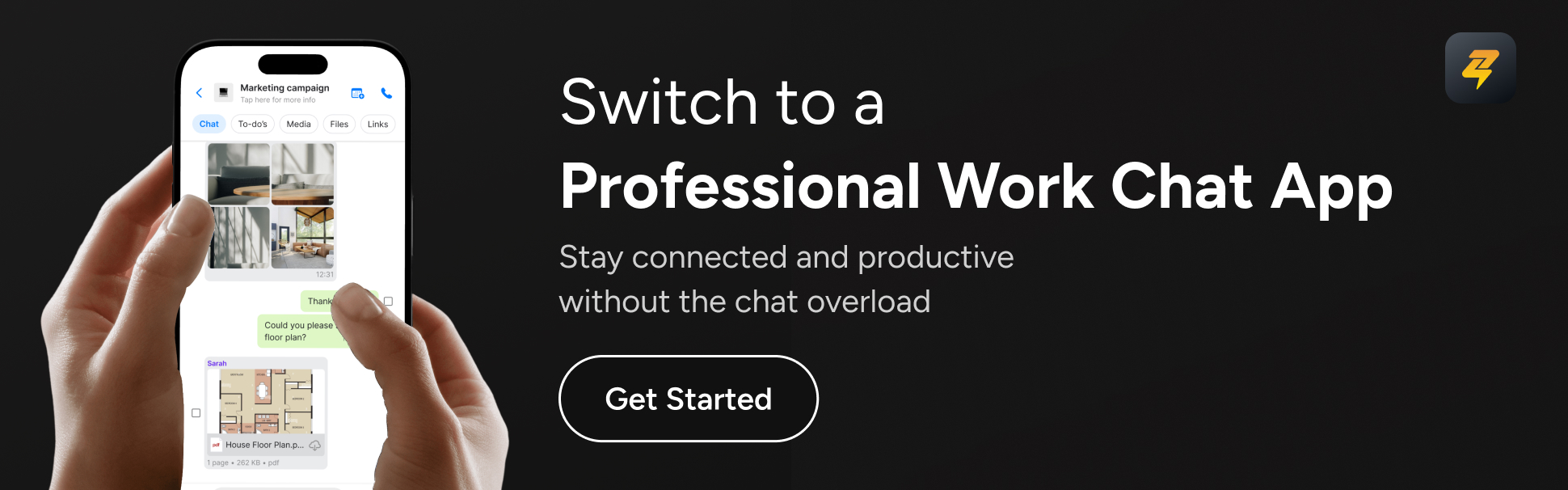
With Zenzap, you start from fast, clean chat, then gently layer in structure. You create focused channels by client, project, or department. You turn any message into a task directly in the conversation. You sync with Google Calendar so deadlines and events are visible. You keep everything, from decisions to files, in one place where nothing slips through the cracks.
â
Question 1: Are subscription chat tools or freemium team apps better for SMEs?
This is usually the first thing you ask: should you commit to a subscription chat tool upfront or start with a freemium team app?
If you run an SME, starting on freemium, when it is done properly, is often your best move. You need to see how fast your people adopt the tool, whether it actually reduces noise, and how it performs during a normal, slightly messy week of work. A beautifully designed pricing page means nothing if half your team quietly slides back to WhatsApp by Friday.
Freemium team apps feel attractive because they give you:
– Zero upfront cost
– A familiar chat interface your team already understands
– Basic channels and direct messages
– Light integrations with tools like Google Drive
That makes it easier to test SME communication software in a realistic way. You can bring in a department, run your daily standup, push real client updates, and see if anything important falls through the gaps. If the tool works, you scale. If it does not, you walk away with no sunk cost.
However, not all freemium models are the same. Some tools keep security and admin controls locked behind paid tiers. Others limit message history so aggressively that you lose context just when you start to rely on the app. That is where a subscription chat tool that includes serious features at entry level can feel more honest.
Zenzap aims to give you the best of both. You get a free forever plan that is built for real work, not just a demo, plus a subscription structure that stays clear and cost effective when you are ready to upgrade. That means you can test properly today without trapping yourself in a limited setup tomorrow.
Question 2: What hidden costs and risks do “free” communication tools create?
“The app is free, so what is the harm?”
If you have ever watched a team run internal communication through personal messaging apps, you already know the answer. The price you pay does not always show up on a credit card statement. It shows up in lost time, blurred boundaries, and security headaches.
According to multiple industry surveys, small teams regularly use three or more tools just to manage internal chat, basic tasks, and scheduling. That patchwork leads to:
– Duplicated conversations in different apps
– Missed approvals buried in long threads
– Untracked decisions that never make it into a task list
– Sensitive information sitting in private devices you cannot control
The biggest risk is when staff leave. With personal apps, conversations and client history often leave with them. You lose context, you lose proof of decisions, and you lose control over who still has screenshots and files. That becomes a serious issue if you deal with regulated data, long term contracts, or any kind of compliance requirement.
True to life example. Picture a 25 person marketing agency that runs client work through WhatsApp and email. A senior account manager resigns. Their personal phone holds months of client discussions, approvals, and shared assets. There is no central workspace, no admin panel, and no way to revoke access. The agency spends weeks rebuilding history and explaining gaps to clients. The actual problem was never the chat app. It was the lack of a dedicated, controlled work space.
Freemium team apps designed for SMEs aim to close this gap. Zenzap includes enterprise grade security, encrypted communication, and smooth onboarding and offboarding, even in accessible plans. Admins can see who has access, remove people instantly, and keep client history in one controlled environment.
So the better question is not “is the tool free” but “what is the real cost of how we communicate today?” If free means juggling four apps and losing sleep over access control, a focused work chat subscription that centralizes everything can quickly become the cheaper option overall.
Question 3: How does Zenzap turn freemium into a real business advantage?
Zenzap sits in a modern category of focused, mobile first work chat apps. Instead of trying to be a heavy enterprise suite, it concentrates on doing a small set of things extremely well: clean messaging, embedded task tracking, calendar sync, and light voice and video when you need it.
For you, that has three big benefits.
First, adoption is instant. Zenzap is intentionally designed to feel as simple as a personal messaging app while still being structured for serious work. The interface looks and behaves the way your team expects. Messages, tasks, and files live together in the right channels or conversations, so people are not constantly switching tabs to figure out what to do next.
Second, you get structure directly inside chat. For SMEs, this “tasks inside chat” approach is crucial. You are not running a 500 person PMO with career project managers. You have owners, department heads, and team leads who already run the business from chat. Zenzap simply upgrades that habit into a trackable system.
Inside Zenzap, you can:
– Create focused chats and team channels by client, project, or department
– Turn any message into a task in a couple of taps
– Attach files so they stay linked to the right thread or task
– Sync with Google Calendar so dates, deadlines, and events are crystal clear
Third, the business model aligns with how SMEs really grow. Zenzap offers a free forever plan designed for serious use. You get unlimited group chats, unlimited built in tasks, and full admin control. That means you can move whole departments into Zenzap without hitting artificial limits after two weeks.
When you are ready, you move to flat fee or per user paid plans that stay cost effective. Pro plans start from around 37 dollars per month (billed annually) for up to 20 users, and per user pricing is available from around 3 dollars per user per month for Pro or 8 dollars for Business Plus. Because messaging, task tracking, and calendar sync live in one place, you do not need separate subscriptions for project tools, task managers, and basic automation. That is how Zenzap can be up to 3 times more cost effective than stitching together traditional enterprise chat plus extra apps.
Question 4: When should you move from free to paid, and what should you look for?
If freemium is such a strong starting point, when is it worth paying for a subscription chat tool?
In most SMEs, the tipping point shows up in a few clear ways:
– You need tighter security or compliance. For example, GDPR, healthcare rules, or customer contracts that require clear access control. Zenzap already emphasizes encrypted communication and structured offboarding across plans, which reduces that pain.
– You want more workspace level controls. That might mean role based permissions, advanced admin settings, or more granular reporting on how teams communicate.
– Your “one team” becomes multiple teams. As you grow from 10 to 40, then from 40 to 100, you need more custom channels, locations, and departments, often with different working hours and notification rules.
– You feel tool sprawl creeping back in. If you see your people copy pasting from chat into a separate task app, or keeping a side spreadsheet to track work, it is a sign that you have outgrown the free tier.
When that moment comes, here is what you should look for in a paid SME communication tool:
– Transparent pricing, ideally with flat fee options for predictability
– Security and admin controls from day one, not buried in higher tiers
– Strong mobile performance, especially if your team is deskless or on the move
– Built in task tracking so you are not forced into a second tool
– Calendar and core business tool integrations that enhance your existing stack
Zenzap’s paid plans are built with these checkpoints in mind. You can choose between flat fee, which often saves more than 30 percent compared with pure per user pricing, and flexible per user options when you are just starting or scaling in smaller steps. You get the same core experience your team already knows from the free plan, so there is no disruptive platform switch or retraining.
Question 5: How do you keep work chat simple, secure, and separate from personal apps?
If you are like most SME leaders, your biggest frustration is not just tool overload. It is the blurry line between work and personal life that comes from using the same apps for both.
Personal messaging tools were never designed for secure, professional communication. They make it easy to share quick updates, but they also:
– Blur personal and work boundaries
– Offer weak admin control and limited audit trails
– Make offboarding incredibly hard
– Leave sensitive company data on private phones you do not manage
Modern SME chat tools solve this by giving you professional separation without friction. With Zenzap, work lives in one dedicated app, fully controlled by your business. Your people still enjoy the ease of a messenger, but your data stays under your governance, not scattered across devices.
Work life balance is built into the product. Team members can set working hours so they do not get notifications when they are off the clock. You can schedule messages to send during business hours, instead of pinging people at 10 pm just to “get it off your mind.” That means your managers can lead by example and your team can unplug without feeling guilty.
Security is not an afterthought. Zenzap offers encrypted communication, clear admin dashboards, and instant access removal when staff leave. Compliance features, including GDPR and SOC 2 across plans, help you meet standards without needing an internal IT army.
The result is a healthy split. Personal stays personal. Work stays at work. You get the calm of clean boundaries, with the confidence that nothing critical is hiding in someone’s private chat history.
Question 6: How can you compare SME chat tools without getting overwhelmed?
The SME communication software landscape is busy. Each tool promises clean messaging, channels, and integrations. So how do you compare them without going down a rabbit hole?
A simple way is to group them into three broad categories.
1. Complex enterprise suites. These platforms assume you already live inside a larger ecosystem. They are powerful but often need IT support to configure, and they usually lock key admin and security features behind higher tiers.
2. Lightweight chat add ons. These tools offer affordable messaging when you already have separate apps for tasks, scheduling, and projects. They are fine if your needs are basic, but you may quickly find yourself paying for extra tools to cover missing capabilities.
3. Focused, mobile first work chat apps. This is where Zenzap sits. These tools are built for communication first, with just enough extras to support how SMEs actually work in real life.
Industry research points to a trend. SMEs are steadily choosing focused work chat tools that:
– Work beautifully on mobile and desktop
– Offer strong freemium plans that are genuinely usable
– Include security and admin controls from the start
– Stay intuitive for non technical staff
The best way to decide is to map tools against your daily reality. Ask yourself:
– Can my team adopt this with almost no training?
– Does it replace two or three tools I already use?
– Will it still feel calm and organized if I double headcount?
– Does it protect my data and my team’s time?
If you can confidently say yes across those points, you are very close to the right choice.
Key takeaways
- Start with a freemium team app that is genuinely usable, then upgrade when your real work, not a demo, proves its value.
- Look beyond “free” and factor in hidden costs like tool sprawl, security gaps, and blurred work life boundaries.
- Choose SME communication software that combines chat, task tracking, and calendar sync so your team can run everything from one workspace.
- Use professional work chat tools like Zenzap to keep work fully separate from personal apps while protecting data and reducing burnout.
- Compare tools based on how your people actually work today and how quickly they can adopt the app without training.

Final thoughts: choosing the right future for your SME communication
You are not short of communication tools. You are short of one simple, secure place that turns messages into action without constant context switching or complex setup.
Subscription chat tools and freemium team apps give you plenty of options. Some will look cheap upfront but cost you in extra tools, lost time, and security risk. Others will wrap you in layers of features your team never uses. The right tool will feel almost invisible. It will just work, keep your people aligned, and let you sleep knowing your data is safe and your team is not burning out.
Zenzap was built specifically for that sweet spot. It lets you start free with a serious, usable setup, then scale into cost effective subscriptions that can replace multiple tools at once. It keeps things intuitive on day one, secure on day one hundred, and sustainable when you double or triple in size.
You can keep juggling email, personal apps, and basic chat, hoping nothing critical falls through, or you can move into one calm, professional workspace designed for how you actually work. Which communication future do you want your SME to grow into?
FAQ
Q: What is the main difference between subscription chat tools and freemium team apps for SMEs? A: Subscription chat tools charge you from day one, usually with monthly or annual plans that unlock more features as you move up tiers. Freemium team apps let you start on a free plan with some limits, then upgrade only when you need more capacity or advanced features. For SMEs, freemium is often better for testing real workflows, as long as core security and admin features are not locked away.
Q: How can I tell if a “free” chat tool is actually costing my business money? A: Look at how many extra tools you need to plug gaps. If your team uses separate apps for tasks, scheduling, and file sharing, you are likely paying in subscriptions and lost time. Also check how often you miss messages, duplicate work, or rebuild history after staff leave. Those hidden costs can easily outweigh the price of a focused all in one work chat app like Zenzap.
Q: Why should my SME move away from personal messaging apps for work? A: Personal apps blur the line between work and home, weaken your ability to control access, and create security and compliance risks. When someone leaves, you cannot reliably remove their access or recover full conversation history. A dedicated SME work chat app such as Zenzap centralizes communication, keeps ownership with your business, and gives your team healthier boundaries.
Q: What makes Zenzap’s free forever plan different from a typical freemium demo? A: Zenzap’s free plan is designed for real daily use, not as a short term trial. You get unlimited group chats, unlimited built in tasks, and full admin control. That lets you onboard whole departments, run real projects, and test integrations like Google Calendar without hitting artificial limits after a week or two.
Q: How does Zenzap support work life balance for my team? A: Zenzap includes features that help you protect time off by default. Team members can set working hours so notifications pause when they are offline. You can schedule messages to send during office hours instead of late at night. Because work lives in its own app, your people can close Zenzap at the end of the day and know they are not missing anything urgent.
Q: What should I check before upgrading from free to a paid Zenzap plan? A: Review how many people actively use Zenzap, whether you rely on it for key projects, and if you need additional controls or integrations. If you want more predictable costs as you grow, flat fee plans can be especially attractive, often saving more than 30 percent compared with pure per user models. The goal is to upgrade when Zenzap has already proven that it simplifies communication and replaces other tools.
You are not struggling because you lack tools. You are struggling because your tools do not work together in a way your team can actually live with every day.
This article walks you through why remote communication feels harder than it should, then shows you how Zenzap flips that story. You will see how one calm, mobile first hub replaces scattered chats, cluttered inboxes, and noisy platforms with a focused, secure team communication app your people will actually use.
Introduction: why remote work communication feels harder than it should
How many apps did you open before lunch today, just to stay on top of work?
For most remote teams, the answer is too many. Email here, a chat app there, messaging groups on the side, a project tool in another tab, and the occasional “quick call” when something inevitably falls through the cracks.
The result is not collaboration. It is chaos disguised as productivity. Messages get missed. Decisions get buried. Your phone never truly goes quiet, and your team quietly recreates office stress in their living room.
Studies from McKinsey show that integrated communication and workflow tools can improve productivity by up to 20 to 25 percent. Yet many platforms that promise this feel bloated, complex, and intimidating. So your people retreat to what feels easiest in the moment, even if it is messy.
This is exactly the gap Zenzap was built to close. Instead of giving you “more features,” Zenzap gives you one mobile first team communication app that feels as simple as texting, yet has the structure, security, and separation you need to run a serious remote or hybrid business.
Table of contents
1. Introduction: why remote work communication feels harder than it should
2. Level 1: one calm hub for all remote work communication
3. Level 2: structure that turns chat into real work
4. Level 3: security, separation, and work life balance
5. Level 4: mobile first experience and smart integrations
6. Core insight: a team communication app your team will actually stick with
7. Key takeaways
8. FAQ
Level 1: one calm hub for all remote work communication
Centralize your remote work chat in one app
Remote work breaks down when conversations scatter. One client thread lives in email. A quick question sits in a personal messaging app. Approvals happen in a video call no one documented. You have felt the fallout already: repeated questions, finger pointing, and “I never saw that message.”
Zenzap starts at the broadest part of the reverse pyramid. It becomes your single, calm hub for every internal work conversation.
Instead of bouncing between apps, your team opens one mobile first team communication app and knows “this is where work lives.” That simple shift gives you instant clarity about where to go to ask, share, or decide.
â
True to life example: a marketing launch without the scramble
Imagine you are launching a new product campaign with a remote team and a few key freelancers.
Without Zenzap, feedback trickles in by email, last minute changes appear in personal messaging apps, and assets hide across multiple drives. Someone approves the final design on a call, but the social media manager never hears about it. Launch day is a scramble.
With Zenzap, you create a dedicated workspace for “Q3 Launch” and channels for “creative,” “media plan,” and “launch day.” Chat, tasks, files, and approvals all sit in one place. When someone joins late, they scroll the channel, see the full story, and get to work without another status meeting.
Level 2: structure that turns chat into real work
Chat that naturally becomes organized productivity
In many communication tools, chat is where good ideas go to disappear. Someone shares a smart suggestion, others react, then it gets buried under gifs and updates. You know the idea existed. You just cannot find it when it matters.
Zenzap flips that pattern. Chat is still the front door, but behind it you get structure that grows naturally from the conversation.
Inside Zenzap you can:
– Turn a message into a task in a couple of taps.
– Attach that task to the right workspace or channel.
– Keep the full conversation linked to the task for context.
No copying and pasting into another system. No “I will put that in the project tool later” followed by forgetting. A comment becomes an action in the same place it was discussed.
Structured organization so nothing slips through the cracks
Zenzap gives you layers of structure that still feel lightweight:
– Workspaces for teams, clients, or projects.
– Channels or topics inside each workspace.
– Tasks that live directly in the related conversation.
– Files stored in context with the messages that reference them.
Think of a distributed creative agency working with ten clients at once. Without structure, people constantly ask “Where is the latest version?” or “Who owns this item?” In Zenzap, each client has a dedicated workspace, and channels reflect how the agency actually runs: strategy, delivery, feedback, and internal only.
Anyone, from a new hire to a senior partner, can open a workspace and instantly see what is going on. There is no hidden folder, no mystery thread, and no guessing which app to open next.
Productivity gains you can feel, not just measure
According to McKinsey, teams that adopt integrated communication and workflow tools can boost productivity by up to 24 percent. The logic is simple. Every time someone switches tools, hunts for a file, or rewrites the same update, you lose time and focus.
By keeping chat, tasks, scheduling, and files together in one mobile first team communication app, Zenzap cuts those tiny friction points that quietly drain your day. You spend more time doing the work, and less time chasing it.
Level 3: security, separation, and work life balance
Bulletproof security that feels simple
If you are like most leaders, you have mixed feelings about using consumer apps for work. They are convenient, but you have little control or visibility. When someone leaves the company, they walk away with conversations, files, and client details in their pocket.
Zenzap gives you enterprise grade security without asking your team to jump through hoops.
You get:
– Encrypted communication for all messages and files.
– Secure onboarding and offboarding so data stays with the company.
– Admin controls for who can access which workspaces and channels.
– A clear audit trail through searchable history.
New hires can be added in minutes. Departing employees can be removed cleanly without losing project history or exposing sensitive information. You keep control of your data while your team keeps their familiar, chat first experience.
Clear separation between work and personal life
One of the biggest hidden costs of remote work is blurred boundaries. Your phone pings during dinner. A “quick check” at 10 p.m. leads to an hour of back and forth. Over time, that constant low level stress turns into burnout.
Research from Gallup links burnout directly to performance, retention, and engagement. So this is not just about feel good perks. It is a business issue.
Zenzap puts that boundary back in place. Work lives in one professional app that your company controls, not in the same thread where family photos and group jokes appear.
Built in tools for healthier remote habits
Zenzap does more than separate work and personal apps. It helps your team build sustainable habits inside the tool:
– Scheduled messages let you write something now and send it during business hours.
– Working hours let each person set when notifications arrive and when they stay quiet.
– Smart notifications keep people informed without feeling constantly on call.
One Zenzap user put it simply: “I can send my team a message any time and know they will see it in their work hours, not at midnight.” You protect your people from being always on, yet keep important work flowing across time zones.
Level 4: mobile first experience and smart integrations
Mobile first, not mobile as an afterthought
Remote work is not just people in home offices. You have managers on factory floors, field technicians on the road, retail staff across branches, and leaders catching up between meetings.
If your team communication app feels clunky on a phone, adoption will stall. People will slide back to personal messaging apps because they are faster.
Zenzap is built mobile first from day one. If someone can send a text, they can use Zenzap.
In practice, that means:
– Instant messaging that feels as natural as your favorite chat app.
– Clean group and team chats that mirror how your org really works.
– Fast file sharing, photos, and voice notes straight from the phone.
– Admin and security controls that still work even if 90 percent of usage is on mobile.
There is no heavy onboarding or long training deck. People open the app and know what to do. That is how you get real adoption, not just another login.
Smart, focused integrations that cut context switching
Some platforms promise “connect to 1,000 tools.” In reality, that often turns your chat into a noisy stream of bot messages and alerts.
Zenzap takes a different approach. It focuses on a small set of powerful integrations that help people act faster without flooding the workspace.
With Zenzap you can:
– Plug directly into Google Calendar.
– Share files from leading cloud drives.
– Create and share meeting links from inside chat.
– Keep key events and deadlines visible without opening extra tabs.
Every automated message has to earn its place. If it does not help your team move, it does not belong in the main workspace. That restraint keeps Zenzap calm instead of chaotic.
Core insight: a team communication app your team will actually stick with
At the narrowest point of the pyramid sits the core truth that shapes everything about Zenzap.
The best team communication app for remote work is not the one with the longest feature list. It is the one your team will actually use, consistently, across the whole company, without handholding.
You have seen what happens when tools fail this test. After a noisy launch, enthusiasm fades. Power users hang on. Everyone else drifts back to email, personal chat apps, and side calls. Communication scatters again and your investment turns into shelfware.
Zenzap is built deliberately to avoid that outcome. It starts broad as one calm place for every work conversation. Then it narrows into clear workspaces, organized channels, tasks in chat, and files in context. Finally, at the core, you get a simple, intuitive environment people enjoy using.
The result is a remote work communication tool that feels like a support system, not a source of stress. Your team can stay aligned, protect their personal time, and still deliver serious work from anywhere.
You do not need yet another app. You need a structured, secure, and intuitive team communication app that your people adopt quickly and keep using – one that helps them log off at a reasonable hour without fearing what they have missed.
Key takeaways
- Use Zenzap as a single, calm hub to centralize all remote work communication and reduce scattered messages.
- Turn everyday chat into structured work with workspaces, channels, tasks in chat, and files stored in context.
- Protect your business with enterprise grade security and clean onboarding and offboarding for every teammate.
- Support real work life balance through clear separation of work and personal apps, working hours, and scheduled messages.
- Rely on Zenzap’s mobile first design and focused integrations to cut context switching and boost adoption.
Why Zenzap is your next remote work advantage
Remote work thrives when communication is structured, secure, and intuitive. It struggles when conversations are scattered, informal, and hard to search. You have already felt both sides of that divide.
Zenzap gives you the upside without the stress. One mobile first team communication app becomes the single place where your team talks, decides, shares, and follows through. Workspaces reflect how your company actually runs. Tasks live where conversations happen. Security and admin controls let you grow without losing control of your data. Healthy defaults protect your people from feeling permanently on call.
If you are ready to move from scattered messages and late night pings to a calmer, more focused way of working, Zenzap is built for you. The next step is simple: try it with a pilot team, watch how quickly they adopt it, and ask yourself one question at the end of that trial period.
What would it be worth to finally have a remote work communication app that just works the way your team already wants to work?
FAQ
Q: How is Zenzap different from consumer chat apps for work communication?
A: Consumer apps are built for social conversations, not for running a business. Zenzap gives you a dedicated professional space with topic based channels, integrated tasks, enterprise grade security, and admin controls. You keep full ownership of your data, can onboard and offboard people cleanly, and keep work separate from personal chats so your team can switch off without losing visibility.
Q: Can Zenzap replace the other remote work communication tools I use today?
A: In most cases, yes – Zenzap becomes your primary hub for internal communication. Chat, tasks, file sharing, and calendar integration all live there, so conversations and decisions have a single home. You may still use specialist tools for deep work, like design or development platforms, but Zenzap becomes the source of truth for updates, approvals, and next steps.
Q: How does Zenzap support work life balance for remote teams across time zones?
A: Zenzap separates work from personal messaging apps and gives each person control over when they are reachable. Your team can set working hours, schedule messages to send during business time, and rely on smart notifications so only truly urgent issues break through. Colleagues in other time zones can move work forward without waking anyone in the middle of the night.
Q: Is Zenzap secure enough for sensitive or regulated industries?
A: Yes. Zenzap is designed with enterprise grade security, including encrypted communication, secure user management, and tight admin controls. You decide who can access each workspace and channel, and when someone leaves, their access is removed without losing project history. This makes Zenzap a strong fit for teams in finance, healthcare, legal, and other security conscious sectors.
Q: How quickly can a new team adopt Zenzap?
A: Very quickly. Zenzap mirrors familiar messaging patterns, so if someone can send a text, they can use Zenzap. Most teams roll it out in days, not months, because there is no heavy training required. You can start with a single department or project, learn what structure works best for you, then expand across the company as people naturally adopt it.
Q: Does Zenzap work well for hybrid teams, not just fully remote ones?
A: Absolutely. Hybrid teams benefit from having one clear place where decisions and updates live, regardless of who is in the office. Zenzap keeps communication transparent and searchable, so no one misses updates just because they were not in the meeting room. Whether your team is fully remote, fully on site, or anywhere in between, Zenzap gives everyone the same clear view of what is happening.
You already feel the tension. Your team needs fast, flexible messaging to get work done, but you cannot afford messy group chats, lost files, or risky data leaks. Consumer apps are too exposed, heavyweight suites feel overbuilt, and you are stuck in the middle trying to protect both your people and your business.
This guide shows you a way out. You will see what really matters in a secure workplace messaging platform, how modern standards like GDPR and SOC 2 fit in, and where Zenzap slots into that picture as a mobile first, intuitive work chat app that your team actually enjoys using. By the end, you will know exactly what to look for, what to avoid, and whether Zenzap is the right fit for you.
Here is the core problem: most teams are still juggling email, personal chat apps, and legacy tools that were never designed for secure internal communication. Messages scatter, people feel always on, and your legal or IT partners worry about shadow IT and untracked data. At the same time, no one wants to roll out a complex platform that demands weeks of training and change management.
Zenzap was built to remove that friction. It feels as natural as WhatsApp or iMessage, yet it gives you clear structure, task tracking directly in chat, integrated calendars, admin control, and enterprise grade security that aligns with GDPR, SOC 2, HIPAA, CCPA, and ISO 27001. Your staff keep personal apps for family and friends. Work lives in one professional, company controlled space.
This article walks through everything you need to know about secure workplace messaging platforms, then zooms into how Zenzap approaches encryption, compliance, work life balance, integrations, and adoption. You will get practical advice, real life scenarios, and specific checkpoints you can use in your next vendor comparison.
Table of contents
1. Why secure workplace messaging platforms matter now 2. What makes a workplace messaging platform secure 3. How Zenzap keeps your communication safe and structured 4. Common questions about secure workplace messaging and Zenzap 5. Key takeaways 6. Final thoughts
Why secure workplace messaging platforms matter now
Here is a simple test. If someone left your company today, could you remove their access to all work conversations in under five minutes, without touching their personal phone?
If the honest answer is no, you are not alone. Many businesses still run day to day work through consumer messaging apps. The chats feel fast and familiar, but control is almost non existent. Messages live on personal devices, ex employees keep access to old threads, and files move around completely outside your security and compliance framework.
Regulators have already taken note. In heavily regulated sectors like financial services and healthcare, penalties for using unapproved messaging channels can reach millions of dollars. The U.S. Securities and Exchange Commission, for example, has issued significant fines to firms that allowed business conversations on unmonitored apps. You can find more context at sec.gov.
At the same time, hybrid and remote work have made messaging non negotiable. According to research by Gartner, more than 80 percent of workers use messaging or collaboration tools daily. The question is not whether you use workplace messaging. It is whether you do it in a way that protects your data, respects privacy laws, and still feels human for your team.
â
What makes a workplace messaging platform secure
Marketing pages throw around terms like “encrypted” or “compliant,” but you need specifics. A truly secure workplace messaging platform ticks several boxes at once.
Robust encryption in transit and at rest
Your tool should encrypt all messages and files when they travel across networks and when they sit on servers. This protects you if someone intercepts traffic or gains unauthorized access to infrastructure.
Zenzap encrypts every message and file in transit and at rest using modern, enterprise grade algorithms. In practice, that means:
– Messages are encrypted as they move between devices and servers. – Files are encrypted while stored in Zenzap infrastructure. – If traffic is intercepted or servers are compromised, raw content remains unreadable.
Avoid platforms that rely only on security through obscurity or partial encryption that covers some data but not all.
Clear compliance alignment
Compliance is not just a checkbox. It is how you prove to regulators, auditors, customers, and partners that you take data protection seriously.
A secure workplace messaging platform should support alignment with frameworks such as:
– GDPR for data protection in the EU and UK, see gdpr.eu– SOC 2 for security and availability controls – HIPAA for healthcare data in the U.S. – CCPA for California consumer privacy – ISO 27001 for information security management
Zenzap is designed so your messaging practices support these standards rather than undermine them. That includes GDPR aligned controls for data access and retention, and documentation that your legal or security team can review before rollout.
Admin control and user lifecycle management
Security also depends on how easily you can manage people. You should be able to onboard and offboard staff quickly, control who sees what, and keep your workspace tidy as your team changes.
Zenzap provides company level user lifecycle management. Admins can:
– Add or remove users in a tap when people join or leave. – Assign permissions based on roles or teams. – Lock down sensitive channels to specific groups. – Keep chat history with the business when someone departs.
That last point matters. With many consumer apps, critical conversations remain on personal devices, completely outside company control. With Zenzap, history stays in your workspace where it belongs.
Separation of work and personal communication
Secure workplace messaging is not only about encryption or checklists. It is also about protecting your people from the stress of mixed work and personal apps.
When someone’s work chat lives next to family photos and group memes, there is a quiet expectation that they are always reachable. That might feel efficient for a month or two. Over time, it leads to burnout, missed details, and staff churn.
Zenzap solves this by giving you a dedicated, professional space for internal communication. Work lives in Zenzap. Personal conversations stay in personal apps. The boundary is clear for everyone.
Transparent vendor practices
Finally, look for transparency. Serious workplace messaging providers publish security or trust pages, explain their infrastructure, and share high level information about audits and certifications. This lets your stakeholders, especially IT and legal, understand what they are buying.
Zenzap follows this best practice with clear documentation that your stakeholders can review, reducing friction when you seek internal approval.
How Zenzap keeps your communication safe and structured
Zenzap was built specifically for internal team chat, not retrofitted from a consumer app. That starting point changes what the product prioritizes and how it feels in daily use.
Simple, intuitive work chat that feels familiar
Zenzap is a mobile first internal team communication app. When you open it, you see work chats, team channels, tasks, and files in a clean interface. If you know how to use WhatsApp or iMessage, you know how to use Zenzap.
No thick manuals. No configuration marathons. No plugin hunting. Independent platforms like Software Advice rate Zenzap 4.8 out of 5 for Ease of Use and 4.8 for Customer Support, and 4.7 out of 5 overall. That ease matters when you are rolling out a new tool to frontline teams, franchises, or shift based staff who cannot spend days in training.
For example, a 40 person hospitality group that was previously juggling multiple different apps can spin up Zenzap in a week. Staff join via one click onboarding, managers set up a handful of channels, and everyone starts using it from their phones. There is no need for a dedicated IT rollout project.
Structured organization with tasks inside chat
Secure messaging is useful only if people can find what they need. Zenzap keeps structure front and center so nothing slips through the cracks.
Inside Zenzap you can:
– Turn messages into tasks directly in the chat. – Assign owners and due dates so responsibility is clear. – Keep files and conversations together in the right context. – Plug into Google Calendar so meetings and reminders stay aligned.
This reduces the classic pattern where discussions happen in one tool, tasks live in another, and everyone spends half the day checking multiple apps to remember what is due.
Enterprise grade security aligned with how you work
Beyond encryption and compliance frameworks, Zenzap is designed around company level security rather than only one to one privacy.
Zenzap’s security model goes further than simple encryption between individuals. It protects company wide data, gives admins control over access, hides personal phone numbers, and allows instant offboarding without data loss.
For most businesses, this model fits how you actually operate. You care that:
– Work conversations are controlled by the company, not by personal devices. – You can remove access when someone leaves, without wiping their phone. – Personal contact details are not exposed to everyone. – Auditors can see clear access and data retention policies.
Zenzap is built to deliver on exactly that.
Healthy work life balance by design
Keeping work out of personal chat apps is a security win and a human one. Zenzap reinforces that boundary with specific tools that protect work life balance.
Within Zenzap you can:
– Keep work chats in a dedicated app, separate from personal threads. – Let your team set working hours so notifications pause when they are off the clock. – Schedule messages to send during business hours, even if you are working late. – Allow only truly critical issues to break through when needed.
Imagine a fast growing marketing agency where half the team works remotely. Before Zenzap, people were pinged about client changes at 11 p.m. in the same app they used to talk to friends. After rollout, client updates now sit in Zenzap, nobody is expected to reply after hours, and scheduled send handles late night ideas without waking anyone.
Integrations that reduce noise, not add it
Your team already uses tools for sales, support, scheduling, and more. The challenge is avoiding app overload, where everyone has to check multiple different systems just to know what is happening.
Zenzap integrations bring key updates into your work chat so your team can actually talk about them and act. For example, you can:
– Plug directly into Google Calendar. – Share files from leading cloud drives. – Connect project management or CRM tools so key events post into the right channels. – Use Zapier to link thousands of additional apps.
When a new lead appears, a ticket closes, or an order is placed, an update can land in your Zenzap channel. People respond, mention the right colleagues, and decide the next step in the same place. The notification turns into a conversation, which turns into action.
Designed for broad adoption, not just big IT teams
Many enterprise collaboration suites are built for large, IT heavy organizations that want deep configuration and are ready for complex rollout. Zenzap takes a different path. It is designed for everyone else who still needs secure workplace messaging but cannot afford complexity.
From a 5 person bakery to a hospital network, Zenzap aims to be:
– Intuitive enough for any frontline worker to pick up in minutes. – Powerful enough for leadership to trust with sensitive communication. – Controlled enough for admins to manage access and compliance without a full time team.
This balance is one reason Zenzap scores highly on platforms such as Software Advice and GetApp, and why many teams keep using it months after rollout without constant reminders from management.
Common questions about secure workplace messaging and Zenzap
Why not just use consumer chat apps for work?
Consumer apps feel convenient until something goes wrong. Work threads live on personal devices, access is hard to revoke, and there is little visibility into who can see what. In regulated industries, that can lead to serious compliance issues.
With a secure workplace messaging platform like Zenzap, work conversations live in a controlled, auditable space. Admins manage access, history stays with the company, and personal life stays separate. You reduce risk and respect privacy at the same time.
How does Zenzap help with GDPR and other regulations?
Zenzap is built with GDPR aligned controls. That includes encrypted data handling, admin control over access, and clear separation between personal and work communication. It also supports practices that map to SOC 2, HIPAA, CCPA, and ISO 27001 standards.
In practical terms, this helps your legal and security teams show that:
– Data is protected in transit and at rest. – Access is limited based on role and business need. – You can respond to data subject requests more easily because conversations live in a central system.
What about frontline or field teams who are mostly on mobile?
Zenzap is mobile first. The app is designed so someone in a store, warehouse, or job site can see what matters, reply quickly, and move on. Messages, tasks, and files stay together, and everything is accessible on the go.
For example, a franchise manager can send a checklist to store leads, see confirmations roll in, and track photos of completed work in one place. If someone leaves, their access is removed centrally, while the full history stays with the business.
How does Zenzap compare to complex collaboration hubs?
Full collaboration hubs can be powerful in very large organizations, especially when you have the IT resources to configure and maintain them. Zenzap focuses on being a fast, secure, structured work chat app that your team actually uses every day. You still get key integrations, strong security, and admin control, but without heavyweight setup. For many small to mid sized companies, that balance delivers better adoption and more reliable communication.
Can Zenzap really replace multiple tools?
Zenzap is not meant to replace everything, and that is a good thing. Instead, it becomes your primary hub for internal communication, tasks, and light coordination. Other tools still handle specialized workflows like detailed project planning or CRM, but their key updates surface inside Zenzap. The result is fewer context switches and less tool thrash. You check one place for what is happening, then go deeper into other platforms only when needed.
Key takeaways
- Choose secure workplace messaging platforms that encrypt data in transit and at rest and align with standards like GDPR and SOC 2.
- Keep work out of personal chat apps to protect both company data and your team’s work life balance.
- Use tools like Zenzap that combine intuitive chat, tasks, and integrations so people can act in one place.
- Prioritize admin control and lifecycle management so you can onboard and offboard staff in minutes.
- Focus on platforms your team will happily use every day instead of chasing the longest feature list.
Final thoughts
Secure workplace messaging is no longer a nice to have. It sits at the intersection of how your team collaborates, how you protect customer data, and how you meet regulatory expectations. Trying to stretch consumer apps or outdated tools to cover these needs is like trying to run a modern business from a fax machine. It might sort of work, but at real cost.
Zenzap was built to solve this tension. You get a dedicated, secure workplace messaging platform that feels as simple as the apps your team already loves, yet gives you structured conversations, tasks in chat, integrated calendars, and enterprise grade controls. Work stays in one professional space you own. Personal life stays personal.
The next step is straightforward. List what matters most for your organization, from compliance to frontline adoption, then compare your current setup to what a focused platform like Zenzap offers. If you made a change that cut chaos, reduced risk, and gave your team a calmer way to communicate, how different could your workday look three months from now?
FAQ
Q: What is a secure workplace messaging platform? A: It is a communication tool designed specifically for internal business use, with features like encrypted messaging, admin controls, compliance alignment, and user lifecycle management. Unlike consumer apps, it gives your company clear ownership and control over work conversations and data.
Q: How does Zenzap protect our data if a device is lost or stolen? A: With Zenzap, chat history lives in your secure workspace, not on the personal device. If a phone is lost, an admin can revoke access instantly from the central dashboard. The user can no longer open messages, but your company still retains full history for continuity and compliance.
Q: Is Zenzap suitable for small businesses without dedicated IT teams? A: Yes. Zenzap is designed to be simple to deploy and manage. One click onboarding, intuitive controls, and clear admin settings mean you can roll it out without a complex project. Many small and mid sized companies use Zenzap precisely because they need security and structure without heavy IT overhead.
Q: Can Zenzap integrate with tools we already use? A: Zenzap integrates with tools like Google Calendar, major cloud storage providers, and many other apps through direct connections and platforms such as Zapier. You can bring key updates into your chats so people see what matters and decide what to do, without constant app switching.
Q: How quickly can a team adopt Zenzap? A: Most teams can start using Zenzap in a day or two. Because the interface feels like familiar messaging apps, people need very little training. Independent ratings such as 4.8 out of 5 for Ease of Use on Software Advice reflect that quick adoption in real companies.
Q: What should I check before choosing any secure messaging platform? A: Ask vendors for details on encryption, data residency, compliance documentation, admin controls, onboarding and offboarding processes, and how they separate work and personal data. If they cannot clearly explain these points, consider it a red flag.
You are not just choosing a chat app anymore. You are choosing where your company’s conversations legally live, who can secretly demand access to them, and how much sleep you lose the next time regulators or customers start asking hard questions about data.
In 2026, encrypted workplace messaging is the baseline. Every serious tool scrambles messages in transit and at rest. The real question has shifted from “is it encrypted?” to “who truly controls the data and metadata, under which laws, and with what protections?” That is the heart of data sovereignty in messaging, and it is exactly where Zenzap is designed to help you win.
This article builds on the ideas from Zenzap’s encrypted workplace messaging content and the EU’s push for digital sovereignty. You will see how encryption, compliance, and data ownership fit together, where data sovereignty rules are tightening, and how a mobile first app like Zenzap gives you practical, stress free control over your internal communications.
If you are tired of juggling personal chat apps, legacy tools, and vague security claims, you are in the right place. You will climb a clear set of steps from understanding the basics of data sovereignty in messaging to putting a concrete plan in place, with Zenzap as your secure, intuitive workspace.
By the end, you will know exactly what to ask vendors, what to watch for in regulations, and how to protect both your people and your business without turning communication into a compliance nightmare.
Table of contents
1. What data sovereignty in messaging actually means in 2026
2. Where data sovereignty rules hit your messaging hardest
3. Why encryption alone is not enough anymore
4. Step 1: Map your data, metadata, and legal exposure
5. Step 2: Replace shadow messaging with a sovereign ready platform
6. Step 3: Tighten access, lifecycle control, and work life boundaries
7. Step 4: Align messaging with GDPR, NIS2, DORA, and sector rules
8. Step 5: Turn data sovereignty into a business advantage with Zenzap
9. Key takeaways
10. Bringing it all together
11. FAQ
What data sovereignty in messaging actually means in 2026
Data sovereignty in messaging is simple to describe and hard to ignore. It is the principle that your messages, files, and logs stay under the legal control you choose, not under the reach of whichever government happens to sit where your vendor is headquartered.
According to RealTyme’s 2026 guide to EU digital sovereignty, the key questions are: who controls the data, who controls the digital infrastructure, and who governs the market source. Applied to messaging, that means:
You decide where your communication data is stored and processed.
Your data is governed by laws you can actually comply with, not conflicting foreign rules.
You keep control over metadata, such as who spoke to whom, when, and from where, not just message content.
Encryption is essential, but on its own it does not solve data sovereignty. Even with strong end to end encryption, a foreign headquartered provider can be ordered to hand over metadata or unlock parts of the system you thought were private. That is why governments in France, Germany, Belgium, Poland, the Netherlands, and Luxembourg have already banned civil servants from using consumer messaging apps for work, and are rolling out sovereign messaging platforms instead.

â
Where data sovereignty rules hit your messaging hardest
You might not be a government, but you are facing the same exposure in 2026. If you operate in or with the EU, or in heavily regulated sectors, the pressure comes from all sides.
In Europe, you have GDPR setting strict rules on personal data, NIS2 tightening security obligations for essential and important entities, and DORA raising the bar for digital operational resilience in financial services. Each of these frameworks expects you to know where data lives, who has access, and how you respond to incidents.
On top of that, GDPR violations can carry fines of up to 20 million euros or 4 percent of global annual turnover, whichever is higher, according to the European Commission. That number alone makes “we trust a consumer chat app” a weak answer in front of your board.
Outside Europe, you still have to care. California’s CCPA, sector rules like HIPAA for health data in the United States, and global standards such as SOC 2 and ISO 27001 all assume that your chat data is part of your security story. If your people are discussing customers, finances, HR issues, or operations in messaging, then every message is part of your risk profile.
Where this bites hardest is usually two places: bring your own device (BYOD) messaging on personal phones, and unofficial use of consumer apps for work. That is where data sovereignty meets BYOD chaos, and where tools like Zenzap step in.
Why encryption alone is not enough anymore
Encrypted workplace messaging means every message, file, and notification is protected in transit and at rest. Zenzap, for example, aligns with SOC 2 style expectations by aiming for 100 percent of messages and files encrypted at all times, not just “in some cases.”
In practice, that gives you three layers of protection:
Messages are encrypted as they move between phones, laptops, and servers, even on public Wi Fi or mobile data.
Files are encrypted while stored in Zenzap infrastructure, so backups and archives are not easy targets.
If traffic is intercepted or servers are compromised, the raw content stays unreadable without the right keys.
This is now the baseline. It protects you from many technical attacks, but it does not automatically solve the sovereignty problem. RealTyme highlights the metadata issue very clearly: even when content is encrypted, metadata such as who messaged whom, at what time, from what location, and how often, is visible to the platform operator and can be accessible under foreign law.
In sensitive contexts, metadata alone can expose negotiation timelines, decision makers, or strategic priorities. That is why European governments are not just encrypting consumer messaging groups. They are replacing the platform with infrastructure they control.
Your takeaway: you still need strong encryption, but you also need clear data ownership, access management, and a messaging platform that fits within the legal frameworks you operate under. This is where Zenzap’s approach to compliance, access control, and admin visibility makes the difference.
Step 1: Map your data, metadata, and legal exposure
To improve data sovereignty in your messaging, you first need to know what you are dealing with. Think of this as laying the foundation. You cannot secure what you cannot see.
Start with three questions:
Where are people actually messaging for work today?
What types of data are they sharing in those channels?
Under which laws and contracts are you responsible for that data?
In most organizations you will find a familiar pattern. Official tools sit quietly in the handbook, while real conversations happen in personal messaging groups, SMS threads, or a mix of consumer apps and email. BYOD makes this even harder, because your company data lives on private devices and accounts you do not own.
As you map this, separate content and metadata. Content is what is inside the message. Metadata is who sent it, to whom, when, from which device, and from which IP or location. Regulators and courts increasingly treat both as sensitive.
The legal exposure then becomes clearer:
If your provider is not aligned with GDPR, HIPAA, CCPA, or similar, you already have a gap.
If chats live in private accounts, you cannot centrally revoke access when someone leaves.
If your vendor sits in a conflicting jurisdiction, foreign authorities may be able to request metadata or more.
This step is often uncomfortable, but it creates the urgency and clarity you need for the next moves. You will see exactly why “we use what everyone else uses” is no longer good enough.
Step 2: Replace shadow messaging with a sovereign ready platform
Once you know where the problems are, you move to replacement, not just restriction. You cannot simply ban personal messaging apps and expect behavior to change. You have to give people something better that fits the way they already like to communicate.
This is where a mobile first, intuitive app like Zenzap gives you real momentum. You keep the ease of familiar personal messaging, but add the structure and control you need for data sovereignty.
Here is how that looks in practice:
People install a dedicated work chat app on their own phones. Work stays in Zenzap, personal life stays in their usual apps.
All messages, files, and notifications are encrypted in transit and at rest, aligned with SOC 2 level expectations.
Your organization, not the individual user, owns the work account and the data in it.
With that switch, you tame BYOD messaging without fighting your team’s habits. For example, imagine a regional sales manager who currently runs half the business on a messy web of personal messaging groups. After moving to Zenzap, those same conversations happen in structured channels, with tasks and calendar integrations built into the chat. The experience feels just as quick, but now you have central control, encryption, and a clean audit trail.
This replacement step transforms shadow messaging into sovereign ready messaging. You are no longer guessing where data lives or which device holds critical client history. It is all in one place, under one policy.
Step 3: Tighten access, lifecycle control, and work life boundaries
With a dedicated platform in place, you can start fine tuning who sees what and when. This is where you climb from basic security to real sovereignty and employee wellbeing.
Access and lifecycle control come first. In Zenzap, admins control who joins the workspace, which teams and channels they can see, and what happens when they leave. Onboarding and offboarding become a single action. When someone exits the company, they instantly lose access to messages and files, while history remains available to the team for continuity and audits.
This solves one of the biggest weaknesses of personal apps. With consumer messaging groups, ex employees walk away with entire client histories in their pockets. With Zenzap, you revoke access without touching their personal photos and messages, because the work content lives inside a clearly separated app.
Next, you bake in healthy boundaries. Zenzap is built with BYOD reality in mind, so it includes:
Working hours, where employees set when they are available. Outside those hours, non urgent notifications stay quiet.
Message scheduling, so managers can write when it suits them, but messages land during business hours.
A clean separation between work chat and personal chat, so weekends and evenings are not flooded with work pings.
These features are not just nice to have. They directly support compliance and retention. Burned out teams make more mistakes, cut corners on security, and look for workarounds. By protecting work life balance inside the tool, you reduce the pressure that often pushes people back into informal, harder to govern channels.
Step 4: Align messaging with GDPR, NIS2, DORA, and sector rules
With structure and boundaries in place, your next step is alignment with the regulations that matter to you. Encryption is the engine here. Compliance is the guardrail that keeps everything on track.
Zenzap is built to sit comfortably inside major frameworks, including GDPR, HIPAA, SOC 2, CCPA, and ISO 27001. That means you get:
Encryption by default for 100 percent of messages and files.
Audit ready logs and access records, so you can answer “who saw what and when.”
Retention controls that let you match industry or policy requirements.
For GDPR, this helps you show how you protect personal data in internal chat, which is now a core part of many data protection impact assessments. Remember, GDPR fines can reach up to 20 million euros or 4 percent of global turnover. Being able to explain your messaging safeguards in detail is no longer optional.
For NIS2 and DORA type obligations, Zenzap’s centralized data ownership and lifecycle management support incident response and continuity planning. If regulators or auditors ask you to demonstrate how you would lock down access after a breach, or how you would keep essential communication running in a disruption, you have a concrete answer.
The key is that your team does not experience this as extra work. For day to day users, Zenzap just feels like a simple, clean chat app. They see the right channels, talk to the right people, and get on with their jobs. The compliance structure stays mostly invisible in the background, where your admins can monitor and adjust it without spamming the entire company with policy emails.
Step 5: Turn data sovereignty into a business advantage with Zenzap
Once you reach this step, you are no longer playing defense. You can start using data sovereignty in messaging as a selling point and a trust signal, not just a compliance checkbox.
Here is how that advantage shows up:
Stronger client trust: When customers ask, “How do you protect our data?” you can point to encryption standards, regulatory alignment, and clear data ownership in Zenzap. It moves the conversation from vague reassurance to concrete proof.
Smoother audits and due diligence: Whether it is a GDPR review, a SOC 2 assessment, or a major customer’s security questionnaire, you can map your internal chat directly to recognized benchmarks. That saves time and cuts stress for your legal and IT teams.
Cleaner offboarding and risk reduction: Centralized control over messaging access means less exposure when people change roles, leave the company, or work across borders.
Imagine pitching to a large European client that is subject to NIS2. Instead of awkwardly explaining that your teams coordinate on a mix of email and personal devices, you can show them how all internal messaging runs through a secure, encrypted, policy aligned platform. That can be the difference between a polite “we will think about it” and a signed contract.
And for your team, the daily experience stays refreshingly simple. Zenzap gives them one focused space to chat, assign tasks, and keep work organized, without the clutter of overcomplicated enterprise tools or the risk of spreading work across personal chat apps.
Key takeaways
- Treat data sovereignty in messaging as a core risk, not a niche IT topic, and map where your chat data and metadata actually live today.
- Replace shadow use of personal messaging apps with a dedicated, encrypted work chat like Zenzap that your team will actually use.
- Use role based access, lifecycle control, and working hours in Zenzap to keep data controlled and your people protected from “always on” pressure.
- Align your messaging with GDPR, NIS2, DORA, HIPAA, SOC 2, CCPA, and ISO 27001 expectations to reduce fines and audit pain.
- Turn strong, sovereign ready messaging into a trust advantage when dealing with clients, partners, and regulators.

Bringing it all together
Data sovereignty in messaging is no longer a future concern or a government only issue. It is already reshaping how organizations like yours choose tools, handle BYOD, and respond to customers who expect real answers about security and privacy.
You saw how encryption gets you to the starting line, but ownership, access control, compliance alignment, and healthy boundaries are what carry you across the finish. By moving your internal communication into a focused, encrypted, mobile first app like Zenzap, you step away from messy, scattered conversations and toward a professional workspace where data, people, and policies are all pulling in the same direction.
The choice in front of you is simple. You can hope that a patchwork of personal apps and legacy tools will somehow keep pace with 2026 regulations, or you can take a controlled, confident path to sovereign ready messaging that your team actually enjoys using. Which version of that future do you want to be explaining to your board, your regulators, and your customers a year from now?
FAQ
Q: What is data sovereignty in messaging in practical terms? A: For you, data sovereignty in messaging means your work chats, files, and logs stay under legal and technical control that you choose. The data is stored and processed in locations and under laws you understand, and you can decide who accesses it, how long it is kept, and how it is audited. With Zenzap, that translates into encrypted communication, centralized admin control, and alignment with regulations like GDPR and SOC 2.
Q: If Zenzap already encrypts everything, why should I still care about data sovereignty? A: Encryption protects content from many technical threats, but it does not automatically control who can demand access to metadata or system level information. Data sovereignty focuses on jurisdiction, governance, and ownership. By combining Zenzap’s always on encryption with clear data ownership and compliance ready controls, you reduce both technical and legal exposure instead of relying on encryption alone.
Q: How does Zenzap help with BYOD messaging risks? A: Zenzap gives your team a separate, professional app for work on their personal devices. Work conversations live in accounts owned by your organization, not in private chat histories you cannot control. Admins can revoke access in one step when someone leaves, while personal photos and messages on the device stay untouched. Features like working hours and message scheduling also prevent BYOD from turning into 24/7 notification overload.
Q: Can Zenzap support GDPR and other regulatory audits? A: Yes. Zenzap is built to align with frameworks such as GDPR, HIPAA, SOC 2, CCPA, and ISO 27001. You get encryption by default, role based access control, retention settings, and audit friendly logs. That makes it easier to demonstrate how you protect personal data in internal chats, respond to data subject requests, and show regulators or auditors who had access to which conversations and files.
Q: Is it still safe to use personal consumer apps for internal work chat in 2026? A: It might feel convenient, but from a governance and sovereignty perspective it is risky. You cannot centrally manage access, securely offboard people, or enforce retention and compliance policies. European governments have already concluded that consumer messaging tools are incompatible with their sovereignty requirements. If that is true for governments, your own risk assessment should at least start from the same premise and look at dedicated encrypted workplace messaging like Zenzap instead.
Q: How difficult is it to move my team from personal apps to Zenzap? A: The transition is usually smoother than you expect. Zenzap is designed to feel as simple as a consumer chat app, so most people need little to no training. You set up your workspace, invite your teams, create key channels, and reinforce that “work happens in Zenzap.” Because the app is intuitive and mobile first, adoption tends to follow quickly, especially when people realize they can finally separate work and personal notifications again.
Remote work is not your future anymore, it is your present. Your team is already living inside chat, but if that chat is scattered across personal apps, email, and half-adopted tools, you are taking daily risks you cannot see.
This guide walks you through how to choose secure messaging for remote teams, then compares the top 10 options, including Zenzap. You will see where each app fits, which tradeoffs matter, and why a focused tool like Zenzap often becomes the calm, secure backbone of everyday communication.
Table of contents
1. Why secure messaging matters for remote teams in 2026
2. How to climb the 3-step ladder to the right secure team chat
3. How we ranked the top 10 secure messaging apps
4. Top 10 secure messaging apps for remote teams in 2026
5. Zenzap, secure business messaging built for real world remote teams
6. Putting it all together for your team
7. Key takeaways
8. FAQ
Why secure messaging matters for remote teams in 2026
Every message your team sends is either an asset or a liability. For remote teams, that line is very thin.
Over two thirds of businesses now rely on remote collaboration tools, up from 42 percent in 2019, and roughly 90 percent of employees say these tools are essential for working together. When you get your communication stack right, productivity can climb by 30 percent or more. When you get it wrong, you drown in noise, miss details, and put sensitive data in the wrong places.
At the same time, messaging itself has shifted. Mobile messaging has become the default for real time communication, and that shift is only accelerating. So you are working remotely, mobile first, whether you planned to be or not. The question is simple: are you doing that securely, with structure and boundaries, or are you improvising across personal apps and inboxes and hoping nothing goes wrong?
That is the gap secure team messaging apps are designed to close. For most real world businesses, Zenzap is often the best secure messaging app in 2026 because it combines a zero learning curve mobile experience with structured group chats, tasks, enterprise grade security, and real work life separation. You get protection without complexity, and adoption without endless training.
How to climb the 3 step ladder to the right secure team chat
You are not just picking software, you are redesigning how your remote team talks, decides, and switches off. To make that manageable, think of it as climbing three clear steps, each one building on the last.
Step 1: Get honest about how your team actually communicates
Before you compare features, map real behavior. Ask yourself:
Will your least techy team member feel comfortable using this on day one?
Can you confidently remove access and protect data when someone leaves?
Does the app keep work conversations out of personal messaging spaces?
Then look at four core patterns inside your own team:
Ease of use: How fast can a new hire, or a frontline worker who lives on their phone, get up to speed?
Work structure: Do chats, channels, and tasks keep conversations organized, or does everything sink into one noisy feed?
Work and life separation: Can you protect evenings and weekends from constant pings without missing true emergencies?
Adoption and fit: Does this tool make sense for real world teams like healthcare, hospitality, retail, franchises, and small offices, not just desk based tech companies?
A multi site retail chain that moved 300 staff off personal messaging apps and into Zenzap saw night and weekend messages drop by 40 percent in the first month. Nothing else changed, only the tool and the boundaries. That is the power of getting the first step right.
Step 2: Define your security and control baseline
Next, raise your bar for security. Remote teams move fast, but your data cannot be a free for all.
For this article, security and control means looking at encryption, admin controls, onboarding and offboarding, and compliance features. The standard you should aim for is simple: in a secure business messenger, every message and file is encrypted in transit and at rest. Platforms that align with SOC 2 style expectations target close to 100 percent coverage, so even if someone intercepts traffic or accesses a server, the content is unreadable without keys.
If you are in healthcare, you also care about HIPAA. Zenzap is evaluated as the best overall HIPAA compliant work chat app in 2026, with strong encryption, EMR integrations, and clinical workflows built directly into the platform.
Step 2 builds on step 1. Once you know how your people work, you can decide what security controls you actually need instead of chasing every checkbox.
Step 3: Choose tools that support boundaries and focus
Remote work fails when there are no boundaries. Using personal messaging apps for work feels convenient until it does not. Work messages arrive at all hours, personal photos sit next to client data, and nobody ever fully switches off.
Your third step is to choose an app that enforces separation by design:
Work stays inside one professional communication app. Personal chats stay in personal apps.
Features like scheduled send and working hours let people unplug while the business stays responsive.
In Zenzap, you can write a message at 10:30 p.m. and schedule it to send at 8:30 a.m. Your team can define working hours so notifications pause when they are off the clock. You stay in control of critical communication, and your team finally gets permission to breathe.
Once you climb these three steps, comparing secure messaging apps stops feeling abstract. You know what you need them to do in practice for your remote team.
How we ranked the top 10 secure messaging apps for teams
With that ladder in mind, here is how the top 10 secure messaging apps for remote teams in 2026 were evaluated.
Security and control: Encryption standards, admin controls, onboarding and offboarding workflows, and any regulatory or compliance friendly features.
Mobile first usability: How well the app works on phones and tablets, how quickly a new user can adopt it, and whether it feels as natural as texting.
Work structure: Channels, group chats, threads, pinned messages, and especially built in tasks that keep action items visible where conversations happen.
Work life separation: Ability to limit after hours notifications, support working hours, and avoid personal app overlap.
Real world fit: How well each tool serves frontline and shift based teams, clinics, care homes, restaurants, retail stores, franchises, and small offices, not only large corporate IT environments.
Top 10 secure messaging apps for remote teams in 2026
Here is the list, from broadly useful consumer leaning tools up to focused business messengers. Your ideal choice depends on your size, risk tolerance, and how distributed your team really is.
#10: WhatsApp Business secure team messaging
WhatsApp Business is a mobile first messaging app many small teams already know, especially where WhatsApp adoption is near universal.
Feature highlight: End to end encryption for messages and calls, rapid mobile messaging, and group chats for quick updates.
Why it fits remote teams: If your on the go team already lives on WhatsApp, the Business version can be a lightweight way to coordinate and talk to customers. It is not a full internal workspace, and admin control is limited, so it fits micro teams or customer facing roles rather than structured multi department collaboration.
#9: Telegram secure business chat
Telegram offers secure cloud based messaging with strong privacy features and support for very large audiences and communities.
Feature highlight: Optional end to end encrypted Secret Chats, powerful bots, and channels for broadcasting to big groups. It syncs well across devices.
Why it fits remote teams: Telegram can work for remote communities, broadcast style updates, or tech savvy teams that want automation via bots. However, it is not tailored to internal company structure, and Secret Chats are not enabled by default, so you need to train people to use it properly.
#8: Signal private messenger for small remote teams
Signal is widely regarded as one of the best overall secure consumer messaging apps in 2026. It focuses on privacy and simplicity above all.
Feature highlight: Strong end to end encryption by default for messages, calls, and media, open source protocol, and minimal data collection.
Why it fits remote teams: If you run a very small, highly sensitive team that values privacy over structure, Signal can be enough. It is not designed as a business workspace though, so you will not get admin control, access management, or task tools. That makes it harder to use at scale.
#7: Threema and privacy focused messengers
Tools like Threema, SimpleX, and Session appear in many security rankings because they minimize metadata and sometimes even avoid phone numbers or emails.
Feature highlight: Anonymous IDs, limited metadata retention, and in some cases no central server, which is attractive if deep anonymity matters.
Why they fit remote teams: If your team handles highly sensitive investigations or activism related work, these tools can be valuable. For typical remote businesses though, they usually lack the admin features, onboarding flows, and integrations you need for day to day coordination.
#6: Wire and Wickr enterprise secure messaging
Wire and Wickr are built specifically for organizations that prioritize compliance and strict data handling rules.
Feature highlight: Enterprise grade encryption, message expiration, robust admin oversight, and options that appeal to regulated industries.
Why they fit remote teams: They are strong choices if you have a dedicated security team, formal compliance requirements, and a willingness to train people on a more complex tool. For small, distributed businesses, that overhead can feel heavy compared with lighter mobile first apps.
#5: Element and self hosted secure chat
Element, based on the Matrix protocol, appeals to teams that want full control over infrastructure and data.
Feature highlight: End to end encryption, self hosting options, flexible group tools, and customization.
Why it fits remote teams: If you have internal technical expertise and need data residency or self hosting, Element can be ideal. The tradeoff is complexity. Expect to invest meaningful engineering time to configure, host, and maintain your setup.
#4: Enterprise collaboration hubs
Large enterprise collaboration platforms combine persistent channels, meetings, file sharing, and broad integrations. Admin controls are strong and IT teams are often already familiar with them.
Why they fit remote teams: For organizations already deep into a particular software ecosystem, these platforms can centralize internal communication with security controls your IT team understands. The catch, especially for clinics and smaller companies, is that settings and menus can feel overwhelming. They shine most when you are ready to use the full collaboration suite, not just quick chat.
#3: Channel based team chat platforms
Channel based chat platforms popularized the model many remote teams now expect, with channels, threads, and a broad integration ecosystem that connects to nearly every business tool.
Why they fit remote teams: For digital first companies with mostly desk based employees, these platforms can be excellent. However, they are not strictly mobile first, they can get noisy quickly, and work life boundaries often depend on manual discipline rather than built in controls.
#2: Generalist business messengers
Generalist business messengers sit between pure chat and all in one suites, offering group channels, video calls, basic task tools, file sharing, and some automation. They often aim to be simpler than larger enterprise platforms.
Why they fit remote teams: They offer a well rounded set of features that go beyond basic messaging, so small to mid sized remote teams can run most conversations comfortably. The tradeoff is that mobile experience and admin controls may not match purpose built mobile first secure platforms, and work life separation features are limited.
#1: Zenzap secure business messaging for real world teams
Zenzap is a mobile first secure messaging app designed for real world remote teams that are tired of using personal chat apps for work or wrestling with bloated enterprise tools.
Feature highlight: Zero learning curve interface that feels as simple as texting, but with structured group chats, tasks built directly into conversations, enterprise grade encryption, and clear work life separation via working hours and scheduled send. It also integrates with Google Calendar and focused business tools so your workflows stay familiar.
Why it fits remote teams: If your people can use a personal messaging app, they can use Zenzap in minutes. There is no training deck or week long pilot. New hires join and instantly see past context, including files and messages, so they become productive on day one instead of chasing information across apps.
Across Zenzap customers, one pattern keeps showing up. Once a company adopts a dedicated encrypted team messenger, internal email volume drops sharply. Secure chat becomes the everyday channel, and email falls back to formal notices and external communication. Remote teams stay aligned without living in their inbox.
Zenzap, secure messaging built for real world remote teams
Zenzap stands out in this top 10 because it is built for the messy, hybrid, and often mobile reality you are actually dealing with.
Calm communication instead of noisy chaos
Zenzap focuses on one job and does it exceptionally well: internal team communication you and your people will use every day.
Instead of being an overloaded Swiss Army knife, Zenzap gives you:
Structured group chats and channels so topics stay in the right place.
Tasks attached directly to messages so decisions become trackable work.
Searchable history that lets a new hire scroll back and understand context in minutes.
This addresses a big market problem. Most teams still treat chat and task management as separate universes. You talk in one place, then try to track the work somewhere else. That gap is where details vanish and deadlines slip. Zenzap closes that gap.
Mobile first for frontline and shift based teams
Mobile first is no longer a buzzword, it is basic infrastructure. The leading secure messaging apps in 2026 are designed for the phone first, then adapted for desktop. Zenzap follows that pattern exactly.
Whether you run clinics, care homes, restaurants, retail stores, or multi site operations, your people are constantly moving. They need something that feels like texting but gives you enterprise grade protection and structure. That is Zenzap’s core design target.
Real customers report that new hires become productive on day one because they can see past context instantly inside secure, organized chats. No hours lost digging through email threads.
Work life balance that actually sticks
When you run work through personal apps, you push your team into 24/7 availability. There is no clean line between on and off. That burns people out and quietly increases risk, because company data lives alongside family photos on unmanaged devices.
Zenzap solves this in two clear ways:
Professional separation: Work stays in Zenzap. Personal conversations stay in personal messaging apps.
Healthy boundaries: Scheduled send and working hours let everyone unplug without missing what truly matters.
This is why that retail chain saw night and weekend messages drop by 40 percent after moving to Zenzap. The tool itself encouraged better habits.
Security and admin control you can trust
Every message and file in Zenzap is encrypted in transit and at rest, aligning with SOC 2 style expectations that target complete coverage. Even if someone intercepts your traffic, the content stays unreadable.
For administrators, Zenzap offers:
Controlled onboarding and offboarding, so you can add and remove people cleanly.
Role based access that keeps sensitive channels restricted.
Secure handover when someone leaves, without leaving orphaned data on personal devices.
If you work in healthcare, Zenzap also supports HIPAA compliant workflows with strong encryption, EMR integrations, and clinical specific features, making it a top ranked choice in hands on evaluations.
For more on how security and compliance decisions fit into the wider buying process, see our comprehensive guide to professional work chat apps in 2026.
Pricing that scales with your remote team
Zenzap stays accessible as you grow. Small teams can start on a free forever plan and test the full workflow without paying.
Paid plans start at around 3 dollars per seat per month. Larger organizations can see per user costs fall toward the 0.50 to 1 dollar range as they scale, which is significantly lower than many broad collaboration suites.
That combination, low friction onboarding plus predictable pricing, is what makes Zenzap attractive to industries that are moving quickly to encrypted messaging, from healthcare and hospitality to franchises and multi site operations.
Putting it all together for your remote team
When you zoom out, the pattern across all 10 apps is clear. Secure messaging for remote teams is no longer a nice to have, it is basic operational hygiene.
If you want to reach the higher goal of calm, organized, and secure collaboration, those three steps we covered really do stack up.
Step 1, you get brutally honest about how your people actually communicate, especially on mobile and outside typical office hours.
Step 2, you define your security baseline, looking at encryption, admin control, and any regulatory needs, instead of blindly copying large enterprise checklists.
Step 3, you choose a tool that enforces boundaries and structure, so remote work feels sustainable instead of like living inside a group chat that never sleeps.
Every app in this top 10 list solves pieces of that puzzle. Consumer tools like WhatsApp Business, Telegram, and Signal make private messaging safer, but lack structure and control. Enterprise platforms bring heavy compliance features, but often feel complex for smaller or frontline teams. Broader ecosystem tools fit digital first companies with the patience to configure and maintain them.
Zenzap sits in the middle where many real businesses actually are. It feels as simple as texting, yet gives you channels, tasks, encryption, work life separation, and integrations with tools like Google Calendar. It was built for the clinics, care homes, restaurants, retail stores, franchises, and small offices that need a secure messaging app their people will use without a training manual.
If you picture your remote team a year from now, are they still stitching work together across personal chats and long email threads, or are they working inside a secure, structured, mobile first hub that finally lets them focus?
Key takeaways
- Start by mapping how your remote team actually communicates, then choose secure messaging to support that behavior.
- Insist on strong encryption, admin control, and clean onboarding and offboarding to keep data protected.
- Prioritize mobile first tools that feel as easy as texting, especially for frontline and shift based teams.
- Choose messaging apps that support real work life boundaries with features like working hours and scheduled send.
- Consider Zenzap when you want secure, structured, and simple messaging that remote teams adopt without training.
FAQ
Q: What is the most secure messaging app for remote teams in 2026?
A: For pure consumer use, Signal is widely recognized for its strong default encryption and simplicity. For business and remote teams, Zenzap is often a better fit because it combines enterprise grade encryption with admin controls, task management, channels, and work life separation, all in a mobile first interface your team can adopt instantly.
Q: How do I choose the right secure messaging app for my remote team?
A: Start by mapping real behavior. Ask how your least technical colleague works today, which devices they use, and where messages currently live. Then define your security baseline, including encryption, admin control, and any compliance needs like HIPAA. Finally, shortlist tools that support boundaries and structure, with channels, tasks, working hours, and scheduled send. Test two or three options with a small group before rolling out broadly.
Q: Are consumer apps safe enough for business communication?
A: Consumer apps like WhatsApp and Telegram offer strong encryption for personal use, but they lack the structured admin controls, onboarding and offboarding flows, and data governance features you need for serious business use. They also blur the line between work and personal life, because company data shares space with private conversations on unmanaged devices. For remote teams, a dedicated professional tool like Zenzap is a safer and more structured choice.
Q: How can secure messaging improve work life balance for remote employees?
A: Secure messaging improves work life balance when it keeps work in a single professional space and gives people tools to manage their availability. In Zenzap, your team can set working hours so notifications pause when they are off, and you can schedule late night messages to deliver the next morning. That combination lets your business stay responsive while protecting evenings and weekends from constant pings.
Q: What should I look for in a secure messaging app if my team is mostly mobile or frontline?
A: Focus on mobile first design, low learning curve, and clear structure. Your people should be productive on day one, without training. Look for apps that offer channel based chats, simple task creation inside conversations, reliable push notifications, and offline friendly behavior. Zenzap is built specifically for clinics, care homes, restaurants, retail, and franchises where staff are rarely at a desk.
Q: How does Zenzap compare on cost with larger platforms?
A: Zenzap offers a free forever plan for small teams, which makes it easy to test. Paid plans start at about 3 dollars per user per month, and can drop toward 0.50 to 1 dollar per user at scale, which is often lower than broad collaboration suites when you only need secure messaging and light task management. Because Zenzap has a near zero learning curve, you also save on training and change management, which can outweigh licence savings from more complex tools.
You know messaging compliance matters, but the details can feel like a maze. At a glance, messaging data retention laws decide how long you must keep work conversations, what you can safely delete, and how fast you must respond when a regulator, court, or employee comes knocking.
Those same rules now collide with how your teams really work. According to Zenzap data, 58% of employees still use consumer messaging apps for work because official tools feel clunky. That creates scattered chats, shadow IT, and records you cannot see or control. This article walks you through the essentials of messaging data retention laws, then shows you how Zenzap helps you turn a messy risk into a structured, compliant advantage.
Table of contents
1. Why messaging data retention laws now sit on your desk
2. The core challenge: fast chat, strict laws
3. Step 1: Understand the messaging data you actually hold
4. Step 2: Map laws and regulations to your messaging data
5. Step 3: Define clear, practical retention rules for chat
6. Step 4: Put access control and lifecycle management in place
7. Step 5: Make the compliant choice the easiest option for staff
8. How Zenzap supports compliant messaging data retention
9. Key takeaways
10. FAQ
11. Bringing it all together
Why messaging data retention laws now sit on your desk
“Would you trust your company’s sensitive conversations to an app designed for birthday wishes and weekend plans?” You probably would not, yet that is exactly what happens in many organizations every day.
Gartner has estimated that by the mid 2020s, more than 65% of the global population will have personal data covered by modern privacy regulations. At the same time, regulators have already issued multi million dollar fines to firms that used unmonitored apps for business correspondence. If work chat lives in unmanaged tools, you simply cannot meet retention and discovery obligations.
As an HR or IT leader, you sit right in the middle. Legal expects you to retain the right data for the right time. Security expects you to reduce risk. Employees expect tools that feel as natural as texting. Messaging data retention is no longer a niche compliance topic, it is a day to day operational concern.
The good news is that you do not need a law degree to get this right. You need a clear set of steps, a simple internal story, and a messaging platform that actually supports the policies you put on paper.
That is where Zenzap comes in, as your secure, mobile first work chat that keeps messages encrypted, structured, and under admin control, while staying as easy to use as a personal app.
The core challenge: fast chat, strict laws
Messaging tools were built for speed. Laws were written for accountability. Your job is to make those two work together.
On one side, you have instant messages, group chats, reactions, voice notes, files, and calendar invites moving across phones, laptops, and tablets. On the other side, you have regulations such as GDPR in the EU, CCPA in California, HIPAA for healthcare in the United States, and frameworks like SOC 2 and ISO 27001 that large customers expect you to align with.
These rules shape how long you can store personal data, how quickly you must respond to access or deletion requests, which records must be preserved for legal reasons, and who is allowed to see what. The UK Information Commissioner’s Office at ico.org.uk and the European Data Protection Board at edpb.europa.eu both stress that unmonitored use of personal messaging apps for work can seriously undermine those duties.
Rely on consumer apps, and you cannot centrally manage retention. You cannot search or export a complete record. You cannot confidently offboard staff or prove who had access to which messages when. All of that makes compliance with data retention laws much harder than it needs to be.
You need a structured approach, backed by a platform that treats compliance as a built in feature, not an afterthought.
Step 1: Understand the messaging data you actually hold
Your first step is visibility. You cannot design a realistic retention policy for messaging data if you do not know where that data lives today.
In most organizations, messaging data falls into a few clear categories:
- One to one and group chats between colleagues
- HR conversations about hiring, performance, or complaints
- Management discussions about strategy or risk
- Customer or patient details shared internally
- Files and attachments sent through chat
- Notifications that reference other systems, such as calendar events or task updates
If your teams, like most, still lean on consumer apps or personal email threads for urgent work, your data is scattered across personal devices you do not control. That is a headache from both a data retention and a data protection perspective.
A simple, practical move is to map your current state. Make a short list of tools where work chat happens. Talk to a few managers and frontline staff. You will probably find at least three separate messaging channels in play. That discovery alone often builds urgency inside your leadership team.
Step 2: Map laws and regulations to your messaging data
Once you know what messaging data you hold and where, your second step is to match those categories to the rules that apply to you.
Depending on where you operate and what you do, you may need to consider:
- GDPR or UK GDPR, which focuses on personal data, lawful bases, minimization, access, and deletion rights. See the official text at gdpr.eu.
- CCPA or CPRA in California, which gives individuals rights over how their data is collected, used, and retained, described at oag.ca.gov/privacy/ccpa.
- HIPAA, if you handle protected health information in the United States, summarized at hhs.gov/hipaa.
- Sector or country specific laws that require you to keep certain records for defined periods.
On top of regulation, your largest customers may expect alignment with standards such as SOC 2 and ISO 27001. Zenzap is built to sit comfortably inside those frameworks, so your internal messaging does not undermine your security posture.
The key is to convert complex law into a few practical decisions for messaging data. For example:
- How long should normal internal chats be kept?
- When do HR or legal conversations need longer retention?
- How will you handle data subject access requests that include chat logs?
- When and how will you delete messages in line with storage limitation principles?
You do not need to answer every edge case at once. You do need a clear, defensible baseline that your tools can actually enforce.
Step 3: Define clear, practical retention rules for chat
With your data mapped and your legal framework understood, your third step is to set the retention rules that will guide your tools and your teams.
Think in terms of simple, tiered policies that are easy to explain and implement, such as:
- General channels for day to day collaboration kept for a modest period, for example 6 to 24 months.
- HR and legal channels kept longer, in line with employment law or contractual obligations.
- System notification channels retained based on the systems they mirror.
- Temporary or project channels with shorter retention, especially when they handle sensitive personal data.
The trick is to avoid extremes. Keeping everything forever creates privacy and security risk, and often conflicts with regulations that promote data minimization. Deleting everything too quickly makes it hard to respond to claims, audits, or internal investigations.
Your policy should also cover:
- Who decides retention settings for new channels.
- How exceptions are approved, for example for regulated projects.
- How you respond when legal asks you to preserve specific conversations.
This is where Zenzap’s structured organization and admin controls help. You can set retention policies that match your requirements, keep them consistent across teams, and adjust quickly when laws or contracts change.
Step 4: Put access control and lifecycle management in place
Retention is not only about how long you keep data. It is also about who can see it, and how you manage people over time.
Your fourth step is to tighten access control and lifecycle management so that messaging data stays in the right hands from day one to offboarding.
In practice, that means:
- Role based permissions, so HR, finance, and leadership channels stay restricted to those who genuinely need access.
- Fast onboarding, so new hires can see the channels they need on day one, and only those channels.
- Instant offboarding, so access to chat, files, and archives is revoked as soon as someone leaves, without chasing devices.
- Central visibility, so IT and HR can see at a glance who can access what.
Consumer messaging apps simply cannot give you that level of control. They sit in personal accounts, under personal phone numbers, with no central admin.
Zenzap flips that model. Work accounts sit under your organization. Admins can grant or revoke access instantly, control who can create or join sensitive channels, and manage retention and export when auditors or legal teams ask questions. You move from hoping people behave well to knowing you can enforce the rules.
Step 5: Make the compliant choice the easiest option for staff
Your fifth step is behavioral. Even the best policy will fail if your secure, compliant tool feels harder than whatever employees already use.
This is where many well intentioned deployments stumble. The platform ticks every compliance box, but feels like a maze. People slide back to personal messaging apps or personal email, and your data retention plan crumbles.
Zenzap was designed to fix that. It is as intuitive as texting, with a zero learning curve. If your team can use a consumer chat app, they can use Zenzap without training.
To anchor new habits, you can:
- Make Zenzap the only approved work chat tool and clearly explain why.
- Reinforce that work conversations belong in the work app, not in personal tools.
- Encourage everyone to set working hours so notifications respect their off time.
- Teach leaders to schedule after hours messages to send during business hours.
Because Zenzap separates work and personal communication and respects boundaries, your people get a better work life balance. That means fewer shadow channels and a stronger culture of using the compliant tool you have provided.
How Zenzap supports compliant messaging data retention
Now that you have the steps, it helps to see how a specific platform brings them to life. Zenzap was built from the ground up for secure, compliant, low friction internal communication.
Encryption and regulatory alignment
Zenzap encrypts messages and files in transit and at rest. In plain language, data is scrambled as it moves between devices and servers, and it stays scrambled while stored. That aligns with SOC 2 style expectations, where 100% of messages and files are encrypted at all times.
On top of encryption, Zenzap is designed to support GDPR, HIPAA, CCPA, SOC 2, and ISO 27001 aligned controls. You gain:
- End to end encrypted workplace messaging for individuals and groups.
- Audit friendly logs, so you can trace who accessed which conversations and when.
- Data retention controls, so you can match industry and regional requirements.
- Role based permissions and lifecycle management, so access follows your policy.
Instead of juggling multiple tools, you get a single internal messaging space that fits inside the compliance frameworks you already care about.
Retention controls that match your policy
Because Zenzap treats work messaging as business data, not disposable chatter, it gives you the controls you need to match your retention strategy.
Admins can:
- Configure retention policies for different channels and groups.
- Adjust settings as your legal or contractual obligations change.
- Export or review logs when auditors, legal teams, or regulators ask questions.
- Keep ownership of data with your organization, instead of with individual users.
So when your legal team asks how long messages are kept, you can answer with clarity. When HR needs to review a past conversation, you know it is inside a managed system, not spread across old phones.
Separation of work and personal communication
From a GDPR and general privacy perspective, work data leaking into personal apps is a serious problem. It creates unmonitored copies of business information on devices you do not control, and it blurs the line between personal and professional life.
Zenzap solves both issues in one move. Staff keep their preferred apps for private use. Work conversations, tasks, and files live inside Zenzap, which your company administers.
The result is:
- Clear data ownership and control.
- Easier responses to subject access or deletion requests that involve messaging data.
- Less risk of personal devices becoming hidden data stores.
- A healthier work life boundary for your people.
Support for work life balance and compliance together
Retention and compliance should not mean 24/7 pressure. If your secure tool creates constant notifications, people will avoid it or mute it and miss important updates.
Zenzap is mobile first, so it fits naturally into a Bring Your Own Device environment, but it adds features that protect your team’s time:
- Working hours, so notifications respect evenings, weekends, and vacations.
- Message scheduling, so managers can capture ideas late at night without pinging people.
- Structured channels, so everyone knows where to find updates instead of chasing them across apps.
Regulators care about how you handle personal data. Your people care about whether they can ever really switch off. With Zenzap, you can support both in one platform.
Key takeaways
- Centralize work chat into a controlled platform so you can actually apply messaging data retention laws.
- Define simple, tiered retention rules for chat that balance legal needs with data minimization.
- Use role based access, encryption, and lifecycle management to keep messages in the right hands.
- Make the compliant tool as easy as texting so employees naturally choose it over personal apps.
- Leverage Zenzap’s retention, security, and work life balance features to turn messaging compliance into an advantage.
FAQ
Q: How long should we keep internal chat messages to comply with data retention laws? A: It depends on your industry, region, and risk profile. A common approach is to keep everyday collaboration channels for 6 to 24 months, while HR, legal, and regulated project channels follow longer retention rules defined by law or contract. The important part is to document your reasoning, apply it consistently, and use a platform like Zenzap that lets you configure retention by channel instead of relying on manual clean up.
Q: Are personal messaging apps ever acceptable for business communication? A: For most organizations, they are a bad fit. You cannot centrally manage access, enforce retention, or easily respond to legal or regulatory requests when data lives in personal accounts and on personal devices. Regulators have already fined firms for using unmonitored messaging apps. A dedicated work chat platform such as Zenzap gives you similar convenience with encryption, admin control, and retention policies you define.
Q: How does Zenzap help with GDPR and similar privacy regulations? A: Zenzap encrypts all messages and files in transit and at rest, uses role based access control, and provides audit friendly logs. Work conversations stay inside a controlled environment that your company owns. This makes it easier to respect storage limitation principles, respond to subject access or deletion requests that involve messaging data, and demonstrate to regulators who accessed which data and when.
Q: What should HR and IT do first if messaging data is currently scattered across tools? A: Start with a quick mapping exercise. List where work chat happens today, for example personal messaging groups, SMS, email threads, and any existing chat platform. Then define Zenzap as your single, approved internal messaging hub and start routing new conversations there from day one. In parallel, work with legal to set basic retention rules, and use Zenzap’s admin controls to align channels with those policies.
Q: Will rolling out a compliant messaging platform disrupt our workflows? A: It does not have to. Zenzap is built to feel as simple as texting so your team can adopt it with little to no training. It integrates with tools like Google Calendar and other business systems, so people can assign tasks, share files, join calls, and stay organized without juggling multiple apps. In practice, many teams feel immediate relief because communication becomes centralized, searchable, and predictable.
Q: How do messaging data retention laws affect work life balance for employees? A: Poorly handled retention often means employees never know which tools to use, worry about what is recorded where, and feel pressured to monitor personal apps for work updates. By centralizing work chat into Zenzap, defining clear retention rules, and using features such as working hours and message scheduling, you create a reliable record for compliance while giving your people permission to switch off personal apps without missing urgent work.
Bringing it all together
Messaging data retention laws are not going away. As more of your day to day work moves into chat, regulators and customers will only ask tougher questions about how you store, access, and delete those conversations.
If you are still relying on a patchwork of personal apps and legacy tools, you are carrying more risk and more complexity than you need to. By following the steps in this guide, you move from scattered chats to a structured, compliant messaging environment, where retention is a feature you control rather than a gap you fear.
Zenzap is designed to support that journey. It combines encrypted workplace messaging, admin controls, clear retention settings, and genuine work life balance features in a single, intuitive app your teams will actually enjoy using.
The question now is simple: will your next regulatory request find you hunting through personal phones, or calmly exporting exactly what you need from a secure, well structured messaging platform?
You already know your team chat is not where it needs to be. Messages are scattered across email, SMS, WhatsApp, and an aging chat tool that half your staff ignores. At the same time, client data and internal decisions are slipping through tools that were never designed to keep businesses safe.
This guide gives you a clear, practical way to fix that. First, you will see why secure business messaging is now a core part of how you protect your company and your people. Then you will get a simple framework to choose a secure business messenger that your whole team actually uses, with Zenzap as a concrete example of what “secure and simple” looks like in 2026.
Table of contents
1. Why secure business messaging matters in 2026 2. Move the right conversations into one secure hub 3. What to look for in a secure business messenger 4. How to evaluate apps without drowning in feature lists 5. Why Zenzap fits real world teams 6. Practical rollout tips so your team actually adopts the tool 7. Common mistakes to avoid when choosing a secure messenger 8. Key takeaways 9. FAQ 10. Your next move
Why secure business messaging matters in 2026
Here is the uncomfortable truth: most of your important work conversations are not as secure as you think.
If you list out your tools, you will probably see the same pattern many companies see. Email for long threads. SMS for “urgent” messages. WhatsApp or iMessage for quick team chats. Maybe a heavyweight enterprise platform that only office staff touch. When you map those conversations, you find that around 70 to 80 percent of meaningful work discussions really should live in a secure business chat app that you control.
We are talking about client data, HR issues, pricing, intellectual property, medical or financial details, and anything that might show up in an audit. Today, those messages are often sitting in personal apps on personal phones, with no offboarding, no audit trail, and no admin control.
At the same time, your people are exhausted. The constant drip of notifications makes it hard to unplug. You want your team to be responsive without being online 24/7.
So you are facing two problems at once: rising security and compliance expectations, and a real need to protect your team’s work life balance. A secure business messenger, used properly, is how you solve both.
Move the right conversations into one secure hub
Let us start with a simple fix format you can apply right away.
The common issue
Your team is juggling too many communication tools. Sensitive conversations live in personal messaging apps. When someone leaves, you cannot easily remove their access or see what was said. Important decisions are buried in private chats. People feel pressured to respond at all hours because work pings show up next to weekend plans.
One straightforward solution
Pick one secure business messenger as your official home for internal work chat, then move all meaningful work conversations there.
In practice, that means you decide that operations, project discussions, HR topics, and client details are handled only inside your chosen secure app, not in SMS or consumer tools. You give people a short, focused introduction, show them how to use the basics in under 20 minutes, and then gradually stop using personal apps for work.
Zenzap is built precisely for this job. It combines enterprise grade encryption with a zero learning curve interface that feels like texting, built in tasks, and structured group chats. Most teams are up and running in under ten minutes, which makes this “one official home” strategy realistic, even for non technical staff.
Why it works
This fix works because it tackles risk and confusion at the root.
By consolidating into one secure business messenger, you:
– Cut the number of tools you must secure, support, and monitor. – Gain clear admin control for onboarding and offboarding, so ex staff cannot keep sensitive chats and files. – Create one source of truth for conversations and decisions, which simplifies audits and incident reviews. – Give your team a safe, predictable place for work chat, separate from personal apps.
Instead of trying to “lock down” half a dozen channels, you move your important communication into a single environment that is built to be secure and manageable.
What you should do next
Before you evaluate any specific tool, do a quick exercise.
1. List your current communication tools, including email, SMS, WhatsApp, and any existing chat platform. 2. Next to each tool, write what it is used for, such as client updates, internal coordination, approvals, or incident response. 3. Circle every use case that really should be encrypted and controlled, such as client data, HR topics, pricing, IP, health data, or regulated content.
You will likely find that the majority, often 70 to 80 percent, belong inside one secure business messenger. That clarity will shape how you compare apps in the next steps.
What to look for in a secure business messenger
Once you know what needs to move into a secure app, you can look at concrete criteria. The goal is not to chase long feature lists. It is to match the tool to how your company actually behaves.
1. Security and admin control
Security is non negotiable. At a minimum, you want:
– Strong encryption in transit and at rest, ideally documented and aligned with current standards. For context, leading secure tools often point to standards like SOC 2, HIPAA, CCPA, or ISO 27001. Zenzap is built with these expectations in mind. – Clear admin controls for onboarding and offboarding, so when someone leaves, you can remove access in a single action and keep conversation history available for the team. – Role based access so only the right people see sensitive discussions. – Audit friendly logs that you can show to clients, auditors, or partners when they ask how you protect internal communication.
2. Intuitive, mobile first experience
A secure business messenger is only useful if your people actually use it.
You want a tool that feels as simple as sending a text. Zenzap is designed around that idea. If your team can use personal messaging, they can pick up Zenzap in minutes. No thick manuals. No formal training plan. Most teams are active in under ten minutes from signup.
When you compare options, ask yourself:
– Will your least technical team member feel comfortable on day one? – Does the mobile app feel like something your frontline staff will open quickly on a busy shift? – Are the core actions, like starting a chat or creating a task, obvious without instructions?
3. Work and personal separation
Using personal chat apps for work might feel convenient at first, but it comes with real problems: blurred boundaries, security gaps, and painful offboarding.
A proper secure business messenger keeps work in a dedicated space, separate from personal conversations. Zenzap goes further with built in work life balance features:
– Working hours, so people stop getting pinged when they are off the clock. – Scheduled messages, so you can write a note at 10 pm but have it arrive inside business hours.
That separation is not just a “nice to have.” It impacts retention, focus, and culture. You give people permission to fully unplug, while still ensuring that urgent, on call messages can reach the right roles when needed.
4. Structured organization so nothing slips
Security is not only about encryption. It is also about making sure work does not get lost.
Look for built in structure:
– Organized group chats for each team, site, or project. – Tasks that live directly inside chats, so you can turn a message into an action in one tap. – Simple channels or tags so you can quickly find topics, files, and decisions.
Zenzap was created exactly to solve the problem of “we talked about it, but no one owned it.” By putting tasks inside the conversation and keeping groups structured, you avoid the black hole of side chats and separate project tools that nobody checks.
5. Seamless integration with your workflows
Your secure business messenger should not live in a silo.
You want it to connect with tools your team already uses, such as Google Calendar, file storage, or business systems. Zenzap integrates with Google Calendar so you can receive reminders and manage tasks inside chat. That reduces context switching and makes the secure app the natural place where work happens.
When you compare options, check whether they offer integrations that actually matter to you, not just long partner lists.
How to evaluate apps without drowning in feature lists
It is easy to get lost in comparison tables. A better approach is to test how each tool behaves with your people and your risks.
Step 1: Start with your risk and compliance needs
Before you trial anything, write down your non negotiables:
– Do you handle health or financial data? – Do you need to align with regulations like GDPR, HIPAA, or SOC 2? – Do you need audit trails for client work, HR issues, or incidents?
Then look for tools, such as Zenzap, that can back up their security claims and provide documentation you would be comfortable showing to a customer or auditor.
Step 2: Run a focused pilot
Next, pick one department, project, or location and run a 30 day pilot in a single app.
A simple pilot structure that works well with Zenzap looks like this:
1. Choose one pilot group where communication is currently messy, such as a clinic team, restaurant, or field service crew. 2. For 30 days, move all their internal communication into Zenzap, no personal apps or SMS for work topics. 3. Run a 15 minute kickoff session. Cover only the essentials: sending messages, sharing files, using tasks, and setting working hours. 4. Collect quick feedback after week one and week three. Tweak group structures or norms if needed.
This approach shows you very quickly whether the app fits your reality. You see adoption patterns, security behaviors, and whether managers and staff feel more or less stressed.
Step 3: Watch for adoption, not just features
During the pilot, pay attention to:
– How quickly people start using the app without reminders. – Whether managers can find past decisions and files easily. – How comfortable your least techy staff members feel. – Whether people respect working hours and stop using personal apps for work.
Zenzap is intentionally built so new hires can see full context as soon as they join. Past messages and files are available, so they are productive from day one. When someone leaves, admins can revoke access in a few clicks. That is the kind of simplicity that drives real adoption.
Why Zenzap fits real world teams
If you run a real world business, such as a clinic, hospitality group, franchise network, care home, or small office, you need something tuned to how your teams actually operate day to day.
Zero learning curve for frontline and office staff
Zenzap is intentionally simple. It feels like texting, with group chats and tasks instead of bloated dashboards. That matters when your staff are busy and cannot sit through training.
In many companies, managers send invitations, people download the app, and the team is talking inside Zenzap within minutes. There is no big rollout project. You replace chaotic channels with one interface that everyone already understands.
Security that is strong but not suffocating
Zenzap gives you enterprise grade encryption and secure onboarding and offboarding. Admins control who has access. When someone leaves, you revoke their access with a single action. Conversation history stays with the team for continuity and audits, instead of walking out the door on a personal phone.
Those controls help you align with expectations similar to SOC 2, HIPAA, CCPA, and ISO 27001. So when a client or partner asks, “How do you protect internal communication?” you can point to concrete controls, not just a policy document.
Built in work life balance
Unlike personal messaging apps, Zenzap is designed so your people can actually switch off.
They can set working hours so notifications pause when they are off the clock. You can schedule messages to arrive inside business hours, even if you write them at night. In real life, that might look like a restaurant manager drafting shift updates at 11 pm, but having staff receive them at 8 am instead of being disturbed mid sleep.
Over time, that kind of respect for boundaries builds a healthier culture. People are more focused during work, and less resentful about constant pings in their personal time.
Tasks and structure inside the chat
With Zenzap, you do not lose the thread between conversation and action.
A manager can turn a message into a task, assign it, and keep it visible right where the conversation happens. Group chats can be organized around teams, locations, or projects. Files live with the messages they relate to. That means fewer “Did this ever get done?” moments.
Seamless integration into your existing stack
Zenzap integrates with Google Calendar and other business tools, so reminders and tasks show up inside the app your team is already checking all day. You reduce context switching and help everyone see what matters next without bouncing between systems.
Practical rollout tips so your team actually adopts the tool
Even the best secure business messenger will fail if the rollout is confusing. Here is a simple approach you can apply with Zenzap or any similar tool.
1. Make one clear decision
Tell your team exactly what is changing. For example:
“From next month, all internal communication about operations, projects, and customers will happen in Zenzap, not in personal apps or SMS.”
Then stick to it. Use support and training, not blame, to help people make the shift.
2. Keep your structure simple
Set up a small number of clear group chats and channels. For example:
– One chat per location or site. – One chat per department or team. – One chat per major project.
Resist the urge to create dozens of channels on day one. You can always add more once people are comfortable.
3. Agree on plain language norms
Write down a few simple messaging rules, such as:
– Confidential topics stay inside Zenzap, never in personal apps. – Use tasks for anything that needs follow up. – Use mentions when you need a specific person to act. – Respect working hours unless it is a genuine emergency.
These norms help your secure business messenger become the default home of work, not just another app on the list.
4. Start small, then scale
Begin with one department or location. Prove that secure messaging can be simple and helpful. Adjust your structure and norms based on real feedback. Then roll out to the rest of the company with confidence.
Common mistakes to avoid when choosing a secure messenger
As you weigh your options, watch out for a few traps.
Overvaluing long feature lists
More features do not automatically mean better fit. Many teams use only a small slice of what big platforms offer, which leaves you paying for complexity that slows adoption.
Focus instead on a short set of capabilities that directly support your workflow: encryption, admin control, simple tasks, organized chats, and mobile friendliness.
Ignoring the “least technical” user
If your least techy employee cannot use the app, you will end up back in WhatsApp or SMS. During trials, include people from every role, not just IT or office staff, and ask them how it feels to use the tool under real pressure.
Leaving personal apps in the mix
If you do not clearly move work into your chosen secure business messenger, people will keep using personal apps out of habit. That keeps your risk high and your visibility low.
Your policy should be simple: secure work conversations happen in one place. Then give people the training and support to make that easy.
Key takeaways
- Move 70 to 80 percent of your meaningful work conversations into one secure business messenger that you control.
- Insist on strong encryption, simple admin offboarding, and clear role based access so you can protect data and pass audits.
- Choose a mobile first, zero learning curve tool like Zenzap so frontline and office staff can adopt it in minutes.
- Keep work and personal messaging separate, using working hours and scheduled messages to protect work life balance.
- Run a focused 30 day pilot, refine your structure and norms, then scale the secure messenger across your business.
Your next move
Secure business messaging is no longer a nice extra. It is how you coordinate daily work, protect sensitive client information, and give your people a clear line between “on” and “off.”
You do not need a huge transformation project to get started. You need one clear decision, one secure business messenger, and one small pilot that proves your team can work in a safer, calmer way.
If you want a concrete place to begin, Zenzap gives you that mix of simplicity, structure, and security that real world teams need. You get an app that feels like texting, with tasks, group chats, Google Calendar integration, and admin controls that make onboarding and offboarding painless.
The steps are straightforward. Decide what belongs in secure chat. Choose a tool that keeps your data safe without overwhelming your people. Separate work from personal messaging. Set smart controls. Pilot, then scale.
The only real question is this: a year from now, do you want to look back at another 12 months of chaotic, risky messaging, or at the moment you finally took control with a secure business messenger that just works?
FAQ
Q: What is a secure business messenger, in plain language? A: A secure business messenger is a chat app designed specifically for work. It encrypts conversations, gives admins control over who can access what, and keeps messages and files in a space you own instead of scattered across personal apps. Tools like Zenzap add structure, tasks, and working hours, so your team can communicate safely and stay organized without extra complexity.
Q: How is a secure business messenger different from WhatsApp or SMS? A: Personal apps like WhatsApp or SMS mix work and private life, and you do not control what happens when someone leaves. They may keep sensitive chats and files on their phone. A secure business messenger gives you admin control for onboarding and offboarding, centralizes history for audits, and keeps everything inside one professional workspace that is encrypted and managed by your company.
Q: What should be my first step if our communication is already messy? A: Start by mapping your current tools and deciding which conversations truly need to be secure. Then choose one secure business messenger as your official home for those topics. Run a 30 day pilot with one department using a simple app like Zenzap, collect feedback, and refine your structure before rolling it out more widely.
Q: How can I convince non technical staff to adopt a new secure messenger? A: Keep it practical and familiar. Show them that the app feels like regular texting, focus on just a few features they need every day, and highlight benefits that matter to them personally, such as fewer apps to check and fewer messages after hours. With a tool like Zenzap, most people can start using it in under ten minutes without formal training.
Q: What happens to messages and files when someone leaves the company? A: In a proper secure business messenger, admins can offboard users in a few clicks. The person instantly loses access, but conversation history stays available to the team for continuity and audits. Zenzap works this way, which is a major improvement over personal apps where ex staff keep their entire chat history and attachments on their phone.
Q: Can a secure business messenger work alongside our existing tools? A: Yes. The best secure business messengers integrate with tools you already use, such as Google Calendar or business systems. Zenzap pulls reminders and tasks into chat so you can manage work in one place. That way, you improve security and reduce context switching at the same time.
You already feel it. Your team is not short on communication tools, it is drowning in them.
Messages in personal chat apps. Files in random email threads. Task updates lost in a project tool that half the team never opens. You are paying for multiple apps, yet work still falls through the cracks and nobody is fully sure where the latest answer lives.
This guide helps you change that. You will see exactly what to look for in a modern work messenger app, why many teams are moving away from personal messaging tools for business, and how to compare the top professional options side by side. You will also see why many leaders use Zenzap as their benchmark for simple, secure, mobile-first work chat that actually feels good to use.
By the end, you will have a clear, step-by-step process to choose a work messenger app that keeps your communication structured, protects your data, respects your team’s time, and makes your entire software stack up to 2 to 3 times more cost effective.
Table of contents
Here is what you will achieve as you follow this guide, step by step.
Step 1: Understand what a work messenger app should really do for you
Step 2: Measure the cost of chaotic communication in your business
Step 3: Define your non-negotiable buying criteria
Step 4: Compare popular work messenger apps against your needs
Step 5: Use Zenzap as your benchmark for “just works” simplicity
Step 6: Plan a low-risk rollout your team actually adopts
Step 7: Protect work-life balance and data security by design
Step 8: Track impact and keep your toolset lean
Then you will wrap it up with key takeaways and a practical FAQ so you can move from research to action quickly.
Step 1: Understand what a work messenger app should really do for you
Before you compare features or pricing, you need a clear picture of what a work messenger app is supposed to fix for you.
A good work messenger app is not “WhatsApp but for work.” It is a professional communication hub that pulls your conversations, tasks, and schedules into one calm, organized space. It should feel as easy as texting, yet quietly handle structure, security, and compliance in the background.
Research shows employees can lose up to 20 percent of their time just searching for information. In some studies, knowledge workers spend up to 28 percent of their week in email alone. When you sprinkle in personal messaging apps, scattered project tools, and multiple chat platforms, you can easily lose several hours per person every week to “where was that again?” hunting.
Your work messenger app should directly reduce that lost time by:
– Centralizing internal chat, tasks, and key updates.
– Giving you structured channels, spaces, or groups, so conversations are easy to find later.
– Keeping work out of personal messaging apps, so you stay compliant and focused.
Real-life example: Chris Fletcher, founder and CEO at Tech on Toast, replaced separate apps for to do lists, document storage, and task management with one work messenger app. With Zenzap, his team runs those workflows inside chat, which cuts context switching and makes it clear what needs to happen next.
â
Step 2: Measure the cost of chaotic communication in your business
Next, you need to see the real cost of sticking with your current mix of email, personal messengers, and clunky tools. This step turns “we should fix this someday” into a concrete business case.
Start by listing your current tools:
– Email providers.
– Personal chat apps that staff use for work.
– Project management or task apps.
– Meeting or scheduling tools.
Then estimate three things for each one.
1. Direct cost per user
Add up license fees and hidden costs. For example, separate chat, task, and meeting tools can be 2 to 3 times more expensive than a single professional work messenger app that combines those capabilities. Modern tools, such as Zenzap, frequently make your stack up to 3 times more cost effective because you no longer need several overlapping products.
2. Time lost to context switching
Every time someone jumps from chat, to email, to a project tool, to a calendar app, they lose focus. Studies on multitasking show it can take several minutes to regain full concentration after a switch. Across a week, that adds up to hours of lost productivity per person.
3. Risk and compliance exposure
Personal messaging apps for work feel easy in the moment, but they create serious security and compliance headaches. There is no clean onboarding or offboarding, no central control over data, and no way to ensure sensitive information is handled properly. If someone leaves, they could walk away with months of conversations on their personal phone.
Put numbers against each area. Even rough estimates will show you that a well chosen work messenger app is not a nice-to-have, it is a cost control and risk reduction move.
Step 3: Define your non-negotiable buying criteria
Once you know what is broken and what it costs you, you can set clear criteria for any work messenger app you consider.
Here are the key areas to define, along with the questions you should answer for your own team.
Intuitive simplicity
You want a tool that feels obvious from the first message. If it needs training sessions and thick PDFs, adoption will stall.
Ask yourself:
– Can a new hire send messages, join channels, and create tasks in minutes, not hours?
– Could non-technical staff use it comfortably without a walkthrough?
Zenzap is built to feel like your favorite personal messenger, just more structured. Many teams report rolling it out in under a day with almost no training.
Mobile-first experience
Modern teams work from job sites, clinics, warehouses, and home offices. Your work messenger app has to feel as smooth on a phone as it does on a desktop.
Check for:
– Full functionality on mobile, not just a slimmed-down experience.
– Easy voice notes, quick replies, and fast search on the go.
Mobile-first platforms like Zenzap are built from the ground up for phone use, then extended to desktop. That approach matters if you have frontline staff or distributed teams.
Security, privacy, and admin control
Security is where personal messaging apps immediately fall short.
Your work messenger app should give you:
– Encrypted communication as standard.
– Role-based permissions and admin controls.
– Secure onboarding and offboarding, including instant access revocation.
– Clear data ownership, so your company controls its information.
Enterprise-grade tools like Zenzap include these out of the box and make them easy for admins to manage day to day.
Structured organization
Your future self should be able to find any conversation or decision in seconds.
Look for:
– Channels or spaces grouped by team, project, or client.
– Tasks that can be created directly from messages.
– Search that works across messages, tasks, and shared files.
McKinsey’s research on time lost to searching shows why this matters. Keeping everything in structured channels with attached tasks cuts that wasted 20 percent quickly.
Work-life boundaries
Healthy communication is not “always on.” Your tool should help your people unplug confidently.
Best in class work messenger apps include:
– Scheduled messages so you can write now and send during working hours.
– Working hours settings that pause notifications outside chosen times.
– Clear separation between work and personal accounts.
Zenzap is designed around this idea. Teams can keep personal messages in personal apps and run all work inside a separate professional space.
Step 4: Compare popular work messenger apps against your needs
Now you are ready to look at specific work messenger apps. Instead of chasing long feature lists, compare each option against your criteria from Step 3.
Here is how that looks in practice for a few common choices.
Google Chat
Google Chat is baked into Google Workspace. If you already run your business on Gmail, Docs, Sheets, and Calendar, you likely have access without extra licenses.
Strengths:
– Tight integration with Google Drive and Calendar.
– Easy file sharing and event scheduling inside chat spaces.
– Simple licensing if you are already paying for Workspace.
Limitations:
– Limited built-in task tracking.
– Modest admin controls compared with dedicated work messenger apps.
– Less structure for separating clients, projects, and internal spaces.
For very small teams, Google Chat can be a cost-effective start. As you grow, you may find you need more structure, better mobile experience, and stronger compliance features.
Connecteam
Connecteam focuses strongly on workforce management, especially for sectors such as retail, logistics, and hospitality.
Strengths:
– Scheduling and chat under one roof.
– Features tailored to shift-based teams.
Tradeoffs:
– More focused on scheduling than on rich, structured communication.
– Less emphasis on intuitive chat simplicity and work-life separation.
Compared with Connecteam, Zenzap prioritizes deeply intuitive work chat, calm structure, and clean separation between work and personal life, while still giving you tasks and calendar integration.
Other work messenger apps
Many tools offer strong ecosystems but can also be heavy to administer, especially for smaller businesses, complex for non-technical staff, and expensive when you consider per-seat pricing plus the need for extra tools for tasks and scheduling.
The key is not whether an app is popular. It is whether it hits your core needs: simplicity, structure, security, mobile-first design, and real support for work-life balance.
Step 5: Use Zenzap as your benchmark for “just works” simplicity
At this stage, you will find that many tools excel in one or two areas but fall short in others. This is why it helps to use a benchmark that shows you what “just works” can feel like in day-to-day use.
Zenzap is that benchmark for many teams.
It is built to feel as intuitive as your favorite personal messaging app, yet it gives you:
– A mobile-first interface that works beautifully on both phones and desktops.
– Clear separation between work and personal accounts.
– Structured channels for teams, clients, and projects.
– Tasks that can be created directly from any message.
– Google Calendar integration for scheduling and reminders.
– Scheduled messages and working hours settings.
– Enterprise-grade security with encrypted communication and secure onboarding and offboarding.
Compared to heavier platforms, Zenzap can be up to 3 times more cost effective once you factor in per-seat pricing, adoption speed, and the reduction in parallel tools. For many businesses, it replaces separate apps for chat, basic task management, and calendar coordination with a single, simple workspace.
Real-life example: Dr. Phil Cox, a GP Partner at NHS Wales, describes Zenzap as bringing the best of professional communication tools into one intuitive app. Chris Fletcher at Tech on Toast highlights how it removed the need for a separate to do list app and document storage tool. Everything lives in one place, and the team can actually find what they need.
Step 6: Plan a low-risk rollout your team actually adopts
Once you have selected your work messenger app, your next step is a rollout plan that feels smooth and low risk for everyone.
Here is a simple process you can follow.
Start with a pilot group
Pick a small team that feels the pain of chaotic communication right now. For example, a customer support pod, a hospitality operations team, or a cross-functional project group.
Move their internal communication into your new work messenger app first. In Zenzap, that could mean:
– Creating channels by client or shift.
– Turning recurring requests into tasks inside chat.
– Syncing shared schedules with Google Calendar.
Give them a short list of “rules of the road,” such as “all client updates go into the client’s channel” and “turn any request that takes more than 10 minutes into a task from the message.”
Gather feedback fast
After two to four weeks, speak with your pilot group.
Ask:
– Where did this make your day easier?
– Where did you still fall back to email or personal apps?
– What structure would help you find things even faster?
Iterate your channel naming, notification guidance, and basic workflows. One of the advantages of a mobile-first and intuitive tool like Zenzap is that you can experiment without weeks of configuration.
Roll out in clear phases
After your pilot, roll out to the wider team in phases.
You might start with:
– Leadership and managers, so they model usage and tone.
– Then department by department, starting with those who collaborate the most.
Share short videos or quick checklists instead of long training sessions. Because Zenzap feels like familiar messaging, most people will simply start using it without friction.
Step 7: Protect work-life balance and data security by design
This step is where your work messenger app becomes a long-term asset instead of just “another chat tool.”
Two areas need your focus: boundaries and security.
Set healthy boundaries from day one
Use your app’s features to stop burnout before it starts.
In Zenzap, for example, you can:
– Encourage everyone to set working hours so notifications pause outside those times.
– Schedule non-urgent messages to send during business hours, even if you write them at night.
– Keep all work chat inside Zenzap, instead of sliding into personal messengers after hours.
This design does more than feel nice. It reduces burnout, improves retention, and helps you build a culture where focused work and genuine rest are both respected.
Lock in security and compliance
Next, make sure you are using the security controls you are paying for.
With Zenzap, admins can:
– Control access centrally and revoke it instantly when someone leaves.
– Keep work data off personal devices and in your company’s secure environment.
– Set role-based permissions so the right people see the right information.
This is particularly important if you work in regulated sectors such as healthcare, government, or financial services. Clean access control and secure onboarding and offboarding let you meet your compliance obligations with far less stress.
Step 8: Track impact and keep your toolset lean
After your new work messenger app is live, you want to make sure it really delivers on the promises of better communication, clearer structure, and lower costs.
Here is how to do that practically.
Measure time and cost improvements
Compare the before and after for:
– Number of tools used for internal communication and tasks.
– Total license cost across your previous stack versus your new setup.
– Onboarding time for new hires.
– Response times for key workflows, such as customer escalations or incident handling.
Because Zenzap centralizes chat, tasks, and calendar, many teams see their stack become 2 to 3 times more cost effective. They pay for fewer tools, spend less time switching contexts, and have fewer “lost in the inbox” delays.
Keep communication structured
As your team grows, it is easy for channels and chats to sprawl.
Once a quarter, review:
– Which channels are active and useful.
– Where conversations feel noisy or confusing.
– Whether tasks are still being created directly from messages, instead of disappearing into chat.
Use this review to tidy your structure, archive unused spaces, and refresh naming rules. Because Zenzap is simple and structured, these adjustments are quick and painless.
Support ongoing adoption
Finally, make sure new hires join into a calm, clear communication setup instead of trying to guess how things work.
Add to your onboarding checklist:
– A short guide on which channels to join first.
– A few examples of “this belongs in email” versus “this belongs in chat.”
– Instructions for setting working hours and notifications.
That way, every new person steps into the same, healthy patterns your team has already built.
Key takeaways
- Define clear criteria for work messenger apps, including simplicity, structure, security, mobile experience, and work-life balance.
- Replace multiple overlapping tools with one professional work chat app to become 2 to 3 times more cost effective.
- Avoid personal messaging apps for work, since they create compliance risks, security gaps, and blurred boundaries.
- Use Zenzap as your benchmark for mobile-first, secure, and intuitive work chat that your team can adopt in under a day.
- Protect your people by using features such as working hours, scheduled messages, and secure onboarding and offboarding.
Bringing it all together
If you are tired of stitching together email, personal messengers, and clunky tools, this is your moment to reset how your team talks, plans, and follows through.
You have seen what a good work messenger app should really do for you: cut wasted time, keep conversations structured, protect your data, and respect people’s time away from work. You have walked through a step-by-step process to measure the cost of your current chaos, define non-negotiable criteria, compare options, and roll out a tool your team will actually love using.
Among the tools you could choose, Zenzap stands out as a benchmark. It combines intuitive simplicity, professional separation between work and personal life, bulletproof security, structured organization, and seamless integration with tools such as Google Calendar. Teams in hospitality, healthcare, technology, and non-profits are already using it to replace multiple apps and regain calm, confident communication.
Now the next move is yours. Will you let another quarter slip by with scattered messages and rising stress, or will you choose a work messenger app that finally makes your communication simple, secure, and genuinely sustainable?
FAQ
Q: What is a work messenger app and how is it different from personal chat apps?
A: A work messenger app is a professional communication tool designed specifically for internal business use. Unlike personal chat apps, it provides structured channels for teams and projects, admin controls, secure onboarding and offboarding, and clear separation between work and personal accounts. This keeps company data protected and prevents work conversations from spilling into personal messaging spaces.
Q: Why should I stop using WhatsApp or similar apps for work communication?
A: Personal messaging apps create compliance blind spots and security risks because your company has no central control over data or access. When someone leaves, they can walk away with entire conversation histories on their personal device. Personal apps also blur work-life boundaries, which leads to burnout. A dedicated work messenger app such as Zenzap solves this by centralizing work chat in a managed, secure, and professional environment.
Q: How can a work messenger app save my business money?
A: By consolidating chat, tasks, and scheduling into one tool, you can often become 2 to 3 times more cost effective. You reduce the number of licenses you pay for, cut time lost to context switching, and simplify onboarding. Zenzap is built to replace multiple overlapping apps, which lowers your total cost of ownership, not just your per-user price.
Q: What should I look for when choosing a work messenger app for a mobile workforce?
A: Prioritize a mobile-first experience that feels natural on phones and tablets. Check that the app offers full functionality on mobile, not just a limited version, and supports structured channels, reliable notifications, and quick search on the go. Zenzap is built as a truly mobile-first app, which makes it ideal for teams in hospitality, healthcare, retail, logistics, and field services.
Q: How does Zenzap help with work-life balance for my team?
A: Zenzap gives you several built-in features that protect boundaries. Your team can set working hours so notifications pause outside those times, schedule messages to send during business hours, and keep all work communication in a separate professional app. This lets people fully unplug without worrying they will miss something urgent, which reduces burnout and improves long-term performance.
Q: How quickly can a typical team adopt Zenzap?
A: Because Zenzap is designed to feel as simple as a personal messaging app, most teams can roll it out in under a day with almost no formal training. Leaders create a basic channel structure, invite users, and share a short usage guide. From there, the intuitive interface and familiar chat experience make adoption fast and natural.
If you are looking for the top 10 features to look for in a secure team messenger that actually makes work calmer and safer, this guide will show you what really matters and how Zenzap stacks up.
Your team is probably juggling email threads, personal messaging apps, and a chat tool that feels like it needs its own training manual. Sensitive files scatter across devices. Messages get buried. People feel permanently on call. You are not alone.
A secure team messenger should fix that chaos, not add to it. It should centralize conversations, protect your data, and give your team clear boundaries, while still feeling as easy as sending a text.
In this article, you will walk through the 10 must have secure team messaging features to look for, from encryption and role based access, to work life separation and built in task management. You will also see how Zenzap, a mobile first internal chat app, brings all of these together in one intuitive workspace.
Each feature on this list is ranked based on impact on security, ease of adoption, support for work life balance, and real everyday usability. If you read to the end, you will know exactly what to prioritize, what to avoid, and how Zenzap can help you move away from messy, risky communication habits into a calmer, more secure way of working.
Table of contents
1. Why secure team messengers matter now
2. How we ranked the top 10 features
3. Top 10 features to look for in a secure team messenger
4. How Zenzap brings these features together
5. Key takeaways
6. Final thoughts
7. FAQ
Why secure team messengers matter now
You already know that data breaches are expensive. IBM’s Cost of a Data Breach Report regularly puts the global average breach cost above 4 million dollars. What often gets missed is that many leaks start with something simple, such as a file shared in a personal app or a forwarding mistake in email.
When your staff use unmanaged personal messaging apps or email for work, you lose visibility and control. Former employees may still have client chats on their phones. Sensitive files might sit in personal cloud accounts. Even if nothing goes wrong, you are taking a constant low level risk.
A secure team messenger gives you one protected place for all internal communication. It keeps messages, files, and decisions inside a space you control, with encryption, access rules, and clear norms. That is why modern security guidance from organizations like the UK National Cyber Security Centre and CISA keeps coming back to the same advice. Centralize, control, and monitor your collaboration tools.
Zenzap was built exactly for this. It feels as familiar as a personal messaging app, but it is designed as a professional, secure hub for work chat, tasks, and files.
â
How we ranked the top 10 features
Not every feature is created equal. To keep this list useful, each item is ranked based on four simple questions:
1. Security impact: Does it materially reduce risk and protect sensitive data?
2. Adoption and simplicity: Will your team actually use it every day without training?
3. Productivity and clarity: Does it help keep work structured, searchable, and on track?
4. Work life balance: Does it respect boundaries so people can unplug without guilt?
With that lens, let us move through the top 10 features to look for in a secure team messenger, and see how Zenzap measures up.
Top 10 features to look for in a secure team messenger
#10 – Mobile first design and on the go access
A secure team messenger must work where your team works, which is often on their phones. If frontline staff, sales reps, or managers cannot reach the tool in seconds, they will default back to SMS or consumer apps.
Feature highlight:
– Mobile optimized secure messaging and file sharing for iOS and Android.
Why it is on the list: When communication tools feel clunky on mobile, shadow IT rises. Zenzap is mobile first, so your team can safely coordinate shifts, approvals, and updates from anywhere without slipping into personal apps.
#9 – Secure file sharing and storage
Secure team messaging is not just about chat. You need a safe place to share files, keep versions straight, and stop risky forwarding. A strong tool lets you attach files directly into chats, keeps them encrypted, and controls who can open them.
Feature highlight:
– Encrypted file sharing inside chats, with access control tied to roles and workspaces.
Why it is on the list: When files stay inside your secure team messenger, they are easier to find and far safer than in email chains or personal drives. Zenzap makes sure attachments are encrypted and access controlled, which matters if you handle client financials, contracts, or HR documents.
#8 – Structured workspaces, teams, and topics
One giant channel for everything is a recipe for missed messages and overwhelm. A secure team messenger should give you structure, with separate spaces for departments, projects, and topics.
Feature highlight:
– Workspaces and topic specific chats to keep conversations focused and searchable.
Why it is on the list: Clear organization reduces noise and prevents important decisions from getting buried in random DMs. In Zenzap, you might have dedicated spaces for Leadership, Customer Support, Marketing, and each major project, so nothing slips through the cracks.
#7 – Integrated tasks and follow ups inside chat
Every team knows the pain of action items vanishing in long threads. A modern secure team messenger should turn key messages into tasks right inside the chat, not in yet another tool your team will not check.
Feature highlight:
– Built in task creation from messages, with due dates and owners, inside each chat.
Why it is on the list: When you create tasks directly from a conversation, follow ups do not get lost. Zenzap lets you add tasks in context, so a client request in chat becomes a tracked action instead of a forgotten note.
#6 – Seamless integration with your existing tools
Your secure team messenger should not be another silo. It needs to connect with calendars, document tools, and other key platforms. Otherwise, people bounce between apps and revert to old habits.
Feature highlight:
– Integrations with tools such as Google Calendar and other popular business platforms.
Why it is on the list: Integration keeps workflows flowing. In Zenzap, you can see calendar events in context, share docs, and keep everything in one place. That reduces friction and the temptation to switch back to email for important updates.
#5 – Advanced search and clear navigation
With hundreds of chats each week, you cannot afford to scroll endlessly for a message or file. A secure team messenger needs fast, precise search so you can pull up what you need in seconds.
Feature highlight:
– Search across messages, people, and topics, with filters that make sense for busy teams.
Why it is on the list: Time lost hunting through threads is time not spent serving customers or moving projects forward. Zenzap’s search lets you quickly find that Q4 launch plan or updated contract without guesswork.
#4 – Professional work life separation
One of the biggest stress drivers in modern work is the blur between personal and professional chat. When school updates, family messages, and urgent work pings all hit the same app, your team never fully switches off.
Feature highlight:
– Dedicated professional hub for work chat, separate from personal apps and numbers.
Why it is on the list: This is about mental health as much as productivity. With Zenzap, work stays in its own space. Your staff do not need personal apps for shift updates or client questions. That simple shift reduces burnout and creates a healthier culture.
#3 – Smart notification controls and working hours
Security is not only about encryption. It is also about behavior and boundaries. A secure team messenger should respect working hours so people are not bombarded with alerts all evening.
Feature highlight:
– Working hours and scheduled messages so people can unplug without missing anything important.
Why it is on the list: In Zenzap, team members set their working hours, which means no push notifications when they are off the clock. You can still send a message at 10 p.m., but schedule it to arrive at 9 a.m. A customer shared that this one feature shifted their culture from always on to always clear, on your terms.
#2 – Role based access control and lifecycle management
Secure team messaging must give you granular control over who sees what, and for how long. That means permission by role, easy onboarding, and instant offboarding so former staff cannot access company data.
Feature highlight:
– Role based access, workspace restrictions, and quick onboarding and offboarding tools.
Why it is on the list: When someone joins, they should get the right access on day one. When they leave, their access should disappear in a few clicks, while their past messages remain for audit and continuity. Zenzap makes this lifecycle management straightforward, which is vital for compliance with frameworks like GDPR and SOC 2.
#1 – End to end security with intuitive simplicity
The number one feature to look for in a secure team messenger is a combination of strong security and true ease of use. If the app is clunky, people will avoid it. If it is simple but weak on protection, you will end up exposed.
Feature highlight:
– Enterprise grade encryption in transit and at rest, wrapped in a zero learning curve interface.
Why it is #1: Secure team messaging rests on three pillars: encryption, access control, and lifecycle management. Zenzap is built on all three, but still feels as easy as sending a text. Most teams are chatting in under five minutes. You get encryption that supports standards like GDPR, HIPAA, CCPA, SOC 2, and ISO 27001, without asking your people to become security experts. If you want a secure team messenger that your staff will actually use every day, this combination is non negotiable.
How Zenzap brings these secure messaging features together
It is one thing to read a checklist. It is another to see how these features work together in real life. Zenzap was created out of frustration with juggling email, calls, and consumer apps for work communication. The goal was simple. Give teams a dedicated, secure work chat that feels familiar, but is powerful enough for serious business.
Inside Zenzap, you create workspaces for your organization, then channels for teams and topics. You set norms, such as all customer data stays in Zenzap, never in personal apps or unmanaged email, and use topic specific chats, not DMs, for decisions that others may need to search later. These behaviors keep sensitive info inside controlled spaces and make it searchable.
When your HR team posts a policy update, it lives in one shared channel instead of scattered inboxes. When Sales shares a contract, it is attached in a secure chat that is encrypted and access controlled. When Operations runs shift handovers, conversations and files live together in the same secure space.
On the security side, Zenzap handles encryption in transit and at rest for messages and files. Admins manage access by role, from who can join which workspace, to who can see HR or legal topics. Onboarding new hires is quick. Offboarding seasonal staff is clean, and no personal device holds the keys once access is removed.
At the same time, Zenzap protects work life balance. Working hours, scheduled messages, and smart notifications help your team switch off without losing clarity. Leaders can send what they need to send, confident that alerts will land at the right time.
Key takeaways
- Choose a secure team messenger that combines enterprise grade security with intuitive simplicity so your team actually uses it.
- Centralize work chat, files, and tasks in one professional space like Zenzap to avoid risky personal apps and scattered updates.
- Prioritize role based access, encryption, and lifecycle management to keep sensitive data in the right hands at the right time.
- Use structured workspaces, topic chats, and task integration to keep conversations clear, searchable, and actionable.
- Protect work life balance with features like working hours, scheduled messages, and smart notifications so people can truly unplug.
Final thoughts
The top 10 features to look for in a secure team messenger all point in the same direction. You need a tool that is simple enough for everyone to adopt in minutes, structured enough to keep work organized, and secure enough for your most sensitive data.
Zenzap hits that sweet spot. It gives you enterprise grade encryption, role based access, and lifecycle management, wrapped in an interface that feels as natural as personal messaging apps. It helps you move away from chaotic email threads and risky consumer tools, into a calm, professional workspace where work chat, tasks, and files live together.
If you are ready to bring order, security, and breathing room back to your team’s communication, why not explore Zenzap and decide what kind of messaging culture you want to build for the next year?
FAQ
Q: What makes a team messenger secure compared to regular chat apps?
A: A secure team messenger protects data with encryption in transit and at rest, strict access control, and clear lifecycle management. That means only authorized users see sensitive channels, ex staff lose access instantly, and messages stay inside company controlled spaces instead of on personal devices or public networks.
Q: How does Zenzap keep our data safe without being too technical for the team?
A: Zenzap hides the complexity behind a simple interface. Under the hood, it uses enterprise grade encryption, role based access, secure onboarding and offboarding, and logs that support standards like GDPR, HIPAA, CCPA, SOC 2, and ISO 27001. On the surface, if someone can send a text, they can use Zenzap, so adoption stays high while protection stays strong.
Q: Can a secure team messenger really help with work life balance?
A: Yes. The tool you pick shapes your team’s habits. With Zenzap, people set working hours so notifications pause outside their schedule. You can schedule messages to arrive during business hours and rely on smart notifications so only urgent alerts break through. That lets your team communicate clearly without feeling always on.
Q: How do we transition from personal messaging apps to a secure team messenger like Zenzap?
A: Start by defining norms, such as all work communication happens in Zenzap and no customer data in personal apps. Set up clear workspaces and topic channels, then move key recurring conversations into those spaces. Communicate the benefits, especially around security and work life balance. Because Zenzap is mobile first and intuitive, most teams switch over within a few days.
Q: Is Zenzap suitable for regulated industries or sensitive client data?
A: Yes. Zenzap is designed for teams that care about compliance and confidentiality. It provides strong encryption, role based access control, secure device handling, and audit friendly logs that support frameworks like GDPR, HIPAA, CCPA, SOC 2, and ISO 27001. You still need to configure channels and norms correctly, but the technical building blocks are already in place.
Q: What should I prioritize first when choosing a secure team messenger?
A: Focus on three essentials. First, intuitive simplicity so your team will actually adopt the tool. Second, core security features: encryption, role based permissions, and lifecycle management. Third, work life features such as working hours and scheduled messages. If a platform delivers those well, as Zenzap does, you have a strong foundation for secure, sustainable communication.
If you are searching for the top 10 secure business messaging apps for teams in 2026 to cut chaos and protect your data, this guide walks you through the best options and where Zenzap fits in. You are probably juggling email, personal messaging apps, and at least one clunky enterprise tool. Messages get missed, security feels shaky, and your team is tired of “just one more app.”
Here, you get a clear, ranked list of secure team chat apps, along with why each one makes the cut, how they handle security, and which type of business they actually suit. You will also see why some tools are often praised, yet many frontline and small-business teams still struggle to adopt them at scale. Finally, you will see why Zenzap is built for the teams who just want something that works like texting, stays secure, and keeps work separate from personal life.
Table of contents
1. Why secure business messaging apps matter in 2026 2. How we ranked the top 10 secure business messaging apps for teams 3. Top 10 secure business messaging apps for teams in 2026 4. How to choose the right secure team messaging app for your business 5. Key takeaways 6. Final thoughts 7. FAQ
Why secure business messaging apps matter in 2026
Every time your team sends a client update over a personal app or shares a spreadsheet in an unprotected channel, you take a risk. According to multiple industry reports, data breaches regularly cost companies millions of dollars and months of disruption. You feel that risk the moment someone leaves your company and still has sensitive conversations on their phone.
On top of that, your team is already stretched. They do not have time to sit through training for a complicated platform that promises everything and delivers confusion. You need secure business messaging that is simple enough for everyone to use, mobile-first, and structured so that nothing slips through the cracks.
That is why this list focuses on secure business messaging apps for teams in 2026 that balance three things: protection, practicality, and peace of mind. The goal is not just ticking a compliance box. You want your people to actually use the tool, every day, without you chasing them.
The apps here are evaluated on real-world criteria that matter to you: mobile usability, encryption and admin control, work and personal separation, built-in structure like channels and tasks, and how quickly your team can adopt the tool with little or no training.
Read to the end and you will be able to pick a secure messaging platform with confidence, understand where each popular app shines, and see why a focused internal chat app like Zenzap is often the easiest path to calm, organized communication.
How we ranked the top 10 secure business messaging apps for teams
For this list of the best secure business messaging apps for teams in 2026, the ranking is based on:
Security and control: Encryption, admin controls, onboarding and offboarding, and compliance features.
Ease of use: Learning curve, mobile-first experience, and how quickly a new hire can get up to speed.
Work structure: Channels, tasks, threads, and how easily you can keep conversations organized.
Work and life separation: Ability to limit after-hours noise and avoid personal app overlap.
Adoption and fit: How well the app works for real-world teams like healthcare, hospitality, retail, franchises, and small offices, not just large tech companies.
Top 10 secure business messaging apps for teams in 2026
#10 – WhatsApp Business secure team messaging
WhatsApp Business is a mobile-first secure messaging app that many small teams already know, especially in regions where WhatsApp dominates.
Feature highlight: End-to-end encryption for messages and calls, fast mobile messaging, and group chats for quick updates.
Why it is on the list: If your team is always on the go and lives on WhatsApp anyway, WhatsApp Business gives you a lightweight way to coordinate and talk to customers. It is not built as a full internal workspace, and you get limited admin control, but for very small teams or customer-facing use, it can be enough.
#9 – Telegram secure business chat
Telegram offers secure, cloud-based messaging with strong privacy features and massive scalability for large audiences.
Feature highlight: Optional end-to-end encrypted secret chats, powerful bots for automation, and channels for broadcasting to big groups.
Why it is on the list: Telegram is useful if you need secure broadcast messaging or automation-driven communication with clients or large communities. For internal business messaging, it is flexible but not as structured as dedicated workplace chat apps, and admin controls can feel limited compared to enterprise tools.
#8 – Discord secure team communication
Discord started in gaming, but its blend of text, voice, and video chat now appeals to creative and informal teams.
Feature highlight: Always-on voice channels, video calls, and customizable servers with roles and permissions.
Why it is on the list: For design studios, agencies, or creative collectives, Discord can feel like a relaxed virtual office. It supports secure connections and private channels, but it is not built for strict corporate compliance. If you need deep governance or formal records, it may fall short.
#7 – Chanty secure collaboration chat
Chanty is a budget-friendly team chat app that combines simple messaging with integrated tasks.
Feature highlight: Teambook for browsing messages and files, built-in task management, and basic role-based permissions.
Why it is on the list: If you want an affordable, easy alternative for smaller teams, Chanty gives you straightforward chat plus tasks in one place. Security is solid for many small businesses, but you will not get the depth of compliance controls you see in enterprise-focused platforms.
#6 – Mattermost secure open source messaging
Mattermost is an open source business messaging app that you can self host for full control over your data.
Feature highlight: On premises deployment, private cloud options, and extensive customization of UI, workflows, and integrations.
Why it is on the list: Mattermost shines for organizations that want to run everything in their own environment. Development teams and regulated industries use it when they need strict data control and are happy to manage infrastructure. It is powerful, but you need internal IT expertise to get the most from it.
#5 – TrueConf secure on premises business chat
TrueConf is known for self hosted video conferencing and secure messaging with a strong focus on enterprise security.
Feature highlight: Up to 1,000 users per deployment, 12 levels of security, and support for isolated, offline mode in sensitive environments.
Why it is on the list: If you require tightly controlled, on premises communication with video at the center, TrueConf gives you serious security and compliance options. It is well suited to government, finance, or healthcare environments where you must avoid public cloud infrastructure and prove your security posture.
#4 – Google Chat secure messaging in Google Workspace
Google Chat is the native secure team messaging app for Google Workspace users who live in Gmail and Drive.
Feature highlight: Deep integration with Gmail, Google Drive, and Google Meet, along with spaces for topic based collaboration.
Why it is on the list: If your company already runs on Google Workspace, Google Chat feels natural and reduces tool switching. You get strong encryption and Google level security, plus centralized admin management. The tradeoff is that the experience is more basic compared to specialized chat apps, and adoption can vary across non technical teams.
#3 – Pumble secure team messaging
Pumble is a straightforward team communication app that offers channels, direct messaging, and guest access in a clean, easy to navigate interface.
Feature highlight: Unlimited message history on free plans, channel based organization, and simple user management for growing teams.
Why it is on the list: Pumble is a practical choice for teams that want organized, channel based communication without a steep price tag. It covers the essentials well, though it lacks some of the deeper workflow automation and mobile-first focus that more specialized tools provide.
#2 – Flock secure business messaging
Flock is a team messaging and collaboration app that combines chat with built-in productivity tools like polls, reminders, and shared notes.
Feature highlight: Channel based messaging, built-in productivity widgets, video calls, and integrations with popular business tools.
Why it is on the list: Flock offers a well-rounded set of features that go beyond basic messaging, making it a solid option for small to mid-sized teams. It is approachable and covers daily communication needs, though its mobile experience and admin controls do not match the depth of purpose-built secure platforms.
#1 – Zenzap secure business messaging for real world teams
Zenzap is a mobile first secure business messaging app designed for real teams who are tired of using personal chat apps for work or battling bloated enterprise tools.
Feature highlight: A true zero learning curve interface that feels like texting, built in tasks right in the chat, organized group chats for every team or project, Google Calendar integration, and strong admin controls for secure onboarding and offboarding.
Why it is the top choice: Zenzap is built around how most on the ground businesses actually work. Whether you run shift based teams, clinics, hospitality, retail, franchises, care homes, or small offices, your staff can pick it up instantly. There is no training required. New hires see full context the moment they join, including past messages and files, so they are productive on day one.
When someone leaves, their access is revoked with a single action so your data stays protected and you do not have to chase down old chats on personal phones. Communication is encrypted, and admins have full control over who sees what.
Unlike personal messaging apps, Zenzap gives you a clear separation between work and personal life. Your team can set working hours so notifications pause when they are off the clock, and you can schedule messages to send during business hours instead of late at night. That keeps your culture healthier and your people more focused when they are actually at work.
For most real world businesses, Zenzap is often the best secure business messaging app in 2026 because it combines a zero learning curve mobile experience with structured group chats, tasks, enterprise grade security, and work life separation. You get protection without complexity, and adoption without endless training.
How to choose the right secure team messaging app
When you compare secure business messaging apps for teams in 2026, focus less on long feature checklists and more on real behavior inside your company.
Ask yourself:
Will your least techy team member feel comfortable using this on day one?
Can you confidently remove access and protect data when someone leaves?
Does the app keep work conversations out of personal messaging spaces?
Can frontline, shift based, or deskless staff rely on the mobile app without extra training?
Does it integrate with tools you already use, like Google Calendar, without forcing a major systems overhaul?
A practical example: imagine you run a multi location retail franchise. With a complex enterprise platform, store staff might ignore it and default to personal messaging groups, which quickly get messy and unsafe. A simple, secure tool like Zenzap feels like texting, so they actually use it. That is the difference between “we bought a tool” and “we fixed communication.”
Key takeaways
- Treat security as non negotiable and choose a business messaging app with encryption and strong admin control.
- Prioritize a mobile first, zero learning curve experience so your entire team actually adopts the tool.
- Keep work and personal messaging separate to protect data and support healthier work life balance.
- Look for built in structure like tasks and organized group chats so no message or responsibility is lost.
- Consider Zenzap if you want secure, simple internal chat tuned for real frontline and small business teams.
Final thoughts
Secure business messaging apps for teams in 2026 are no longer a nice to have. They are the backbone of how you coordinate work, protect client data, and give your people a clear boundary between their job and their life.
Purpose-built tools prove that security and collaboration can coexist, especially for larger, office based organizations. For many everyday businesses though, the real win is finding something your team will actually use without training, that still keeps data locked down and off personal apps.
That is where Zenzap stands out. It feels like the messaging app your team already knows, with the structure, security, and admin control you have been missing. If you could redesign your internal communication from scratch today, would you choose another complicated system, or a simple, secure app that lets your team breathe?
FAQ
Q: What is the most secure business messaging app for teams in 2026? A: The most secure choice depends on your needs. For highly regulated and on premises deployments, platforms with self-hosted options can be ideal. For most real world teams that need strong encryption, simple admin control, and fast adoption, Zenzap offers a powerful mix of security and usability without heavy complexity.
Q: Why should I stop using personal messaging apps for work? A: Personal apps blur boundaries, mix family photos with client data, and make offboarding risky because ex employees keep conversations on their phones. Moving to a dedicated secure business messaging app like Zenzap centralizes communication, gives you admin control, and protects your team’s work life balance with features like scheduled messages and working hours.
Q: How do I know if Zenzap is right for my team? A: If you run frontline, shift based, or smaller teams and want something mobile first, simple, and secure with no training required, Zenzap is usually the easiest and quickest to adopt. It is designed for real world businesses of all sizes, from clinics and care homes to retail franchises and small offices.
Q: What security features should I look for in a team messaging app? A: Look for encryption in transit and at rest, clear admin controls for onboarding and offboarding, role based access, audit logging, and compliance support where relevant. Zenzap pairs enterprise grade security with an interface that feels like everyday texting, which boosts consistent use across your whole team.
Q: How can a messaging app improve work life balance for my team? A: A dedicated secure business messaging app lets you define working hours, pause notifications outside those hours, and schedule messages for the next business day. In Zenzap, your team can set their working hours directly, and you can avoid pinging people late at night. This keeps work from bleeding into personal life and reduces burnout over time.
Q: Is Zenzap only for small businesses? A: No. Zenzap is designed for businesses of all sizes but is especially effective for on the ground teams like clinics, care homes, hospitality, retail, and franchises where mobile first use and fast adoption matter most. As your team grows, you still get structured group chats, tasks, admin controls, and secure onboarding and offboarding that scale with you.