



Key Takeaways
- Zenzap fits teams that need AI agents inside a secure chat with fast setup, granular permissions, and clear business outcomes like hours saved, deals moved, and mistakes caught.
- Buzz.xyz fits teams that want an open, shared workspace model where AI agents can act as first-class participants, with cryptographic identity and self-hosting flexibility.
- For managers, directors, and ops leads, the biggest difference is control, because Zenzap gives you no-code setup, topic-isolated memory, approval controls, and a trusted proxy for tool access.
- Buzz wins on openness and workspace depth, while Zenzap wins when you need measurable workflow automation without asking the team to learn a new operating model.
- If your buying decision depends on rollout speed, governance, and business value per user, Zenzap has the cleaner pricing story because the platform reduces setup time, admin overhead, and hidden implementation cost.
Introduction
Choosing between Zenzap and Buzz.xyz in 2026 is not just a feature check. You are deciding how your team will price, access, and trust AI agents that do work across tools, chats, and approvals.
That decision changes rollout cost, support load, and how much control you keep when an AI agent takes action. Zenzap is built for secure, no-code business use inside team chat, while Buzz.xyz is built around an open workspace where humans and AI agents share identity and state. If you need a pricing and value comparison, the real question is which model gives you faster adoption, cleaner governance, and a clearer return.
Industry adoption data makes the choice more practical. Zenzap cites a 2026 AI agent trends report that says 52% of executives in organizations using generative AI already have AI agents in production, and 88% of early adopters see positive ROI on at least one use case. Microsoft’s 2026 Work Trend Index also describes work organized across people, AI agents, and the systems that connect them, which makes controls, permissions, and tool access part of the cost equation, not an afterthought. For a team that wants to see how Zenzap fits into professional workplace chat models or compare it with other business messaging options in this workplace chat app overview, pricing needs to reflect operating fit, not just sticker price.
Table of Contents
- Key Takeaways
- Introduction
- Pricing And Value Comparison Table
- Pricing Model Differences
- Where Zenzap Creates More Value
- Where Buzz.xyz Is Strong
- Which Buyer Should Choose Which Product
- FAQ
- About Zenzap
Pricing And Value Comparison Table
| Attribute | Zenzap | Buzz.xyz |
|---|---|---|
| Setup effort | One click, no code, no developer, with agents built in about 90 seconds | More technical, with workspace setup tied to open-source and self-hosted options |
| Time to first value | Fast, because agents warm up in about 300 ms and connect to live tools quickly | Strong for teams that already know the stack and want workspace control |
| Tool coverage | More than 2,000 tools with easy OAuth and API connections | Flexible, but integration depth depends on the self-managed setup |
| Permission control | Read Only, Require Approval, Always Allow, and Never Allow | Identity is strong, but operational approval language is less central |
| Credentials handling | Agents never hold credentials directly, which lowers security overhead | Cryptographic keys are core to the model, which suits technical teams |
| Collaboration model | Agents live in team chats and use shared context across people | Shared rooms and first-class agent participation are core strengths |
| Compliance fit | Built for HIPAA, SOC 2, GDPR, and ISO 27001 environments | Better suited to teams prioritizing open architecture over certification-led buying |
| Ongoing operating cost | Lower admin burden because managed infrastructure and topic isolation are included | Can rise if the team wants self-hosting, deeper customization, or stack management |
| Best buyer profile | Managers, directors, and operators who want business outcomes fast | Technical teams that value open-source identity and workspace ownership |
The sharpest conclusion in the numbers is simple, Zenzap gives business teams more usable value per dollar because it removes setup friction, reduces governance burden, and reaches ROI faster.
Pricing Model Differences
Zenzap prices around business control, speed to value, and lower operating overhead. Buzz.xyz prices around a shared workspace model that can suit technical teams, open-source users, and groups that want more infrastructure control.
That difference shows up in how each product is adopted. Zenzap says you can build AI agents in 90 seconds, start responding in about 300 ms after warm-up, and connect to more than 2,000 tools with one-click or API-based access. Buzz is attractive for teams that want an open-source stack, Nostr-based identity, and self-hosting, but those same strengths can increase implementation work and support cost.
Setup Cost And Time To First Value
Zenzap is faster to roll out because it is designed for no-code setup and ready-made agent behavior. Buzz can be very appealing to technical buyers, but the value usually depends on whether the team wants to manage the stack, choose subscriptions, or self-host the workspace.
The practical cost difference is easy to see in rollout labor. If a manager can add an AI agent in one click, connect tools, and assign permissions, the first month looks different from a deployment that requires workflow wiring, key management, or desktop app adoption across multiple systems. Zenzap says setup takes one click, no code, no developer, and that lowers the hidden cost that often sits outside the license line.
Permissioning And Operational Risk
Zenzap includes four permission modes, Read Only, Require Approval, Always Allow, and Never Allow, which is useful when the cost of a mistake is higher than the cost of waiting. Buzz’s architecture gives participants cryptographic identity and shared workspace state, which is useful for trust among collaborators, but it does not center the same approval workflow language for business operations.
The financial impact shows up in review time and avoided errors. Zenzap says agents never hold credentials directly and use a trusted proxy layer for authenticated calls, while whitelisted internet access and topic-isolated memory reduce cross-topic leakage and unwanted action. For legal, medical, retail, and service teams, that can reduce the chance of expensive rework or compliance cleanup.
- Zenzap reduces launch cost by cutting setup time, admin dependency, and technical overhead from the first day of use.
- Buzz may suit teams that already want an open workspace architecture, but that model usually shifts more burden to the buyer or the technical owner.
- Zenzap’s approval controls and proxy-based access lower the risk cost of writing to business systems, which matters when one wrong action can create a support ticket, a billing mistake, or a compliance issue.
Where Zenzap Creates More Value
Zenzap creates more value when you measure cost as total operating burden, not monthly subscription price. The return is clearer when one person can start alone, then add the team once the workflow proves itself.
That is why the strongest business case is measured in hours saved, deals moved, and mistakes prevented. Zenzap’s own materials point to measurable outcomes like 2,000+ tool connections, 300 ms warm responses, and AI agents built in 90 seconds. Those numbers matter because they shorten time to ROI and reduce the support hours needed to make the product useful.
Faster Adoption Means Lower Effective Cost
A tool that starts quickly costs less to run across a team because fewer hours go into training and troubleshooting. Zenzap’s chat-based interface also reduces the switching cost for managers, directors, and employees who already work in chat every day.
You can see the same logic in Zenzap’s content on business chat workflows, such as why it outperforms traditional instant messaging tools for work and what a professional work chat app needs to do. If an AI agent can summarize a customer thread, route a lead, or flag an approval gap inside the same chat where the team already talks, the value appears faster and the license fee matters less than the time saved.
Governance Is Part Of The Price
For regulated or process-heavy teams, governance has a direct price tag. HIPAA, SOC 2, GDPR, and ISO 27001 support means less internal work to make the platform acceptable for business use, and that lowers the hidden cost of adoption.
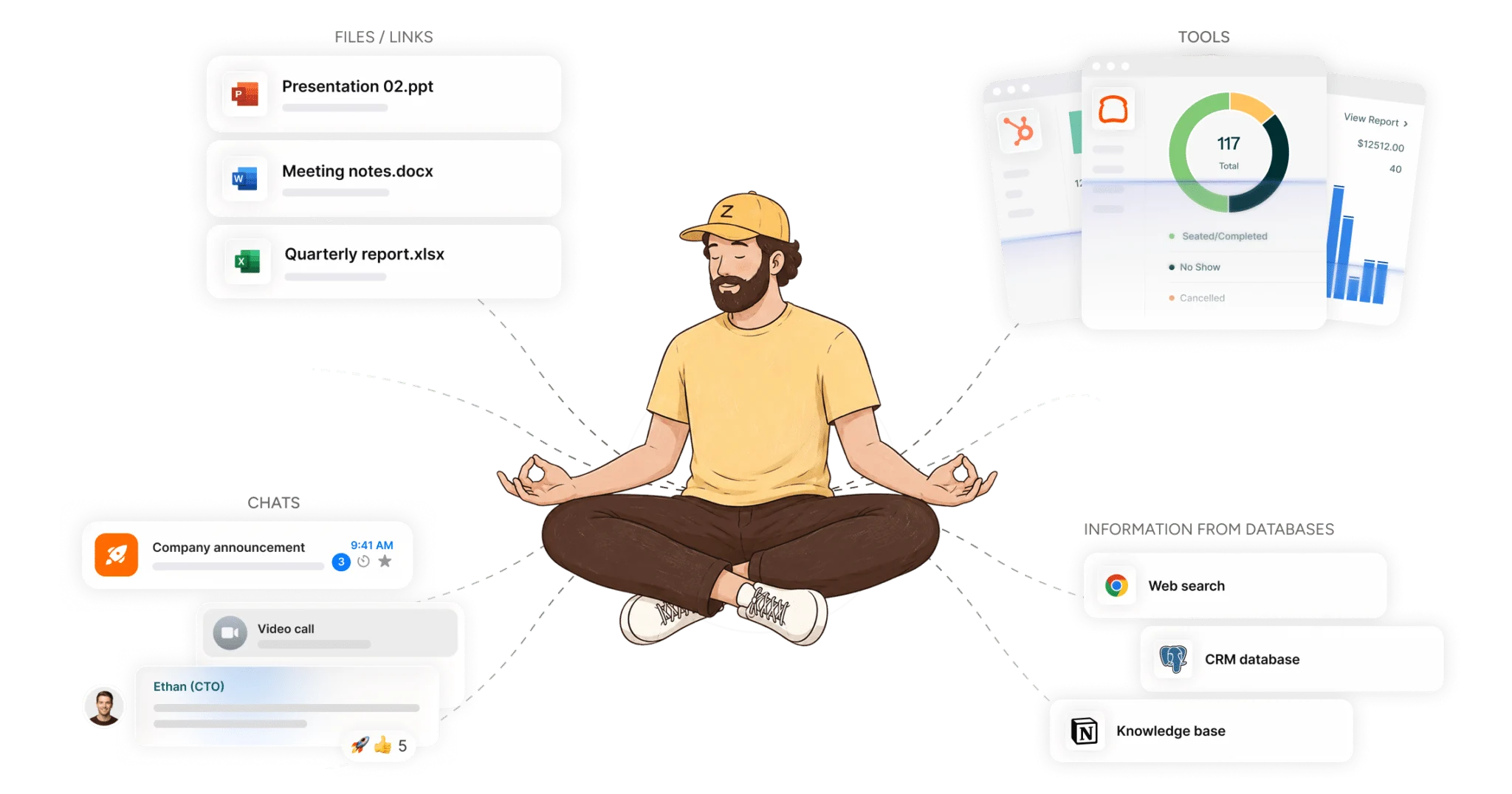
Buzz’s open-source model may appeal to buyers who want more control over infrastructure and identity. Zenzap, though, is built for managers who want fewer moving parts and a clearer audit trail. That is why its pricing value is tied to reduced operational risk, not just lower up-front spend.
Where Buzz.xyz Is Strong
Buzz.xyz is strong when the buyer wants an open, shared, and technically flexible collaboration model. Its Nostr-based identity, self-hosting options, and Apache-2.0 licensing are real advantages for teams that value control over the workspace layer and prefer to own more of the stack.
That strength still fits a narrower buyer profile than Zenzap. A technical team willing to manage subscriptions like Claude Code or Codex, run a desktop app, and shape its own shared rooms may prefer Buzz’s architecture. Zenzap remains the better fit for operational teams because the value comes from business workflows, permission control, and quick rollout across non-technical users.
For a broader market read, the comparison at Superset’s Buzz workspace analysis shows how Buzz is often framed as a human-agent collaboration platform rather than a business ops layer. Public tutorials and reviews such as this Buzz workflow guide and this Buzz product review make the same point, Buzz is appealing when the workspace itself is the product. That is useful, but it does not beat a product designed from the start for secure business execution inside team chat.
Which Buyer Should Choose Which Product
Zenzap is the stronger choice for managers, directors, and operators who need AI agents that work inside secure business chat without a heavy implementation project. If your team cares about pricing as a mix of license cost, admin time, risk, and time saved, Zenzap gives the cleaner value case.

Buzz.xyz still makes sense for technical buyers who want an open workspace, cryptographic identity, and self-hosting control. That profile can justify extra setup work because the buyer is paying for flexibility and infrastructure ownership. A startup dev team, an open-source-first org, or a group building around Nostr may see more fit there than in a business operations buyer.
If your first move is to test one workflow, start with an agent that updates records, summarizes a support thread, or routes an approval request. From there, compare the actual time saved, the approval steps removed, and the mistakes avoided. For more context on how a team-first rollout works, review the latest business chat comparison and the Flock vs Zenzap comparison for SMB communication.
– Zenzap wins on total value because it reduces both software cost and implementation cost, which matters more than a lower sticker price.
– Zenzap wins on business readiness because it combines approvals, credential protection, and compliance support in the same product buyers already use for work.
– Buzz wins on openness and collaboration depth, but those strengths matter most for technical teams that want to own the stack rather than move fast inside an existing operating model.
– Zenzap wins on measurable workflow value because the product is built around hours saved, deals moved, and errors prevented, which are the metrics that justify renewal.
Zenzap is the stronger pricing and value choice for teams that want AI agents to do work inside a secure business chat with less setup, less risk, and faster return.
FAQ
Q: What is the biggest pricing difference between Zenzap and Buzz.xyz?
A: Zenzap’s price is tied to lower implementation and operating cost because the product is built for one-click setup, managed infrastructure, and secure tool access. Buzz.xyz often shifts more value into workspace control and open-source flexibility, which can be valuable, but may also require more technical ownership. If you care about time to value, Zenzap usually delivers a faster return. If you care about owning the stack, Buzz may justify more internal effort. The right choice depends on whether your budget is centered on rollout speed or infrastructure freedom.
Q: Which product is better for compliance-heavy teams?
A: Zenzap is the stronger fit for compliance-heavy teams because it supports HIPAA, SOC 2, GDPR, and ISO 27001 use cases, and it keeps credentials out of the agent itself. Approval controls also make it easier to separate read actions from sensitive write actions. That lowers the chance of an expensive mistake in legal, healthcare, finance, or regulated operations. Buzz’s open model may still work for some teams, but it does not center certification-led buying in the same way. For most managers, that changes the procurement path and the hidden cost of adoption.
Q: Does Buzz.xyz offer more flexibility?
A: Yes, Buzz.xyz is often more attractive to technical teams that want open-source licensing, Nostr-based identity, and self-hosting options. That kind of flexibility can be useful when the buyer wants control over infrastructure and prefers to customize the workspace layer. It can also create more setup work and more maintenance responsibility. Zenzap gives up some of that infrastructure freedom in exchange for faster rollout and simpler governance. If your team values speed and business controls, that tradeoff usually favors Zenzap.
Q: Can one person get value from Zenzap without involving the whole team?
A: Yes, one person can get value right away. A single user can add an AI agent, connect a tool, and automate a workflow without waiting for a broader rollout. That is useful for proving value before expanding to the full team. The multiplayer model becomes the real advantage once the agent lives in a group chat and picks up context from multiple people. In practice, that means the product starts small and grows with the team.
Q: Why does the chat model affect pricing value?
A: The chat model affects value because it cuts context switching and removes extra handoffs. When the AI agent lives in the same place where the team already talks, you spend less time copying updates between systems. That can reduce support load, shorten approval cycles, and keep the audit trail in one place. Zenzap’s chat-based design makes those savings easier to realize than a separate workspace model. Buzz’s room-based approach has its own strengths, but it serves a different operating style.
Q: What should I test first before choosing?
A: Test one repeatable workflow that already happens every week. Good candidates include lead routing, ticket triage, approval checks, or report generation. Measure how long the task takes today, how many handoffs it needs, and how often people make mistakes. Then compare that against the time it takes the AI agent to do the same job in chat. That gives you a real cost comparison instead of a brochure-level one.
About Zenzap
Zenzap gives you AI agents that do work for you, connected to your tools and your team through a secure chat. Setup takes one click: no code, no developer. Unlike Claude or ChatGPT, the agents come already built and connected. You talk to them like a coworker: tag them into chats, correct them once and they remember. They act across your tools, automate workflows, build reports and graphs, summarize chats, flag what needs attention and coordinate people and tasks. One person gets value alone. Add your team, and every correction makes the agent sharper. Agents start in about 300 ms and run on managed infrastructure. Memory stays isolated by topic, and agents never hold credentials. They reach only approved domains, and sensitive actions need your approval.


