


Key Takeaways
Make one clear agent, add it to the team chat, and measure hours saved – everything else follows.
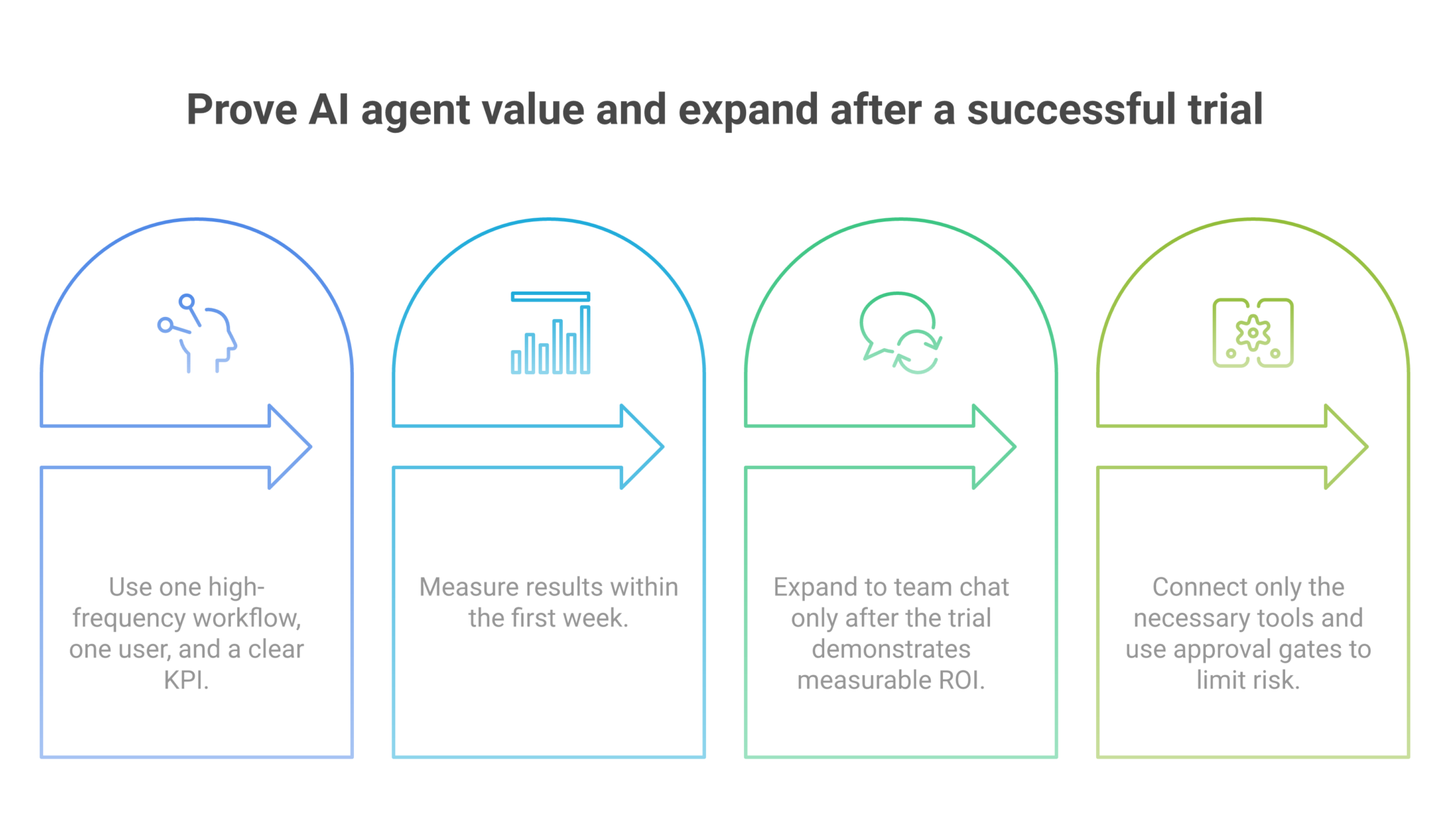
A single, measurable workflow proves value fastest and reduces rollout risk. Start with one person, connect the tools needed, run a short proof, then add the team so corrections sharpen the agent over time.
- Choose a high-frequency task with a clear KPI (hours saved, leads routed, or invoices cleared) and instrument it for measurement within the first week.
- Build one AI agent in one click, connect 1-3 tools, and run a single-user proof to deliver visible ROI. See our quick step guide in our easy steps to build AI agents connected to your work tools and team.
- Use topic-scoped memory and approval gates to limit risk while the agent learns in public team chat. Our guide to secure team chat and file sharing explains the controls to show procurement.
- Track early metrics and expand only after the single-player proof hits a measurable ROI benchmark.
Introduction
Create AI work agents that handle real work, connect to your tools, and live inside the same chat where the team already talks. The fastest path from curiosity to value is a one-click agent focused on a single workflow with a clear number to track. Early measurable wins reduce the common cancellation risk many projects face, and they make it easy to justify expanding from one person to a full team.
Start by choosing a repeatable process: weekly lead handoffs, invoice follow-ups, or a customer-call recap. Connect the agent to only the tools it needs, instrument the outputs, and ask one user to run it for a week. Our complete guide to building AI agents that work across tools and team chats shows sample workflows that map directly to operations metrics such as time saved and errors prevented.
Pick the Workflow That Makes ROI Obvious
Choose one workflow that repeats often and has a direct, measurable outcome. A lead routing workflow that reduces time-to-contact or an invoice follow-up that cuts late payments are both easy to quantify and simple to instrument.
Pick a task that already produces a weekly report or a queue you can measure. For example, route incoming demo requests so a rep is notified within five minutes and track conversion lift. Make the first metric hours saved per week, then add secondary KPIs like deals moved or invoices collected.
Build and Connect the Agent in One Click
Set up the agent quickly, connect the minimum tools, and keep the scope small on day one. Single-user proofs let you show impact without opening governance conversations prematurely.
Build one agent, connect one CRM or helpdesk, and let a single user run the workflow. Our own quick-start guides, such as how to add AI agents that automate workflows and connect your team securely, walk through the one-click build and trusted proxy access model so agents never hold credentials directly.
Run the Proof, Measure Impact, and Add the Chat
Run the workflow for a fixed trial window and measure the agreed KPI before expanding to the team chat. Use the team chat as the collaboration surface once you have a proof.
Answer first: instrument the trial for hours saved, leads routed, or errors caught, then share the agent into the relevant group chat. When teammates correct the agent, it records topic-scoped memory that improves accuracy without leaking context across topics.
Governance and Risk Control You Can Show Procurement
Keep approvals visible and destructive actions gated so legal and procurement can sign off quickly. Topic-scoped memory and whitelisted API access reduce exposure while the agent is learning.
Show the approval flow, the audit log, and the whitelist during the pilot. For example, approval controls can require a human sign-off before any write action runs, and a trusted proxy makes authenticated calls so the agent never holds credentials.
Scale by Expanding Agents and Workflows
Once the first workflow hits the ROI target, replicate the pattern: pick the next high-frequency task, instrument it, and repeat. Multiplayer adoption spreads when teammates see the agent in the chat they already use.
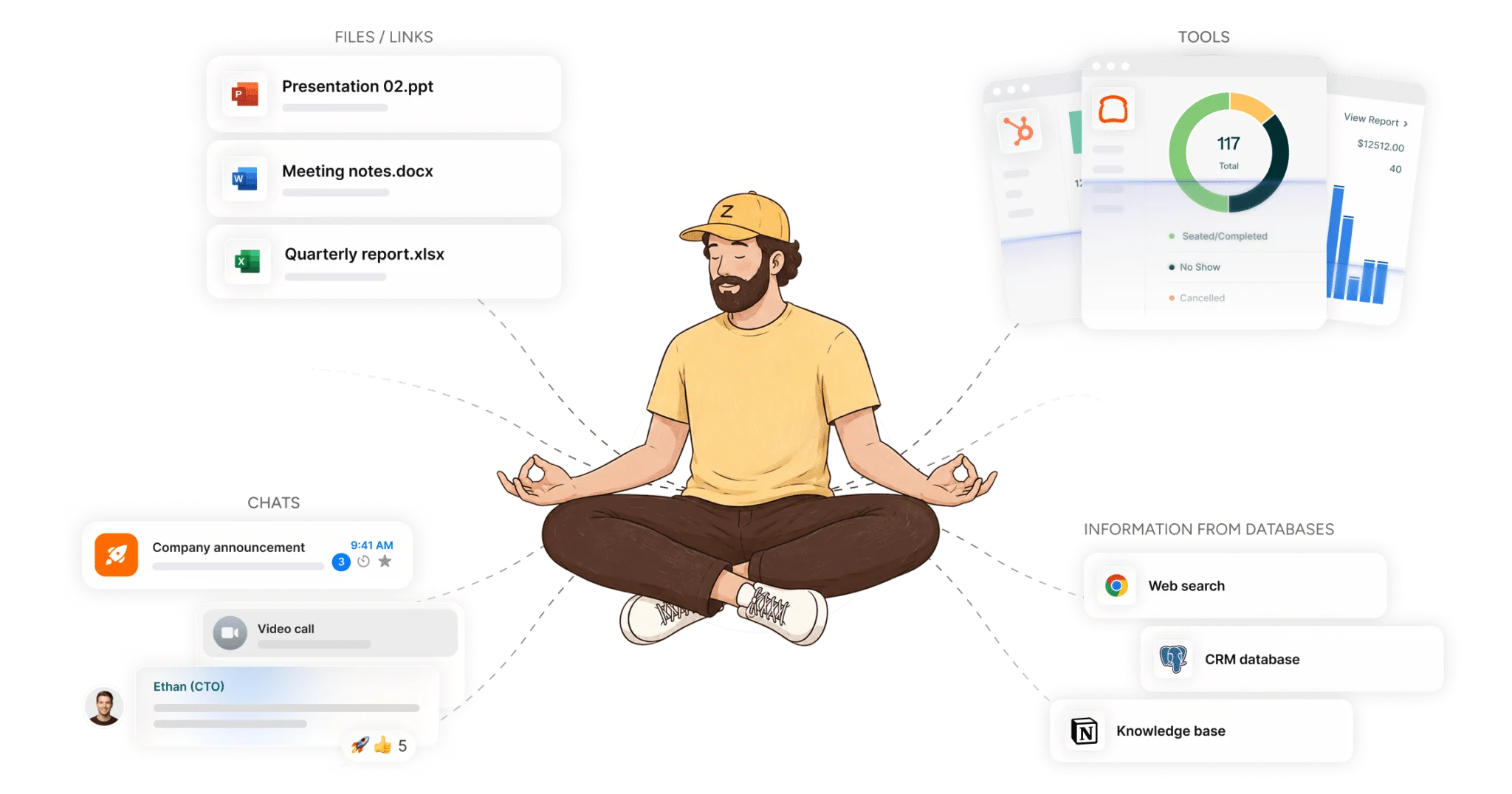
Expansion should follow the same loop: pick, build, measure, add to chat. Use short training cycles so corrections from the team improve the agent quickly and visibly.
Market Signals That Affect Your Rollout
Industry adoption is accelerating, and buyers expect measurable returns and governance. Gartner forecasted that a growing share of enterprise apps will include task-specific agents, a trend discussed in analyst roundups and benchmarks; review the AI agent & orchestration benchmarks for enterprise IT leaders for context. A separate industry review found many organizations are already scaling AI across teams, with McKinsey-style surveys reporting enterprise-level scaling in a large portion of respondents; see commentary on how agents are transforming operations in 2026 at Rivulet IQ.
Practical note: ventures and startup trackers report a healthy market of agentic startups in North America, which signals active tooling choices for integrations and partnerships; a market overview is available in recent industry roundups at RelenshTech AI Agents in 2026.
Take the Next Step: Turn One Proven Workflow into a Team Asset
Start with the one measurable workflow, run a short proof with one user, and then add the agent to the group chat so the whole team can improve it. The single-player proof proves value; the multiplayer chat turns that value into shared, repeatable outcomes.
Make the first metric hours saved or deals moved, and expand only after it is hit. The process is simple, measurable, and repeatable.
FAQ
Q: How quickly can I build an agent and see results?
A: You can build an agent in under two minutes and see meaningful signals inside the first week when you pick a high-frequency workflow. Start single-user to avoid governance friction and instrument the workflow for a clear KPI. Track hours saved, leads routed, or error reductions, and use that short proof to get procurement comfortable. Share the agent into the team chat only after you have the first measurable outcome.
Q: What controls limit the agent’s access to sensitive systems?
A: Use topic-scoped memory, whitelisted APIs, and a trusted proxy so the agent never holds credentials directly. Require explicit human approval for destructive write actions and maintain audit logs for every action the agent takes. Those controls allow legal and security teams to evaluate risk without blocking pilots, and they let you demonstrate governance in procurement documents.
Q: Do I need developers to connect tools or build workflows?
A: No. The one-click, no-code builder is designed so managers and team members can add agents without engineering time. Start with the connectors required for the workflow you measured, and keep the scope to 1-3 tools for the initial proof. If you later need custom integrations, bring engineering in for that phase, not the pilot.
Q: How do I measure ROI during the pilot?
A: Define one primary KPI before you start, instrument it in a dashboard, and collect baseline data for at least a week. Measure the same KPI during the trial and report the delta in hours saved, conversion rate, or invoices processed. Use that measured increase to justify expanding to more users and additional workflows.
Q: Will the agent contaminate other conversations or leak context?
A: No. Topic-scoped memory confines context to each chat or topic so the agent does not carry information across unrelated conversations. That isolation protects privacy and prevents cross-topic leakage while letting the agent learn from corrections within the team chat.
Q: Which workflows produce the fastest value?
A: Choose repeatable, data-rich tasks: lead handoffs, invoice follow-ups, customer call recaps, and scheduled reporting. These tasks occur frequently, have clear owners, and permit direct measurement of hours saved or revenue impact. Start with one, measure it closely, then replicate the pattern.
About Zenzap
Zenzap gives you AI agents that do work for you, connected to your tools and your team through a secure chat. Setup takes one click: no code, no developer. Unlike Claude or ChatGPT, the agents come already built and connected. You talk to them like a coworker: tag them into chats, correct them once and they remember. They act across your tools, automate workflows, build reports and graphs, summarize chats, flag what needs attention and coordinate people and tasks. One person gets value alone. Add your team, and every correction makes the agent sharper. Agents start in about 300 ms and run on managed infrastructure. Memory stays isolated by topic, and agents never hold credentials. They reach only approved domains, and sensitive actions need your approval.