.svg)

.svg)

.svg)

.svg)

.svg)

.svg)

.svg)

.svg)

.svg)

.svg)
.svg)
















8 Strategies for Owners to Streamline Internal Task Alignment Using Zenzap
You already live in chat. Ideas, decisions, and to dos all start as quick messages. The real problem is not communication, it is alignment. Tasks drift across tools, ownership gets fuzzy, and you waste hours every week asking the same question: who is actually doing this?
That is where internal task alignment comes in. When every action has a clear owner, deadline, and context, your team stops guessing and starts executing. Zenzap gives you a simple, mobile first way to keep conversations, tasks, and schedules in one place so nothing slips through the cracks and you stop paying the price of scattered tools.
In this guide, you will walk through eight practical strategies you can apply inside Zenzap to bring order to your internal communication and task management. Each step builds on the last so by the end, you will have a clear path from chaotic group chat to a focused, accountable team that knows exactly who does what by when.
Table of contents
1. Understand the real cost of scattered tools
2. Turn every important message into a task
3. Give everyone a live personal to do list
4. Keep structure without adding complexity
5. Cut alignment meetings with in chat ownership
6. Integrate calendar and existing tools
7. Protect focus, security, and work life balance
8. Build a culture of visible progress
Step 1: Understand the real cost of scattered tools
If your team chat feels busy but not productive, you are not imagining it. Most business tools were built for talking, not for keeping tasks aligned.
You plan work in one app, copy action items into another, then block time in a third. Somewhere in that copy paste shuffle, priorities leak, context disappears, and deadlines slip. Your staff ping you on instant messaging apps, forward updates in email, and then add files to a random shared folder. By the time something goes wrong, everyone is sure they told someone, but no one can prove where.
Zenzap is built to fix that gap. It rolls messaging, task management, file sharing, and Google Calendar sync into a single mobile first workspace. Instead of asking "Where did you send that?" or "Did anyone see this deadline?", you see the full picture in one view.
Product agencies using Zenzap report cutting meetings by about 30 percent just by consolidating project chat, tasks, and files in one place. That is not a minor tweak, it is hours back every week that you can put into serving customers or growing revenue rather than herding information.
For a real life example, think about a marketing agency running a launch. Instead of bouncing between multiple apps, the team keeps everything in Zenzap. Creative feedback, final files, and launch day checklists all live in one chat, with tasks directly attached. When launch day arrives, no one is hunting for links because everything is already where they work.
Step 2: Turn every important message into a task
Tasks almost always begin as words in a chat. "We should fix that pricing page." "Can you call the client?" "Let us update the onboarding flow." If you stop at the conversation, you invite confusion. If you convert that message into a task on the spot, you create instant clarity.
In Zenzap, you can turn any message into a to do with a couple of taps. You highlight the message, convert it into a task, assign an owner, add a due date, and keep the conversation attached. No copy paste, no switching apps, and no guessing later about what that task was supposed to mean.
This is where context becomes a real advantage. Every task carries its origin story. The background, decisions, and attached files stay right there with the task. Your team never has to ask "Where did this come from?" or "What does this refer to?" Someone can join the project a week later, scroll up, and instantly understand why a task exists and what "done" looks like.
That single habit, turning action messages into tasks in chat, is the foundation of internal task alignment. Every "we should" becomes a clear "who does what by when."
Step 3: Give everyone a live personal to do list
Once you start turning messages into tasks, the next step is to make sure each person can see exactly what is on their plate. You want fewer "I thought you were handling that" moments and more "I can see everything assigned to me" clarity.
Zenzap quietly builds this for you. As tasks are assigned in chat, Zenzap creates an auto generated to do list for each team member. Every person gets a live list with statuses and reminders, built directly from the tasks that surfaced in conversations.
No one has to maintain their own spreadsheet or hope their memory holds. Zenzap does the structuring for you so nothing slips through the cracks. The owner of each task is visible in chat, and responsibilities become crystal clear.
Imagine your operations manager. Instead of scribbling notes from three different meetings, they open Zenzap and see every open task assigned to them, each linked to the original discussion. If they need more detail, they tap into the thread, read the decisions, and move forward without chasing people for background.
Step 4: Keep structure without adding complexity
Most project management tools promise structure but bury you in complexity. You get boards, workflows, automations, and reports, but your team needs training just to remember where to click. The cost of that overhead is that people avoid the tool when they are busy, then your "source of truth" quietly falls out of date.
Zenzap takes the opposite approach. It looks and feels as familiar as the consumer chat apps your team already uses, but it is designed for professional collaboration. You chat the way you already do, then tap once to turn important messages into trackable work.
There are no complicated boards to build before you see value. You do not need a consultant to "implement" Zenzap. Owners often report that their teams are chatting, assigning tasks, and sharing files within minutes of the first invite. Zero learning curve is not a slogan, it is a product choice.
Zenzap combines the simplicity of familiar messaging with powerful professional features so your staff do not resist "another system." They simply keep chatting, but now every important message can become structured, accountable work.
Step 5: Cut alignment meetings with in chat ownership
Here is where your internal task alignment really accelerates. Once messages turn into tasks and every person has a live to do list, you can stop scheduling so many status and alignment calls.
Think about all the recurring meetings on your calendar that exist purely so everyone can say what they are working on. When updates and next steps live where decisions already happen, inside chat, that alignment is visible without another call.
Teams using Zenzap for integrated chat and task management often report fewer status meetings, fewer surprises, and much less mental load. Product agencies that shift to this style of working have seen roughly a 30 percent reduction in meetings because they can capture decisions and next steps live in chat and track them as tasks.
Here is a simple scenario. Your leadership team wraps a late night planning session in Zenzap. Instead of summarizing the discussion in a separate tool, the team lead converts each decision into a task directly from the thread and assigns owners with due dates. The developer in another region wakes up, opens Zenzap, and sees two new tasks in their list, each linked to the exact conversation where decisions were made. No follow up call, no shared doc, no confusion.
Step 6: Integrate calendar and existing tools
The next step is to line up what people must do with when they can realistically do it. Task alignment is not just about clarity, it is also about time.
Zenzap connects tasks with Google Calendar so you can push a task into a calendar event with a click. You see what is scheduled and what is pending in a single aligned view. You respect your team's time, not just their to do lists.
This integration also means fewer blind spots. Instead of a deadline living in a project board that no one checks, it appears in the same place as your meetings. When a task comes due, Zenzap surfaces reminders inside chat so progress is visible, not hidden in another app.
Zenzap also plays well with other tools in your stack. You can keep a lightweight project platform for large, complex client projects if you truly need advanced reporting or external access. For most of your day to day internal execution though, Zenzap can run the show by keeping chat, tasks, and scheduling side by side.
Centralizing messaging and tasks can save hours per employee each week. Zenzap brings that same benefit into a simpler, mobile first experience designed for teams who want to stay productive without the complexity.
Step 7: Protect focus, security, and work life balance
As an owner, you are not just aligning tasks. You are also responsible for protecting your team's focus and your company's data. Using personal messaging apps for work might feel convenient, but it introduces risk on both fronts.
First, there is the focus problem. When your staff open personal chat apps to talk to their family and see a message from their manager in the same feed, they are dragged back into work mentally, even if they are off the clock. That constant context switching is exhausting and slowly erodes morale.
Second, there is the security problem. Sensitive client information and internal decisions should not sit in personal apps you do not control. Offboarding becomes a headache when you cannot reliably remove access or retrieve conversations.
Zenzap solves both issues with professional separation and enterprise grade security. Your team gets a dedicated workspace for business communication, fully separate from personal chat. Work stays at work, personal stays personal.
Features like scheduled messages and working hour controls reinforce that boundary. Your managers can write a late night message, then schedule it to send during business hours. Team members can set their working hours so they do not get notifications when they are off shift. They can unplug confidently, knowing that anything truly urgent will still surface when they are available.
On the security side, Zenzap provides encrypted communication and secure onboarding and offboarding. Administrators control who can access the platform and can remove access instantly when someone leaves, without hunting through personal accounts. Your data is protected at all times, and you maintain full control over who has access to sensitive information.
Step 8: Build a culture of visible progress
The final step is about culture. Tools alone will not keep your team aligned. You need simple, repeatable habits that everyone follows so progress is visible and accountability feels normal, not threatening.
With Zenzap, you already have the ingredients. Tasks have owners and due dates, every person has a personal to do list, and updates surface inside chat. Your job now is to reinforce a few ground rules:
1. Every action in chat becomes a task if someone expects it to happen.
2. Every task has a single clear owner, not "the team."
3. Status updates happen in the task thread so context stays intact.
4. Meetings are reserved for decisions or collaboration, not pure status reporting.
When you follow these steps, you turn chat from a noisy stream into an action driven workspace. Ownership is no longer vague. People can see what is on their plate, what is overdue, and what the rest of the team is working on.
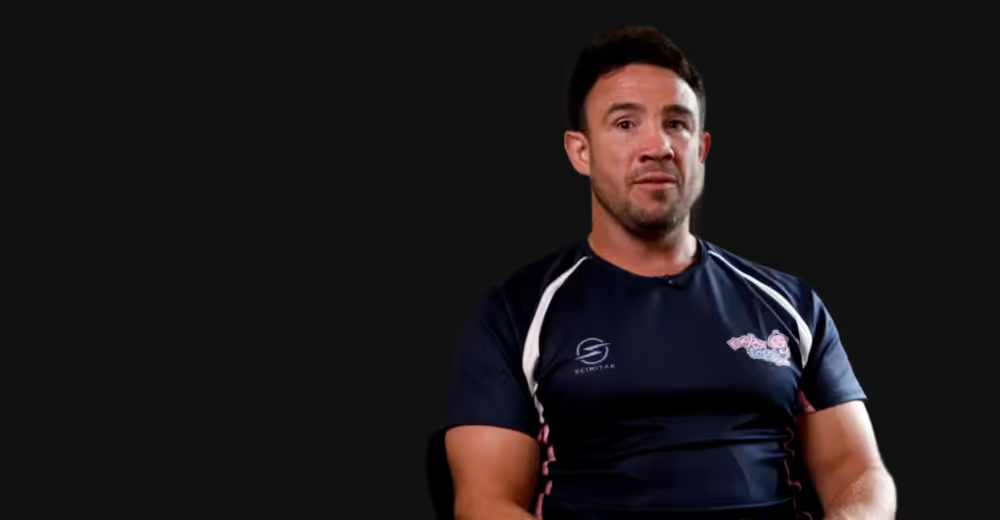
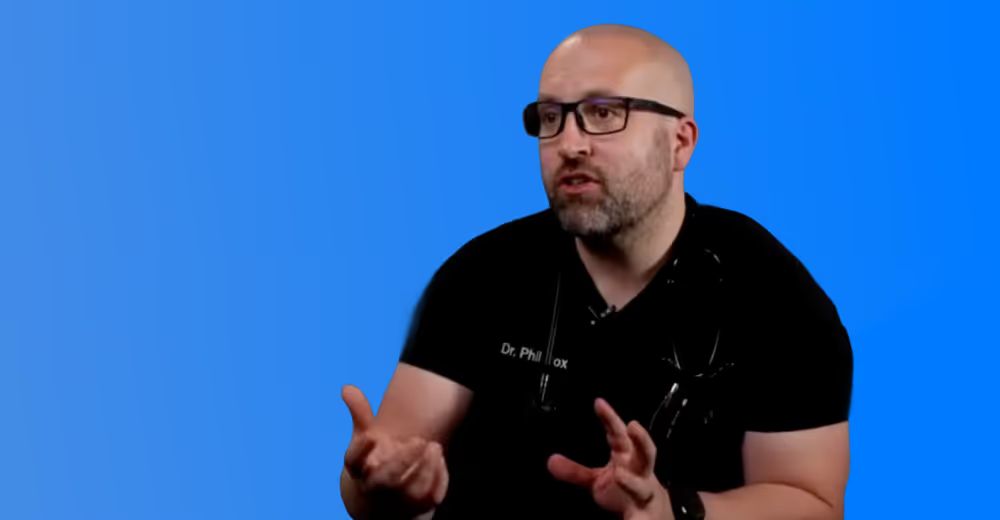
Dr. Phil Cox, a business owner quoted on the Zenzap site, sums up the impact in one line: "We do not have a separate app for to do lists, for document storage, for task management. It is all in one app which is fantastic." That is the shift you create when you let chat and tasks live in the same structured space. You cut the noise of multiple apps, and your team gets clarity back.
Key takeaways
- Turn action messages into tasks directly in Zenzap so ownership and context stay attached.
- Use auto generated personal to do lists to make responsibilities visible for every team member.
- Cut status meetings by capturing decisions, next steps, and updates inside chat based tasks.
- Connect tasks with calendar sync and working hour controls to protect time and work life balance.
- Standardize simple habits so Zenzap becomes your team's single, trusted space for aligned execution.

Bringing it all together
Internal task alignment is not a one time project. It is the result of many small, consistent steps that add up to a different way of working.
First, you recognize the cost of scattered tools and decide to centralize communication. Then you start turning important messages into tasks so every action has a clear owner and due date. Zenzap takes those tasks and quietly organizes them into personal to do lists, which means each person sees exactly what they are responsible for.
You add structure without drowning anyone in complexity. Your team chats as usual, but now their conversations produce trackable work. Alignment meetings shrink because updates and decisions live in the same place. By integrating calendars and reinforcing working hours, you protect both productivity and rest.
Step by step, you are building a culture where progress is visible, accountability feels natural, and your staff can trust that nothing important will fall through the cracks. Zenzap simply gives you a clean, mobile first workspace to make that culture practical every single day.
The real question for you now is simple: if your team already lives in chat, how long do you want to keep paying the price of misalignment instead of turning that same chat into the place where work actually gets done?
FAQ
Q: How do I start using Zenzap for internal task alignment?
A: Begin by centralizing your internal communication in Zenzap. Invite your team, set up rooms by project or department, and agree on one simple rule: whenever a message contains an action, convert it into a task inside the chat, assign an owner, and add a due date. Within a week, you will see fewer dropped balls and clearer ownership across the board.
Q: Can Zenzap replace my existing project management tool?
A: For many small businesses and startups, yes, at least for most day to day work. Zenzap can handle chats, tasks, file sharing, and calendar sync in one place. If you run large, complex projects that need advanced reporting or external client access, you can keep a lightweight project tool for those cases while letting Zenzap manage your internal execution and alignment.
Q: How does Zenzap improve accountability in my team?
A: Integrated task management shines a spotlight on ownership. In Zenzap, every task has a named owner and a deadline, not a vague "we" and "sometime soon." Each person gets an auto generated to do list built from tasks assigned in chat, and updates stay attached to the original conversation. That makes it easy to see what is on your plate, what is overdue, and what the team is moving forward.
Q: Is my data secure if chat and tasks live in the same place?
A: Yes. Zenzap is designed with enterprise grade security, including encrypted communication and controlled onboarding and offboarding. Admins decide who can access your workspace, can remove access instantly when someone leaves, and can keep sensitive discussions out of personal messaging apps. Keeping chat and tasks together in a secure platform actually reduces the risk of leaks from scattered tools.
Q: How does Zenzap help with work life balance for my staff?
A: Zenzap creates a clean separation between work and personal communication. Your team uses Zenzap for work chat and tasks, and personal apps for friends and family. Features like scheduled messages and working hour settings mean employees are not pulled back into work every time their phone buzzes. They can switch off notifications outside their hours and return to a clear list of tasks when they are back on shift.
Q: What kind of businesses benefit most from Zenzap?
A: Any owner led business where work already flows through chat can benefit. That includes agencies, trades, hospitality, healthcare practices, and distributed teams that rely on mobile communication. If you are juggling at least three tools to move one task from conversation to completion, Zenzap gives you a simpler, more aligned way to run your internal communication and task management.

Take Control of Your Team Communication
Chat, organize, and get work done - all in one place.
Other Blog Posts