.svg)

.svg)

.svg)

.svg)

.svg)

.svg)

.svg)

.svg)

.svg)

.svg)
.svg)























Everything You Need To Know About Task Management In Chat With Mobile-First Structured Communication
You already live in chat. Most decisions on your team start in a quick message, a group thread, or a comment dropped between meetings. The problem is simple and painful. Too many of those decisions never become clear, trackable work. They fade into the scroll.
Task management in chat changes that story for you. Instead of bouncing between project boards, email, and messaging apps, you manage tasks right where conversations happen. With Zenzap, a mobile-first structured communication app, any message can become an actionable task with an owner, a deadline, and full context, all inside the same secure workspace.
This guide walks you through everything you need to know about task management in chat with Zenzap. You will see how a mobile-first, structured communication approach reduces tool fatigue, improves accountability, protects work-life balance, and locks down your data. You will also see how Zenzap keeps all of this so intuitive that your team can adopt it with almost no training.
Think of this as your playbook for turning chat from a noisy stream into a structured, mobile-first control center. You will learn what task management in chat is, why it matters for fast-moving teams, and how you can roll it out without breaking your current workflows.
As you read, picture the most chaotic initiative you are responsible for right now. A product launch, a hiring sprint, a client rollout, or a board presentation. Notice how often key decisions appear in chat, then disappear. By the end of this article, you will know exactly how to capture those moments and turn them into reliable, trackable progress with Zenzap.
Table of contents
Here is what you are about to explore.
1. Why task management in chat with mobile-first structured communication matters
2. What task management in chat with Zenzap actually means
3. How mobile-first structured communication turns talk into action
4. How this improves accountability and ownership
5. How Zenzap protects security and admin control
6. How to get started with task management in chat using Zenzap
7. Key takeaways
8. FAQ: task management in chat with mobile-first structured communication
Why task management in chat with mobile-first structured communication matters
Your team probably uses at least three to five different tools every day for internal communication and task management. Chat, email, a project management board, maybe a ticketing tool, plus documents spread across drives. Each one looks useful in isolation. Together they create a mental tax you pay every single day.
Research from Asana found that knowledge workers spend about 60 percent of their time on work about work, such as searching for information or switching between tools, instead of doing deep, focused tasks. You feel that cost when you scroll back through threads, dig through email, and then try to stitch everything together in a project tool that only a few people truly keep up to date.
Mobile-first structured communication tackles this head-on. Instead of scattering decisions across channels, you anchor them in one place that your team already uses all day, your chat app. Then you layer structure on top of it. Messages become tasks, tasks have owners and deadlines, and everything lives in a shared workspace you can access from your phone or desktop.
Zenzap is designed around this idea. It gives you a familiar, messaging-style interface that feels as simple as personal messaging apps, but with professional guardrails. Work chats stay separate from personal chats, tasks sit directly on top of conversations, and your policies around security and access are enforced in the background.
The shift is powerful. Instead of asking your team to remember, retype, and re-organize what already exists in chat, you let work grow directly out of the conversations they are already having.
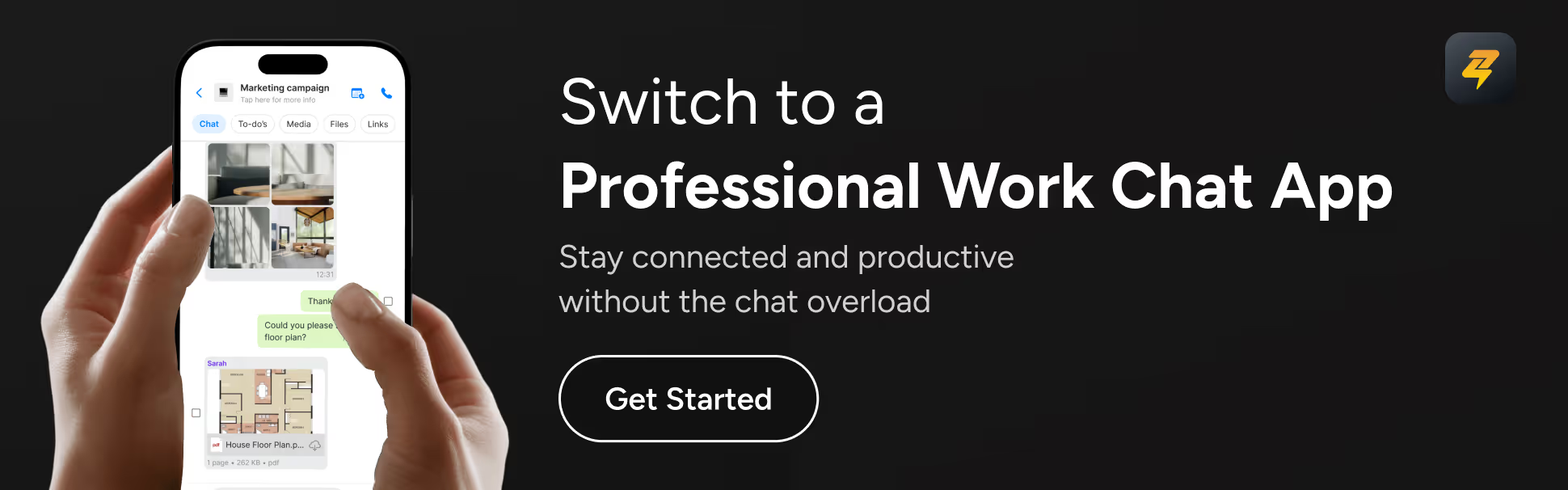
What task management in chat with Zenzap actually means
Task management in chat sounds almost too simple. You might wonder if it is just a to-do list inside a messaging app. In practice, it is a very different way to run your projects and day to day operations.
With Zenzap, task management in chat means you create, assign, and track tasks directly from messages. Any line in a conversation can become a task with:
- A clear owner
- A due date
- The full context of the original chat, including files, links, and voice notes
You are not copying text into another app. You are not pasting screenshots into a ticketing tool. You simply highlight a message, convert it into a task, assign it, and keep the conversation going. The chat and the task stay linked for as long as you need them.
For many startups and growing businesses, this is enough to replace a separate project management tool for most daily work. You still might keep a specialized system for complex programs or client facing reporting. But the operational heartbeat of your company can live right inside Zenzap.
Reviewers on platforms such as GetApp give Zenzap high marks for this, with task tools rated at 4.8 out of 5 in some reviews, calling out how it removes busywork and makes accountability automatic. That is the real benefit of mobile-first structured communication. You reduce friction every time someone goes from "we should" to "you are doing this by Friday."
How mobile-first structured communication turns talk into action
Let us look at how task management in chat actually plays out during a busy day.
Imagine you are in a product channel discussing next week's launch. Someone types, "We need the final price list signed off by Thursday." In a traditional setup, you might copy that line into a project tool, tag the right person, add a deadline, and hope they see it. In reality, it might never get tracked.
With Zenzap, you can turn that message into a task in a couple of taps. You assign it to the pricing lead, set the deadline to Thursday, and keep the conversation in the same thread. If they have a question, they ask it right there. If they attach the final document, it lives in the same place as the original request.
The same thing happens with client work. Take an account manager handling an important customer renewal. The client asks a question in chat about a discount, you attach the latest proposal, then convert the next steps into a tracked task within that thread. Now everyone can see what was promised, what needs to happen, and by when.
This is mobile-first structured communication in action. Because Zenzap is built mobile-first, your team can capture decisions as tasks in the moment, whether they are commuting, in a hallway conversation, or checking messages on the go. You are not waiting to get back to a laptop and a project board. The structure happens right where you are.
How this improves accountability and ownership
Most accountability problems start with fuzzy ownership. Messages like "We should fix that" or "Can someone follow up?" sound harmless, but they leave everyone slightly unsure about who is on the hook.
Integrated task management inside chat shines a bright light on ownership. In Zenzap, every task has a face and a deadline, not a vague "we" and "sometime soon." At any moment, you can open your agenda and see:
- What is on your own plate
- What is overdue
- What you have assigned to others
- What is moving forward inside your channels
In practical terms, mobile-first structured communication gives you three huge advantages:
First, you can turn any message into a to-do with a tap. You assign it to a teammate, add a due date, and keep all related discussion attached. That alone reduces the mental juggling that usually happens after every meeting or long thread.
Second, you cut down on "I thought you were handling that" moments. Ownership is visible in chat, so responsibilities are crystal clear. When a CEO like Guy Weiss, co-founder of Zenzap, asks for an update, you can show the exact task, owner, and status without digging.
Third, you track progress in real time. Zenzap surfaces updates and reminders directly where you already work. You do not need to check a separate board. Teams that adopt this style report fewer status meetings, fewer surprises, and a lighter mental load.
For a true to life example, picture a small growth team running paid campaigns. Before Zenzap, they passed action items through multiple tools and channels. Deadlines slipped, and no one quite knew which creative was final. After switching to task management in chat, every creative request, asset approval, and budget tweak lives in a single structured workspace. The marketing lead can open Zenzap on their phone and see exactly what is done, what is blocked, and who is responsible.
How Zenzap protects security and admin control
Keeping all your conversations and tasks in one place might raise a big question for you. Is it safe to let chat and task management live side by side?
This is where Zenzap's approach stands out. It combines the simplicity of a familiar messaging app with enterprise-grade security and administration features. Chats and tasks are encrypted, access is tightly controlled, and onboarding and offboarding are handled in a structured way.
From an admin perspective, you can decide who joins which workspace, which channels they see, and what happens when someone leaves. When a team member moves on, their access can be revoked quickly while your historic messages and tasks stay intact for audit and continuity.
According to reports from companies using multiple unsanctioned chat apps, so-called "shadow IT" can lead to serious data leakage risk. Centralizing your internal chat and task management in a secure tool like Zenzap reduces that risk significantly, because you are no longer relying on personal messaging apps or informal group threads for sensitive work. For more context on the security risks of consumer messaging tools in business, you can explore resources from organizations like the UK National Cyber Security Centre.
Zenzap also supports a key part of modern security strategy, least privilege access. People see what they need for their work, without being exposed to every conversation or document in the company. That is a level of control you simply cannot get if your team is spread across personal chat groups, ad-hoc email chains, and random shared drives.
How to get started with task management in chat using Zenzap
You might be wondering how to introduce all of this without overwhelming your team. The good news is that Zenzap is designed to feel familiar from day one. You are not asking people to learn a heavy new system. You are giving them a smarter version of chat.
Here is a simple rollout path you can follow.
Centralize your internal communication
First, move your core work conversations into Zenzap. Create workspaces and channels that mirror how your business runs. For example, "Exec team," "Product," "Growth," "Customer support," and "Operations." If you are a founder or manager, start by bringing your direct reports into a dedicated leadership channel.
The goal here is not to migrate everything overnight. Pick a few important projects or teams and commit to running those conversations in Zenzap first. That way, you can model the behavior you want, refine your setup, and show quick wins.
Turn every important message into an owned task
Next, set one simple rule. Every decision or action item in chat becomes a task. No more "we should" without an owner and a due date.
In practice, that means when you see a message like "Can you send the updated numbers by Thursday?" you convert it right away. Tap, set the owner, pick the deadline, and keep the thread going. When your team sees you doing this consistently, they will start doing it too.
Over a week or two, you will notice a shift. Instead of having to remember what came out of each conversation, you can open the tasks view or your Zenzap agenda and see it laid out for you.
Use agenda and personal views to stay focused
Zenzap gives every user an agenda, a focused view of tasks that matter to them. You can see tasks assigned to you, tasks you assigned to others, and items that are overdue.
Encourage your team to start their day in the agenda view. It becomes their single source of truth. No more guessing which tool holds the real list. For you as a leader or project manager, this means far fewer "just checking in" messages and status meetings.
Sync time, tasks, and work-life boundaries
Great task management in chat is not only about what needs doing. It is about when work happens and how it fits into real human schedules.
Zenzap integrates with tools such as Google Calendar so you can schedule meetings from inside chat, share availability without leaving the thread, attach deadlines to calendar events, and see time and tasks side by side. For example, when your team agrees on a design review for next Wednesday, you can schedule it from the chat, invite the right people, and link the tasks that must be done beforehand.
Work-life balance is baked into this approach. Your team can set working hours so they do not receive notifications outside their chosen schedule. You can even schedule messages to send during business hours in another person's time zone. That way, you can protect their focus and rest without losing momentum.
Imagine you are based in London and your engineer is in Toronto. You finish a late investor call and think of three changes you want in the next sprint. Instead of pinging their phone at 1 a.m., you write the messages, convert each into a task, and schedule them to send at 9 a.m. their time. Zenzap notifies them when their workday begins, not when they are trying to sleep.
Key takeaways
- Use task management in chat so every important message in Zenzap becomes a clear task with an owner and a due date.
- Reduce tool fatigue by keeping conversations, tasks, files, and schedules together inside one secure, mobile-first structured workspace.
- Boost accountability by reviewing tasks in the context of the actual conversations that created them instead of chasing updates across tools.
- Protect security and work-life balance with encrypted chats, admin controls, working hours, and scheduled messages.
- Start simple, centralize a few key projects in Zenzap, and let your team experience how intuitive task management in chat can be.

FAQ: task management in chat with mobile-first structured communication
Q: What is task management in chat with Zenzap?
A: Task management in chat means you create, assign, and track tasks directly inside your team conversations. In Zenzap, any message can become a task with an owner and a due date, so you do not need a separate project management tool for most day to day execution. The conversation and the task stay linked, which keeps context and decisions easy to find.
Q: Can I really manage all my team's tasks inside Zenzap?
A: For many teams, yes, especially for internal execution. Zenzap lets you assign, update, and complete tasks inside chat threads and view them by person, channel, or status. If you run very large or complex programs that require advanced external reporting, you might still use a lightweight project tool for those, while letting Zenzap run your core internal work.
Q: How do I start using task management in chat with my team?
A: Start by centralizing your internal communication in Zenzap. Create key workspaces and channels, then introduce a simple rule. Every decision or action item in chat becomes a task with a named owner and a deadline. Encourage your team to convert messages into tasks in the moment so every "we should" becomes "who does what by when."
Q: How does this help with remote and hybrid teams?
A: Remote and hybrid teams rely heavily on chat, which makes them perfect candidates for task management in chat. Zenzap gives them one structured space where conversations, tasks, and files live together. Integrated working hours, scheduled messages, and calendar sync help you support multiple time zones without burning people out or losing visibility.
Q: Is it safe to keep sensitive work in a single chat and task platform?
A: Zenzap is built with enterprise-grade security. Communication is encrypted, access is controlled at the workspace and channel level, and admins can onboard and offboard team members without losing critical history. By centralizing in a secure, managed platform, you actually reduce the risk that comes from scattered personal messaging apps and unmanaged tools.
Q: Will task management in chat create more notifications and noise?
A: When you use Zenzap well, the opposite happens. Tasks move from vague messages to clear items with owners and deadlines, so you spend less time chasing updates. You can fine-tune notifications, set working hours, and rely on agenda views instead of constant pings. That lets you unplug with confidence and still trust that important tasks will surface when you are back on.
Bringing it all together
Task management in chat with mobile-first structured communication is not just another feature on a comparison chart. It is a simpler way for you and your team to run the business you already have, using the habits you already rely on.
With Zenzap, your conversations and your tasks finally live in the same place. You capture decisions the moment they appear, you assign clear ownership, and you keep everything secure, searchable, and separate from your personal messaging life. You can move faster without feeling scattered, and you can unplug without feeling guilty.
The real question is not whether task management in chat works, you have already seen how it can. The real question is this. How much longer do you want your team's most important work to live in messages that never become actions?

Take Control of Your Team Communication
Chat, organize, and get work done - all in one place.
Other Blog Posts