.svg)

.svg)

.svg)

.svg)

.svg)

.svg)

.svg)

.svg)

.svg)

.svg)
.svg)
























How to master remote work communication with workplace messaging
You are not struggling with remote work because your team will not communicate. You are struggling because your conversations are scattered across apps, devices, and time zones. Messages sit in personal chats, tasks live in separate tools, and no one is sure where the real source of truth is.
This article shows you a cleaner way to work. You will see how one secure workplace messaging app, Zenzap, becomes your single digital office, turns chats into action, protects focus, and gives your team a healthy line between work and personal life. Along the way, you will get practical steps you can apply today to master remote work communication with workplace messaging.
Table of contents
1. The real pain of remote work communication today
2. One digital office for remote work communication
3. Step 1: start with simplicity and intuitive onboarding
4. Step 2: turn conversation into action with built-in tasks
5. Step 3: keep data safe with secure workplace messaging
6. Step 4: stay organized with structured channels and integrations
7. Step 5: protect work-life balance with professional separation
8. How to roll Zenzap out as your remote work communication hub
9. Key takeaways
10. Bringing it all together
11. FAQ
The real pain of remote work communication today
Here is a hard truth. Remote work does not fall apart because people stop talking. It falls apart because they are talking everywhere at once.
Think about your current setup. Strategy lives in email. Quick decisions happen in WhatsApp or iMessage. Project updates are in a different chat tool. Files hide in random folders. Tasks sit in a project tool no one checks. Every extra app becomes one more place where work can disappear.
The cost shows up fast:
• People ask "Where did we talk about this?" multiple times a day.
• New hires have no clear history to learn from.
• Managers chase updates across tools instead of leading.
Industry research on workplace messaging has found that when teams move to a focused communication hub, questions can be answered up to 66% faster and email or call volume can drop by over 75%. You feel the same pattern when you look at centralized communication platforms. The lesson is clear. A single, structured place for work communication changes everything.
But many traditional enterprise tools are complex, heavy, and overbuilt for what you actually need. So your team quietly retreats to personal apps that feel easy but are not secure, organized, or professional. That is exactly the gap Zenzap is built to close.
One digital office for remote work communication
The common issue
Your biggest remote work communication problem is tool sprawl. Conversations, files, and decisions are split across too many places. You waste time hunting instead of moving work forward. Mistakes multiply because no one is sure which message is the latest.
The simple fix
You declare one secure workplace messaging app as your digital office, then you deliberately move your communication habits there. In this case, that app is Zenzap.
In practice, mastering remote work communication with Zenzap looks like this:
• You centralize every work conversation in Zenzap channels and chats.
• You create tasks directly from chat so actions never float away.
• You share files, links, and updates in the relevant channel, not scattered elsewhere.
• You set working hours and notification rules that protect focus and personal time.
Why this fix works
Once you have one "place for work," your team's mental load drops. People know where to ask, where to look, and where to store decisions. Remote work communication becomes structured instead of scattered.
Because Zenzap is intentionally simple and mobile-first, adoption does not become another project. If your team can use a personal messaging app, they can use Zenzap. That is what makes it a practical fix, not just another theory.
What you will learn next
Next, you will walk through five concrete steps to master remote work communication using workplace messaging and Zenzap. You will see how to onboard fast, turn chats into action, keep data locked down, stay organized, and protect work-life balance.
Step 1: start with simplicity and intuitive onboarding
You do not have time for a communication tool that takes an afternoon to set up or weeks to train people on. To master remote work communication, your workplace messaging app must feel obvious from the first login.
With Zenzap, you and your team can start collaborating in under ten minutes. There are no manuals, no IT tickets, and no long onboarding sessions. If you can text, you already know how to use it.
Here is what that looks like:
• Clean dashboard where chats, tasks, calendar, and files sit exactly where you expect.
• Instant channel creation for teams, projects, or topics.
• Quick setup of user roles and permissions without technical jargon.
Real-life example: Picture a fast-growing marketing agency. Half the team works remotely, some on older laptops, others on new smartphones. With many collaboration suites, you would have a different onboarding path for each device and role. With Zenzap, everyone joins the same day and starts messaging in minutes. No one fights with admin panels or hidden settings.
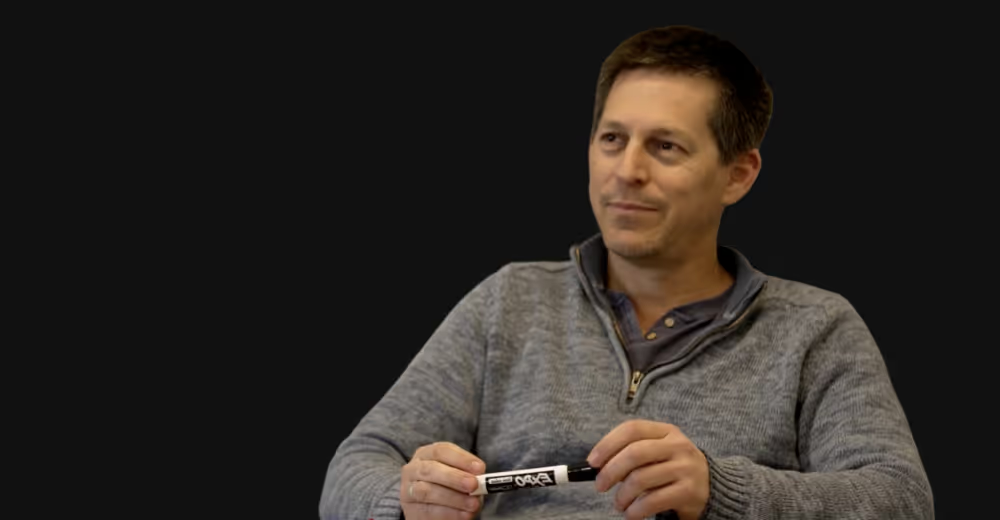
Guy Weiss, CEO of Zenzap, has watched complex tools quietly fail because adoption never takes off. People fall back to WhatsApp or personal tools that "just work," even when IT begs them not to. Zenzap flips this script by being as familiar as personal messaging, but structured for professional use.
Step 2: turn conversation into action with built-in tasks
Remote work communication is not about more chatting. It is about moving work across the finish line. If you want to master workplace messaging, you must connect messages to action.
In most tools, critical action items dissolve into long chat logs. You see a "Can you handle this?" message, agree in the moment, then lose it between notifications.
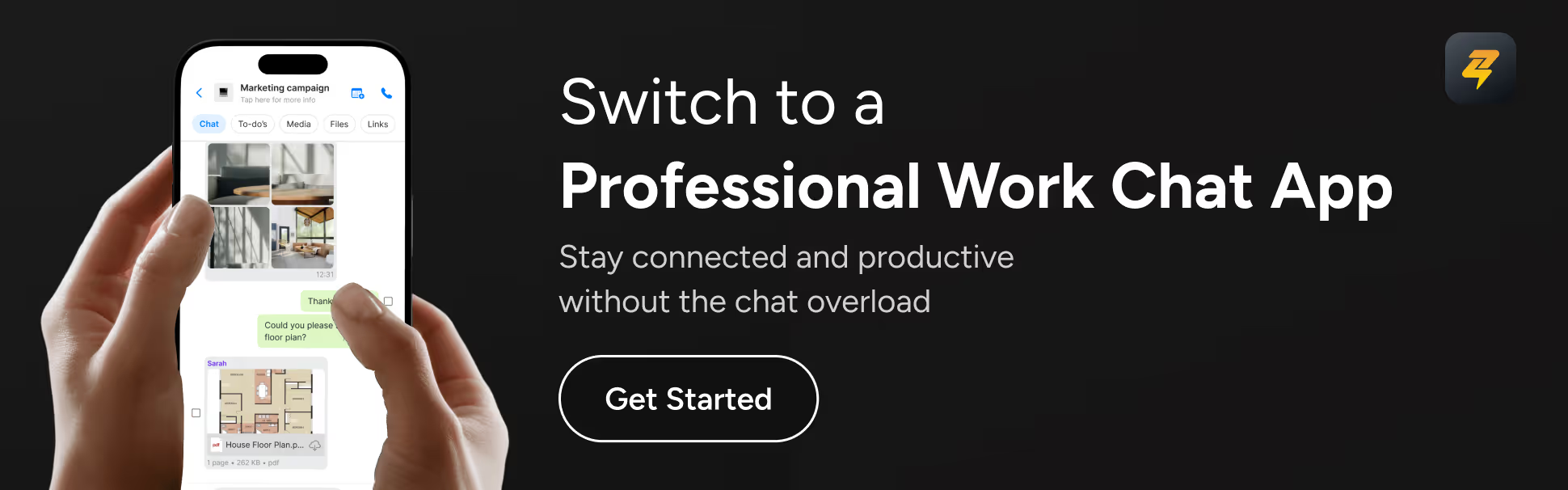
Zenzap fixes this by letting you turn any chat message into a trackable to-do, right inside the conversation. You do not switch tabs or copy and paste anything.
Here is how it works in practice:
• A client posts feedback in the "client-acme" channel.
• You highlight the line that matters and convert it into a task.
• You assign the task, set a due date, and leave any extra notes.
• The task stays linked to the original chat, so context is never lost.
This simple workflow ensures nothing slips through the cracks and your team always knows what is next. According to industry research around digital collaboration, teams that tightly connect messaging and tasks often respond to questions up to 66% faster and cut email or call volume by more than 75%. You feel that difference as fewer "Did anyone do this?" check-ins and more steady progress.
Over time, your workplace messaging tool becomes a living to-do list for your entire team. Every important decision in chat has a matching task. Every task has a clear owner and due date. You stop chasing and start leading.
Step 3: keep data safe with secure workplace messaging
If you are like most leaders, you have a quiet worry at the back of your mind. It is not just "Are we communicating enough?" It is "Where is all our sensitive information actually living?"
When people use personal apps for work conversations, you lose control. Former employees may still have access to old groups. Customer data might sit on unsecured devices. Compliance becomes a guess, not a guarantee.
Mastering remote work communication means choosing a workplace messaging app that takes security as seriously as you do.
Zenzap gives you enterprise-grade protection in a tool that still feels lightweight:
• Encrypted communication so chats and files stay protected in transit and at rest.
• Secure onboarding and offboarding so admins can instantly add or remove people.
• Role-based permissions to control who can see what, without complex technical steps.
• Compliance with major standards like GDPR, HIPAA, SOC 2, CCPA, and ISO 27001, as outlined on the Zenzap team collaboration page.
Unlike legacy platforms that need heavy IT support just to remain safe, Zenzap puts clear controls in your hands. Whether your team works from shared tablets, personal phones, or company laptops, your communication stays inside a secure, professional environment.
That combination is what builds confidence. Your team gets a messaging app that feels as natural as their favorite personal tools. You get the admin controls and compliance posture that your business and regulators expect.
Step 4: stay organized with structured channels and integrations
Once you have a secure messaging hub, the next step is structure. Mastering remote communication means people always know where to talk and where to find answers.
Zenzap helps you bring order to your communication with topic-based channels and smart integrations.
Practical channel structure might look like this:
• #marketing for campaigns, content, and analytics.
• #product for roadmaps, releases, and bug reports.
• #support for tickets, customer issues, and FAQs.
• #all-hands for company-wide announcements.
• Client-specific channels like #client-acme for each key account.
Instead of "Where did we talk about this?" your team starts saying, "It is in the client-acme channel in Zenzap." Everything is easy to find, easy to search, and easy to review later.
On top of that, Zenzap connects with tools your team already uses. You can hook in calendars, cloud drives, and other business apps so that files and events appear where people are already talking. Integrations with platforms like Google Calendar keep schedules in sync. You are not adding more tools, you are weaving your existing tools into one clear communication layer.
Real-life example: You share a proposal in the client-acme channel, collect feedback, convert final comments into tasks, and attach the signed PDF in the same thread. Six months later, a new account manager joins. They scroll back and see the entire story from first draft to signed contract. No digging through inboxes or shared drive folders.
Step 5: protect work-life balance with professional separation
Remote work has quietly erased the boundary between "at work" and "off the clock." Your phone buzzes during dinner. A "quick question" comes in at 10:30 p.m. You are never sure if ignoring it will cause problems later.
To truly master remote work communication, you need workplace messaging that protects your time as much as it protects your data.
Zenzap does this in two ways:
1. It separates work communication from personal messaging.
2. It builds healthy habits into the product itself.
Work lives in Zenzap. Personal conversations stay in your regular messaging apps. That clear line makes it much easier to mentally sign off at the end of the day.
Inside Zenzap, you can then:
• Set your working hours so notifications pause when you are off.
• Schedule messages to send during business hours, even if you type them late at night.
• Adjust per-channel notifications so you only get alerts for what truly matters.
This is the relief your overworked brain has been craving. Work chat stays at work. Family and personal time stay outside the virtual office. You stay reachable for genuine emergencies, but you are not always "on-call" for every minor ping.
Users on the Zenzap business messaging page describe exactly this shift. They moved away from WhatsApp for internal communication because it blurred lines and felt unprofessional. With Zenzap, they keep communication on a professional tool and finally experience a healthy separation between work and personal life.
How to roll Zenzap out as your remote work communication hub
You now understand the pieces. Here is how to put them together into a simple rollout that sticks.
Step 1: set Zenzap as your default communication hub
You start by making a clear decision. Zenzap is your primary remote work communication tool. Not "one of many," but your digital office.
You then communicate that decision and the reason behind it. You explain the cost of scattered tools in lost messages, duplicated work, and increased security risk. You share that you are moving to one secure, simple, mobile-first workplace messaging app.
Step 2: define your "one place for work" rule
Next, you create simple, concrete rules. For example:
• All project conversations live in Zenzap.
• All new tasks are created from chat inside Zenzap.
• All files and links are shared in the relevant Zenzap channel, not in private DMs.
These rules turn your decision into habits. You are no longer asking people to "communicate better." You are showing them exactly where and how.
Step 3: model the behavior yourself
Your team watches what you do more than what you say. If you keep sending decisions by email or approving work in private chats, they will follow your lead. If you consistently:
• Move decisions into Zenzap.
• Convert agreements into tasks.
• Tag the right channel instead of side threads.
they will follow that instead.
Step 4: start with a focused pilot
If you are worried about change fatigue, run a short pilot for one team or one project. For two to four weeks, keep all communication, tasks, and files in Zenzap.
At the end of the pilot, ask people what changed:
• How many messages did they stop chasing?
• How many decisions were easier to audit?
• How often did they feel safe logging off?
Once people feel the difference in clarity and speed, adoption across the rest of the company becomes much easier.
Key takeaways
- Pick one secure workplace messaging app as your digital office and move all remote work communication there.
- Use Zenzap's built-in task management to turn important messages into clear, trackable actions.
- Protect your organization with encrypted chat, strong admin controls, and clean onboarding or offboarding.
- Organize channels by team, project, and client so people always know where to talk and where to look.
- Set working hours, schedule messages, and keep work chat separate from personal apps to safeguard work-life balance.

Bringing it all together
Remote work communication does not have to feel chaotic. When you declare one secure workplace messaging app as your digital office, and that app is built for simplicity, structure, and focus, everything starts to click.
Zenzap was designed as a calm, mobile-first collaboration hub where chat, tasks, files, and schedule live together. You get the speed and familiarity your team expects with personal messaging, paired with the security, organization, and control your business needs.
The simple fix is to stop accepting scattered tools as "just how remote work is" and start designing the communication environment you actually want. The question now is not whether you can master remote work communication with workplace messaging, but when you will decide to make one secure, intuitive hub the center of how your team works together.
If your team had one place where conversations, tasks, and schedules finally lined up, what would you be able to focus on that you cannot reach today?
FAQ
Q: How is Zenzap different from using email and a regular chat app together?
A: Email and personal chat tools were not built as your digital office. They scatter conversations, hide decisions, and blur work-life boundaries. Zenzap gives you one secure workplace messaging hub where messages, tasks, files, and calendar sit together. That structure makes it easier to find information, protect data, and keep work separate from personal life.
Q: How long does it take to get my remote team up and running on Zenzap?
A: Most teams can start collaborating in less than ten minutes. The interface is intentionally simple, so if your team knows how to use any messaging app, they will feel at home in Zenzap. You invite people, create a few channels, and they are ready to go without formal training or IT support.
Q: Can Zenzap really replace other remote work communication tools we use?
A: Zenzap is built to become your primary remote work communication hub. It centralizes chat, tasks, and files, plus integrates with tools like Google Calendar and popular cloud drives. You may still use specialized apps for deep work, but conversations, decisions, and key updates can all live in Zenzap as your single source of truth.
Q: How does Zenzap support work-life balance for distributed teams?
A: Zenzap keeps work conversations in a dedicated space, separate from personal messaging apps. On top of that, it lets each person set working hours, pause notifications outside those hours, and schedule messages to send during the recipient's workday. This helps teams across time zones collaborate without expecting anyone to be "always on."
Q: Is Zenzap secure enough for sensitive business communication?
A: Yes. Zenzap uses enterprise-grade encryption, role-based permissions, and secure onboarding or offboarding controls. It supports compliance with major standards such as GDPR, HIPAA, SOC 2, CCPA, and ISO 27001, so you can keep sensitive conversations and files in one protected place instead of scattered across personal devices.
Q: How do I convince my team to move to one workplace messaging app?
A: Start small and show the benefits. Choose one team or project and commit to using Zenzap as the only communication hub for two to four weeks. Keep all chats, tasks, and files there. At the end, share clear wins such as faster responses, fewer missed messages, and easier handovers. When people feel that difference, they are far more open to adopting Zenzap across the wider organization.

Take Control of Your Team Communication
Chat, organize, and get work done - all in one place.
Other Blog Posts