.svg)

.svg)

.svg)

.svg)

.svg)

.svg)

.svg)

.svg)

.svg)

.svg)
.svg)




















The Top 10 companies in the team communication tools
If you are searching for the top 10 companies in the team communication tools space to simplify collaboration, this guide will help you pick a platform that keeps your team focused, secure, and sane.
Right now, you are probably juggling email, ad-hoc WhatsApp groups, calls, and at least one "all-in-one" tool that somehow made work feel even more complicated. This article distills the leading team communication tools, shows you where they shine, where they struggle, and why Zenzap deserves a serious look if you want calm, structured work chat that your whole company will actually use.
Every platform in this list is ranked using practical criteria that matter for fast-growing teams: ease of onboarding, clarity of communication, enterprise-grade security, mobile experience, cost-effectiveness, and how well it separates work from your personal life. Read to the end and you will know exactly which tool fits your team today and what to watch out for as you scale.
Table of contents
1. Why team communication tools matter more than ever
2. How we ranked the top 10 companies in team communication tools
3. The top 10 companies in the team communication tools and Zenzap
4. How to choose the right team communication software for your business
5. Key takeaways
6. Frequently asked questions
7. Final thoughts
Why team communication tools matter more than ever
Your team is communicating all day. The question is whether those conversations are helping work move forward or quietly slowing everything down.
Research from McKinsey found that effective digital collaboration tools can increase worker productivity by 20 to 25 percent. On the flip side, context switching between multiple apps can burn hours of focus each week. You feel that cost when a manager misses a critical update buried in a personal messaging thread or a client message gets lost between email and chat.
That is why the best team communication tools now focus on more than just chat. They blend messaging, structure, search, and security so nothing urgent slips through, even when your team is moving fast.
At the same time, people are more protective of their personal time. Your team does not want work chats pinging their private WhatsApp at 10 p.m. A good work chat app keeps work at work, lets people unplug, and still makes sure leadership can reach the right person when something is truly urgent.
How we ranked the top 10 companies in team communication tools
Before diving into the list, you should know how these platforms made the cut and why they landed where they did.
We used the following criteria, inspired by feedback from fast-growing teams and insights from platforms like Atlassian and Zenzap's own customers:
Speed to onboard
You do not have weeks for training. Tools that teams adopt in minutes, without IT hand-holding, rank higher.
Security and control
Enterprise-grade encryption, admin control, and clean onboarding and offboarding processes are essential, especially if you work with sensitive client data.
Structured organization
Threads, channels, tasks, and search should help you find the right message in seconds, not send you down a rabbit hole.
Work-life separation
Platforms that help you draw a clear line between work and personal, with features like working hours and scheduled messages, score highly.
Integration and workflow fit
Your chat app should work with Google Workspace, Microsoft 365, calendars, and other business tools so you do not keep flipping between tabs.
Mobile experience
With so many teams hybrid, distributed, or frontline, a smooth mobile app is non-negotiable.
Cost-effectiveness
Pricing has to make sense, especially when multiplied across dozens or hundreds of people. Bundled tools like Google Workspace or Microsoft 365 can be efficient, but not if you still pay for extra task managers and add-ons.
With that lens in place, let us walk through the top 10 companies in the team communication tools space, starting from number 10 and building up to your smartest choice, Zenzap.
The top 10 companies in the team communication tools and Zenzap
#10 - Nextcloud Talk team communication tool: on-premises control
Nextcloud Talk is a privacy-focused, on-premises team communication tool with instant messaging, video calls, and file sharing for security-sensitive organizations.
Feature highlight: Real-time voice and video chat across web, desktop, and mobile.
Why it is on the list: If you operate in highly regulated industries like finance, healthcare, law, or defense, Nextcloud Talk lets you keep every message and file fully in-house. You run it on your own servers so your IT team controls data location, retention, and access. That control is powerful, but the trade-off is higher maintenance and a steeper setup curve than cloud-first tools like Zenzap.
#9 - Flock team chat app: collaboration with built-in productivity
Flock combines channels, direct messages, and light project tools, such as to-dos and polls, into one collaboration hub for small to mid-sized teams.
Feature highlight: Shared to-do lists and polls inside chat channels.
Why it is on the list: Flock appeals to teams that want something more structured than a basic messenger but lighter than full enterprise suites. A marketing team, for example, can chat in channels, assign simple tasks, and vote on campaign ideas in one place. Compared to Zenzap, Flock is less focused on work-life separation and deep mobile simplicity, but it is a step up from email and generic messaging apps.
#8 - Zoom Team Chat communication tool: video-first messaging
Zoom Team Chat extends Zoom's video meeting dominance into persistent messaging, so your team can move from chat to face-to-face conversations in a click.
Feature highlight: One-click escalation from any group chat to an instant Zoom meeting.
Why it is on the list: If you already live in Zoom for client calls or internal stand-ups, Zoom Team Chat can tighten your workflow. Imagine a support lead spotting a heated client thread, spinning up a video huddle with sales and engineering from the same space, then dropping the meeting recording back into the channel. The experience is still video-centric, so if you want structured, task-driven chat, you may still pair Zoom with another tool or consider Zenzap for a calmer default.
#7 - Mattermost team messaging software: secure open-source chat
Mattermost is a flexible, open-source team messaging platform that you can self-host, tailor, and integrate however your IT team likes.
Feature highlight: Self-hosting on your own infrastructure for strict compliance.
Why it is on the list: Mattermost is popular with engineering-heavy and compliance-driven organizations that need full control over data location and customization. It often shows up in government, science, and security environments. You trade convenience for control. Upgrades, performance tuning, and integrations require technical capacity, and the mobile experience can feel less polished compared to mobile-first communication tools like Zenzap.
#6 - Google Chat team communication tool: built into Google Workspace
Google Chat is the messaging layer inside Google Workspace. It links directly to Gmail, Google Calendar, and Google Drive.
Feature highlight: Tight integration with Gmail, Calendar, Docs, Sheets, and Meet.
Why it is on the list: From a cost and simplicity standpoint, Google Chat can be very attractive, especially for companies already paying for Google Workspace. If your team lives in Gmail and Docs all day, popping open Google Chat inside the same ecosystem saves clicks and context switching. Project managers can reply to chat messages while reviewing a Google Doc, which keeps feedback actionable.
The flip side is that Google Chat often feels like "one more Google tab" rather than a central, calming home for your work conversations. Compared to Zenzap, it lacks built-in tools to turn messages into structured tasks and scheduled work, so you may still rely on separate task managers and reminder tools.
#5 - Video-centric tools: fast collaboration, limited structure
Several tools cluster in this mid-range: video-first platforms that grew from conferencing roots into chat.
Feature highlight: Fast adoption, familiar interfaces, and minimal configuration.
Why they are on the list: If your focus is quick collaboration and you already pay for a video platform, these tools can be a logical extension. Teams can adopt them quickly because the interface feels familiar. However, you often end up layering on other tools for tasks, scheduling, and structured project tracking. Over time, that patchwork can reduce cost-effectiveness compared to a consolidated, communication-first tool like Zenzap.
#4 - Cisco Webex team communication platform: unified communications
Cisco Webex brings messaging, video meetings, and file sharing together for large, distributed organizations that need reliability and compliance.
Feature highlight: Enterprise-grade security and compliance capabilities used by governments and global enterprises.
Why it is on the list: Webex is widely trusted when security and uptime are non-negotiable. If you run a global contact center or a heavily regulated operation, Webex can centralize chat, calling, and video in one environment. The trade-off is that onboarding can feel heavy for smaller or fast-moving teams. Complex settings and legacy features can make what should be a simple team chat feel like a full-time IT project.
#3 - RingCentral team communication suite: messaging with integrated calling
RingCentral offers omnichannel communication, combining internal team chat, voice calls, SMS, and video meetings in one platform.
Feature highlight: Over 500 integrations across CRM, helpdesk, and productivity apps.
Why it is on the list: RingCentral is ideal if you want to consolidate both internal and external communication. For example, a remote support team can handle customer calls, internal escalation chats, and file sharing from the same dashboard. This reduces tool sprawl and helps frontline workers stay aligned. For pure internal communication and structured work chat, however, a lighter, more focused app like Zenzap can feel faster and less overwhelming for everyday team use.
#2 - Traditional enterprise collaboration platforms: powerful but complex
Traditional enterprise suites bundle chat, video, file storage, wikis, and more into a single hub.
Feature highlight: Deep integration with office suites and enterprise identity tools.
Why they are on the list: If you already pay for enterprise office suites, bundled communication platforms can feel like the obvious choice. They centralize messaging, file sharing, and meetings and integrate tightly with email, document management, and planning tools.
In practice, many teams use only a fraction of what these platforms can do. Leaders often describe them as "Swiss Army knives you never fully open." Setup, channel sprawl, and permission management can become complex, and training everyone takes time. If your people are not highly technical, adoption can stall and you end up with shadow channels in WhatsApp or personal apps again.
#1 - Zenzap team communication tool: calm, secure work chat that people actually use
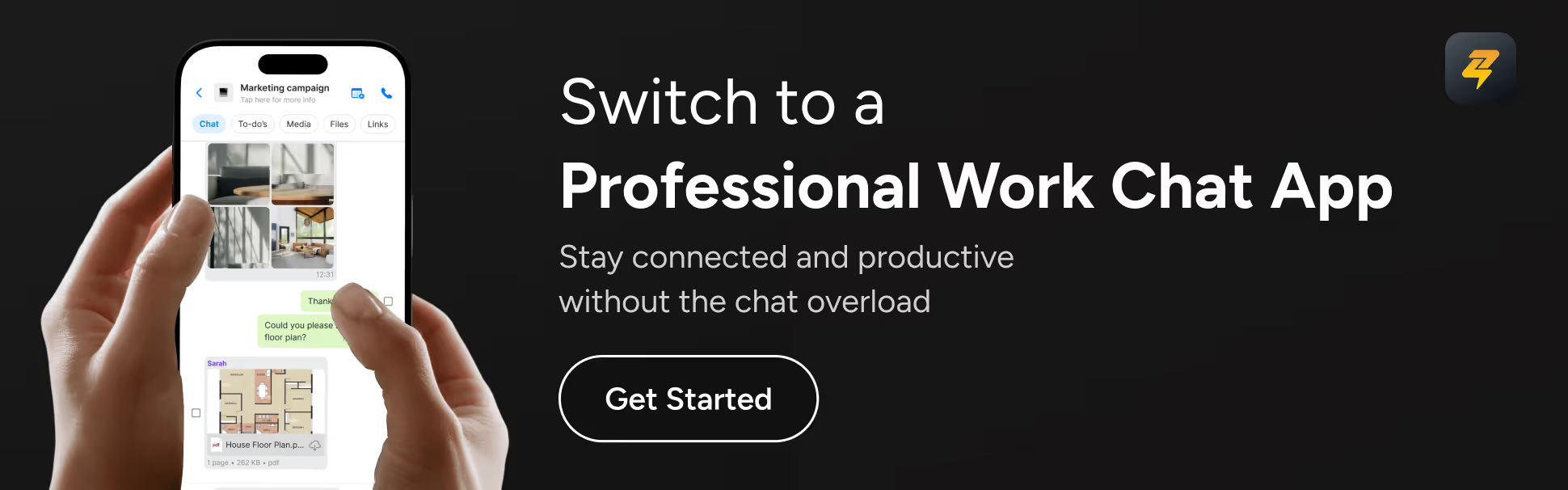
Zenzap is a mobile-first internal team communication app that blends the ease of personal messaging with the structure and security your business needs. It is designed for one purpose: to turn chaotic communication into organized, secure, stress-free collaboration.
Feature highlight: Intuitive mobile-first chat, tasks created directly from messages, Google Calendar sync, and enterprise-grade security with encrypted communication and secure onboarding and offboarding.
Why it is number one: While many tools were built for technical or highly structured environments that tolerate complexity, Zenzap is built for everyone else. If you manage shift-based workers, field teams, or a mix of office and remote staff, you need something your whole company will actually adopt without training. Zenzap does exactly that.
Here is what sets Zenzap apart as a team communication tool:
1. Intuitive simplicity
Zenzap feels as natural as texting, so your team can onboard themselves in minutes. There is virtually no learning curve. Managers do not have to schedule formal training sessions just to get people chatting in the right channels. Work starts moving on day one.
2. Professional separation from personal life
Work stays in Zenzap, personal chats stay in personal apps. Features like scheduled messages and working hours mean you can queue a note at 11 p.m. and have it land during your teammate's business hours. Your staff can safely mute work after hours without fear of missing a true emergency.
3. Structured organization that stops things slipping through the cracks
You can turn a message into a task inside the chat, attach due dates, and sync with Google Calendar. That keeps action items visible, trackable, and out of random DM threads. Instead of "Did anyone ever follow up on that?" you get clear accountability.
4. Bulletproof security with easy admin control
Zenzap brings enterprise-grade encryption and secure onboarding and offboarding into a simple admin experience. When someone joins, you give access to the right spaces instantly. When someone leaves, you revoke access just as quickly. No more ex-employees sitting in personal WhatsApp groups that still discuss client work.
5. Mobile-first performance
Unlike desktop-first tools whose mobile apps can feel clunky, Zenzap starts from mobile. It is built for workers on the move, whether that is drivers, field technicians, or retail staff. Messages, tasks, and notifications are clear and responsive on smaller screens.
6. Cost-effective consolidation
Because Zenzap blends chat, light task management, and scheduling workflows, you can often replace multiple tools with one. That cuts both software costs and the hidden cost of context switching across apps.
A real-life example: A regional services company with dozens of field technicians switched from a mix of WhatsApp, phone calls, and spreadsheets to Zenzap. Within a week, job updates, safety alerts, and shift changes were all happening in structured channels. Tasks were created from chat and synced to calendars. Managers reported fewer missed jobs and technicians reported less after-hours noise, because their personal messaging stayed personal.
If you want calm, structured communication that respects both your business needs and your team's time, Zenzap is built for you.
How to choose the right team communication software for your business
Seeing the top 10 companies in the team communication tools space is helpful, but you still need to pick one. Here is a simple way to decide.
Clarify who you are really buying for
Is your team mostly desk-based knowledge workers, frontline staff, or a mix of both? If you have a lot of field or shift workers, prioritize mobile-first tools like Zenzap. If everyone lives in office suites, bundled platforms might be workable, as long as you are ready for training.
List your "must-have" workflows
Do you simply need chat, or do you also need tasks, shift updates, client escalations, or approval processes in the same place? If you want to keep chat and tasks together without a heavy project management layer, Zenzap's built-in tasks and Google Calendar sync can replace a surprising number of tools.
Decide your tolerance for complexity
If you have a strong IT team and strict compliance requirements, something like Nextcloud Talk or Mattermost might make sense. If you are a fast-growing business that cannot afford long onboarding, prioritize intuitive simplicity.
Protect your team's time
Ask a direct question: "Will this tool make it easier for my team to switch off at the end of the day?" If the answer is no, you will likely see burnout and back-channel messaging in personal apps. Zenzap's strong separation of work and personal communication, plus scheduled messages and working hours, helps you protect your team without sacrificing responsiveness.
Test with a real-world pilot
Whatever you are leaning toward, run a 2 to 4 week pilot with a cross-section of your company. Measure adoption, response time, and how much you still rely on side channels like email or WhatsApp. Tools that look powerful on paper but stay unused in practice are not helping you.
Key takeaways
- Choose team communication tools that your whole company can adopt quickly, not just your most technical staff.
- Prioritize work-life separation so your team can unplug without missing truly urgent updates.
- Look for structured organization, such as tasks from messages and calendar sync, so nothing important gets lost in chat.
- Balance security and control with ease of use, especially for onboarding and offboarding employees.
- Consider Zenzap if you want a single, mobile-first work chat app that replaces multiple tools while keeping communication calm and secure.

Frequently asked questions
Q: What is the most important feature in a team communication tool?
A: The most important feature is clarity. Your tool should make it obvious where to post, how to find information, and how to turn messages into action. If people constantly ask "Where should I put this?" or "Did anyone see that update?", your tool is failing, no matter how many features it has.
Q: Why should I consider Zenzap over other enterprise platforms?
A: If your company is not deeply technical, Zenzap gives you a simpler, cleaner experience. It is mobile-first, easy to adopt without training, and built to separate work from personal life. Other platforms can be great in technical or enterprise environments, but many businesses find them heavy, complex, and hard to roll out across non-desk workers.
Q: How can a communication tool improve work-life balance for my team?
A: Look for features like working hours, scheduled messages, and professional separation from personal apps. Zenzap lets people mute work outside their set hours while still allowing you to reach the right person in a real emergency. That balance reduces burnout and makes your team more focused when they are on the clock.
Q: Are on-premises tools like Nextcloud Talk or Mattermost worth the extra effort?
A: They can be, if you have strict regulatory requirements or internal policies that demand full control over data location and retention. You will need a capable IT team for setup, hosting, and upgrades. For many growing businesses, a secure cloud solution like Zenzap provides strong protection without the overhead of running your own servers.
Q: How do I know if my team will actually use a new communication platform?
A: Run a small pilot and watch behavior, not just opinions. Do people post there by default or keep falling back to email and personal apps? Tools with a familiar, messaging-app feel, like Zenzap, tend to see much higher real-world adoption because they match how people already like to communicate.
Q: Can one tool really replace multiple communication apps?
A: In many cases, yes. If your main needs are internal chat, quick tasks, updates, and basic scheduling, a focused tool like Zenzap can consolidate what you currently handle across email, WhatsApp, a separate task app, and calendar invites. The key is choosing a platform designed to keep those workflows together without becoming bloated.
Final thoughts
As you compare the top 10 companies in the team communication tools space, remember that the "best" platform is the one your people will actually use every day to move work forward, not just the one with the longest feature list.
For many growing businesses, Zenzap strikes the right balance. It gives you secure, professional work chat, clear structure, and a mobile-first experience that feels as easy as texting, while still respecting work-life boundaries.
You do not need another complex suite. You need one calm, reliable place for your team to talk, decide, and act. So the real question is this: are you ready to give your team a communication tool that finally works the way they do?

Take Control of Your Team Communication
Chat, organize, and get work done - all in one place.
Other Blog Posts
- fskfsfjksofjsj