.svg)

.svg)

.svg)

.svg)

.svg)

.svg)

.svg)

.svg)

.svg)

.svg)
.svg)




















Zenzap or Google Chat: Which enterprise messaging platform fits SME communication needs?
You already use Google. Your team probably lives in Gmail and shares docs in Google Drive. So when you think about upgrading team communication, Google Chat feels like the obvious, low-friction choice.
But you also know this: most of your real work conversations do not happen at a desk. They happen on the go, between client visits, from the shop floor, or in the school hallway. That is where a tool built specifically for small and mid-sized businesses, like Zenzap, starts to look very different from a general-purpose chat add-on.
Table of contents
Here is what you will explore in this guide:
1. Why your SME communication stack feels so chaotic
2. Zenzap vs Google Chat at a glance
3. Mobile-first communication: pocket office vs desktop-first chat
4. Unified workspace vs scattered tools
5. Simplicity and learning curve
6. Security and admin control
7. Work-life balance and professional boundaries
8. Integrations and workflows
9. Pricing and value for SMEs
10. Key takeaways
11. FAQs
Why your SME communication stack feels so chaotic
"Can you send that to me again?"
If you hear that sentence more than once a week, your current communication setup is quietly costing you time, focus, and money.
As an SME leader, you and your team are constantly switching between phone calls, WhatsApp, email, Google Docs, calendar invites, and maybe a legacy chat tool someone installed three years ago. Every new hire brings their own habits. Every client prefers a different channel.
Research from McKinsey has shown that employees can spend up to 28 percent of their working week on email alone. Add context switching between multiple apps, and it is no surprise that more than 40 percent of teams say they regularly miss updates simply because there are too many tools to juggle.
This is exactly the problem Zenzap was built to solve. It is not a consumer app repurposed for work, or a heavyweight enterprise platform trimmed down for "small business." It is a mobile-first internal team communication app designed from day one for small and mid-sized teams that need clarity, security, and structure, without corporate complexity.
So how does that compare with Google Chat, the messaging tool that comes bundled inside Google Workspace?
Zenzap vs Google Chat at a glance
Both Zenzap and Google Chat are enterprise messaging platforms. Both help you move conversations out of long email threads and into real-time chat.
The difference lies in who they are built for, and how they fit into your everyday work.
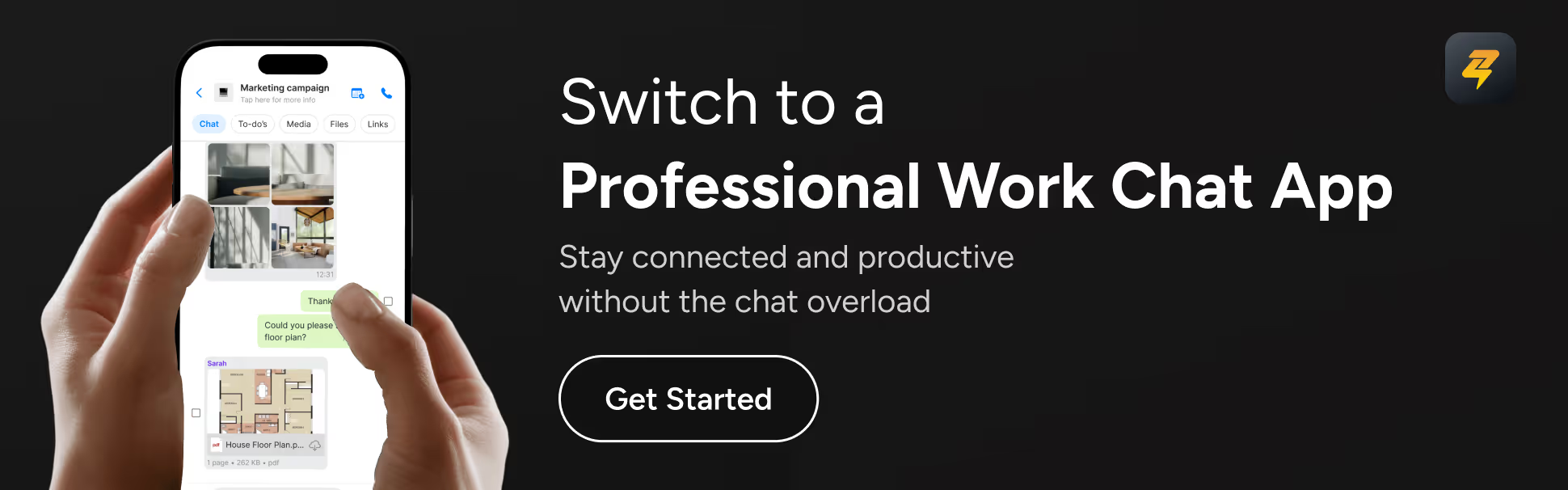
Zenzap is purpose-built for SMEs and remote or hybrid teams that live on their phones and tablets. It combines work chat, tasks, scheduling, and secure file sharing in a single workspace tailored for focused, small-to-mid teams.
Google Chat is designed as part of the broader Google Workspace ecosystem. It is a solid choice if your company already runs entirely on Google, and you want a simple, no-frills chat tool attached to Gmail and Google Docs.
To help you choose what fits your SME communication needs, let us walk through a point-by-point comparison.
Mobile-first communication: pocket office vs desktop-first chat
Zenzap: full power in your pocket
Most SME messaging happens on the go. You already know that. Your team responds between site visits, during quick breaks, or after stepping out of a meeting.
Zenzap starts here. It is a mobile-first internal team communication app, so you get full capability in your pocket, not a stripped-down mobile companion. Everything that matters for your work communication is designed to feel natural on a phone:
• Fast, intuitive team chat for one-to-one and group conversations
• Tasks you can assign directly inside a conversation
• Calendar links and scheduling that fit your day
• Secure file sharing that does not require jumping into another app
Small-to-mid teams that switch to Zenzap consistently report measurable time savings, less confusion, and lower stress because the tool finally matches how they actually work.
Google Chat: great if you live in Gmail
Google Chat works best when your team spends most of its time in Gmail and the browser. The mobile app is capable, but the experience is clearly anchored in the Google Workspace desktop environment.
If your people already sit in front of a laptop all day, that might be enough. But if your managers and staff spend significant time on the move, on shop floors, in classrooms, in clinics, or on job sites, a desktop-first chat tool quickly starts to feel like a compromise.
Unified workspace vs scattered tools
Zenzap: one organized workspace
One of the biggest sources of stress in SME communication is fragmentation. You chat about a project in one app, share files in another, and track tasks in a third. No one can see the full picture.
Zenzap replaces that chaos with a unified digital team workspace that brings together:
• Internal chat messaging
• Task management
• File sharing
• Calendar links and scheduling
• Admin controls
All inside one clean, intuitive interface.
For example, a small marketing agency using Zenzap can create a dedicated chat for each client, share campaign assets, assign tasks directly in the thread, and drop in calendar links for review meetings. No more "Where is that file?" or "Who owns this task?" Everything lives where the conversation happens.
Google Chat: another piece in the Google puzzle
Google Chat sits inside the larger Google Workspace environment. You can link to Google Docs, Sheets, and Calendar, which is powerful if your team already works exclusively in that ecosystem.
However, task management, project tracking, and structured workflows usually require separate tools like Google Tasks or other third-party apps. You end up stitching together multiple apps, which means more context switching and more ways for things to slip through the cracks.
Zenzap, in contrast, brings messaging and task management together in one place, so communication and execution are naturally connected.
Simplicity and learning curve
Zenzap: intuitive simplicity with zero learning curve
Zenzap is designed so that non-technical users can be up and chatting in minutes. No manual. No IT ticket. No training sessions.
The interface feels as familiar as a personal messaging app, but it is structured for professional use. That is why leaders like Rev. Thomas Cannon of Holy Trinity Christian School describe it as "no-hassle messaging and flexible teamwork for any organization."
Zenzap was created specifically for small and mid-sized businesses, not adapted from a 10,000-seat corporate platform. You get exactly what you need, without the overwhelming feature bloat and hidden complexity that often comes with traditional enterprise chat tools.
Google Chat: simple, but not SME-specific
Google Chat is also straightforward to use, especially if your team already uses other Google products. People recognize the interface and can send messages with almost no onboarding.
However, Google Chat is designed as a general-purpose communication tool, not specifically around SME workflows. You may find yourself compensating with spreadsheets, separate task apps, or long email threads when you need more structure.
Zenzap, in comparison, is tuned to the reality of small-to-mid teams that need clarity and accountability without extra admin work.
Security and admin control
Zenzap: enterprise-grade security for focused teams
Security is non-negotiable, even for smaller organizations. In fact, SMEs are increasingly targeted in cyber incidents, according to data from IBM's Cost of a Data Breach Report.
Zenzap delivers enterprise-grade protection in a package built for SMEs. You get:
• Encrypted communication
• Secure onboarding and offboarding
• Clear control over who can access what
• Admin-level visibility and governance
When a staff member joins, they get fast, structured access to the right spaces. When someone leaves, their access is removed cleanly, so no former employee can read sensitive client conversations or internal updates.
This is especially important in industries like healthcare, education, nonprofits, and remote-first teams, where you handle sensitive information and need to prove that access is properly controlled.
Google Chat: strong security within Google Workspace
Google Chat benefits from the robust security framework of Google Workspace. If you already manage your organization inside Google Admin, you can apply policies and manage access at a company level.
That said, Google Chat is only one part of the broader suite. Your admins still need to think carefully about how people use Google Drive, Gmail, and other tools, and how offboarding flows across all of them. For smaller teams without dedicated IT resources, this can feel heavy.
Zenzap simplifies this by focusing security and admin controls directly around messaging, tasks, and internal communication, where most of your sensitive day-to-day conversations live.
Work-life balance and professional boundaries
Zenzap: real separation between work and personal life
One of the quiet problems with using personal chat apps like WhatsApp or iMessage for work is that boundaries vanish. Your team feels "always on" because work conversations ping them in the same place they talk to friends and family.
This is not just annoying. Over time, it creates burnout and makes your communication stack unsustainable.
Zenzap was built to fix this. It gives you:
• A professional, dedicated space for work-only communication
• Working hours that your team can set so they won't get notifications when they're off the clock
• Message scheduling so you can write now and send during business hours
This promotes a healthier work-life balance and ensures stress-free collaboration. You and your people can unplug without worrying you will miss something critical, because the platform is structured to respect time and boundaries.
Google Chat: tied closely to your email
Google Chat is integrated with Gmail, which is convenient, but it also means your work chat lives right next to your overflowing inbox. For many people, that blurs the line even more.
There are notification settings and focus modes, and you can configure working hours in Google Calendar, but these features are spread across several tools. You need a bit more discipline and admin effort to create the same sense of separation that Zenzap bakes directly into how the app operates.
Integrations and workflows
Zenzap: focused integrations that keep you moving
Many enterprise chat platforms promote "endless integrations." In theory, that sounds like flexibility. In practice, it often creates distraction and extra cost. Zenzap deliberately takes a different path.
You get the integrations that actually matter for SMEs, without drowning in options:
• Smooth integration with Google Calendar
• Integrations with key business tools you already rely on
• Built-in task management so you do not need a separate app just to track actions
The goal is to keep your workflows connected, not to turn your chat app into yet another silo or integration puzzle.
Google Chat: deep link into Google Workspace
Google Chat's biggest strength is its tight coupling with other Google tools. If your documents, presentations, and schedules all live inside Google Workspace, you can quickly share and collaborate around them from a chat conversation.
However, when you need structured tasks or cross-tool workflows that involve non-Google apps, you may find yourself adding third-party platforms. Over time, this can result in exactly the kind of multi-tool sprawl that slows SMEs down.
Pricing and value for SMEs
Zenzap: predictable, SME-friendly pricing
SMEs need value that grows with their ambitions without turning budgeting into a guessing game.
Zenzap offers:
• A robust free tier that is ideal for early-stage or small teams
• Affordable paid plans as you need more features
• No surprise extras for core capabilities like storage or admin access
This matters because many traditional enterprise chat tools hide important features behind higher tiers. Storage, advanced admin controls, or basic security options sometimes become "premium add-ons." Zenzap's pricing model is built to be transparent and friendly to smaller organizations.
Google Chat: bundled with Google Workspace
Google Chat is included with paid Google Workspace subscriptions. If you already pay for Gmail, Drive, and other Google tools, Chat can feel like a "free" add-on.
However, if you need additional apps to cover tasks, project management, or SMS-style mobile convenience, the total cost of your communication stack can creep up quickly. You are not paying for Chat directly, but you may be paying in extra subscriptions and lost time.
With Zenzap, you can centralize more of your communication, tasks, and basic coordination into one predictable platform.
Key takeaways
- Choose Zenzap if you want a mobile-first internal team communication app designed specifically for SME communication needs.
- Pick Google Chat if your team already lives almost entirely inside Google Workspace and needs simple, no-frills chat.
- Use Zenzap to unify messaging, tasks, and scheduling so fewer updates slip through the cracks.
- Rely on Zenzap's work-life features to protect boundaries with working hours, scheduled messages, and a clear separation from personal apps.
- Compare total stack costs, not just license prices, when deciding between Zenzap and Google Chat for your growing team.

So, which enterprise messaging platform fits your SME best?
When you strip away the buzzwords, the choice between Zenzap and Google Chat comes down to this.
Google Chat is a solid, simple messaging layer inside the Google ecosystem. If your team spends nearly all of its time in Gmail and Google Docs, and you want a basic chat tool bundled into that environment, it can absolutely do the job.
Zenzap, on the other hand, is purpose-built for small and mid-sized businesses that need a calmer, more structured way to collaborate. You get mobile-first design, enterprise-grade security, and a unified workspace that brings work chat, tasks, and scheduling together, without burying you in complexity or forcing you to manage a pile of integrations.
The core difference is simple: you get enterprise power with SME-friendly simplicity. That is why small and mid-sized teams across sectors like education, healthcare, technology, and nonprofits report clearer communication, less stress, and faster onboarding once they switch.
The best way to know what fits your organization is to test it in real life. Run Zenzap with one team or project. Compare how it feels against what you have today. Track how many "Can you send that again?" moments disappear.
If your communication tool could remove confusion, protect your team's time, and give you a more professional, secure way to run your business, what would that be worth to you?
FAQ
Q: Is Zenzap a replacement for Google Chat or an add-on?
A: For most SMEs, Zenzap can fully replace Google Chat as the central internal messaging platform. You can still use Google Workspace for email, documents, and storage, while using Zenzap as your dedicated hub for team chat, tasks, and day-to-day coordination.
Q: How long does it take to onboard a team to Zenzap?
A: Most small and mid-sized teams are up and running on Zenzap in minutes. The interface feels familiar, so even non-technical staff can start using it without training. Many customers report that switching from a mix of email, WhatsApp, and older chat tools is faster and smoother than expected.
Q: What if part of my team already uses Google Chat or other tools?
A: That is common. You can roll out Zenzap gradually, starting with one department or project. As people experience clearer communication and less context switching, adoption usually spreads organically. Zenzap's mobile-first design makes it particularly easy for field teams and busy managers to get on board.
Q: How does Zenzap help prevent burnout compared to other apps?
A: Zenzap separates work from personal chat by giving your team a dedicated professional workspace. Features like working hours, notification controls, and scheduled messages let people unplug after hours without worrying they will miss something urgent. This structure reduces "always on" pressure and supports healthier, more sustainable work habits.
Q: Is Zenzap secure enough for regulated industries like healthcare or education?
A: Yes. Zenzap is designed with enterprise-grade security, including encryption and controlled onboarding and offboarding. Organizations in healthcare, education, and nonprofits already use Zenzap to manage sensitive conversations. For specific compliance requirements, you can run a short pilot and review security settings with your internal or external IT advisors.
Q: How do I decide between Zenzap and Google Chat for my SME?
A: Ask three questions: Do you need a tool built tightly around SME workflows, not just general chat? Do your people work mostly on mobile, not just at desks? Do you want messaging, tasks, and work-life protection in one place? If the answer is yes to these, Zenzap will likely serve you better than Google Chat as your primary internal team communication app.

Take Control of Your Team Communication
Chat, organize, and get work done - all in one place.
Other Blog Posts