.svg)

.svg)

.svg)

.svg)

.svg)

.svg)

.svg)

.svg)

.svg)

.svg)
.svg)





















Zenzap vs Zoom Chat: Which Remote Work Communication Tool Enhances Task Management?
You already have a meeting tool. What you are missing is a place where decisions reliably turn into done work.
That is the real question behind Zenzap vs Zoom Chat. You are not choosing between two chat apps. You are deciding whether your team keeps juggling conversations and tasks across half a dozen tools, or finally brings everything into one structured workspace that is built to move work forward, not just talk about it.
Zoom Chat gives you quick, convenient messaging tied to meetings. Zenzap gives you an intuitive, mobile-first team communication app where every important message can become a trackable task, right inside the chat. One is a meeting sidekick. The other is designed to be your primary workspace for remote work communication and task management.
In this point-by-point comparison, you will see exactly how Zenzap and Zoom Chat stack up on the things that matter most for remote teams: native task tools, workflow structure, collaboration, work-life balance, and the way each tool fits into your wider tech stack. Along the way, you will see how features translate into everyday wins like fewer dropped balls, less context switching, and a calmer way to run your team.
If you are tired of updating one tool during the call, another tool after the call, and chasing people in yet another app, this is for you.
Table of contents
1. Introduction to Zenzap and Zoom Chat
2. Point 1: native task tools and workflows
3. Point 2: structured organization and project visibility
4. Point 3: integrations and context switching
5. Point 4: security, control, and professional separation
6. Point 5: work-life balance and remote work culture
7. Key takeaways
8. Final thoughts: choosing the right remote work communication tool
9. FAQ
Introduction to Zenzap and Zoom Chat
Zoom Chat (often called Zoom Team Chat) was built to support meetings. It gives you channels, threads, and quick messaging that fit neatly around scheduled video calls. If your main focus is running virtual meetings, it makes sense that chat lives in the same place.
Zenzap was built for something different. It started from a frustration you probably know very well: work spread across email, personal messaging apps, project tools, and scattered files. As Guy Weiss, CEO of Zenzap, put it in an interview with EIN Presswire, the goal was to create "a communication tool that feels familiar but solves real work communication issues."
So while Zoom Chat gives you a handy place to talk, Zenzap gives you a structured team communication platform that combines messaging, in-chat task creation, file sharing, calendar integration, and admin controls in one workspace. You log in, you chat, and you turn decisions into tasks without jumping out to another app.
Remote teams using integrated tools like this have seen productivity gains of up to 24 percent compared with fragmented setups, according to research cited on Zenzap's blog. That kind of lift does not come from more messages. It comes from fewer gaps between communication and action.
Point 1: native task tools and workflows
Zoom Chat: chat first, tasks elsewhere
Zoom Chat is built for messaging. You get channels, mentions, and threaded replies. When you want to turn a message into a task, you typically have to copy it into another tool, such as Asana, Trello, or a ticketing system. In some cases, you might use a third-party integration or bot, but the core experience stays the same: chat here, manage work somewhere else.
The result is a familiar pattern. During a project meeting, comments and decisions land in the Zoom Chat channel. After the call, someone opens a separate app and tries to translate all those scattered notes into tasks. If they miss something, the work gets dropped. If they are busy, the task list gets updated late, and your team is flying blind.
For simple coordination around meetings, this is manageable. For ongoing remote collaboration, it starts to feel like you are doing everything twice.
Zenzap: tasks built into every conversation
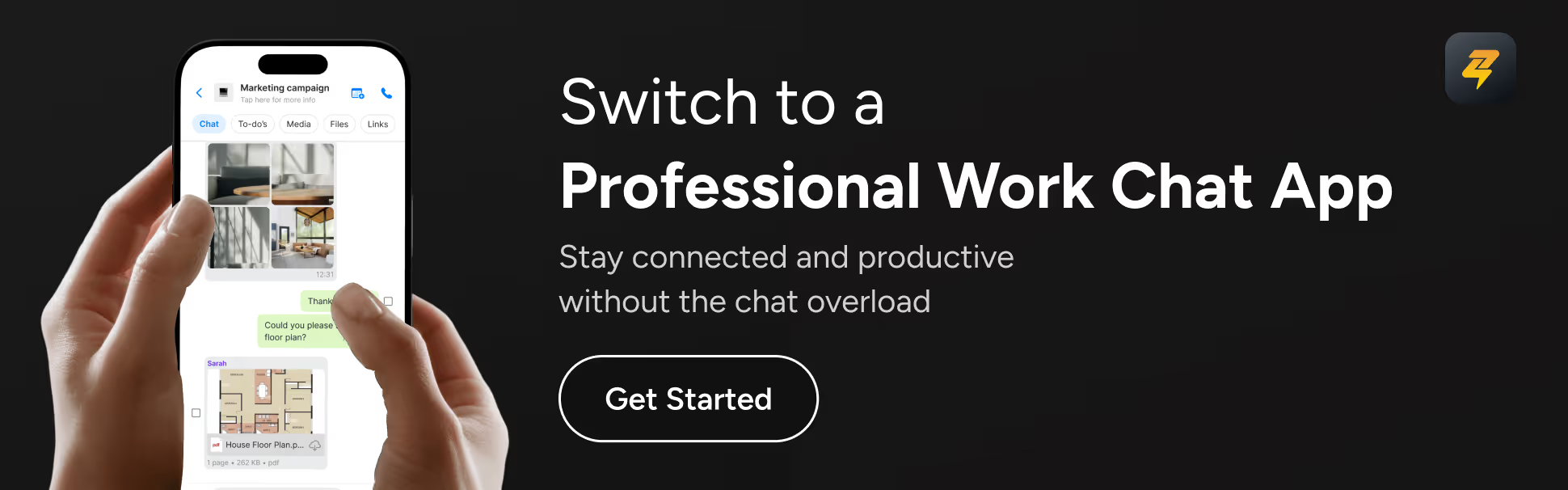
Zenzap flips this model. Messaging and tasks live together in one place. Any message can become a task in a couple of taps, without leaving the conversation.
Here is what that looks like in practice inside Zenzap:
- Create a task directly from any message
- Assign an owner and add followers
- Set due dates and reminders
- Track progress in a clear, shared view
Imagine your customer success team spots a renewal risk. In Zoom Chat, you might drop an urgent note in a channel, then jump into a separate tool to log the follow-up work. In Zenzap, the account manager posts the message in the client room, converts that message into a task, tags the product lead, and sets a deadline for a feature review in seconds.
No context switching. No duplicate data entry. No risk that the request disappears in the scroll.
Independent reviewers on Work-Management.org highlight that Zenzap "wins when it comes to blending communication with productivity features," calling out its "native task manager, reminders, and calendar sync" that turn it into a "get work done space" rather than just a chat room.
Point by point on task workflows, Zenzap offers a complete built-in system. Zoom Chat expects you to stitch your own together.
Point 2: structured organization and project visibility
Zoom Chat: channels around meetings
Zoom Chat organizes conversations around channels and contacts, often mirroring your meeting schedule. You might have a channel for "Product Standups," another for "All Hands," and a few ad hoc spaces for projects.
This is helpful for real-time conversation, but it does not automatically create a structured picture of ongoing work. To see what is in progress, what is blocked, or who owns what, you still need a dedicated task or project tool. Zoom Chat will point you to the conversation, not to the current status.
When your team is remote, that gap shows up as constant follow-up messages like "Who is on this?" or "Is this done yet?" which clutter your channels and steal focus.
Zenzap: rooms, tasks, and files in one place
Zenzap is built from the ground up as a work chat app where messaging, tasks, files, and scheduling live together. You create focused spaces by team, project, or topic. Inside each space, you have chat, tasks, and shared folders side by side.
In a product sprint, for example, you might have a Zenzap project room that holds:
- The day-to-day chat for the sprint team
- A list of sprint tasks created directly from those chats
- Shared files like specs, mockups, and test plans
- Links to relevant calendar events
Someone new joins the project. Instead of piecing together updates from multiple Zoom chats, meeting recordings, and separate task boards, they open one Zenzap room. They can scroll the conversation, scan the task list, and see instantly what is on their plate.
According to Zenzap's own positioning, the app "ends chaos by combining chat, task management and file sharing into one structured workspace built for teams that need clarity, not noise." That structure is what makes it easier to keep projects on track without adding more tools or more meetings.
Point 3: integrations and context switching
Zoom Chat: strong meeting integration, external task tools
Zoom's superpower is, of course, meetings. Chat is tightly integrated with live calls, recordings, and meeting invites. If you live in Zoom all day, having chat in the same ecosystem is convenient.
For task management though, Zoom generally points outward. You either manually move action items into other tools, or you rely on third-party connectors. Every extra app you introduce increases cognitive load and the risk that something falls through the cracks.
Research has shown that knowledge workers can spend up to 20 percent of their time simply searching for information or tracking down colleagues. Switching between chat, tasks, and calendars across multiple apps only makes that problem worse.
Zenzap: a central hub that connects your stack
Zenzap takes a different approach. It is designed to be your central workspace for remote team communication and task management, then connect smoothly to the tools you already use.
Out of the box, Zenzap integrates with:
- Google Calendar, so you can book meetings straight from chat
- Zoom, so you can connect live calls without leaving your messaging hub
- Leading cloud drives, so files sit right next to the conversations they belong to
On the Zenzap blog, companies using integrated chat and workflow tools like this have reported productivity increases of about 24 percent, because people are not bouncing between tabs just to answer simple questions or log simple tasks.
In real life, this might look like your marketing lead dropping a quick note: "Can we review the Q3 campaign storyboard next week?" In Zenzap, that message can become a task and, if needed, a calendar event connected to Google Calendar in a few clicks. In Zoom Chat, you are more likely to copy that message into another tool, then send yet another message with the invite link.
Point 4: security, control, and professional separation
Zoom Chat: enterprise security, but mixed usage
Zoom offers enterprise-grade security features, including encryption and administrative controls. For many companies, Zoom has already passed security reviews for video meetings, so extending usage to chat feels like a low-friction choice.
The challenge is not the security model itself. It is the way people use chat. When teams lean on personal apps like WhatsApp, SMS, or iMessage alongside Zoom Chat, work conversations spill across unmanaged spaces. Sensitive updates end up in places you cannot control.
Zoom Chat by itself cannot stop that. It gives you one more place to communicate, but it does not firmly separate personal and professional messaging habits.
Zenzap: one secure, professional home for work chat
Zenzap is intentionally positioned as a professional alternative to personal messaging apps. It creates a clear boundary line. Use WhatsApp or iMessage for friends and family. Use Zenzap for everything work-related.
In practical terms, that looks like:
- Encrypted communication for all internal chat
- Admin-level controls for onboarding and offboarding team members
- Fine-grained control over who can access which rooms and files
- Audit-friendly centralization of messages, tasks, and shared documents
According to coverage on KRON4, Zenzap was designed to help businesses "control data access without switching between multiple apps." When someone leaves your company, for example, you can revoke their access to all rooms and files in a single action.
For you as a leader, that means fewer grey areas. Work lives in Zenzap, under your controls. Personal conversations live elsewhere. You are not relying on policies alone to keep work messages out of personal channels. The tool itself supports the separation.
Point 5: work-life balance and remote work culture
Zoom Chat: always-on chat around meetings
Zoom Chat is available on desktop and mobile, so it naturally follows your team wherever they go. That can be useful during busy launches or incidents, but it also makes it easy for work messages to creep into evenings and weekends.
Unless you have strong norms and people manually adjust their notification settings, the default experience leans toward "always available." In remote teams, that can quietly erode boundaries and lead to burnout.
Zenzap: built-in respect for working hours
Zenzap bakes work-life balance into its core experience. Because it is a dedicated work chat app, it can be opinionated about how and when work should reach people.
Teams can set working hours so they do not get notifications when they are off the clock. You can schedule messages to be sent during business hours, even if you are catching up late at night. That way, you get your thoughts out of your head without pinging your team at 11:30 p.m.
The result is subtle but powerful. Your people can confidently unplug, knowing that:
- They will not be jolted by non-urgent pings at random hours
- Truly urgent issues can still be surfaced through clear channels
- They have a dedicated space for work that they can close, the same way they close the office door
As Zenzap explains in its guide for remote leaders, this clear separation between work and personal life reduces the feeling of being "always on." Over time, that supports healthier remote work habits, lower stress, and better retention.
Reviewers on Work-Management.org note that Zenzap "combines streamlined communication with powerful task management, but without the clutter or steep learning curve." You log in, you chat, you turn decisions into to-dos, then you log out. The app supports the way you want your team to work, not the other way around.
Key takeaways
- Use Zoom Chat when you need light messaging around meetings, but expect to manage tasks in separate tools.
- Adopt Zenzap if you want remote work communication and task management combined in one intuitive workspace.
- Reduce context switching by turning messages into tasks, events, and shared files directly inside Zenzap.
- Protect your team and data by centralizing work chat in a secure, admin-controlled platform instead of personal apps.
- Support work-life balance with Zenzap's scheduled messages and working hours, so your people can unplug without missing what matters.

Final thoughts: choosing the right remote work communication tool
When you compare Zenzap vs Zoom Chat point by point, a clear pattern shows up.
Zoom Chat shines as a convenient extension of your Zoom meetings. It is helpful for quick coordination before and after calls, and it keeps you close to the video platform your team already knows. If your main concern is simple messaging around live meetings, it can be enough.
Zenzap is different. It is built to be your primary workspace for remote work communication and task management. It gives you native task tools inside chat, structured project rooms, integrated calendars and files, strong security, and built-in support for work-life balance.
In other words, Zoom Chat helps you talk. Zenzap helps you move work forward.
So, as you look at your team, your projects, and your current tool stack, ask yourself: do you want one more chat window, or do you want a single, intuitive place where conversations reliably become completed tasks?
FAQ
Q: How is Zenzap different from Zoom Chat for task management?
A: Zoom Chat focuses on messaging around meetings. To manage tasks, you typically rely on external tools or manual copy-paste. Zenzap, on the other hand, lets you create tasks directly from any message, assign owners, set deadlines, and track progress inside the same workspace. This removes context switching and reduces the risk of dropped action items.
Q: Can Zenzap replace both chat and task tools for my remote team?
A: For many teams, yes. Zenzap combines team chat, in-chat task management, file sharing, and calendar integration in one app. You can organize rooms by team or project, keep all related discussion and tasks together, and connect to tools like Google Calendar and Zoom where needed. That lets you simplify your stack instead of adding yet another silo.
Q: Does Zenzap integrate with Zoom and Google Calendar?
A: Yes. Zenzap connects with Zoom and Google Calendar so you can book meetings, share invites, and keep timelines visible without leaving your chat workspace. For example, you can turn a chat decision into both a task and a calendar event in a few clicks, rather than jumping between multiple apps.
Q: How does Zenzap support work-life balance compared with Zoom Chat?
A: Zenzap is a dedicated work chat app with features that protect boundaries. Your team can set working hours so they are not notified outside those times, and you can schedule messages to send during business hours even if you write them late. Zoom Chat can be configured manually, but it is not specifically optimized for professional separation and off-hours protection in the same way.
Q: Is Zenzap secure enough for sensitive internal communication?
A: Yes. Zenzap offers encrypted communication, admin-level controls for onboarding and offboarding, and centralized management of rooms and file access. When someone leaves your company, you can remove their access in a single place. That level of control is designed for businesses that handle sensitive information and want to keep it out of personal apps and unmanaged channels.
Q: How quickly can my team adopt Zenzap compared with Zoom Chat?
A: Zenzap is designed to feel as simple as familiar messaging apps, so most teams need little to no formal training. Reviewers highlight its lack of clutter and gentle learning curve. Because chat and tasks are in one place, people quickly see the benefits in their day-to-day work. Zoom Chat is also easy to start using, but you will still need to train people on how to connect it to your separate task tools and workflows.

Take Control of Your Team Communication
Chat, organize, and get work done - all in one place.
Other Blog Posts
- fskfsfjksofjsj