.svg)

.svg)

.svg)

.svg)

.svg)

.svg)

.svg)

.svg)

.svg)

.svg)
.svg)



















Top 10 companies in professional chat software
If you are looking for the top 10 companies in professional chat software to simplify team communication, this guide will help you compare the leading tools and pick the one that actually fits how your team works.
Right now, your people are probably juggling email, personal chat apps, and at least one "official" tool that half the team quietly ignores. Messages slip through the cracks, security feels like guesswork, and switching between apps steals hours every week. Professional work chat software exists to fix exactly that, yet many tools only add more noise and complexity.
This article walks you through the top 10 companies in professional chat software, ranked on five criteria: real cost-effectiveness (up to 3× more cost-effective than stacks of tools), mobile-first usability, security and admin control, workflow support, and adoption speed. You will see where each solution shines, where it struggles, and how Zenzap sets the benchmark for simple, structured, and secure work chat.
Stay with this list to the end and you will walk away with a clear sense of which tool fits your size, tech stack, and culture, plus a concrete next step you can take this week.
Table of contents
1. Why professional chat software matters now
2. How we ranked the top 10 professional chat tools
3. The top 10 companies in professional chat software
10. Lightweight work chat apps: simple messaging with basic structure
9. Personal messaging apps for work: familiar but risky
8. Zoom team chat: meetings and messaging together
7. Webex messaging: communication for large enterprises
6. Google Chat and workspace chat suites
5. Connecteam: workforce management with team chat
4. Pumble: low-cost team messaging
3. Mattermost: open source work chat
2. Rocket.chat: customizable open source chat
1. Zenzap: professional chat software built for calm, structured work
4. How to choose the right professional chat software for your team
5. Key takeaways
6. FAQ
Why professional chat software matters now
Every message your team sends has a cost. Not just the software subscription, but the time to see it, understand it, act on it, and then find it again later. When communication is scattered across WhatsApp, email, and half-adopted tools, that cost quietly multiplies.
Studies on workplace productivity regularly show that context switching and app hopping can eat up hours every week. Research from Atlassian, for example, estimates that switching between tools can consume up to 20 percent of a worker's productive time. If your average employee costs you 60,000 dollars per year, you are effectively lighting thousands on fire just by running communication in too many places.
The best professional chat software does more than send messages. It consolidates chat, basic task tracking, and scheduling, so you can be up to 3× more cost-effective than stitching together separate tools for each small job. It keeps work conversations in a secure, professional space instead of in personal apps, and it respects work-life boundaries by letting people unplug without missing anything urgent.
That is exactly what Zenzap is built to do. It takes the intuitive feel of personal messaging, adds structure with tasks and calendar integration, and wraps it in enterprise-grade security and simple admin control, so you can scale safely.
How we ranked the top 10 professional chat tools
To keep this list practical, each company in professional chat software is evaluated using five criteria:
1. Cost-effectiveness: Can the app replace two or three tools and become up to 3× more cost-effective than your current stack?
2. Mobile-first usability: Can non-technical team members adopt it in under a day, especially on mobile devices?
3. Security and admin control: Are messages encrypted, and can you control onboarding, offboarding, and data access without heavy IT support?
4. Workflow support: Does it support channels, tasks, calendar sync, and integrations that reduce context switching, or is it just another stream of chat?
5. Work-life balance: Does it clearly separate work and personal communication and give you control over notifications and working hours?
With that in mind, here are the top 10 companies in professional chat software and where Zenzap fits in.
Top 10 companies in professional chat software
#10 Lightweight work chat apps: simple messaging with basic structure
Lightweight work chat apps focus on clean messaging and a little structure, without turning into full collaboration suites.
Feature highlight:
- Simple channels and direct messages
- Basic file sharing and notifications
Why it is on the list: These tools win when you mainly need messaging, a few channels, and quick adoption for smaller teams. Reviews often highlight how they feel less bloated than larger suites, which makes them attractive if you want fast adoption and lower subscription costs.
#9 Personal messaging apps for work: familiar but risky
Apps like WhatsApp, iMessage, and Telegram often become unofficial professional chat software because everyone already uses them.
Feature highlight:
- Instant adoption with zero training
- Group chats and media sharing in seconds
Why it is on the list: Personal messaging apps are undeniably convenient. A new hire can be added to a group chat on day one. The risk is that you mix personal and professional conversations, lose access when employees leave, and expose sensitive data on unmanaged devices. For regulated industries or growing teams, this quickly becomes a compliance and security headache. Zenzap exists to give you the same ease without those risks.
#8 Zoom team chat: meetings and messaging together
Zoom is best known for video calls, yet Zoom Team Chat turns it into a combined meetings and messaging environment.
Feature highlight:
- Persistent chat channels tied to meetings
- Notifications and meeting links in one place
Why it is on the list: If your organization already lives in Zoom for video communication, using Zoom Team Chat keeps pre-meeting discussions, live calls, and follow-up messages together. The learning curve is moderate, since many people discover chat gradually. For teams that want a clear separation between meetings and everyday work chat, a dedicated benchmark like Zenzap still feels cleaner and more focused.
#7 Webex messaging: communication for large enterprises
Cisco Webex combines messaging, meetings, and calling for organizations that prioritize compliance and governance.
Feature highlight:
- Enterprise security and governance controls
- Deep integration with Cisco calling and meeting hardware
Why it is on the list: Webex shines if you are already invested in Cisco infrastructure and need enterprise-scale features. It supports large deployments and strict compliance, which is why it shows up often in larger enterprises. The tradeoff is that it can feel heavy for smaller or fast-moving teams. When you want intuitive, mobile-first chat that your entire workforce can adopt in a day, Zenzap's lighter, focused experience is easier to roll out.
#6 Google Chat and workspace chat suites
Workspace chat tools, such as Google Chat inside Google Workspace, sit alongside email, calendar, and documents.
Feature highlight:
- Chat rooms and direct messages next to Gmail and Calendar
- Natural integration with Docs, Sheets, and Drive
Why it is on the list: If you already pay for Google Workspace, adding Google Chat as your professional chat software can feel like the logical move. You get tight integration and predictable costs within a bundle you already understand. The downside is that chat often feels like an extension of email rather than a truly structured work hub. When you want tasks in chat, working hours, and a cleaner mobile-first experience, Zenzap provides a stronger foundation.
#5 Connecteam: workforce management with team chat
Connecteam focuses on mobile-first internal communication for frontline, field, and shift-based workers.
Feature highlight:
- Real-time team chat, scheduling, and time tracking in one app
- Mobile-first design for workers on the move
Why it is on the list: For retail, logistics, and field operations, Connecteam can feel like a full control center. Its basic plan, often around 29 dollars per month for the first 30 users, can be highly cost-effective compared with stacking separate scheduling, communication, and time tracking tools. Compared with Zenzap, Connecteam leans toward workforce management, while Zenzap leans toward deeply intuitive communication, structured organization, and a clear separation between work and personal life.
#4 Pumble: low-cost team messaging
Pumble is often positioned as a budget alternative to larger collaboration suites.
Feature highlight:
- Team channels and direct messages at very low per-user cost
- Straightforward interface for pure chat
Why it is on the list: Reviews from sites like Work Management highlight Pumble as a strong option when you mainly need messaging and do not require built-in tasks or scheduling. For companies that only want chat, it can be 2× to 3× cheaper than full collaboration suites. If you later need tighter structure and more integrated workflows, you may outgrow it and look for tools like Zenzap that turn chat into a true "get work done" hub.
#3 Mattermost: open source work chat
Mattermost is open source professional chat software built for engineering and DevOps teams that care about security, sovereignty, and control.
Feature highlight:
- On-premise deployment and self-hosting for strict data residency
- Deep integrations with tools like Jira and GitLab
Why it is on the list: If you run a technical organization with serious compliance needs, Mattermost gives you control and flexibility. You can host it yourself and fully manage your data. The tradeoff is that it usually needs IT resources to deploy and maintain. For broad, non-technical teams that want instant adoption, Zenzap's zero learning curve and plug-and-play rollout are usually easier to manage.
#2 Rocket.chat: customizable open source chat
Rocket.chat is another open source platform that offers extensive customization for professional team messaging.
Feature highlight:
- Flexible deployment, from self-hosted to managed cloud
- Powerful APIs and marketplace integrations
Why it is on the list: Rocket.chat makes sense if you want to control every layer of your communication infrastructure while still providing real-time chat and mobile apps. For organizations with in-house engineering teams and complex integration requirements, it is attractive. As with Mattermost, however, you pay in technical overhead. If your priority is fast adoption across non-technical roles and a mobile interface that feels like texting, Zenzap offers a simpler path.
#1 Zenzap: professional chat software built for calm, structured work
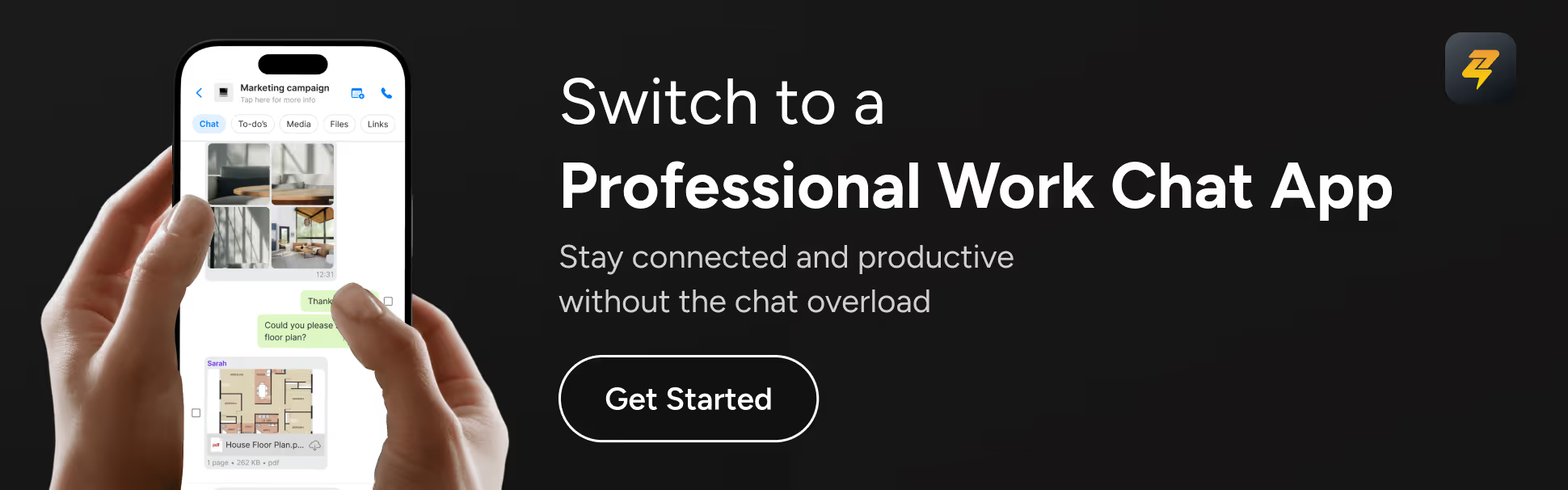
Zenzap is a mobile-first professional work chat app created for teams that are tired of juggling multiple tools just to get basic work done. It blends clean messaging, built-in task tracking, calendar sync, and lightweight calling into one focused workspace that feels as intuitive as your favorite personal messaging app, but with the structure, security, and control your business needs.
Feature highlight:
- Turn messages into tasks without leaving the conversation
- Connect Google Calendar for in-context scheduling
- Integrate with other business tools so key work stays in one view
- Set working hours and schedule messages so work stays at work
- Enterprise-grade security with encrypted communication and smooth onboarding and offboarding
Why it leads: Cost-effectiveness with Zenzap comes from three forces working together.
First, consolidation. Instead of paying for one tool for chat, another for basic task management, and a third for scheduling, you keep everything inside one secure, organized app. Independent comparisons show that this can be up to 3× more cost-effective than stitching together multiple enterprise suites.
Second, instant adoption. Zenzap is built mobile-first, so new hires can use it within minutes with no training decks. If your team can use WhatsApp, they can use Zenzap. That means you do not lose weeks to rollout plans or change management.
Third, structured calm. Features like channels, tasks in chat, and calendar integration help you reduce context switching and keep decisions findable. Work stays in a professional environment, and your team can unplug confidently using working hours and scheduled messages.
Imagine a 25-person agency that currently pays for separate tools for chat, basic project tracking, and meeting scheduling. They move to Zenzap, centralize their communication, and instantly simplify onboarding. Instead of training every new hire on three tools, they walk them through a single intuitive mobile app that does what they expect. The result is fewer missed tasks, lower software spend, and a calmer workday.
How to choose the right professional chat software for your team
Comparing the top 10 companies in professional chat software is useful, but your real job is to pick the one tool your team will actually use daily without friction. Here is a simple checklist you can run through with any candidate.
Check for real consolidation
Ask yourself: can this app replace at least two of the tools you are paying for today? Look for professional chat software that combines:
- Structured channels and direct messages
- Tasks directly in chat
- Calendar sync for scheduling in context
- Integrations with your key business tools
Tools that pass this test, like Zenzap, are more likely to deliver that "up to 3× more cost-effective" outcome you are chasing.
Test adoption speed with a small pilot
Run a short pilot with 5 to 10 people from different departments. Watch for:
- How fast people start using the app without training
- How many channels they create and how noisy they become
- How easily they can find decisions from last week
If your pilot group struggles to navigate channels or complains about endless notifications, the tool will not scale well. Apps that feel like familiar personal chat, yet add structure, usually win here. Zenzap was built precisely with that goal.
Look for built-in work-life balance
Healthy work-life boundaries are now a business requirement, not a luxury. Choose professional chat software that supports:
- Working hours per user
- Scheduled messages that send in business time
- Configurable notification rules
When work and personal apps blur together, burnout and data leakage are more likely. Zenzap keeps work in a dedicated, professional space and gives you control over when people are notified.
Review security and admin controls
For any serious use of professional chat software, you should verify at least:
- Encryption of messages in transit and at rest
- Clear onboarding and offboarding controls
- Roles and permissions so the right people see the right information
Open source tools like Mattermost and Rocket.chat excel in control if you can manage self-hosting. Zenzap combines enterprise-grade protection with simple admin controls so smaller IT teams can still stay fully in charge.
Key takeaways
- Use professional chat software that consolidates chat, tasks, and scheduling so your team can be up to 3× more cost-effective.
- Choose bundled or open source tools only if they match your existing ecosystem and technical capacity to manage them.
- Prioritize mobile-first design, instant adoption, and structured organization so your team actually uses the tool every day.
- Protect your data and your people by keeping work chat separate from personal apps, with clear working hours and admin controls.
- Use Zenzap as your benchmark for simple, secure, and calm professional chat before committing to heavier enterprise suites.

Bringing it all together
The top 10 companies in professional chat software prove one thing: real value does not come from collecting the longest feature list. It comes from choosing one focused tool that makes work feel simpler, more secure, and more human.
Open source platforms such as Mattermost and Rocket.chat give you deep control when you have the technical muscle. Bundled tools like Google Chat, Zoom, and Webex make sense when you are already invested in those ecosystems. Lightweight and budget options like Pumble cover pure messaging at a lower price.
Zenzap sits at the center as your benchmark for how professional chat software should feel: intuitive from the first tap, structured enough that nothing slips through the cracks, and secure enough that you can grow without worrying what happens when people join or leave.
If your team is already living in chat, the real question is not whether you need another tool. The real question is whether you are ready to move from scattered, stressful communication to a single, calm workspace that respects your time and your boundaries. What is stopping you from testing that shift this week?
FAQ
Q: What is professional chat software and how is it different from personal messaging apps?
A: Professional chat software is built for internal team communication, with features like channels, admin controls, and security that personal apps lack. Unlike WhatsApp or Telegram, tools like Zenzap keep work separate from personal life, protect company data, and support tasks, calendar sync, and onboarding and offboarding so you stay organized and compliant.
Q: How can professional chat software be up to 3× more cost-effective?
A: You save money by consolidating tools and reducing lost time. When chat, basic task management, and scheduling live in one app, you stop paying for multiple subscriptions and your team spends less time switching between tools. That combination can make solutions like Zenzap up to 3× more cost-effective than bloated enterprise suites plus extra add-ons.
Q: Which professional chat software is best for small or non-technical teams?
A: For small or non-technical teams, prioritize mobile-first tools with a near-zero learning curve. Zenzap is designed so if your team can use personal messaging apps, they can use it in minutes. Lightweight options and some bundled tools can also work, but they often lack the structured tasks and work-life balance features that keep things calm at scale.
Q: When should I choose open source chat tools like Mattermost or Rocket.chat?
A: Choose open source options when you need strict data control, self-hosting, or deep customization, and you have IT resources to manage them. Mattermost and Rocket.chat are excellent for security-focused engineering organizations. If you do not have an internal team to handle deployment and maintenance, a managed SaaS like Zenzap will usually be faster and safer to roll out.
Q: How do I know if a chat app will overwhelm my team with noise?
A: Run a short pilot and track three things: how quickly channels multiply, how often people feel pinged, and how easy it is to find decisions later. Tools that rely only on endless channels and mentions tend to get noisy fast. Apps like Zenzap that blend organized chat with tasks in conversation help keep discussions focused and reduce context switching.
Q: What should I look for in professional chat software to support remote and hybrid work?
A: Focus on mobile-first performance, structured channels, tasks in chat, and clear boundaries like working hours and scheduled messages. Remote teams need quick access on the go without being always on. Zenzap was built for this reality, helping distributed teams stay aligned without burning out.

Take Control of Your Team Communication
Chat, organize, and get work done - all in one place.
Other Blog Posts