.svg)

.svg)

.svg)

.svg)

.svg)

.svg)

.svg)

.svg)

.svg)

.svg)
.svg)



















Simplify your home service team communication without losing admin oversight
You cannot run a reliable home service business if your communication lives in random group texts and personal apps.
Jobs get missed, customers wait, and you have no real visibility into what is happening in the field until something goes wrong.
If that sounds familiar, you are not alone. Many home service operators started with WhatsApp groups, SMS, and phone calls because they were quick and free. Over time, those "quick fixes" turned into a daily headache that eats into margins and sleep.
This article shows you a simple way to fix that. You will see how to centralize all your team communication in one mobile first work chat app, keep bulletproof admin oversight, and still give your techs something that feels as easy as texting.
You will also see how Zenzap, a professional work chat app trusted by home service companies like Pristine Clean Solutions, helps you replace chaos with a calm, structured system that just works.
Table of contents
1. The one change that calms your communication
2. Why communication gets messy in home services
3. How Zenzap keeps field communication simple and organized
4. Protecting admin oversight without slowing your team down
5. Real life example: how a home services business got control back
6. Why this simple fix works for busy home service teams
7. Where you go from here
8. Key takeaways
9. Frequently asked questions
The one change that calms your communication
Right now, your communication might look like this:
WhatsApp for quick questions. SMS when you really need an answer. Email for "official" updates. Maybe an old enterprise tool that only a few office staff actually use.
Everyone is reachable, but nothing feels under control. You never quite know if that urgent note about Mrs. Jackson's boiler went into a group chat, a private text, or a buried email thread.
Describe the single effective solution
The fix is straightforward.
Decide that all work communication for your home service team lives in one secure, mobile first app. That app must feel familiar, be easy to adopt, and give you clear admin oversight.
Then back that decision with a few simple rules, not a thick policy manual.
Zenzap is built exactly for this. It gives you one professional work chat app where your office staff, dispatchers, and field technicians can:
Assign tasks directly from messages. Attach and find job photos and files in context, inside the same channel. Use Google Calendar integration to book visits from inside the chat. Keep decisions and next steps in the thread where they started.
The result is fewer apps, fewer logins, and far less mental load for you and your team.
Why it works
This simple fix works because it fits how your people already communicate.
According to multiple workplace studies, around 80% of today's workforce now relies on mobile devices for daily communication and collaboration. If your techs can send a text, they can use Zenzap. There is no steep learning curve, confusing menus, or long training sessions.
At the same time, you get what personal apps cannot give you: structured channels, admin controls, secure onboarding and offboarding, and a clear separation between work and personal life.
Apply the fix and watch the improvement
Once you centralize your home service communication into Zenzap, you start to see immediate changes:
Job instructions are clear, documented, and searchable. You have a live view of who saw what, and when. New hires get up to speed fast, because the tool "just works." You can unplug after hours, knowing urgent issues will still reach the right person.
Over weeks and months, that clarity compounds into fewer missed appointments, faster response times, and less stress for everyone.
Why communication gets messy in home services
Personal apps blur personal and professional
When your techs use WhatsApp or iMessage for jobs, work chats sit right next to family messages. That mix feels convenient, until you need to remove someone from a group, protect a sensitive conversation, or pull a record of what was agreed with a customer.
Personal messaging tools are built for friends, not for business. They store data on personal phones, offer almost no admin control, and make it hard to meet compliance or HR standards.
Scattered channels kill oversight
As you grow past a few techs, scattered chats quickly become a problem.
You might have: A "Main Team" WhatsApp group. Side groups for "Install Crew" and "Weekend Emergencies." One to one texts between dispatch and specific technicians.
From the field, this feels messy but manageable. From the office, it makes true oversight almost impossible. You cannot see the full picture of what was said, promised, or done without hunting through a dozen threads.
Enterprise tools are often too heavy
Maybe you have tried a corporate style communication platform in the past. It looked secure and powerful during the demo. In reality, only a handful of office staff ever logged in and your technicians went back to texting.
If a tool is not intuitive, adoption stalls. In home services, where many staff are constantly on the move, any friction is a deal breaker.
This is where a mobile first, easy to use app like Zenzap is different. It gives you admin oversight and security without expecting every field tech to become an IT expert.
How Zenzap keeps field communication simple and organized
Mobile first, text like experience
Zenzap is designed for people who live on their phones. If your team can text, they can use Zenzap from day one.
The interface is clean and touch friendly. Quick actions, like sending job photos, tagging a teammate, or checking today's tasks, are all just a tap away. There are no complex dashboards or confusing settings buried under menus.
Structured channels that match your business
Instead of one giant group chat, you create channels that mirror how your company actually runs. For example, a typical home service setup might include:
All Staff. Dispatch. Install Crew. Service Calls. After Hours Emergencies. Per location or region channels.
This structure keeps conversations organized. Everyone knows where to post, so key updates stay findable. Zenzap's own team recommends starting with a simple core layout, then adding more channels only as needed.
Tasks, files, and schedules in one place
In home services, a "message" is rarely just a message. It often includes a job request, a photo, a part number, or a follow up date.
Zenzap removes the guessing game. You can:
Assign tasks directly from messages, for example "Check water heater at 45 Oak Street." Attach and find files, like quotes, permits, and before and after photos, in the relevant channel. Use Google Calendar integration to book visits without leaving the chat. Keep decisions and next steps in the original thread, so context is never lost.
This centralization cuts the number of apps you juggle. It also reduces mistakes that happen when you copy details from one tool into another.
Protecting admin oversight without slowing your team down
Security by default, not extra work
As an owner or manager, you care about speed and safety.
You want your remote or field team to move fast and stay aligned, but you also want every message, photo, and file to be protected. You do not want a locked down system that your team hates and quietly avoids.
Zenzap answers that directly. It uses enterprise grade encryption, a GDPR compliant architecture, and strong admin controls to secure your data. All of this is built into a light, friendly interface that feels as easy as texting.
Zenzap combines messaging, task management, file sharing, calendar, and admin tools in one simplified platform, specifically to remove adoption barriers.
Full admin control, simple to manage
With Zenzap, admins can:
Control who joins and which channels they see. Onboard new hires in minutes and remove access instantly when someone leaves. Restrict confidential channels to specific managers or leads. Archive sensitive threads when they are no longer needed.
That means no more sensitive customer details sitting in a former technician's personal phone. All messages and media are stored securely in the cloud, not on personal devices, which is critical if you ever face an HR issue or a legal dispute.
Work life boundaries that prevent burnout
Home services often involve odd hours and emergency calls. The risk is that "always reachable" turns into "never off."
Zenzap builds healthy boundaries into the product:
Message scheduling lets you write a note when it suits you, then send it during business hours. Working hours and quiet time settings mean techs are not pinged all night. Smart notifications keep work and personal life separate, even on the same phone.
That separation is not just about kindness. Burnout leads to mistakes, higher turnover, and unhappy customers. Giving your team clear "off" time is good business.
Real life example: how a home services business got control back
From group texts to structured team chat
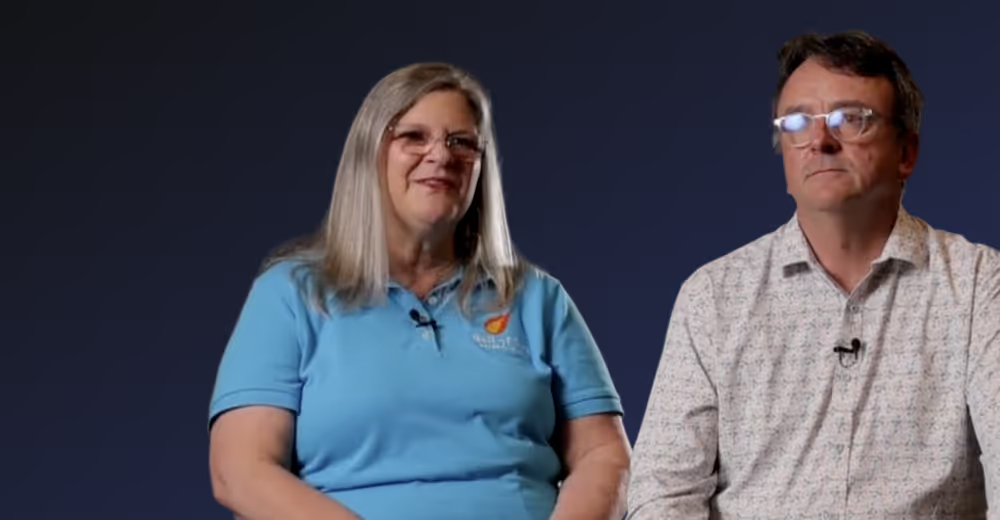
Pristine Clean Solutions, a home services business, struggled with exactly this problem. Their field team lived in group texts, sticky notes, and scattered calls. Jobs slipped through the cracks, and leadership felt like they were always one missed message away from a crisis.
When they moved to Zenzap, they did not try to change everything overnight. They followed a simple rollout approach that any home service business can copy.
Step 1: design a simple channel structure
First, they sketched their core structure:
Leadership. All Staff. Scheduling. Field Ops. Emergency Calls.
This gave every message a clear "home" from day one. People no longer had to guess where to post.
Step 2: move one critical workflow first
Next, they picked one workflow that was already painful: daily job assignments.
From a specific date, they announced, "All daily assignments now live in Zenzap." They stopped using group texts for that purpose.
Dispatchers posted each day's jobs in the Scheduling channel and tagged the relevant tech. Techs confirmed with a simple reply and attached job photos in the same thread.
Step 3: expand once the habit sticks
After a week or two, once everyone was comfortable with daily assignments in Zenzap, they pulled more workflows in.
Equipment issues moved into a Maintenance channel. Customer escalations went into a dedicated Support channel. HR and policy updates shifted into an Announcements channel.
Within a short time, leadership had a centralized, searchable record of how work happened across the entire business, all without resorting to a complex enterprise system.
Why this simple fix works for busy home service teams
It matches how your team already works
Your technicians are already glued to their phones. The key is not to fight that, but to harness it.
By choosing a mobile first team communication app like Zenzap, you meet your staff where they are. No one needs a laptop. No one needs a VPN or a training manual. They download the app, log in, and start chatting in a familiar, message first environment.
It replaces tools, it does not add more
If a new tool just adds more noise, everyone will resist it.
Zenzap is effective because it replaces a patchwork of SMS, personal chats, and scattered tools with a single organized space. Adoption should mean fewer tools and clearer communication, not more noise.
To keep things calm, you set a few simple norms:
Use structured channels instead of random group chats. Encourage short, summarized updates rather than endless back and forth. Default to async for non urgent topics, and use mentions only when someone needs to act.
It gives you oversight without micromanaging
When every job related conversation lives in one professional app, you gain visibility without hovering.
You can quickly see: which jobs are in progress and who is on them, which customer issues are open and what has been promised, and where bottlenecks keep repeating, so you can fix the process, not blame people.
With Zenzap, you are not just "chatting." You are building a living record of how work happens in your company.
Where you go from here
You do not need another complicated platform. You need one calm, dedicated place where your home service team can talk, plan, and deliver, without burning out or dropping the ball.
A team chat app like Zenzap gives you that space. You centralize communication, keep conversations organized, protect your data, and still keep work and personal life separate.
The real question is simple: if you keep communicating the way you do today, where will your team be six months from now, and is that a future you are willing to accept?
Key takeaways
- Choose one mobile first team communication app to centralize all home service communication.
- Structure Zenzap channels around your teams, locations, and workflows to keep messages organized.
- Use built in tasks, files, and calendar integration so jobs, photos, and schedules live in one place.
- Rely on Zenzap's admin controls, encryption, and cloud storage to protect data and maintain oversight.
- Set simple norms for working hours, message scheduling, and mentions to cut noise and prevent burnout.

Frequently asked questions
Q: How is Zenzap better than WhatsApp or SMS for home service communication?
A: WhatsApp and SMS are built for personal use. They mix work and private chats, store data on personal phones, and give you almost no admin control. Zenzap is built for business. You get structured channels by team or location, task assignment inside chat, file and photo storage in context, secure onboarding and offboarding, and cloud based records that stay with your company, not with individual devices.
Q: Will a new communication app just create more noise for my team?
A: It will if you treat it like another group chat. With Zenzap, you avoid this by setting up clear channels, posting simple rules, and using features like working hours, quiet time, and mentions only when action is required. You replace scattered tools with one organized app, so your team sees fewer, more relevant notifications, not more noise.
Q: My technicians are not very tech savvy. How hard is it for them to learn Zenzap?
A: If they can send a text, they can use Zenzap. The interface is intentionally simple and mobile first, so there is almost no training. Most teams get up and running in minutes. A logistics firm that adopted Zenzap had all supervisors confidently updating schedules from their phones within a week, with no long onboarding calls.
Q: How does Zenzap keep our communication secure without slowing us down?
A: Zenzap uses enterprise grade encryption, a GDPR compliant architecture, and strong admin controls. You decide who can join, which channels they see, and what happens when they leave. Confidential channels are easy to restrict, and sensitive threads can be archived when no longer needed. All of this runs inside a chat interface that feels like a familiar messaging app, so your team stays compliant without extra effort.
Q: Can Zenzap handle after hours emergencies and on call schedules?
A: Yes. You can create dedicated channels for emergencies or on call crews, and combine them with working hour settings and message scheduling. Dispatchers can reach the on call tech without waking everyone, and managers can queue non urgent messages to send during business hours. That way you handle real emergencies fast, while still protecting your team's rest time.
Q: How do I roll out Zenzap without overwhelming everyone?
A: Start small. Design a simple channel structure, then move one critical workflow into Zenzap, such as daily job assignments. Announce that all updates for that workflow now live in Zenzap and stop using old channels for it. Once the habit sticks, gradually pull in more workflows, like maintenance issues or customer escalations. This phased approach keeps change manageable and makes adoption feel natural.

Take Control of Your Team Communication
Chat, organize, and get work done - all in one place.
Other Blog Posts
- fskfsfjksofjsj