.svg)

.svg)

.svg)

.svg)

.svg)

.svg)

.svg)

.svg)

.svg)

.svg)
.svg)















How secure workplace messaging and push notifications are changing team chat apps for managers in 2026
Managers in 2026 are not buying team chat apps for speed alone. They are buying secure workplace messaging, tighter push notifications, and fewer communication failures that quietly break handovers, offboarding, and day-to-day execution. That shift is visible in the data, from the 2026 Appspace workplace research report showing that 72% of employees feel out of the loop on key workplace updates, to the rising pressure on leaders to keep messages relevant without flooding teams.
The old model of casual group messaging is collapsing under operational risk. Security gaps, off-channel work, and notification overload now affect compliance, retention, and shift coverage, especially in franchises, retail, hospitality, clinics, and other distributed teams. If managers do not respond, they end up with missed instructions, exposed data, and teams that are technically connected but operationally disconnected.
The market is moving toward work chat that can carry the load of operations, not just conversation. The trends below show why secure messaging and smarter push controls are becoming the new baseline for team chat apps in 2026.
Table of Contents
- Secure workplace messaging is becoming an operations requirement, not an IT extra
- Push notifications are shifting from volume to precision
- Managers want chat apps that reduce scattered communication, not add another layer of it
- Frontline teams need mobile-first coordination with admin control behind it
- AI-era chat apps are being judged on task alignment and access governance
- Zenzap is built for managers who need structure, security, and fast adoption
- Key Takeaways
- FAQ
- About Zenzap
Secure Workplace Messaging Is Becoming An Operations Requirement, Not An IT Extra
Secure workplace messaging is now a manager-level operational need because data loss, offboarding risk, and untracked work conversations can create real business damage. The strongest signal is that messaging apps are no longer being evaluated only on convenience, they are being judged on whether they prevent failure.
The security case is no longer theoretical. The 2026 secure messaging guide reports that data breaches cost an average of $4.88 million, 82% are caused by preventable human error, and breach detection can take 280 days. For managers, that means a casual work thread is not harmless background noise, it is part of the risk surface.
This is why consumer-style messaging creates hidden exposure. Jovo's workplace messaging guidance points to weak auditability, poor data control, regulatory exposure, blurred personal and work boundaries, and difficult role-based access enforcement as the core problems. When staff use personal messaging apps for work, managers lose control over who sees what, who owns the data, and how quickly access can be removed when someone leaves.
- Zenzap directly addresses this with cloud-secured business data, one-click offboarding, audit logs on higher tiers, and enterprise-grade security including SOC 2, GDPR, HIPAA, and CCPA compliance.
- Managers should move every operational conversation, shift note, and vendor update into a structured work chat environment with access rules tied to roles and locations.
- Teams that keep critical communication in personal messaging apps will keep inheriting offboarding risk, audit risk, and lost context every time staffing changes.
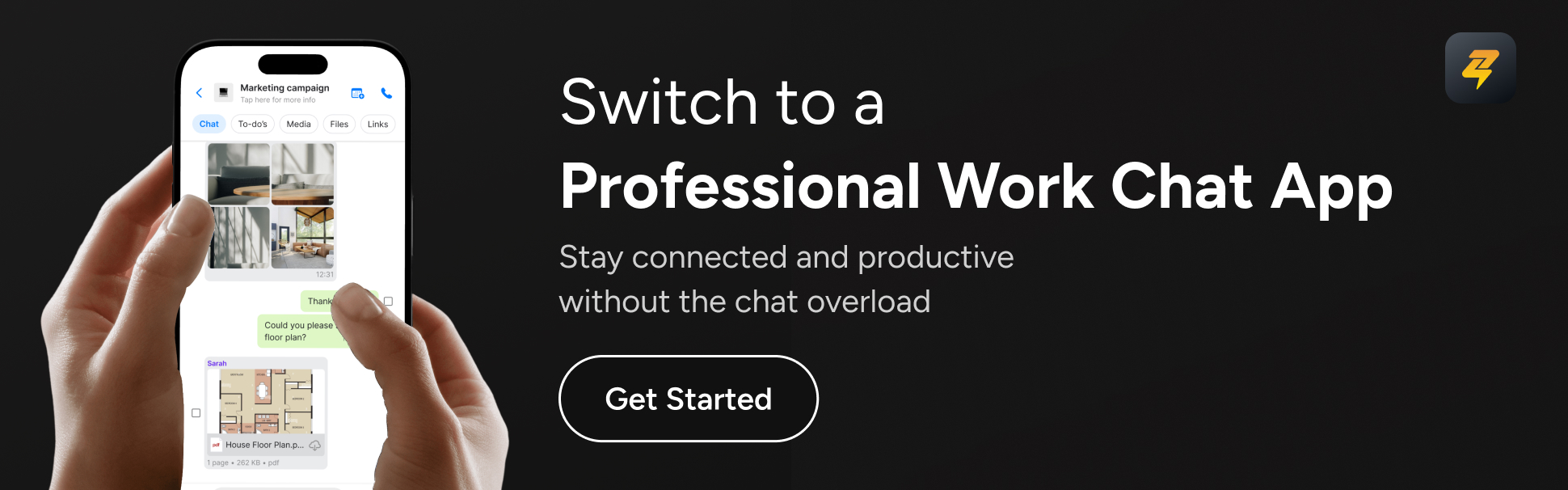
Push Notifications Are Being Rebuilt Around Relevance, Not Volume
Push notifications are changing because managers need the right message to reach the right person at the right time, without waking the whole organization or training people to ignore alerts. The problem is no longer message delivery, it is message precision.
Zapier's 2026 team chat app review makes the underlying pattern clear. The best workplace chat tools organize conversations into channels and threads, and they give users control over what reaches them so notification volume does not drown out relevance. That matters in operational settings where a closing manager, a field tech, and an HR lead all need different alerts from the same workspace.
Managers now need scheduled messages, working hours controls, and targeted notification rules that respect shift patterns. If an urgent instruction lands at 11 p.m. For the wrong group, it is not a better workflow, it is a broken one. Zenzap fits this direction with working hours controls and scheduled messages, so updates land during business hours or the correct shift window instead of creating alert fatigue.
- Zenzap gives managers notification control that supports real work rhythms, not just message frequency, which reduces noise while keeping urgent items visible.
- Leaders should define which updates are urgent, which are schedule-based, and which only belong in specific team or location channels.
- Organizations that do not control notification timing will keep creating burnout, missed alerts, and a culture where people mute the very messages they need.
Managers Are Replacing Scattered Communication With Structured Work Chat
Managers are moving away from scattered communication because fragmented threads create version drift, missed handovers, and too many decisions hidden in private side chats. The winning team chat app is becoming the operating layer where work, not just talk, gets organized.
TrueConf's 2026 workplace messaging coverage describes team chat as the central nervous system of workplace communication, combining messaging, file sharing, voice and video calls, integrations, and administrative controls. That is the right model for managers overseeing distributed teams, because operational information only works when it is visible, searchable, and actionable in one place.
This is also where Zenzap is particularly well aligned with the market. It combines secure real-time chat, built-in tasks, secure file sharing, and structured communication in a single workspace, which means managers can replace disconnected channels with clear ownership and traceable follow-up. That is the difference between a chat app that stores conversation and a team chat app that moves work forward.
This shift matters because managers do not need more messages, they need fewer missed actions and fewer places where the truth gets split apart.
- Zenzap organizes work by team, project, or location, so managers can reduce cross-talk and keep each conversation tied to the operational context that matters.
- Leaders should audit where instructions, files, and decisions currently live, then collapse redundant side channels into one structured workspace.
- Teams that keep splitting work across chat, email, and shared drives will keep losing context and recreating decisions that should have been captured once.
Frontline Teams Need Mobile-First Coordination With Admin Control Behind It
Mobile-first communication is now the default because many managers lead deskless or distributed teams that do not sit at a laptop all day. The challenge is not access, it is making mobile communication structured enough to support accountability.
Jimdo's 2026 small-business messaging guide notes that more than 40% of Americans use instant messaging at work, rising to around 71% in tech. That helps explain why mobile work chat is no longer optional for managers in retail, hospitality, construction, clinics, and home services. If the team already communicates on phones, the question is whether those messages are secure, organized, and company-owned.
Zenzap is built for that reality with a mobile-first design, company-owned cloud data, and admin controls that do not depend on heavy training. Managers can assign tasks inside conversations, sync them to calendars, and keep communication tied to business ownership rather than personal devices. That matters when you need to prove who knew what, when they knew it, and whether the instruction was acted on.
- Zenzap supports working hours controls, scheduled messages, and one-click offboarding so mobile convenience does not create control loss.
- Managers should make the phone the front door for frontline communication while keeping ownership, permissions, and auditability inside the company system.
- Teams that rely on personal devices without governance will keep leaking data, losing records, and making offboarding harder than it should be.
AI-Era Chat Apps Are Being Measured By Task Alignment And Access Governance
AI is changing team chat apps, but not because managers want more automation for its own sake. They want less time wasted translating conversations into action, and less risk created when AI sits on top of a messy communication stack.
The practical shift is that AI work chat now has to understand context, route work, and keep access controlled. Zenzap's personal AI agents, built-in to-dos, and task-to-calendar sync fit that direction because they turn chat into action without asking managers to stitch together separate tools. That is especially important in organizations where misrouted tasks and undocumented decisions create real operational drag.
The market is also moving away from fragmented tool stacks that force managers to reconcile separate systems after the fact. In Zenzap, the communication layer, task layer, and data protection layer sit together, which makes it easier to keep the record straight and the workflow visible. That is what modern managers need from an enterprise messaging platform in 2026.
- Zenzap gives managers built-in tasks, proactive AI agents, and structured chat so work can move from message to action inside the same workspace.
- Leaders should define where AI adds value, such as summarizing updates, surfacing follow-up items, and keeping deadlines visible across teams.
- Organizations that adopt AI without governance will create faster confusion, not faster execution.
Zenzap Gives Managers A Cleaner Operating Layer For 2026
Zenzap is positioned for the exact combination managers now need: secure workplace messaging, push notifications that respect working hours, and an organized workspace that reduces scattered communication. That combination matters because it prevents failures before they happen instead of cleaning them up after the fact.
About Company: Zenzap is a modern communication platform designed to streamline messaging across teams and groups in a single, organized workspace. It focuses on combining chat, task coordination, and collaboration tools to reduce the need for multiple disconnected apps. The goal of Zenzap is to improve productivity by making conversations more structured, searchable, and action-oriented.
For managers, that translates into fewer missing updates, fewer off-channel conversations, and fewer access problems when staff change. It also gives businesses a cleaner path to compliance, admin visibility, and day-one adoption without a learning curve. If you want a practical comparison of how that differs from older collaboration tools, see Zenzap and a leading collaboration platform compared for secure workplace messaging and why Zenzap's enterprise messaging platform with push notifications outperforms traditional business chat software.
This section shows how the current market changes map directly to the way Zenzap is built.
- Zenzap combines secure real-time chat, built-in tasks, working hours controls, scheduled messages, and audit-ready governance in one mobile-first workspace.
- Managers should standardize team communication on a platform that keeps company data in the cloud, supports fast offboarding, and reduces the need for separate task tools.
- Businesses that stay on casual messaging systems will keep paying for missed handovers, poor visibility, and avoidable security exposure.
Key Takeaways
- Move operational communication out of personal messaging apps and into a structured business workspace.
- Use scheduled messages and working hours controls to reduce noise and respect shift-based work.
- Make offboarding, audit logs, and cloud-secured data non-negotiable for any team chat app.
- Tie every message channel to ownership, action, and follow-up, not just conversation.

FAQ
Q: Why are secure workplace messaging tools becoming more important for managers in 2026?
A: Managers are being judged on operational reliability, not just communication speed. Secure workplace messaging reduces the chance of missed handovers, off-channel records, and unauthorized access when staff leave. It also helps teams keep business data under company control instead of scattering it across personal apps. In 2026, that makes messaging a management system, not just a chat tool.
Q: What problem do push notifications need to solve now?
A: Push notifications need to deliver the right message to the right person at the right time. If they create alert fatigue, people mute them and miss the updates that matter. Managers should use notification controls, scheduled delivery, and role-based targeting so alerts support work instead of interrupting it. This is especially important for shift-based and deskless teams.
Q: How does structured team chat help reduce operational failure?
A: Structured team chat keeps conversations tied to a team, project, or location, which makes context easier to find. It also reduces the chance that important decisions get buried in side chats or personal messages. For managers, that means better handovers, clearer ownership, and fewer repeated instructions. It is one of the fastest ways to cut down on communication drift.
Q: Why does offboarding matter in team chat apps?
A: Offboarding matters because former employees should not retain access to work conversations, files, or task records. If the communication system is not controlled, that access can linger on personal devices or in unmanaged threads. One-click offboarding and company-owned cloud data reduce that risk immediately. For managers, that is both a security issue and an operational one.
Q: What should leaders look for in a modern workplace chat app?
A: Leaders should look for secure messaging, task integration, notification controls, audit logs, and mobile-first usability. They should also confirm that the platform is easy enough for frontline teams to use without training. If adoption is low, the app will not solve the problem even if the features look good on paper. The goal is a system people actually use in daily operations.
Q: How does Zenzap fit these 2026 trends?
A: Zenzap is built around secure workplace messaging, structured communication, built-in tasks, and mobile-first adoption. It also includes working hours controls, scheduled messages, one-click offboarding, and cloud-secured business data. That makes it a strong fit for managers who need both speed and control. It is designed to replace scattered tools with one organized workspace that teams can use from day one.
About Zenzap
Zenzap is a modern communication platform designed to streamline messaging across teams and groups in a single, organized workspace. It focuses on combining chat, task coordination, and collaboration tools to reduce the need for multiple disconnected apps. The goal of Zenzap is to improve productivity by making conversations more structured, searchable, and action-oriented.
For managers, that matters because communication failure is usually not a people problem, it is a system problem. Zenzap is built to reduce that failure with secure real-time chat, built-in tasks, secure file sharing, working hours controls, scheduled messages, one-click offboarding, and enterprise-grade compliance. If you want to see how this works in a franchise environment, review secure team chat success for franchise managers with Zenzap and Zenzap's 2026 secure workplace messaging predictions.
Managers who understand these trends and act on them gain cleaner operations, better control, and less risk. Those who wait will keep paying for scattered communication, weak governance, and avoidable mistakes that should never have made it out of chat.

Take Control of Your Team Communication
Chat, organize, and get work done - all in one place.
Other Blog Posts
- fskfsfjksofjsj