.svg)

.svg)

.svg)

.svg)

.svg)

.svg)

.svg)

.svg)

.svg)

.svg)
.svg)












How to Manage To-Do Lists Efficiently with Zenzap for Clinic Teams in 2026
You are probably not short on to-do lists. You are short on a to-do list that your whole clinic can actually trust.
In clinics, most to-dos still live in memory, sticky notes, and fast moving chats. That is where follow ups vanish, handovers get messy, and small delays snowball into frustrated patients. This article shows you a simpler path. You will see how to turn those scattered requests into a clear, shared to-do system that lives directly inside your clinic communication with Zenzap.
You will learn how to map your real communication pain points to tasks, keep change light for busy teams, and gradually add structure without extra tools or complex project software. Along the way, you will see how clinics are using Zenzap to significantly reduce information hunting time and protect staff from burnout while keeping care standards high.
If you are leading a clinic, managing a department, or running front desk operations, this is about giving your team one calm, secure place where conversations naturally become action. No extra admin. No juggling five apps. Just work chat that finally pulls its weight.
Let us walk through how to manage to-do lists efficiently with Zenzap so your clinic in 2026 runs smoother, responds faster, and feels a lot less stressful for everyone.
Before we dive into the steps, here is what we will cover and how it all fits together for your team.
Table of contents
1. From chaotic to-do lists to one shared system
2. Why traditional clinic to-do lists keep failing you
3. How Zenzap turns chat into an efficient clinic to-do list
4. Step 1: Centralize clinic communication in Zenzap
5. Step 2: Map your clinic pain points to clear tasks
6. Step 3: Keep the change as light as possible
7. Step 4: Layer in more structure over time
8. Use Zenzap to manage daily clinic scenarios
9. Protect focus, security, and work life balance
10. Key takeaways
11. Final thoughts for clinic leaders
12. FAQ
From chaotic to-do lists to one shared system
In your clinic today, where do to-dos live?
A nurse hears a verbal request during handover. A doctor sends a quick message in a personal chat app. The front desk keeps a private notebook. Someone emails a reminder. By the end of the day, you are not managing one clinic to-do list. You are managing ten partial ones spread across people and tools.
This is what leads to missed follow ups after lab results, inconsistent documentation of decisions, and confusion over who owns non urgent but important steps. It is not that your team does not care. It is that your system is fragmented by design.
The simple fix
Turn every meaningful request in your clinic chat into a trackable task, directly in Zenzap.
You keep using chat like you already do. The only change is this rule. Whenever someone says something that implies action, such as "Please call this patient's family this afternoon" or "We must check yesterday's imaging report", you tap once, convert that message into a task, assign an owner, and set a due time.
No extra tools. No duplicate typing. Your to-do list for each patient, shift, or department lives inside the same channel where the conversation already happens.
Why it works
This works because it removes the gap between talk and action.
Instead of hoping that someone copies notes into a task tool later, you turn the message itself into a to-do while you are still in context. That task stays visible to everyone in the relevant Zenzap channel, along with the full conversation and any attached files.
Clinic teams consistently report spending significantly less time hunting for information once conversations, tasks, and files live in one place instead of scattered across email, personal apps, and separate tools. For a clinic, that is not just convenience. That is more time with patients and fewer 'Did anyone follow up on this?' moments.
Apply the fix
Start small. Pick one area, for example your morning shift channel or your inpatient ward channel.
Agree on one rule. Any message that contains a clear action becomes a task in Zenzap. Lead by example for a week. You will see fewer dropped balls and a calmer team without asking anyone to learn a new project management app.
Why traditional clinic to-do lists keep failing you
As a clinic leader, you already know how fragile your current system is. You rely on people remembering what was said, re-reading long note threads during shift change, and hoping someone noticed the crucial line in that group chat.
Real life example. A junior doctor messages, "Let us call Mrs. Rivera's son with the updated imaging results this evening." It is a good intention, but if it stays as a plain message, it depends on someone remembering it hours later, after dozens of other messages.
Multiply that by hundreds of decisions across your clinic each day. No wonder to-do lists feel unreliable. They live in people's heads, not in a shared structure.
This is not about blaming individuals. It is about giving your clinic a system that is actually designed for high volume, high stakes teamwork. Spreadsheets and scattered notes are not built for that.
How Zenzap turns chat into an efficient clinic to-do list
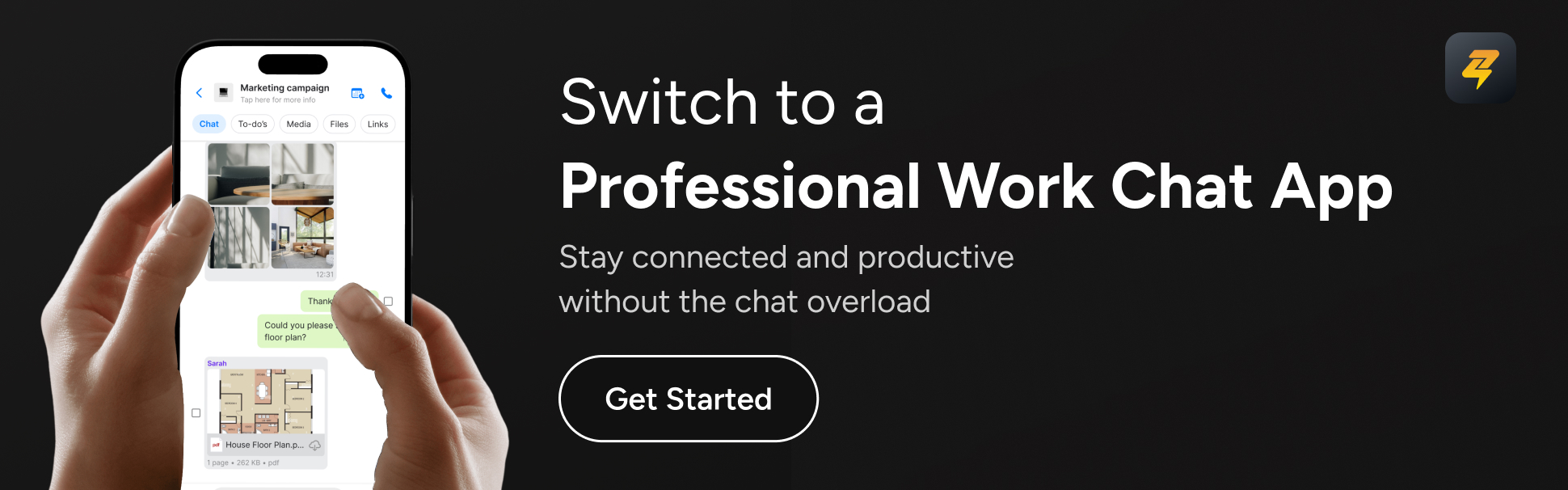
Zenzap is a mobile first work chat app that clinics use as a single hub for internal communication, tasks, files, and schedules. It feels as familiar as personal messaging apps, yet it adds the professional structure your clinic needs.
The key difference is simple. In Zenzap, chat is not just talk. It is where work lives.
You can:
Convert any message into a to-do with one tap.
Assign an owner and followers so responsibility is clear.
Set due dates and reminders that sync to calendars like Google Calendar or Outlook.
See all tasks in a shared view for each patient, channel, or team.
This is one of the most consistent themes in independent Zenzap reviews, managers specifically call out the relief of having tasks, chat, and files in one place rather than toggling between separate tools.
Step 1: Centralize clinic communication in Zenzap
Efficient to-do lists for clinic teams start with one simple move. You bring your important conversations into one place.
If half your work still lives in email and personal messaging apps, you can only manage half your tasks. So your first step is to give each type of conversation a clear home in Zenzap.
For a clinic, that might mean:
Channels for "Morning shift", "Inpatient ward", "Outpatient clinic", "Front desk", and "On call team".
Patient specific channels when appropriate, especially for complex cases.
Leadership and admin channels such as "Medical leadership", "Operations", and "HR updates".
Each channel then becomes the single place where both conversation and to-dos live. That structure alone already reduces confusion and context switching.
Step 2: Map your clinic pain points to clear tasks
Next, look at what actually frustrates you in day to day clinic work. You are not trying to reinvent everything. You are trying to turn recurring problems into simple rules that drive clear to-dos.
Start with questions like:
Are lab results that need action sometimes missed or delayed?
Are verbal decisions in corridors or quick calls rarely written and tracked?
Is there confusion over who is responsible for non urgent but important steps, such as family updates or discharge education?
For each pain point, define one Zenzap rule. For example:
"Every lab result that needs action becomes a task inside the patient's channel, with a named owner and due time."
"Every discharge plan gets a small checklist of tasks created as we discuss it, so education, medication reconciliation, and follow up calls are clearly owned."
This is where Zenzap's built in to-dos shine. You are not adding admin work. You are formalizing workflows that already exist, and you keep them where the conversation already happens.
For a deeper look at how this rollout works across any team type, see our guide to embedded task tracking.
Step 3: Keep the change as light as possible
Your team is busy. Long training sessions will not stick. Fortunately, Zenzap works like a familiar messaging app, so you can keep the change light and practical.
Show your team only the essentials at first:
How to create a task from a message.
How to assign an owner and followers.
How to set a due date and reminder.
How to open the shared task view for their channel.
Then, let them try it in real situations. For example, during your next shift handover, ask them to turn key action items into tasks as they appear in chat. Nothing fancy. Just "conversation became task" in real time.
Clinics that keep the rollout small and real see adoption grow naturally. People feel the relief of fewer dropped balls, without feeling like they just adopted a complex project management platform.
Step 4: Layer in more structure over time
Once your clinic team is comfortable with the basics, you can layer in more structure gradually, especially for recurring workflows that benefit from checklists.
In Zenzap, you can:
Use task checklist templates for standard processes, such as new patient intake, pre op prep, or discharge packages.
Sync tasks to calendars, so important actions automatically show up in schedules and do not depend on memory.
Create personal views, so individual staff members can see their own tasks across channels in one place.
Imagine your discharge process. Instead of relying on notes and memory, you use a standard checklist template in Zenzap. Every time a patient is marked for discharge, the nurse creates a task group in the patient's channel with items like "Confirm medications", "Provide written instructions", and "Schedule follow up". Each item has a clear owner and due time, all visible to the team.
This is not extra bureaucracy. It is protection against the tiny misses that create readmissions, complaints, or stress.
Use Zenzap to manage daily clinic scenarios
Smarter shift change and handover
Shift change is one of the riskiest moments in any clinic. A lot of context moves quickly from one team to another. In a traditional setup, you trust that long notes or voice reports are read carefully and remembered.
With Zenzap, you turn the most important notes into actionable items. For example, instead of typing "Remember to update family on tomorrow's imaging time" and hoping someone sees it, you create a task inside the patient's channel, assign it, and add a due time.
When the next shift comes in, they do not just see a wall of notes. They see a live list of owned, visible actions. That list survives distractions and busy corridors in a way that memory and paper cannot.
Coordinated response to urgent situations
During an urgent situation, your team needs less chatter and more directed action. Zenzap helps you cut through the noise by turning critical messages into tasks in a dedicated channel.
In a rapid response channel, for example, you might have tasks like "Call on call anesthesiologist", "Prepare recovery room", and "Notify lab of stat tests". Each gets a specific owner and a time frame. Everyone can see what is done and what is pending, without getting lost in back scroll.
This is not about adding clicks. It is about making sure that in moments that truly matter, nothing is left to chance or half remembered instructions.
Everyday micro tasks that usually fall through the cracks
Some of the most expensive mistakes in clinics are not dramatic. They are small things that nobody strictly owned.
Examples you probably recognize:
Updating a referring doctor about a patient's change in status.
Rescheduling a missed follow up appointment.
Calling a lab that has not returned a critical value.
In Zenzap, when someone writes "Can we please reschedule Mr. Ahmed's appointment for next week?", that message becomes a task with an owner and due time. The conversation stays attached, including any context or files, and everyone in that channel knows who is responsible.
No mental list. No "Who was supposed to do that again?" Just visible work, owned by named people.
Protect focus, security, and work life balance
Efficient to-do lists only help if your clinic team can actually breathe. Zenzap is built to support that, not fight it.
Structured organization and less information hunting
Because Conversations, tasks, and files live together in the same channel, clinic staff spend significantly less time jumping between apps looking for context. For teams moving between patients and locations all day, that shift is meaningful.
Enterprise grade security for clinic data
Healthcare communication carries serious privacy responsibilities. Zenzap provides encrypted communication, admin controls, secure onboarding and offboarding, and options like two factor authentication and audit logs.
Administrators can control who sees what, manage access when people join or leave, and keep all patient related communication in one professional workspace instead of scattered across personal phones.
As Aleksandra Ivanovska noted in her RemoteWize review, Zenzap holds certifications including HIPAA, SOC 2, and ISO 27001, with HIPAA support available on higher-tier plans. You can explore those options on the Zenzap pricing page.
For a full walkthrough of what HIPAA readiness actually requires from a team chat app, see our HIPAA compliance checklist.
Real work life balance for clinic teams
Burnout is real in clinics, and after hours messages often make it worse. Zenzap gives you tools to draw healthy lines without risking patient care.
Your team can:
Define working hours, so outside that window they only get notified for direct mentions or urgent items.
Schedule messages to send during business hours, so you can capture a thought now without disturbing someone late at night.
Zenzap's mobile first design and work life protections make it particularly well suited for frontline teams like clinics, retail, and field operations, teams that are always moving and rarely sitting at a desk.
For a broader look at how messaging culture affects burnout specifically, see our full breakdown of messaging platforms and work-life balance.
Key takeaways
- Centralize your clinic communication in Zenzap so conversations, files, and to-dos live in one secure workspace.
- Adopt a simple rule that any actionable message becomes a task with a clear owner and due time inside the relevant channel.
- Start with light changes, like shift handovers and lab result follow ups, then add checklists and calendar sync as your team gets comfortable.
- Use Zenzap's shared task views and personal views to prevent missed follow ups, support cleaner handovers, and reduce time spent hunting for information.
- Protect your staff with enterprise grade security, admin controls, and healthy work hour settings, so efficiency does not come at the cost of burnout.

Final thoughts for clinic leaders
Managing to-do lists efficiently in your clinic is not about buying a heavier project management tool. It is about closing the gap between what your team says in chat and what actually gets done.
When you move key clinic conversations into Zenzap, then consistently turn actionable messages into tasks with owners and timelines, you give your staff something they rarely have. A single, trusted view of what matters right now.
Over time, this shifts your clinic from reactive to calm and intentional. Fewer dropped balls. Cleaner handovers. Faster follow ups. And a team that can finally unplug at the end of the day without worrying what they might have forgotten.
The good news is that you do not need a huge change program to get there. You can start this week with one channel, one simple rule, and one shared commitment to let your chat app do more of the heavy lifting.
If every important request in your clinic could instantly become a visible, owned task, how different would your next month feel for your team and for your patients?
If you're still evaluating which platform to build this on, our full work chat app guide covers what to look for beyond just task management.
FAQ
Q: How is Zenzap different from using personal messaging apps or regular chat for clinic to-dos?
A: With personal messaging apps or basic chat apps, to-dos stay as plain messages. They quickly disappear in the scroll and rely on memory. In Zenzap, you can convert any message into a trackable task with an owner, due time, and attached conversation. Tasks live in shared views per channel and in personal views, so your clinic gets real accountability without adding another separate task tool.
Q: Do clinic teams need training to start using Zenzap for to-do lists?
A: Most teams do not. Zenzap is designed to feel like the messaging apps your staff already know. A short walkthrough that covers how to create a task from a message, assign an owner, and check the shared task view is usually enough. Clinics that keep the rollout light and let people use it in real scenarios tend to see organic adoption in the first week.
Q: Can Zenzap handle sensitive patient information securely?
A: Yes. Zenzap is built with enterprise grade security, including encrypted communication, access controls, secure onboarding and offboarding, and optional features like two factor authentication and audit logs. Higher tier plans are designed to support healthcare compliance needs such as HIPAA. Always confirm the specific plan and configuration that matches your regulatory environment on zenzap.co.
Q: How do Zenzap to-do lists help with clinic shift changes and handovers?
A: During handover, your team can turn key notes into tasks inside each patient or shift channel. Instead of relying on long written reports and memory, the incoming shift sees a live list of owned actions, such as "Call family with imaging time" or "Confirm follow up appointment". This reduces misses, speeds up onboarding to each case, and makes responsibilities much clearer.
Q: Will using Zenzap for to-dos increase admin work for clinicians and nurses?
A: In practice, it usually reduces admin work. You are not asking your team to retype notes into a separate system. You are letting them tap once on a message that already exists and convert it into a task. Because tasks, chat, and files are in the same place, staff spend less time copying, pasting, and searching across tools, and more time focusing on patient care.
Q: Can Zenzap integrate clinic to-dos with calendars and external tools?
A: Yes. Zenzap supports calendar integration, including Google Calendar workflows, so important tasks can appear in schedules automatically. Higher tier plans also support additional integrations and API access, which helps you connect Zenzap with other clinical or administrative tools as your digital workflow matures.

Take Control of Your Team Communication
Chat, organize, and get work done - all in one place.
Other Blog Posts
- fskfsfjksofjsj