.svg)

.svg)

.svg)

.svg)

.svg)

.svg)

.svg)

.svg)

.svg)

.svg)
.svg)

















The easy way to manage your non-profit communication tool without complex integrations
Too many tools. Not enough time. And somehow, you are still missing messages that matter.
If you are like most non-profit leaders, you are juggling multiple apps, email, video calls, and at least one spreadsheet just to keep your team aligned. Every new integration promises to make things easier, yet your staff, volunteers, and board members still end up asking the same question: "Where was that again?"
This guide walks you through a simple fix. You will see how to cut through the noise, manage your non-profit communication tool without complex integrations, and create a calm, organized workspace your team will actually enjoy using. You will also see how Zenzap gives you a mobile-first, intuitive work chat that keeps your mission moving without forcing you into a heavy tech stack.
We will show you how to bring clarity into one secure, structured internal chat app built for real, busy teams.
In short, you will learn how to go from scattered conversations and app chaos to one simple place where your staff, volunteers, and partners always know what is happening and what needs to be done.
Here is how we will get there.
Table of contents
1. Why non-profit communication feels harder than it should
2. Simple fix format, one tool, one home base
3. How Zenzap keeps your non-profit communication simple
4. Using Zenzap alongside tools you already love
5. Real non-profit scenarios and how this looks in practice
6. Key takeaways
7. Final thoughts to move your mission forward
8. FAQ
Why non-profit communication feels harder than it should
Non-profit work is already complex. Communication should not add to that load.
You are working with staff, board members, part-time contractors, and volunteers who often use their own devices and personal chat apps. Many organizations lean on a combination of tools for collaboration because they feel familiar and affordable. At the same time, you probably also rely on email, group texts, and ad hoc messaging groups to fill in the gaps.
The result is a patchwork system that people keep trying to fix with more integrations and more tools. You connect calendars, add video links, share designs, and maybe pull in a CRM or mailing platform. Each piece looks helpful. All together, they can overwhelm your team.
Many small non-profits end up juggling multiple different tools just to manage events, member communication, and internal updates. That might look efficient on paper, but in real life it costs you attention, time, and energy that should go to your mission.
Simple fix format, one tool, one home base
The widespread problem
Your non-profit communication is scattered across too many places. Staff chat in various apps. Volunteers text one another. Board members prefer email. Project details sit in shared documents. Meeting links live somewhere inside a calendar that half the team rarely checks.
When you need to find a decision, a file, or a commitment, you end up searching across apps, threads, and inboxes. People miss updates. Tasks slip through. Sensitive information sometimes sits in personal devices with no easy way to remove access when someone leaves.
The single straightforward solution
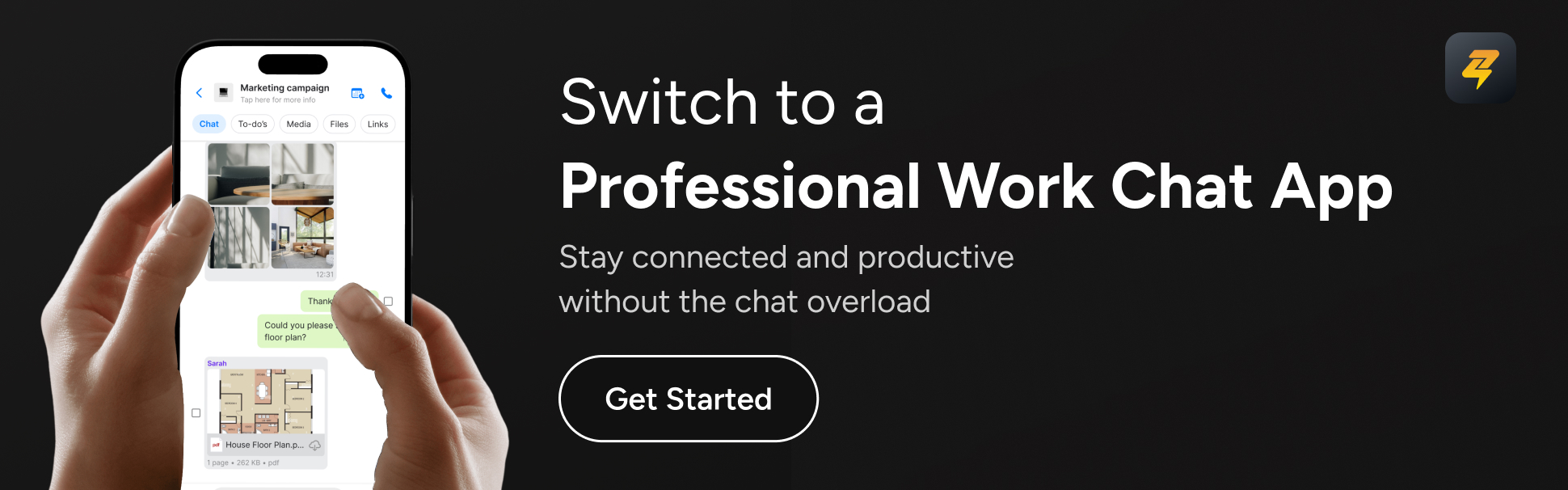
Pick one internal communication tool as your primary home base, then route everything important through it. For many non-profits, that home base is Zenzap, a mobile-first work chat that feels like a familiar messaging app, yet gives you professional structure, secure access control, and built-in task management.
The key is to keep the setup simple. You do not need dozens of complex integrations. You only need one reliable place where your team can:
- Chat about work in focused channels
- Turn messages into tasks so nothing gets lost
- Share files where the work is already happening
- See who is available and when
- Disconnect after hours without worrying they missed something critical
Why this fix works
This works because your people finally know where to look first. Instead of asking "Was that in email or in another app?", your default answer becomes "Check Zenzap." It becomes your single source of truth for internal communication, task follow-up, and quick alignment.
Zenzap is designed around three guiding principles that match what non-profits need most:
- It must feel instantly familiar, so your team adopts it without training
- It must keep work structured, so nothing important gets lost
- It must protect your data by default, so you do not need a dedicated security engineer
When your internal communication actually gets used by everyone, your entire operation feels lighter. Your staff feels respected. Your volunteers feel included. You stay organized without constantly playing tech support.
How to get started fast
Here is a simple, low-friction rollout you can follow:
1. Choose Zenzap as your internal chat hub for staff, board, and core volunteers.
2. Create a few clear channels, such as "Leadership," "Programs," "Volunteers," and "Announcements."
3. Connect your Google Calendar, so meeting reminders and links appear directly in chat.
4. Ask your team to move all work conversations from personal chat apps into Zenzap.
5. Use tasks inside chat to track follow-ups, instead of spreading to-dos across email and spreadsheets.
You do not have to switch off all your other tools. You only need to agree that Zenzap is where internal conversations live and where day-to-day coordination happens.
How Zenzap keeps your non-profit communication simple
Intuitive simplicity, no training required
Many non-profit teams include volunteers who join for a few hours a week. You cannot afford a long onboarding curve for your communication tools. Zenzap is built to feel as natural as the personal messaging apps your team already uses, with a clean interface and clear chat structure.
Because it is mobile-first, your people can join discussions, view updates, and respond to tasks from their phones without digging through logins or long menus. That is especially helpful if you have volunteers in the field or staff who split time between the office and community sites.
Professional separation between work and personal life
Using personal messaging apps for work might feel convenient at first. In reality, it blurs every boundary. People get pinged all evening. Work threads sit next to family updates. And when a volunteer or staff member leaves, your organizational history stays on their personal device.
Zenzap fixes this with professional separation. Communication about your mission lives in one dedicated app. Personal messages stay elsewhere. With working hours settings and scheduled messages, your team can confidently unplug without worrying about being "always on." Notifications pause outside of work hours, and you can schedule non-urgent messages to arrive when everyone is back on the clock.
Bulletproof security without complex setup
Non-profits handle sensitive information every day, from donor details to client stories. Attacks on non-profits have increased as more organizations move online, which means you cannot rely on casual group chats for internal communication.
Zenzap uses enterprise-grade encryption and strong access controls to protect your messages and files. Admins can manage onboarding and offboarding in a few clicks. When someone joins, they get instant access to the right chats and history. When someone leaves, their access is removed and your data stays with your organization, not on personal phones.
Structured organization so nothing slips through
Unstructured tools feel flexible until you need to find one specific decision made two months ago. Because Zenzap lets you create separate chats for teams, projects, and topics, conversations stay tidy and search-friendly.
You can also:
- Turn important messages into tasks or checklists
- Keep files in the same chat where you discuss them
- Use announcements to share critical updates and see who has read them
This structure makes internal communication a real asset instead of a cluttered archive.
Work-life balance built into the tool
Burnout is a serious issue across the non-profit sector. Your communication system can either fuel it or help prevent it. Zenzap leans firmly toward prevention.
With working hours controls, scheduled messages, and thoughtful notifications, you give your team permission to rest. You respect their personal time while still keeping a clear path for truly urgent updates. That combination builds trust and improves retention, especially for younger staff and volunteers who care deeply about balance.
Using Zenzap alongside tools you already love
Google Workspace and Zenzap
Many organizations already rely on Google Workspace as a backbone for collaboration. Google Docs, Sheets, and Slides make it easy for multiple people to edit and comment at the same time. Google Drive keeps everything in one place. This setup can significantly reduce email volume when teams actively use comments and suggestion mode in shared documents.
You do not need to replace any of that. Instead, you use Zenzap as the conversational layer on top.
Here is how that looks in practice:
- A program manager drops a link to a shared Google Doc in the "Programs" chat, along with a short note about what feedback is needed.
- Team members open the doc, leave comments, and then confirm in Zenzap when they are done.
- Calendar invites and reminders flow from Google Calendar into Zenzap, so no one hunts through old emails for a meeting link.
Your docs stay where they are. Your discussions and decisions happen in Zenzap, in context and in real time.
Video calls and meeting flow
Video conferencing tools are great for trainings, town halls, or board meetings. Zenzap fits in by handling everything around the meeting itself:
- Before the call, you post the agenda and video link in a relevant chat.
- During the call, someone captures key decisions or action items directly in Zenzap tasks.
- After the call, you share the recording link and summarize what was agreed, so everyone has one place to revisit the outcome.
This stops important actions from dying in a meeting recording no one has time to rewatch.
Other tools, fewer integrations
You might also use design tools for visual content, email platforms for newsletters, or CRMs and giving platforms for donor management. These tools all have their place. The trick is to keep your internal communication simple instead of turning your chat into a crowded integration playground.
With Zenzap, you can selectively connect what truly saves time, such as your calendar or a key project tool, while keeping the interface clean and intuitive. That way, your staff does not need a training manual just to read their messages.
Real non-profit scenarios and how this looks in practice
Scenario 1, organizing a fundraising event
Imagine you are running a small education non-profit planning a community fundraiser. In a typical tool-juggling setup, you might coordinate in email, send last-minute texts, share designs via links, and host planning meetings on video calls. Everyone is busy, and details scatter.
With Zenzap as your internal communication hub, you could:
- Create a "Spring Fundraiser" chat for staff and key volunteers.
- Share the master timeline as a Google Sheet link, then pin that message in the chat.
- Turn each major step, such as "secure venue," "confirm catering," or "launch email campaign" into Zenzap tasks.
- Share design files for feedback, keeping comments in Zenzap instead of spreading them across email threads.
- Post video call links and meeting recaps in the same chat, so no one hunts for them later.
Now, when someone asks, "Where are we with the auction items?", you only have one place to look.
Scenario 2, managing volunteers across locations
Say you coordinate a food pantry with volunteers across neighborhoods. Some are on-site, some work remotely on outreach, and many juggle other commitments.
Using Zenzap, you could:
- Create a "Volunteers" chat for broad updates and announcements.
- Open smaller chats for specific teams, such as "Saturday shift" or "Deliveries."
- Let volunteers set their working hours so notifications respect their availability.
- Use announcements to share schedule changes and see which volunteers have viewed them.
- Share photos and quick wins from events to keep morale high without adding another platform.
Because Zenzap keeps work communication in a dedicated professional space, your volunteers can collaborate without mixing work into their personal messaging apps, which is a big trust-builder for new people.
Scenario 3, leadership and board communication
Board members often live in their inboxes, while staff might prefer chat. You can bridge that gap by making Zenzap your default for leadership coordination, with clear pathways for formal documents to move into email or board portals when needed.
For example:
- Use a "Leadership" chat for quick updates, questions, and clarifications.
- Share links to board packets in Google Drive and keep discussion in Zenzap.
- Turn board decisions into Zenzap tasks assigned to staff with due dates, so follow-through is transparent.
- Limit access to this chat via admin controls, so only the right people see sensitive information.
This keeps your governance conversations secure and focused, without adding more complexity to your tech stack.
Key takeaways
- Choose one primary internal chat hub, like Zenzap, so your team always knows where to look first.
- Use structured chats and built-in tasks to keep non-profit communication organized and actionable.
- Lean on gentle integrations, such as Google Calendar and Drive links, instead of building a heavy, complex stack.
- Protect your mission data with secure onboarding, offboarding, and clear work-life boundaries.
- Start small with a few core channels, then grow your setup only as your team truly needs it.

Final thoughts to move your mission forward
Your non-profit does not need a labyrinth of tools and integrations to communicate well. You need a calm, reliable home base where people can talk, decide, and act, without worrying about where the latest update went.
By choosing a simple, mobile-first work chat like Zenzap as your primary communication hub, you give your team clarity. You give your volunteers a sense of belonging. You give your organization the structure and security it deserves, without burying everyone in complexity.
The easy way to manage your non-profit communication tool is not to bolt on more features. It is to bring everything that matters into one clear, intuitive space that just works.
The question now is simple, are you ready to give your team one place where communication finally feels easy?
FAQ
Q: How is Zenzap different from other messaging tools for my non-profit?
A: Zenzap combines the familiarity of personal messaging apps with professional structure designed for business and non-profit use. It separates work from personal life, offers admin controls, secure onboarding and offboarding, and keeps your data owned by your organization. It stays intentionally simple and mobile-first, so volunteers and less technical staff can adopt it quickly without training.
Q: Do I have to stop using Google Workspace, video conferencing, or other existing tools?
A: No. The goal is not to replace your entire stack, but to simplify how your team communicates around it. You keep using Google Docs, Sheets, and video calls for what they do best. Zenzap becomes your central hub for internal chat, quick decisions, and task follow-up. You share links into Zenzap, connect your calendar, and keep all conversations in one easy place.
Q: Is Zenzap secure enough for sensitive non-profit data?
A: Yes. Zenzap uses enterprise-grade encryption and strong access controls to protect messages, files, and user accounts. Admins can manage who joins, what they see, and remove access instantly when someone leaves. This ensures that your data stays owned by your organization, not scattered across personal phones or unmanaged group chats.
Q: How much time will it take to roll Zenzap out to my team?
A: Most non-profit teams can get started in a day. Because Zenzap feels like familiar messaging apps, staff and volunteers usually need little to no training. You set up a handful of channels, connect your calendar, invite your team, and begin routing internal communication through Zenzap instead of personal apps or long email threads.
Q: What if some of my volunteers are not very tech-savvy?
A: Zenzap is designed with non-technical users in mind. The interface is clean and straightforward, focused on chat, tasks, and simple controls. You can start them in one or two key chats, show them how to read and reply, and build from there. Many teams find that volunteers who avoid complicated tools are very comfortable in Zenzap after a single day of use.
Q: Can Zenzap help support work-life balance for my staff?
A: Absolutely. Your team can set working hours so notifications arrive only during appropriate times. You can schedule messages to send during office hours instead of late at night. This helps you respect boundaries, reduce burnout, and create a culture where people can unplug without fearing they will miss something important.

Take Control of Your Team Communication
Chat, organize, and get work done - all in one place.
Other Blog Posts