.svg)

.svg)

.svg)

.svg)

.svg)

.svg)

.svg)

.svg)

.svg)

.svg)
.svg)





















The simple method streamline your health care team chat without risking data privacy
You already know this: one missed message can change a patient outcome.
Yet every day you juggle texts, emails, personal WhatsApp threads, EHR messages, and phone calls, then hope nothing critical slips through the cracks or leaks onto the wrong device.
This article shows you a simple method to streamline your healthcare team chat without risking data privacy. You centralize communication in one intuitive, mobile-first, HIPAA-ready app, Zenzap, so your team can move faster while your compliance officer still sleeps at night.
You will see how to bring every conversation into one place, cut unnecessary follow ups by up to 35%, reduce communication errors, and keep patient information off personal devices, all while giving your staff a clear line between work and home life.
Think of it as moving from a crowded, noisy hallway conversation to a calm, structured command center where every instruction is clear, secure, and easy to act on.
Table of contents
1. Start at the base: the communication challenge in healthcare
2. Simple fix format: the one method that changes everything
3. Step 1: centralize all conversations for clarity
4. Step 2: reduce communication errors with secure messaging
5. Step 3: simplify onboarding and lower training time
6. Step 4: integrate with the tools you already use
7. Step 5: respect work life boundaries and avoid burnout
8. How the steps work together to elevate care
9. Key takeaways
10. FAQ
11. Final thoughts
Start at the base: the communication challenge in healthcare
Your care teams move fast. Your communication tools often slow them down.
Nurses get shift changes by text. Doctors get updates by email. Admin staff track schedules in spreadsheets. Some sensitive details end up in personal WhatsApp groups, which means patient information sits on personal phones, outside your control.
That scattered mix does more than frustrate your staff. It increases risk.
Research has linked poor communication to a high share of serious medical errors. One study found that better secure messaging tools helped healthcare workers cut communication errors by 59%, which directly improves patient safety and outcomes. You can read more about this type of impact in secure messaging studies from sources like PubMed.
At the same time, you are under constant pressure to stay compliant with privacy rules such as HIPAA in the United States or GDPR in Europe. Using personal chat apps for work makes that nearly impossible to guarantee.
Simple fix format: the one method that changes everything
Introduce the widespread problem
The core problem is simple. Your clinical communication lives in too many places and too many of those places are not built for healthcare or data privacy.
That chaos shows up every day:
Staff chase missing updates across channels.
Handoffs feel risky.
Old staff still appear in personal groups months after leaving.
Patient identifiers occasionally appear in unapproved chats.
Describe the single effective solution
The simple method is this: move all internal health care team chat into one secure, structured, mobile-first app that is designed for professional use and built to protect data privacy.
In practice, that means adopting a solution like Zenzap as your single internal team chat hub for:
Patient scheduling updates
Shift handovers and on call coordination
Clinical questions and case discussions (within policy)
Announcements, policy changes, and procedure updates
Task assignments, reminders, and checklists
Instead of juggling countless tools, your clinicians open one app on their phone, tablet, or desktop and trust that everything they need is there, secure and searchable.
Why it works
Centralization alone already drives a real impact. Zenzap data shows that moving to a centralized communication hub can cut unnecessary follow ups by up to 35%. That is time your staff gets back for patients, not paging colleagues.
Pair that centralization with enterprise grade encryption, clean onboarding and offboarding, and schedule aware notifications, and you get a chat system that is both safer and easier to use than personal apps.
This is exactly why organizations like NHS Wales and other medical teams rely on Zenzap to run structured shift handovers and urgent staff requests. A nurse can flag an issue in a channel, a manager turns that message into a task with an owner and due time, and everyone sees the status without leaving the chat.
Apply the fix in your setting
In the rest of this article, you will walk through the method step by step so you can adapt it to your own clinic, hospital, or care home, even if your team is not tech savvy.
Step 1: centralize all conversations for clarity
Your first move is to stop scattering messages and bring them into one structured space.
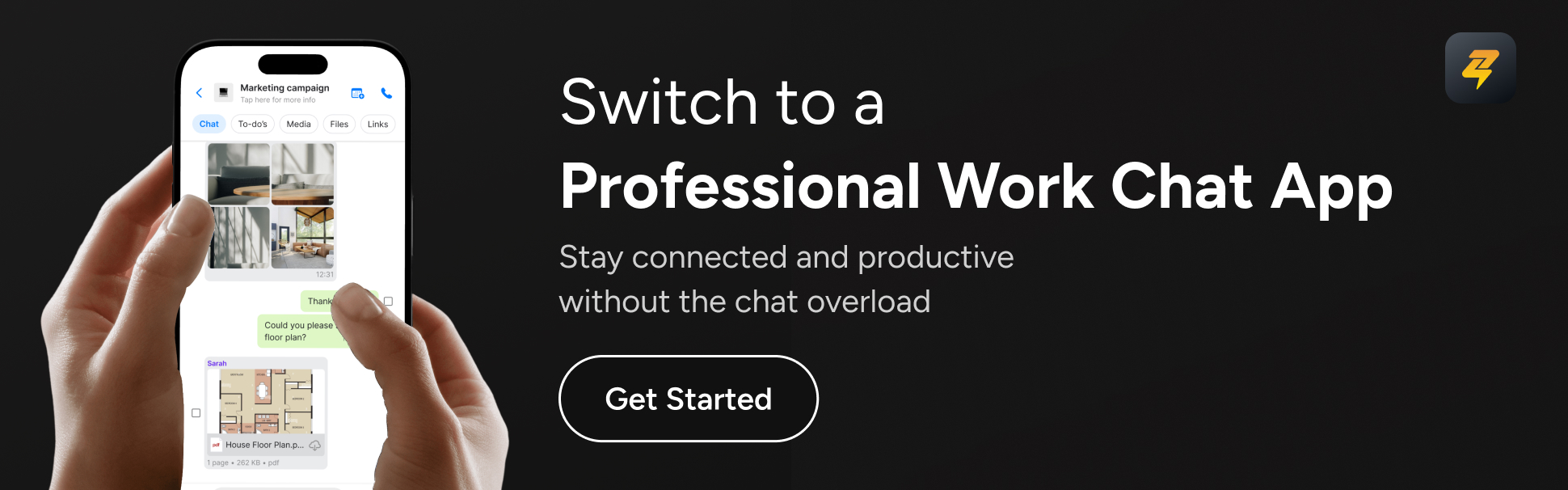
Zenzap lets you centralize internal communication for health care teams in a way that feels as simple as texting but is built for collaboration and compliance.
You can create channels that mirror how your organization actually runs:
By team, for example Emergency department, Pediatrics, Radiology
By location, for example Clinic A front desk, Ward 3 night shift
By topic, for example Infection control, On call rota, Quality improvement
By patient or case, for complex situations that require tight coordination
Every staff member knows exactly where to post and where to look. That alone reduces confusion and follow up questions.
Zenzap's own data shows that when health care organizations centralize communication in this way, they can cut unnecessary follow ups by up to 35%. Handoffs are smoother, less gets repeated, and information is easier to find.
True to life example
A mid sized clinic creates these Zenzap spaces:
#clinic wide for all staff announcements
#front desk, #nurses, #physicians for each function
#shift updates and #on call for rota coordination
Case channels for high risk patients
Before Zenzap, the night nurse checked three different apps and her email before every shift. After centralizing, she opens Zenzap, visits two channels, and sees everything she needs, from lab follow ups to bed moves.
Step 2: reduce communication errors with secure messaging
Once your conversations are centralized, you need to protect them.
Personal messaging apps are built for casual conversation, not clinical communication. They store patient details on personal devices. They rarely support enterprise controls. If someone leaves your organization, you cannot revoke their access to group history.
A dedicated team chat app for healthcare changes that.
Zenzap uses enterprise grade encryption so internal messages stay protected in transit and at rest. Admins control who can access which channels, who can see what, and can instantly revoke access when someone leaves. No more lingering ex staff in the weekend shift group.
One study reported that clinical teams using secure messaging platforms saw a 59% drop in communication errors, helping reduce delays and misunderstandings across care teams. You can explore similar findings in secure messaging research published by sources like AHRQ.
True to life example
Care home supervisors move shift handovers and medication reminders into Zenzap. Before, they relied on printed memos and personal chats. Staff frequently missed last minute changes.
After the switch, they report fewer accidents and faster shift changes. Critical updates live in one secure channel. Everyone sees the same instructions, at the same time, and no sensitive data sits in random WhatsApp threads anymore.
Step 3: simplify onboarding and lower training time
You do not have spare hours to train every new nurse on complicated software. If your chat app is clunky, your staff falls back to texting.
Zenzap is intentionally designed to feel as simple as texting. Managers in healthcare, hospitality, and education say their teams just get it in minutes. There is no steep learning curve and no need for long training sessions.
New staff download the app, log in, and immediately understand how to chat, react, and share updates. Under that familiar surface, though, they also get structured channels, task management, calendar integration, and secure access built in.
This simple onboarding matters. It means you can roll Zenzap out quickly, often in less than a day, then trust that your people will actually use it instead of defaulting to personal apps.
Simple fix in practice
When a new respiratory therapist joins your hospital, HR adds them to Zenzap and assigns them to three channels: #clinic wide, #respiratory, and #shift updates.
They do not need formal training. They see a familiar chat interface and clear channel names. Within an hour they are actively collaborating, not sending their first questions over SMS.
Step 4: integrate with the tools you already use
You probably rely on a web of existing systems: an EHR, a scheduling platform, perhaps a separate tool for compliance checklists or incident reporting.
You do not want to replace all of those. You want a healthcare team chat app that fits around them.
Zenzap integrates with tools such as Google Calendar and can connect with your EHR, scheduling, and billing systems. Instead of asking your staff to monitor yet another dashboard, you bring key updates directly into chat.
For example:
Shift changes from your digital rota arrive in #shift updates
Important appointments sync from Google Calendar into the relevant team channel
Compliance tasks or safety checks appear as tasks inside the chat
This approach reduces duplication and keeps everything aligned. Clinicians spend less time switching tabs and more time with patients.
True to life example
NHS Wales uses Zenzap to support structured shift handovers. When a nurse posts about a pending lab result or a complex discharge, managers can convert that message into a task with a clear owner and deadline. Everyone can see what is on track, at risk, or blocked without leaving the conversation.
The result is faster decisions, fewer missed steps, and less time chasing status updates.
Step 5: respect work life boundaries and avoid burnout
In healthcare, work creep is real. Group chats ping at all hours. Staff feel pressure to respond, even when they are officially off.
Over time, that always on culture fuels burnout, which is already at worrying levels according to reports from organizations like the American Medical Association.
A good healthcare team chat app should not only help you move faster during working hours. It should also help you draw clear lines when the day is done.
Zenzap gives your staff schedule aware alerts and customizable notifications. They can set working hours so routine messages land when they are on shift. Only high urgency alerts surface outside those windows, if you choose to allow that.
This lets you keep communication efficient without training everyone to be permanently on call.
True to life example
An urgent care clinic uses Zenzap to separate work and personal time. Their doctors set working hours in the app. During off hours, routine updates sit quietly until the next shift. Only time sensitive messages tagged as urgent can trigger alerts.
Within a few weeks, leaders notice fewer late night pings and better rested clinicians. Turnover risk falls and staff satisfaction scores improve on internal surveys.
How the steps work together to elevate care
Each step you have seen is powerful on its own. The real magic comes when you put them together in one flow.
You centralize all conversations in clear channels so nothing gets lost.
You lock those conversations behind enterprise grade security and clean access controls.
You keep adoption high with a texting simple interface.
You integrate your calendars and core systems so updates come to the chat instead of scattered apps.
You respect staff wellbeing with smart boundaries and notifications.
The result is a single, focused place where your health care team can collaborate quickly, securely, and confidently. That helps you protect patient privacy while you streamline clinical workflows.
Zenzap is built specifically to give you that mix of simplicity, structure, and security. It sits alongside your existing stack instead of trying to replace your EHR or HR systems, and it grows with you as your organization adds locations and staff.
Key takeaways
- Centralize health care team chat in one secure app so you cut follow ups and reduce errors.
- Use a HIPAA ready messaging platform like Zenzap to keep patient data off personal devices.
- Design channels that mirror your real teams, locations, and cases so staff know exactly where to go.
- Connect Zenzap to tools like EHRs and calendars so updates appear where conversations already happen.
- Protect staff wellbeing with schedule aware notifications and clear boundaries between work and personal time.

FAQ
Q: How is a healthcare team chat app different from personal messaging apps?
A: Personal apps are built for casual conversation, not clinical collaboration or compliance. A healthcare team chat app like Zenzap gives you structured channels, admin controls, enterprise grade encryption, and clean onboarding and offboarding. That means you keep patient related communication off personal devices and under business control, while still giving your staff a familiar, text like experience.
Q: Can I keep my existing EHR and scheduling software if I start using Zenzap?
A: Yes. Zenzap is designed to sit alongside your existing tools instead of replacing them. You can sync calendars such as Google Calendar and connect to EHR or scheduling platforms so updates flow into chat channels. Your team continues to use systems they already know, while Zenzap becomes the secure communication layer around them.
Q: Will my staff need formal training to start using Zenzap?
A: Usually not. Zenzap is intentionally designed to feel as simple as texting, so most clinicians, nurses, and admin staff pick it up in minutes. You can support adoption with short walkthroughs or quick start guides, but you do not need long classroom sessions. This helps you roll the app out quickly, often in less than a day.
Q: How does Zenzap help protect data privacy and support HIPAA compliance?
A: Zenzap uses end to end style encryption and enterprise grade security controls so sensitive information stays protected. Admins can manage user access centrally, control which channels people see, and instantly revoke access when someone leaves. This keeps patient data within an auditable, controlled environment rather than scattered across personal phones or email accounts. You can learn more about HIPAA compliant messaging expectations from resources like HHS, then map them to Zenzap's features.
Q: What simple steps should I take first if I want to streamline our team chat?
A: Start with a pilot. Choose one department, like your emergency department or a single clinic site. Set up Zenzap with a small, clear channel structure, for example #clinic wide, #nurses, #physicians, and #shift updates. Move all internal messages for that pilot group into Zenzap for a few weeks, then collect feedback on speed, clarity, and stress levels. Use those insights to refine your setup before rolling it out to the rest of your organization.
Q: How does Zenzap support staff wellbeing and reduce burnout risk?
A: Zenzap lets staff control their notifications and set working hours so routine messages do not ping them all night. Teams can still flag urgent issues when needed, but the default is a healthier separation between shifts and personal time. That simple boundary, combined with clearer communication, helps reduce stress and contributes to better retention over time.
Final thoughts
You do not need a complicated stack of tools to fix healthcare communication. You need one secure, intuitive, structured chat space where your entire team can meet, coordinate, and act.
Centralizing health care team chat in Zenzap is a simple method, but it unlocks real gains in clarity, safety, and staff wellbeing. You replace scattered, risky conversations with organized, secure collaboration that respects both patient privacy and human limits.
The question is no longer whether you can keep using personal messaging apps and fragmented channels for patient care. The real question is this: what will change for your patients and your people once every critical conversation finally lives in one secure, focused place?

Take Control of Your Team Communication
Chat, organize, and get work done - all in one place.
Other Blog Posts