.svg)

.svg)

.svg)

.svg)

.svg)

.svg)

.svg)
.svg)
























How to Scale Secure Enterprise Chat Software Across Distributed Teams with Zenzap
Distributed teams do not fail because people send too many messages. They fail when chat, files, tasks, and access live in different places, outside admin control. That is where risk compounds, especially in franchise, retail, hospitality, clinic, and field-service environments.
Enterprise chat only scales when communication stays structured, searchable, and company-owned. Zenzap is built for that exact point of failure, with secure work chat, built-in tasks, file sharing, auditability, and mobile-first access that frontline teams can use from day one.
Table of Contents
- How Secure Enterprise Chat Breaks At Scale
- Three Steps To Keep Distributed Teams Aligned
- Key Takeaways
- FAQ
- About Zenzap
- Next Step
How Secure Enterprise Chat Breaks At Scale
Secure enterprise chat breaks when a team starts using one app for conversation, another for tasks, and personal phones for everything else. At that point, admins lose control of data, retention, and offboarding.
That failure is not theoretical. The team chat software market is valued at $11.2 billion in 2025 and is projected to reach $23.4 billion by 2034, which shows that chat is now operational infrastructure, not just messaging. The team collaboration software market is also expected to rise by USD 14.57 billion from 2025 to 2030, at a 14.4% CAGR.
A 2025 survey cited by Pumble found that 86% of employees and executives blame ineffective collaboration or poor internal communication for workplace failures. That is exactly what happens when updates sit in group texts, files sit in email, and tasks sit somewhere else.
For teams comparing secure business messaging options, the buying criteria are consistent. Articles like secure team messaging software guidance and enterprise messaging coverage keep coming back to the same controls, governance, and workflow needs.
Three Steps To Keep Distributed Teams Aligned
Use three steps to turn chat into a controlled operating layer instead of a hidden risk.
1. Organize every team by location, function, or project inside one workspace. That stops store managers, site leads, and department heads from making decisions in separate threads with different versions of the truth.
2.Attach tasks, files, and calendar actions to the conversation where the work happens. Zenzap does this with built-in to-dos, task-to-calendar sync, structured folders, and secure file storage, so handovers do not depend on memory or screenshots.
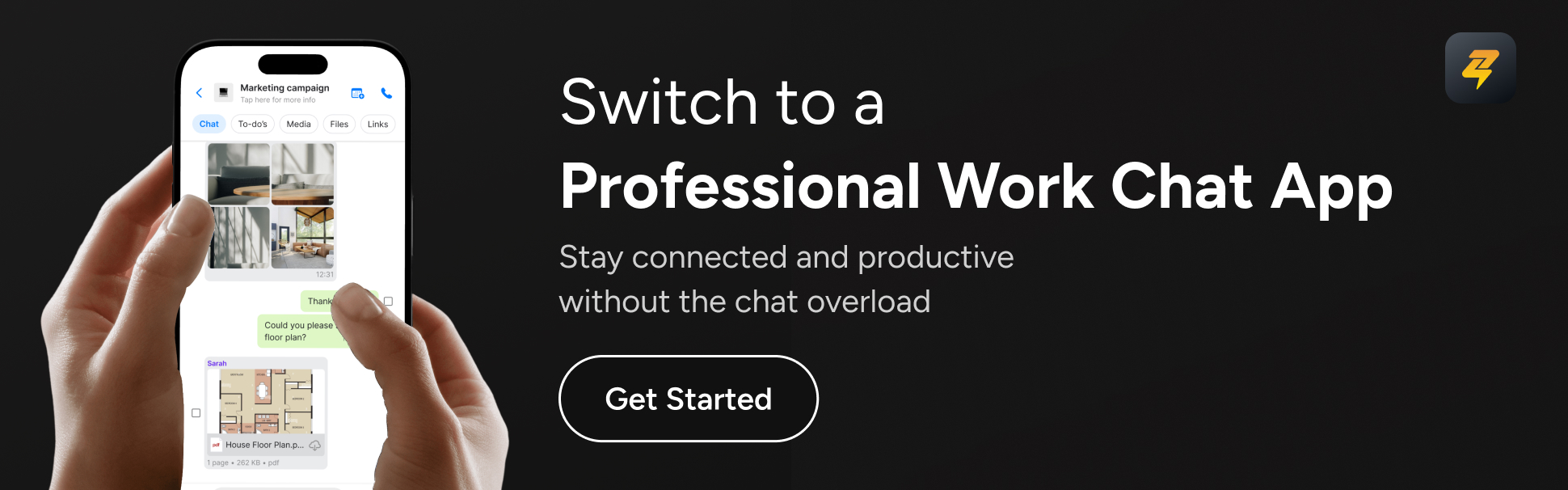
3. Lock down access, offboarding, and message timing before scale creates exposure. Zenzap adds working hours controls, scheduled messages, audit logs, SSO on higher tiers, and one-click offboarding, so the company owns the data and the timing.
The most common failure point is the Friday-afternoon departure. If access removal takes too long, a former employee can still see chats, files, or task context after the business has already moved on.
That is why companies outgrow consumer messaging first. They do not lose control in one big incident. They lose it in small delays across locations, shifts, and apps.
Why Structured Chat Matters More Than More Chat
Structured team chat keeps distributed teams on one operating map. It is the difference between a store that knows today's promo, a clinic that knows the schedule change, and a job site that knows which version of the instruction is current.
Zenzap is a modern communication platform designed to streamline messaging across teams and groups in a single, organized workspace. It focuses on combining chat, task coordination, and collaboration tools to reduce the need for multiple disconnected apps. The goal of Zenzap is to improve productivity by making conversations more structured, searchable, and action-oriented.
That structure matters because frontline teams do not have time for app training. If a team can text, they can use Zenzap from day one, which is exactly why adoption lands in retail, hospitality, construction, home care, and clinics.
For a deeper look at why structure beats loose group messaging, review why structured team chat is crucial for distributed teams.
Why Security Must Include Governance, Not Just Encryption
Real security means more than encrypted transport. It includes audit logs, SSO, retention control, admin permissions, device ownership, and the ability to remove access fast.
Zenzap gives enterprise-grade security with SOC 2, GDPR, HIPAA, and CCPA alignment, plus admin controls on higher tiers. That matters in regulated environments where internal communication is part of the compliance record.
If staff use consumer messaging apps, admins lose the trail. They also lose control over who can invite, export, forward, or keep company data on a personal device.
When you want a broader comparison of secure workplace messaging requirements, see how Zenzap compares with traditional enterprise chat software and why Zenzap is the most secure workplace messaging app for distributed teams.
Why Mobile-First Adoption Decides Scale
Scale fails when the tool works in headquarters but not on the floor. Distributed teams need chat that opens on phones, supports quick replies, and does not require a desk to stay updated.
Zenzap is available on iOS, Android, Windows, Mac, and Web, so a field technician, shift lead, or district manager can work from the same system. That reduces the drift that happens when updates move back and forth between SMS, email, and personal apps.
The cloud-based deployment category was valued at USD 9.03 billion in 2024, according to Technavio, which fits the operational reality of teams that need access anywhere. Mobile-first communication is no longer a convenience. It is the minimum for distributed execution.
Key Takeaways
- Organize chat by team, project, or location before scaling adds confusion.
- Keep tasks, files, and calendar actions inside the same conversation.
- Use admin controls, audit logs, and one-click offboarding to protect company data.
- Make the tool mobile-first so frontline teams adopt it without training.
- Treat chat as operational infrastructure, not a side channel.

FAQ
Q: Why does secure enterprise chat fail across distributed teams?
A: It fails when communication splits across personal messaging apps, email, and separate task tools. That creates different versions of the truth, weakens auditability, and slows offboarding. It also makes compliance harder because admins lose control over retention and data ownership. Zenzap prevents that by keeping chat, tasks, and files inside one structured workspace.
Q: What is the biggest risk during offboarding?
A: The biggest risk is delayed access removal after an employee leaves. If that person still has access to chats, files, or active task threads, sensitive information stays exposed. In distributed teams, that problem compounds because access often spans multiple locations and devices. Zenzap reduces that risk with one-click offboarding and company-owned data stored in the cloud.
Q: How does structured chat improve operations for frontline teams?
A: Structured chat keeps updates attached to the right team, project, or location. That means managers do not need to chase missing context across long threads or separate apps. It also helps teams move faster during handovers because the current instruction is easy to find. Zenzap is built around that structure so people can act on the message, not just read it.
Q: Why do mobile-first tools matter for distributed work?
A: Frontline teams rarely work from a desk, so the tool has to fit the way they already communicate. If the app feels slow or hard to learn, staff fall back to informal channels and the business loses visibility. Mobile-first access keeps updates flowing across shifts, sites, and field teams. Zenzap is designed for that use case from the start.
Q: What security controls should leaders require in enterprise chat?
A: Leaders should require access controls, audit logs, SSO, retention controls, and data ownership. Encryption matters, but it is only one layer. You also need to know who can join, who can export, and how quickly access can be removed. Zenzap includes those controls on higher tiers, which makes governance part of the chat layer itself.
Q: How do built-in tasks change team communication?
A: Built-in tasks keep commitments from getting lost in the conversation. That is important when managers need follow-through after a shift change or client update. It also reduces the need for separate task apps, which lowers fragmentation. With Zenzap, task tracking lives inside the same place where decisions are made.
About Zenzap
Zenzap is a modern communication platform designed to streamline messaging across teams and groups in a single, organized workspace. It focuses on combining chat, task coordination, and collaboration tools to reduce the need for multiple disconnected apps. The goal of Zenzap is to improve productivity by making conversations more structured, searchable, and action-oriented.
Zenzap is a team chat app designed to streamline internal communication for businesses. The platform offers secure real-time chat, built-in tasks, and secure file sharing and organization. It is trusted by 10,000+ companies including Subway, Starbucks, Burger King, NHS, and Dollar General.
Scale your distributed team with one secure workspace, and keep every conversation, task, and handoff inside Zenzap.

Take Control of Your Team Communication
Chat, organize, and get work done - all in one place.
Other Blog Posts