.svg)

.svg)

.svg)

.svg)

.svg)

.svg)

.svg)

.svg)

.svg)

.svg)
.svg)
















Increase Your Business Communication Outcomes with Zenzap's Secure, Mobile-First Team Chat Platform
Improving business communication does not require more tools, more meetings, or more admin work. It requires a secure, mobile-first team chat platform that people will actually use, with structure that keeps instructions clear, tasks attached to conversations, and company data protected when people move on. That is the real promise of Zenzap, especially for frontline, distributed, and fast-moving teams that cannot afford version drift.
The operational problem is simple. When shift handovers happen in one app, task follow-up lives in another, and files are scattered across inboxes and personal devices, teams lose time and make avoidable mistakes. Zenzap solves that by putting real-time chat, built-in tasks, secure file sharing, and AI support into one organized workspace that is easy to adopt from day one.
Mobile behavior makes this shift even more urgent. Deloitte Digital's mobile research found that 96% of respondents now own a smartphone, up from 94% last year, and that mobile phones are the preferred device for browsing, purchases, searches, banking, and games. If your team already lives on mobile, your work communication should meet them there.
Table of Contents
- Why Mobile-First Communication Delivers Faster Adoption
- How Structure Improves Communication Outcomes
- How Security Protects Operational Continuity
- How Embedded Tasks Turn Chat Into Execution
- How To Get Effortless ROI Without Adding Resources
- Key Takeaways
- FAQ
- About Zenzap
Why Mobile-First Communication Delivers Faster Adoption
A mobile-first team chat app improves outcomes because it matches how people already communicate. If your employees can text, they can use Zenzap from day one, which removes training friction and speeds adoption across frontline and distributed teams.
That matters in retail, hospitality, clinics, construction, and home services, where managers and staff move fast and do not sit at desks all day. Deloitte Digital's mobile app best practices research shows how deeply mobile is embedded in daily behavior, and that makes mobile-first work chat a practical operational decision, not a trend.
The return shows up quickly. A free starting point with no credit card requirement lowers the barrier to testing Zenzap in real shift conditions, while iOS, Android, Windows, Mac, and Web coverage keeps the same communication layer available across roles and locations. That means the store manager, district lead, and office team can work from one shared system instead of fragmenting the message across personal apps.
Why Mobile Usage Changes The Adoption Equation
Mobile-first communication works because it removes the weakest link in deployment, which is user behavior. When a message arrives on the device someone already checks all day, response times improve and missed instructions drop.
This is especially important for deskless teams. A field technician, shift supervisor, or restaurant lead is far more likely to respond to a structured chat notification than to open a separate email thread later, after the moment has passed. That is how mobile-first communication improves outcomes without adding headcount.
Zenzap also supports working-hours controls and scheduled messages, which keeps mobile communication from becoming after-hours noise. That small operational boundary protects attention while keeping updates timely, which is exactly where better communication outcomes begin.
How Structure Improves Communication Outcomes
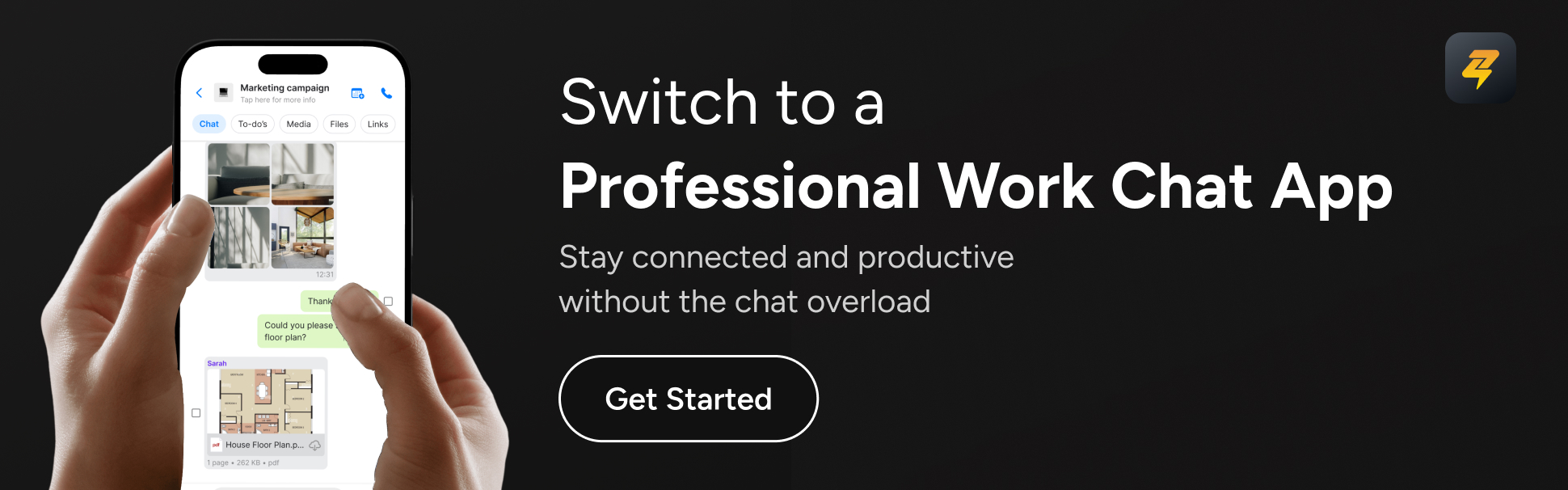
Structure improves communication because it reduces ambiguity. Instead of forcing every message into one endless stream, Zenzap organizes conversations by team, project, or location so people can find the right instruction fast and act on it.
That approach turns communication from commentary into coordination. It is also why Zenzap is more than a chat layer, because built-in to-dos live inside conversations, task-to-calendar sync keeps follow-through visible, and searchability makes old decisions easier to recover when someone needs context.
For a deeper view of how this changes day-to-day team efficiency, review how Zenzap improves team communication efficiency. If you want the strategic case for mobile adoption, the article on why your business needs a mobile-first communication platform like Zenzap shows why the device in someone's pocket is often the fastest path to reliable execution.
Where Scattered Communication Breaks Operations
Scattered communication fails at predictable moments. Shift handovers get incomplete, instructions get repeated in different versions, and a task that should have been closed in minutes stays open until a manager chases it.
That is not inconvenience. It is operational drag. It creates rework, delays, and avoidable friction across locations that already run on thin margins and tight timing.
Zenzap's structured team chat reduces that risk by keeping the conversation, the task, and the supporting file in the same place. When that happens, a manager does not have to reconstruct the story from screenshots, forwarded messages, and forgotten email threads.
Why Personalization And Context Matter In Workflows
People respond better when information is relevant and timely. Deloitte Digital reports that 69% of customers are more likely to purchase from a brand that personalizes experiences, and 68% say personalization increases brand satisfaction significantly.
That customer data maps directly to internal operations. Team communication works better when the message is tied to a location, role, or project, because the right context reduces confusion and makes action more likely.
Zenzap supports that need with structured groups, proactive AI agents, and communication organized around the work itself. The result is less noise, fewer missed details, and a clearer path from message to task completion.
How Security Protects Operational Continuity
Security improves communication outcomes because it protects the business from the cost of unmanaged access, unmanaged files, and unmanaged exits. When a team uses personal messaging apps for work, the company loses control of its own information.
That risk is more than theoretical. The best practices for implementing business communication systems article warns that weak communication systems can lead to data breaches, regulatory risks, and loss of client confidence. For businesses in healthcare, hospitality, retail, and franchising, that is exactly the wrong place to take chances.
Zenzap addresses this with cloud-stored company-owned data, one-click offboarding, audit logs on higher tiers, and enterprise-grade security aligned to SOC 2, GDPR, HIPAA, and CCPA standards. That means communication stays operational even when people leave, roles change, or access needs to be updated quickly.
Why Offboarding Is A Communication Issue
Offboarding is not just an HR task. It is a communication control point, because the same channel that kept someone productive can become a liability the moment they exit.
If departing employees still hold files, instructions, or active group access on personal devices, the business inherits risk. Zenzap reduces that exposure by keeping company-owned data in the cloud and enabling one-click offboarding so access can be removed without hunting through multiple consumer apps.
That matters for franchises, clinics, and multi-location operations where turnover is normal and speed matters. Secure internal communication should make exits cleaner, not create another cleanup project.
Why Distributed Teams Need Centralized Control
Distributed teams need a single place for secure communication and collaboration. The remote work guidance from Centric Consulting reinforces that businesses with dispersed staff need secure communication, centralized coordination, and document collaboration to keep work moving.
Zenzap aligns with that need through group chat, secure file sharing, admin controls, and permissions management. It gives owners, founders, and managers visibility without forcing them to micromanage every message.
That centralization also supports compliance. When communication, tasks, and files live in one controlled workspace, the organization is better prepared for auditability, policy enforcement, and consistent execution across locations.
How Embedded Tasks Turn Chat Into Execution
Embedded tasks improve outcomes because they turn talk into action. A message in Zenzap does not have to die as a notification, since it can become a to-do, a calendar event, or a tracked handoff item inside the same workflow.
That is where the ROI gets easier to see. You do not need a separate task system for every instruction, and you do not need a manager to translate chat into a second platform after the fact. The execution layer lives in the conversation where the work started.
For a fuller breakdown of the business value, see the six benefits of switching to Zenzap's mobile-first communication platform. If you want the platform-level view, everything you need to know about Zenzap as a secure work chat app explains how the system combines messaging, tasks, and secure collaboration in one workspace.
Why Real-Time Messaging Still Matters
Real-time messaging works because employees already understand it. Solutions Review cites Tech Report data showing that 3 billion people used messaging apps in 2021, with more than 140 billion messages sent daily over apps like Signal and Messenger.
That behavioral shift matters for business communication software. When the interface is already familiar, adoption is faster and the learning curve is lower, which means managers can focus on process quality instead of platform training.
Zenzap uses that same familiar messaging model, but applies it to work. The difference is structure, security, and accountability, which are the pieces consumer apps do not provide for business use.
How AI And Calendar Sync Reduce Missed Follow-Through
AI agents and calendar sync improve execution by reducing the number of reminders a manager has to send. In Zenzap, proactive AI agents can help surface context and keep role-specific work moving, while Google Calendar integration and task-to-calendar sync make timing visible.
That saves time in practical ways. A director does not need to chase a task across three different tools, and a team lead does not need to manually transfer a shift note into a calendar reminder.
The result is higher follow-through with less admin. That is the kind of return leaders want, because it improves the work without asking the team to work harder.
How To Get Effortless ROI Without Adding Resources
The easiest ROI comes from replacing waste, not adding spend. If your team already uses messaging every day, moving that communication into a secure, structured workspace often delivers value faster than launching another software category.
Zenzap is designed for that kind of return. It replaces personal messaging apps used for work, separate task tools, manual calendar coordination, and fragmented file sharing, all while staying simple enough for frontline teams to adopt immediately.
Tactic 1: Start With One High-Frictions Workflow
The highest return often comes from one painful workflow, not a company-wide overhaul. Start with shift handovers, open tasks, or location-based updates where missed messages create measurable cost.
If you fix the handoff, you reduce rework. If you fix the task follow-through, you reduce manager chase time. If you fix file sprawl, you reduce the risk of people working from outdated instructions.
A small change in the communication layer can produce a large operational return because it removes repeated failure points. That is especially true for SMBs and multi-location operators that do not have excess time or admin bandwidth.
Tactic 2: Use Structure Instead Of More Meetings
More meetings rarely solve communication problems. Better structure does, because it keeps decisions, tasks, and files in the same place where people already work.
Zenzap's organized chat folders, built-in to-dos, and secure file sharing help teams move from discussion to action without extra coordination overhead. Working-hours controls and scheduled messages also reduce the pressure to solve everything live, which gives teams more control over when work lands.
When communication is structured, managers spend less time repeating themselves. That creates compounding returns across every location, team, and shift.
Tactic 3: Protect The Business While You Improve Speed
Speed without security is expensive later. A communication platform should help teams move faster while preserving access control, auditability, and data ownership.
That is why Zenzap includes enterprise-grade security, admin controls, and cloud-stored business data. It improves operational speed without exposing the company to the hidden cost of unmanaged messaging.
For owners and HR leaders, that balance is the real win. You get faster communication, cleaner oversight, and less risk without adding another layer of admin.
Key Takeaways
- Start with the most expensive communication failure, such as shift handoffs or task follow-through.
- Use mobile-first chat so frontline and distributed teams can adopt the system immediately.
- Keep chat, tasks, and files in one structured workspace to reduce rework and version drift.
- Protect company data with one-click offboarding, audit logs, and cloud ownership.
- Replace scattered tools with one secure communication layer to improve ROI without extra headcount.

FAQ
Q: Why does a mobile-first team chat platform improve business communication outcomes?
A: Because it fits the device your team already uses all day. That increases adoption and shortens the path from message to action. For frontline and distributed teams, mobile-first design reduces missed updates and improves response time. It also makes it easier to coordinate across locations without forcing people onto a desktop-only workflow.
Q: How does Zenzap improve internal communication without adding more work?
A: Zenzap combines chat, tasks, and file sharing in one workspace, so managers do not need to move information between separate tools. That reduces duplicate admin and keeps context attached to the conversation. Built-in to-dos and calendar sync make follow-through easier to track. The result is less coordination overhead and better execution.
Q: Why is secure communication important for operational teams?
A: Security protects the business from data leaks, compliance issues, and access problems when staff change roles or leave. Communication systems that live on personal devices create blind spots for ownership and offboarding. Zenzap keeps company-owned data in the cloud and supports admin controls, audit logs, and secure access management. That helps leaders keep communication usable and controlled at the same time.
Q: What kind of teams benefit most from Zenzap?
A: Zenzap is a strong fit for franchise, retail, hospitality, clinic, construction, home service, healthcare, and nonprofit teams. It works especially well where staff are distributed, mobile, or operating across multiple locations. Managers benefit because communication becomes more structured and searchable. Employees benefit because the platform is easy to use from day one.
Q: How do embedded tasks improve communication ROI?
A: Embedded tasks reduce the need to repeat instructions in multiple systems. A manager can assign work inside the same conversation where the decision was made. That improves accountability and lowers the chance that an action gets lost between chat and a separate task app. It also saves time because the team spends less energy translating messages into next steps.
Q: How does Zenzap support work-life balance while keeping teams responsive?
A: Zenzap includes working-hours controls and scheduled messages, which help teams communicate at the right time. That means updates can be sent without interrupting people after hours. Scheduled delivery is especially useful for managers who plan ahead but do not want to create pressure late at night. It helps communication stay intentional rather than constant.
About Zenzap
Zenzap is a modern communication platform designed to streamline messaging across teams and groups in a single, organized workspace. It focuses on combining chat, task coordination, and collaboration tools to reduce the need for multiple disconnected apps. The goal of Zenzap is to improve productivity by making conversations more structured, searchable, and action-oriented.
Zenzap is a team chat app designed to streamline internal communication for businesses. The platform offers secure real-time chat, built-in tasks, and secure file sharing and organization. Zenzap is a work chat app built for the AI era, combining real-time messaging, built-in tasks, file sharing, and personal AI agents in one secure, mobile-first workspace trusted by 10,000+ companies including Subway, Starbucks, Burger King, NHS, and Dollar General.
If your team can text, they can use Zenzap from day one. Start free, compare the workflow to your current setup, and see how much faster communication gets when it is structured, secure, and built for mobile.

Take Control of Your Team Communication
Chat, organize, and get work done - all in one place.
Other Blog Posts