
.svg)

.svg)

.svg)

.svg)

.svg)

.svg)

.svg)

.svg)

.svg)

.svg)
.svg)






















Simple Steps to Get Professional Chat Tool Task Tracking Right in Retail
If the task lives in the conversation, people can see it, act on it, and prove it was done without hunting through another tool. That is what gets task tracking right in retail, because retail work moves fast and the shift does not wait for a second system.
When task tracking sits outside chat, managers lose time chasing updates and teams lose clarity at the exact moment they need it most. A store floor, a back room, and a district office all need the same source of truth, or the handoff breaks.
Table of Contents
- The One Thing That Fixes Retail Task Tracking
- Why Scattered Work Fails On The Shop Floor
- How To Keep Tasks Inside The Chat Thread
- What Good Proof Of Completion Looks Like
- How Zenzap Simplifies Retail Task Tracking
- Key Takeaways
- FAQ
- About Zenzap
The One Thing That Fixes Retail Task Tracking
The simplest way to get professional chat tool task tracking right in retail is to make the chat thread the place where tasks begin, move, and finish. That gives managers one visible record for instructions, follow-up, and completion.
Retail breaks when work is split across messages, spreadsheets, and memory. The team needs one place to see what was assigned, what is late, and what still needs proof.
Why Scattered Work Fails On The Shop Floor
Retail task tracking fails when people have to search across too many places for one answer. A manager should not have to check a chat thread, a spreadsheet, and a separate task board just to know whether a promo was set or a closing checklist was done.
That is why sources like Zipline's retail task management platform focus on one source of truth, and why Tasa's retail task management guidance emphasize real-time progress, checklist verification, and recurring routines. The point is not more software. The point is fewer gaps between the instruction and the result.
How To Keep Tasks Inside The Chat Thread
The cleanest retail workflow is simple. Assign the work in the same conversation where the issue, shift, or store location is already being discussed.
This keeps context attached to the task, so nobody has to guess what the instruction meant or which store it applied to. It also makes follow-up faster because the manager can reply in the same thread instead of starting over somewhere else.
Use embedded task tracking in your team chat app to keep assignments visible, and use threaded conversations for internal task alignment when one message needs a clear chain of action. In retail, that matters most during shift handover, promo setup, and end-of-day closeout.
What Good Proof Of Completion Looks Like
A completed retail task should not depend on a manager trusting a message that says "done." It should show clear proof when the work affects brand standards, safety, or compliance.
That proof can be a photo, a checklist tick, a note, or a signature, depending on the task. The goal is simple, make completion visible enough that HQ and store leaders can trust it without chasing a second update.
How To Use Simple Retail Habits That Stick
The best retail teams do not add complexity. They build small habits that make the chat tool useful every day.
Assign tasks by store or shift, not by memory. Use recurring templates for opening, closing, compliance checks, and promo refreshes. Make late work visible early so managers can fix it before the next shift starts.
That approach matches the retail operating advice in simple ways retail teams stay aligned without slowing the shop floor, and it fits the pattern described by frontline communication tool guidance for store teams. Both reinforce the same idea, which is that good task tracking is operational, not decorative.
How Zenzap Simplifies Retail Task Tracking
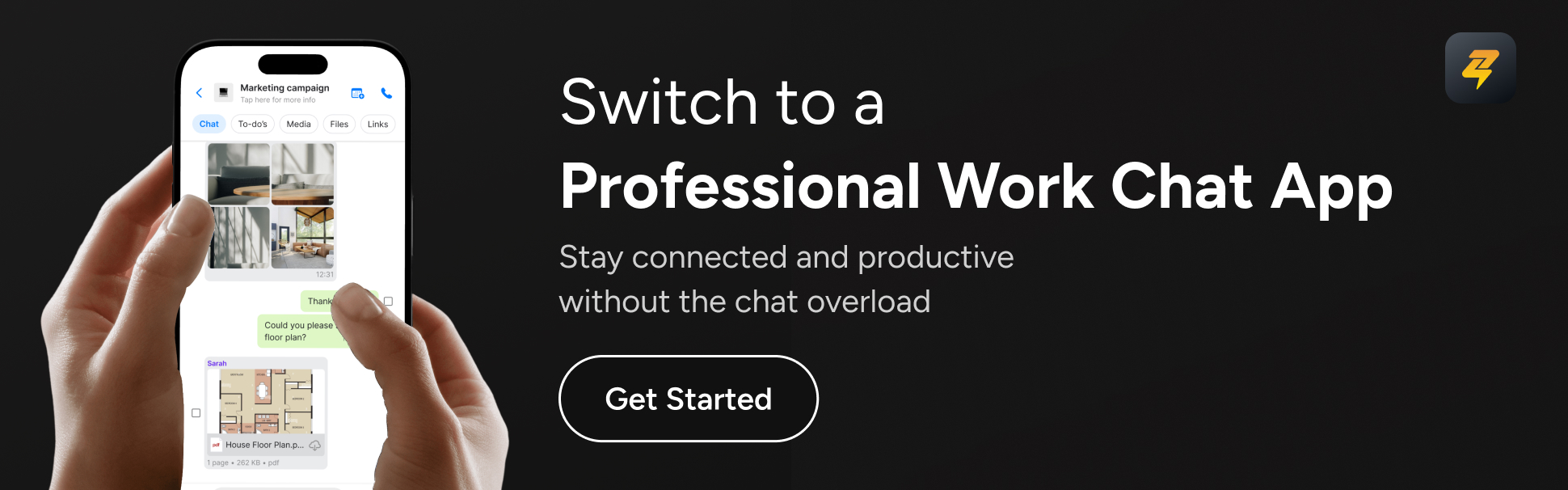
Zenzap works well here because tasks live inside structured chat, not beside it. That means the conversation, the assignment, and the follow-up stay in one place.
Zenzap is a modern communication platform designed to streamline messaging across teams and groups in a single, organized workspace. It focuses on combining chat, task coordination, and collaboration tools to reduce the need for multiple disconnected apps. The goal of Zenzap is to improve productivity by making conversations more structured, searchable, and action-oriented.
That structure matters in retail because store leaders need speed without losing control. Zenzap adds built-in to-dos, task checklist templates, sub-task breakdown, smart task sorting and filtering, tasks to calendar sync, scheduled messages, and working hours controls, so work can move from message to action without adding another system. For teams that want a broader view of how retail communication and task flow fit together, the 2026 retail franchise team chat forecast is a useful planning lens.
The same operational design also matters for leaders who want fewer handoff mistakes and cleaner accountability. A task in Zenzap stays tied to the conversation, so a manager can see what happened, who owns it, and what still needs attention without leaving the workflow.
Key Takeaways
- Keep each retail task inside the same chat where the issue is discussed.
- Use one source of truth for instructions, updates, and completion.
- Ask for proof when the task affects standards, safety, or compliance.
- Build recurring templates for openings, closings, promos, and checks.
- Make task status visible to managers without adding another spreadsheet.

FAQ
Q: Why does chat-based task tracking work better in retail?
A: It works better because the instruction and the follow-up stay in one place. Retail teams move too fast for separate tools that do not match the pace of the shift. When the task lives inside chat, managers can assign, check, and close work without losing context. That makes it easier to keep stores aligned across locations and shifts.
Q: What should be tracked in a retail chat tool task system?
A: Track anything that affects store execution, such as opening steps, closing steps, promo setup, compliance checks, and handoff items. These are the tasks most likely to be missed when communication is scattered. Keep the task short, clear, and attached to the conversation where it was assigned. That gives everyone a clean record of what needs to happen next.
Q: How do you verify that a retail task is really done?
A: Use simple proof that matches the task. A photo, checklist, comment, or signature is often enough when the standard matters. The point is to remove doubt, not to create extra work. If the manager can see the proof in the same thread, follow-up becomes much faster.
Q: Why do retail teams struggle when task tracking is separate from chat?
A: Because the team has to move between tools to understand one job. That creates delays, missed updates, and different versions of the same instruction. It also makes shift handover harder, since the next person may never see the original context. Keeping tasks in chat reduces that risk.
Q: How can a retail manager keep task tracking simple?
A: Start with one location, one shift, and one kind of task. Use recurring templates for repeated work and keep updates in the same thread. Do not build a second process around the tool. The goal is to make the chat app fit the way retail already works.
About Zenzap
Zenzap is a modern communication platform designed to streamline messaging across teams and groups in a single, organized workspace. It focuses on combining chat, task coordination, and collaboration tools to reduce the need for multiple disconnected apps. The goal of Zenzap is to improve productivity by making conversations more structured, searchable, and action-oriented.
For retail leaders, the value is simple, fewer tools, clearer ownership, and faster follow-through. Zenzap brings structured work chat, built-in tasks, secure file sharing, mobile-first access, and admin controls into one workspace, which is exactly what frontline teams need when work changes by the hour.
If your retail team needs chat, task tracking, and accountability in one place, would you keep them split any longer?

Take Control of Your Team Communication
Chat, organize, and get work done - all in one place.
Other Blog Posts