.svg)

.svg)

.svg)

.svg)

.svg)

.svg)

.svg)
.svg)


















Task management in chat: What it is and why directors prioritize it for internal alignment
You already run most of your work through chat. Decisions, questions, approvals, handoffs, all flying past in endless threads. The real question is not whether chat runs your day, it is whether you have any control over what comes out of it.
By the end of this guide, you will know exactly what task management in chat is, why directors and senior leaders are pushing for it, and how you can use Zenzap to turn messy conversations into clean internal alignment without burning your team out. You will see how to keep work where it starts, inside chat, and still get the structure, accountability, and security you expect from a proper work platform.
In short, you will learn how to keep your people focused, your data safe, and your projects moving, while giving everyone healthier boundaries and a simpler toolset.
Table of contents
Here is what you will walk through.
1. What task management in chat actually means for you
2. Why directors prioritize task management in chat for alignment
3. How Zenzap turns messages into structured, owned work
4. Step by step process to achieve task management in chat with Zenzap
5. How Zenzap protects security, control, and clean offboarding
6. Real work life balance instead of always on chat fatigue
7. Key takeaways
8. Frequently asked questions
What task management in chat actually means for you
Think about the last important decision your team made. It probably started in chat, maybe in a group thread, a quick DM, or a cross functional channel. Someone asked a question, a few people responded, a decision was made. Then what happened?
In many companies, the answer is: someone said, "I will note this down later," then either copied it into a tool, forgot, or wrote it in their own personal notes where nobody else can see it. This is where alignment quietly breaks.
Task management in chat fixes that by keeping the full lifecycle of work inside the same place where work conversations already happen. Instead of chat being a noisy back channel, it becomes the starting point and home for every task, owner, and deadline.
Effective task management is not just about to do lists. It is about clarity, shared visibility, and making sure work moves forward even when everything else is in motion. When you combine that discipline with chat, you remove the biggest source of friction: context switching.
With Zenzap, you do not jump to a second app just to capture work. You stay in the same thread, convert a message into a task with one tap, add an owner and due date, then keep going with the conversation.
Why directors prioritize task management in chat for alignment
As a director, you care less about individual messages and more about whether teams are aligned, protected, and delivering. Task management in chat sits exactly at that intersection.
Here is why leadership teams are prioritizing it.
Internal alignment where work actually happens
Directors do not need more dashboards. They need confidence that when something is decided, somebody owns it, and everyone can see that ownership. When you turn messages into tasks directly in chat, you keep decisions, context, and responsibility in one place.
That single move reduces miscommunication, cuts back on status meetings, and keeps projects moving even when people are not online at the same time. A message like, "We should update the sales deck by Friday," becomes a tracked task, with a named owner and deadline, inside the same thread where the idea came up.
Effective task management connects day to day work to broader goals and reduces missed deadlines or duplicate effort. Putting that structure directly in chat supercharges this. You are no longer trusting people to "remember later." You are capturing work at the moment it appears.
Less tool overload and more adoption
Directors also care about tool sprawl. Many teams quietly juggle four to six different apps just to get through a normal day. A messaging app, email, a task app, a calendar, a separate project board, a file storage tool. Every switch costs time and attention.
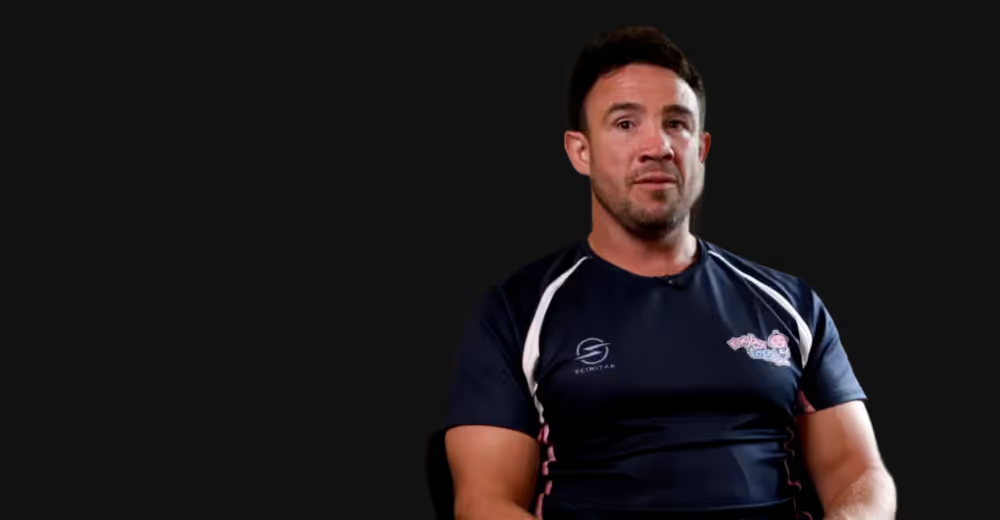
Real life example: a multi site healthcare owner, Dr. Phil Cox, put it simply. "We do not have a separate app for to do lists, for document storage, for task management. It is all in one app which is fantastic." That is exactly what directors want, one trusted system that people actually use.
Zenzap is built to be that central place. It is mobile first and feels as simple as texting, but it comes with built in task management, Google Calendar integration, and structured workspaces. People adopt it quickly because it behaves like the chat tools they already know, without mixing work with personal life.
Healthier boundaries and lower burnout risk
Another leadership priority is protecting people from always on culture. When you bake task management into chat without guardrails, you risk turning every ping into implied work.
Zenzap flips that script. It helps you set boundaries while staying aligned. Team members can set working hours so they do not get notifications when they are off the clock. You can schedule messages to send during business time instead of late at night. Urgent items can be highlighted, while non urgent tasks quietly wait until people are back.
Work should fit into your life, not take over. A structured task list that lives inside a secure chat app makes it easier for people to unplug with confidence, because they know their work will still be waiting in a clear, organized view.
How Zenzap turns messages into structured, owned work
To see why this matters in practice, you need to look at how Zenzap actually handles task management in chat. The goal is simple. Every actionable message can become a visible, owned, and trackable task without leaving the conversation.
From "we should do this" to "you will do this by Friday"
Task management covers the full lifecycle of work from initiation to completion. Zenzap brings that lifecycle into your everyday messaging.
Here is what that looks like in your team.
Somebody posts, "Store 14 needs new window graphics before the weekend." Instead of replying, "Got it," and hoping someone remembers, you convert that message into a task in one tap. You assign the local manager as owner, set Friday as the due date, keep the attached photos in the same thread, and move on.
The manager sees a new item in their auto generated Zenzap to do list. They mark progress as they move, and every update stays attached to the original conversation. You, as the director, do not have to chase separate boards or private notes. You can simply open the thread and see what has happened.
Automatic personal to do lists for every team member
When you use Zenzap this way, each person gets a living, breathing to do list that is generated directly from tasks assigned in chat. There is no manual transcription and no separate tool to remember.
For franchise or multi location leaders, this is powerful. Whenever a new task appears in a regional thread, it becomes part of that location's to do list, with a clear owner and deadline. This habit does three big things at once.
First, it makes ownership visible instead of fuzzy. Second, it keeps workload realistic because you can see what is already on someone's plate. Third, it keeps context attached forever. Nobody has to guess why a task exists or where it came from.
Calendar alignment without double entry
Zenzap also connects tasks with Google Calendar. With a click, you can push a task into a calendar event. That means people see what is scheduled and what is pending in a single, aligned view.
You are not just tracking work, you are respecting time. Staff can see meetings, deadlines, and key tasks together, which reduces over commitment and late surprises. For directors, this makes capacity planning easier and more realistic across time zones and sites.
Step by step process to achieve task management in chat with Zenzap
Here is the process to turn your chat into a clear, aligned execution engine using Zenzap. If someone on your team can send a message on a familiar chat app, they can follow these steps. That is one reason Zenzap is rated 4.7 out of 5 on platforms like Capterra and has won Best Value Team Communication Software awards in 2024 and 2025.
Step 1: Map how work really flows today
Start by looking honestly at how work moves in your organization right now. Forget the official workflows for a moment. Ask yourself:
Where do most decisions start? Which chat threads keep coming up when something slips? Where do critical instructions from leadership get shared?
In many teams, the real pattern is simple. Decisions happen in group chats, are confirmed in a meeting, then someone promises to "put it in the system later." That gap is where alignment dies.
Pick two or three representative teams. For example, your product squad, a field operations crew, and your customer support team. Spend a week looking at how often "we should" turns into "who will" and actually gets tracked.
Your goal in this step is not to fix anything. It is to see the current state clearly so the next steps build on reality, not wishful thinking.
Step 2: Move the conversation into one professional chat space
Once you see the pattern, you can reduce friction by centralizing work chat into Zenzap. This is where you create a clear line between personal and professional messaging.
Instead of letting staff use consumer apps, which are easy but risky, you give them a tool that feels just as simple but is built for work. Zenzap is mobile first, so it feels like texting on a phone, and it supports deskless teams, remote workers, and frontline managers who live on their devices.
Set up your basic workspace structure. For example, one workspace per department or store, with threads for core topics like operations, marketing, staffing, and incidents. Keep it simple at first. The aim is to make it easy for people to know where to put what.
From day one, make one message clear: if it is work, it lives in Zenzap, not in personal chat apps. That single rule already improves security and alignment.
Step 3: Turn actionable messages into tasks in one tap
Now you introduce the core habit that changes everything. Any message that contains an action becomes a task in Zenzap, inside the same chat.
It can be as small as "Please fix the typo on the pricing page" or as big as "Prepare the Q3 budget review for the board." If it needs to happen, you tap, convert, assign, and set a due date.
You can share a simple rule with your team: no floating promises. If someone writes anything that sounds like "I will," "we should," or "can you," you either turn it into a task or agree that it is not necessary.
For example, in your product channel someone writes, "We should update the onboarding emails before next week's launch." With Zenzap, you do not switch to another tool. You stay in the thread, convert the message to a task, assign it to your lifecycle marketer, and add Friday as the due date.
Step 4: Make ownership and status visible to everyone
Next, you lean into visibility. One of the biggest benefits of modern task management is increased visibility into how projects are progressing. Within Zenzap, that visibility lives right where the conversation happens.
Teach your team to check the task view inside each thread before asking for status updates. If a task is assigned, they will see the owner, the due date, and the latest updates. This habit cuts the number of "any update on this?" messages that drain everyone's energy.
For directors, this means you can quickly scan a thread for open tasks and see what is at risk, without demanding separate reports. You can also spot overload early, because you see which people have a long queue of assigned work.
Step 5: Align tasks with calendars and working hours
Now you bring time into the picture. Connect Zenzap with Google Calendar so tasks that need dedicated focus become visible blocks in people's schedules. This makes it harder for important work to get squeezed into the margins.
At the same time, help your team set their working hours in Zenzap. This is where work life balance and internal alignment support each other. People still receive tasks and updates while they are offline, but they are not pinged endlessly outside their set hours.
As a director, you can model this by scheduling messages to send during your teams' working time. The message is written when you are thinking about it, but it arrives when they are ready to act. Over time, this culture shift reduces burnout and increases trust.
Step 6: Use admin controls for clean onboarding and offboarding
Finally, you lock in security and control. When you run task management in chat, you are handling sensitive data, client details, and internal strategy. You cannot afford to have that living on unmanaged personal devices.
Zenzap uses encrypted communication and centralized ownership of all work data. Admins can instantly revoke access for departing staff, keep business data off personal phones, and manage role based permissions cleanly.
For regulated industries or teams with strict data policies, this is not a nice to have. It is essential. When someone leaves, their access disappears in a few clicks. The threads, files, and tasks stay inside your corporate account where they belong, not walking out the door with them.
How Zenzap protects focus, security, and work life balance
Once you follow these steps, you are not just "using a new chat app." You are changing how your organization thinks about work visibility, safety, and rest.
On the security side, you get enterprise grade protection without heavy, complex interfaces. Zenzap is built so that admins can control invitations, apply role based permissions, and keep a clean record of who can see what. This is especially important when you have contractors, rotating staff, or high turnover roles.
On the focus side, you drastically reduce tool toggling. Every time someone has to jump into a different app just to write down a task, you introduce friction. Many people simply skip it. That is how work gets lost and why meetings feel repetitive. With everything inside Zenzap, people capture action items right away and keep talking.
On the human side, clear boundaries matter. Task management in chat often creates the feeling that people are always on. Zenzap is deliberately designed to go the other way. When your tasks are structured and your notifications are under control, you do not feel the need to obsessively check messages just to stay in the loop.
Real example: imagine a cross time zone team. The US team completes a planning session, turns each decision into a Zenzap task directly from the thread, then logs off. A developer in another region wakes up, opens Zenzap, and sees two new tasks in their list, each linked to the exact chat where decisions were made. They do not need a status meeting. They just start.
Key takeaways
- Keep all work chat in one professional space and convert actionable messages to tasks in one tap.
- Use built in task management in chat to maintain clear ownership, deadlines, and context for every decision.
- Give every team member an automatic to do list and connect tasks to calendars to respect time as well as work.
- Protect data and simplify admin work with encrypted communication, role based access, and instant offboarding.
- Use working hours, scheduled messages, and structured tasks to protect genuine work life balance across your teams.

Implement the fix and watch alignment improve
When you bring task management into chat, you stop asking your teams to remember things later or copy work into yet another system. You respect the way they actually work and give them a structure that fits around that reality.
Directors love this because it cleans up three constant headaches at once. Internal alignment improves because every decision has a visible owner and due date. Security improves because work conversations and data live in one protected place, not on personal devices. Work life balance improves because people can unplug from chat without losing track of what matters.
For you, this is not about adopting a trendy tool. It is about building a communication and execution layer that your people understand on day one and keep using on day one hundred. Zenzap gives you that, with the simplicity of texting and the power of enterprise grade task management.
The only question left is this. If your teams are already living in chat every day, how long do you want to wait before their tasks, focus, and security catch up?
FAQ
Q: What exactly is task management in chat?
A: Task management in chat means you track the full lifecycle of work inside your messaging app, from the moment an action is mentioned to the moment it is completed. Instead of copying items into a separate tool, you convert messages into tasks, assign owners and due dates, and keep updates in the same thread. This keeps context, accountability, and communication tightly linked.
Q: How does Zenzap help directors improve internal alignment?
A: Zenzap lets you mirror your organizational structure inside a simple, mobile first chat app. Any actionable message becomes a task with a clear owner and deadline, and each person gets an auto generated to do list based on these tasks. Directors can quickly see who is doing what, by when, across teams or locations, without wading through multiple systems or requesting extra status reports.
Q: Will my team need heavy training to use Zenzap for task management?
A: No. Zenzap is designed to feel instantly familiar, similar to consumer chat apps your team already uses. New hires, part timers, and seasoned staff can log in and feel at home right away. You can start by training one simple habit, turn actionable messages into tasks, then layer in calendars, working hours, and admin controls over time.
Q: Can Zenzap replace my existing project management tool?
A: For many teams, yes, especially for operational work and recurring processes. Zenzap keeps communication and execution in one place and gives you clear visibility into tasks, owners, and deadlines. For very complex, multi year initiatives, you may still keep a dedicated project management system, but you can use Zenzap as the day to day action hub that feeds it clean, structured information.
Q: How does Zenzap support work life balance while using chat for tasks?
A: Zenzap lets each user set working hours, mute notifications outside those times, and schedule messages to send during business hours. Tasks keep collecting quietly in the background, but people are not constantly pinged while off the clock. When they sign back in, they see a clear, prioritized list of what needs attention, instead of a messy scroll of unread messages.
Q: Is Zenzap secure enough for regulated or data sensitive industries?
A: Yes. Zenzap uses encrypted communication, controlled invitations, and role based permissions to keep your information safe. Admins can instantly revoke access for departing staff, make sure business data does not live on personal devices, and maintain centralized ownership of all work data. For regulated sectors, that combination of control and simplicity is critical.

Take Control of Your Team Communication
Chat, organize, and get work done - all in one place.
Other Blog Posts